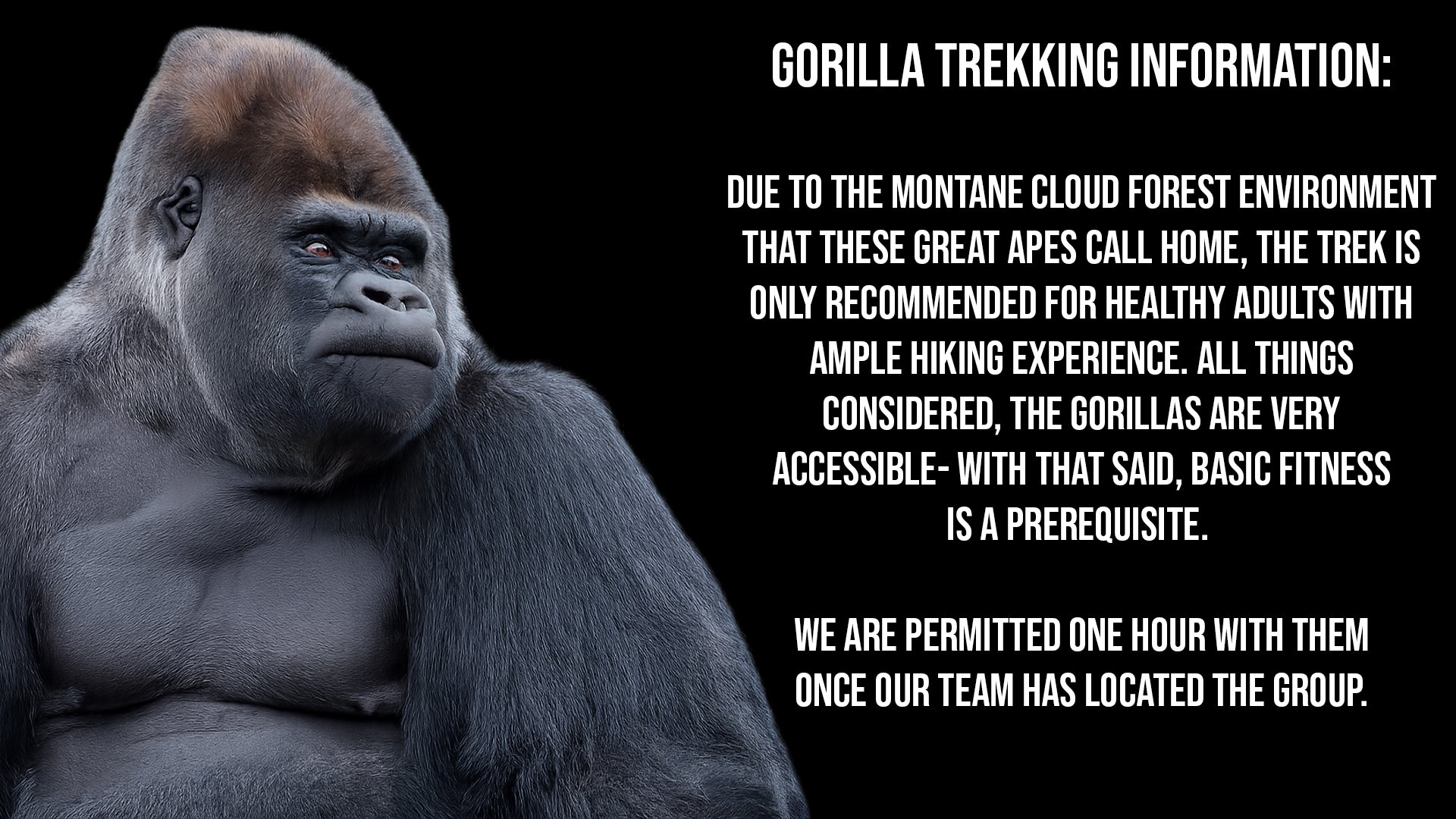
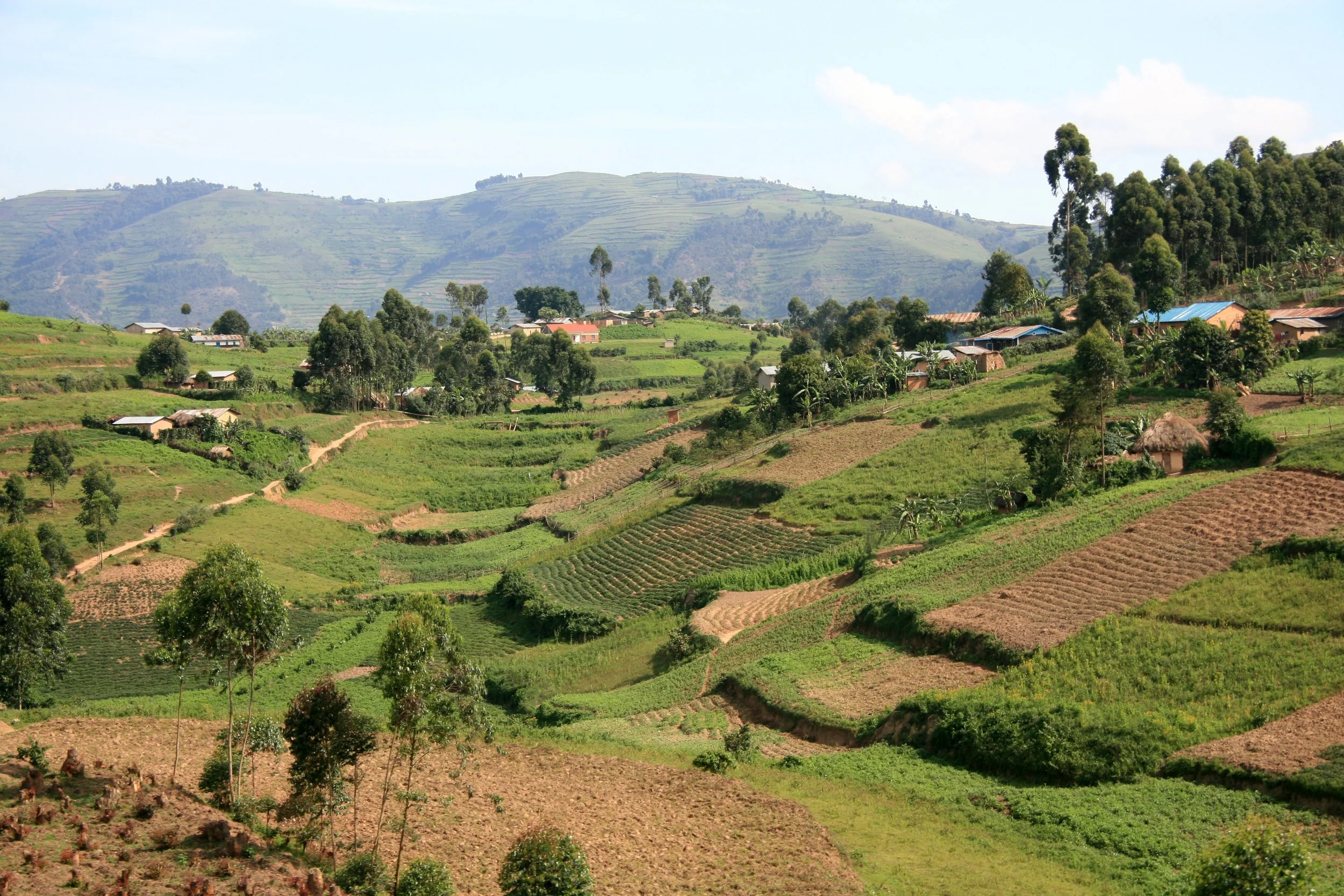
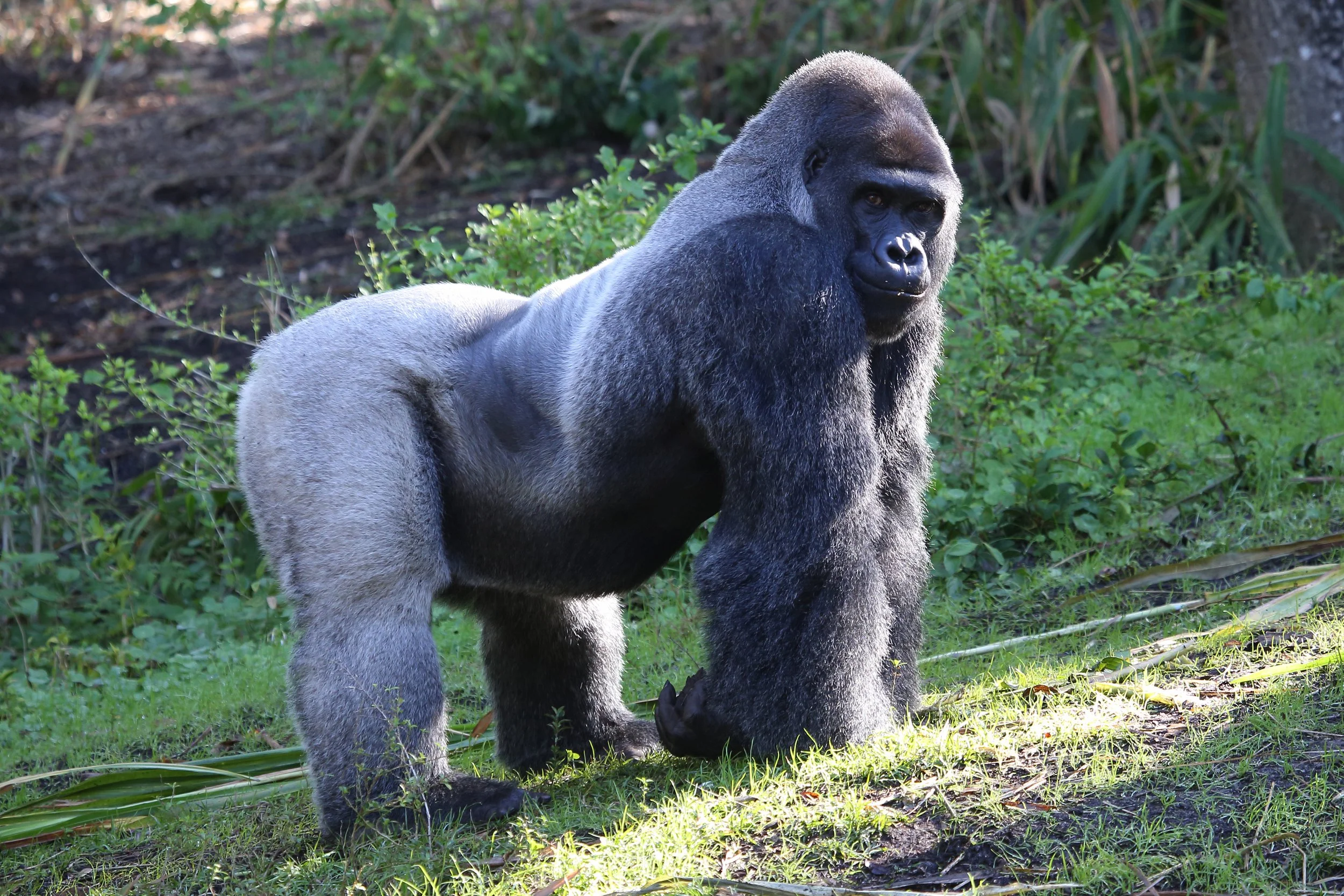
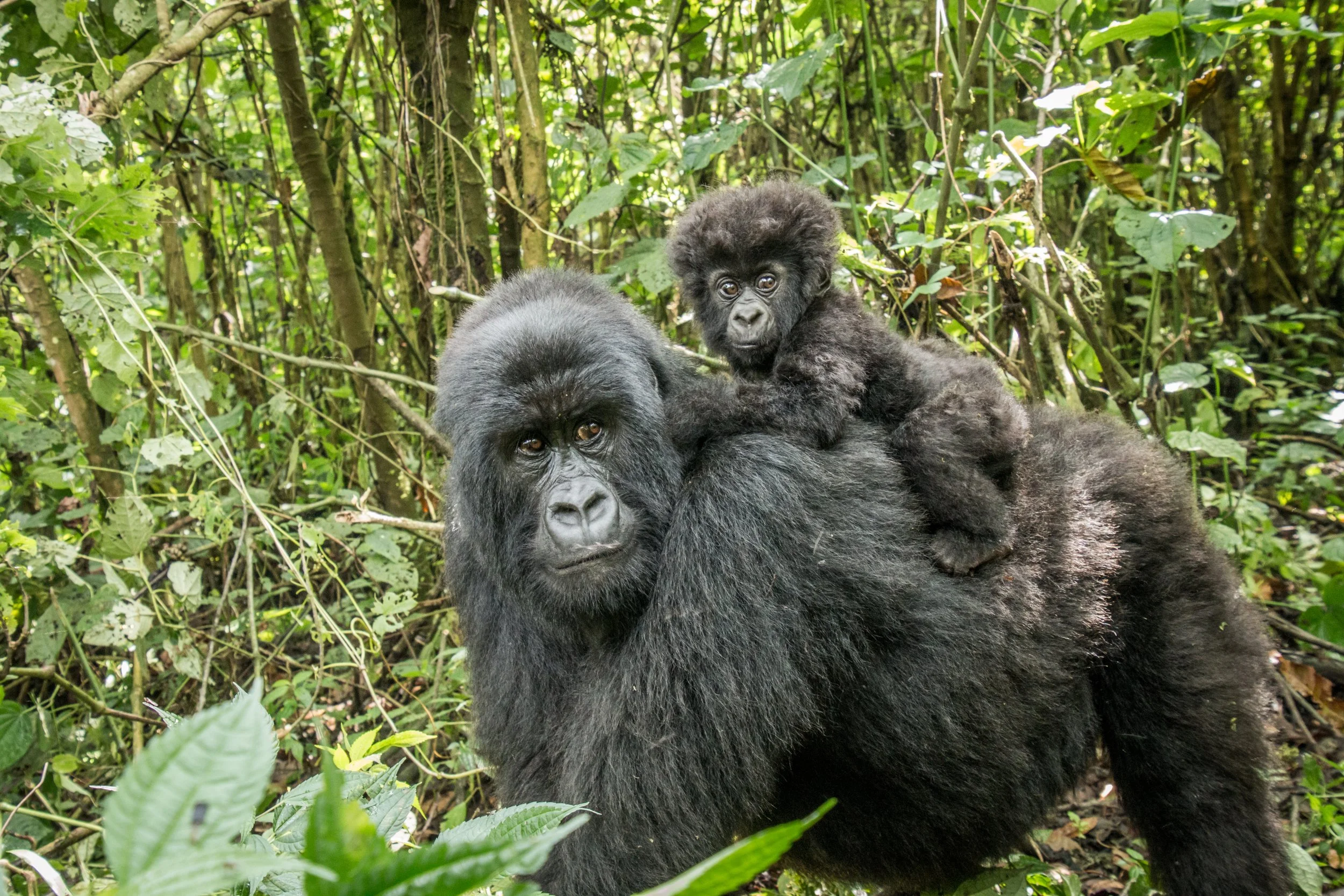
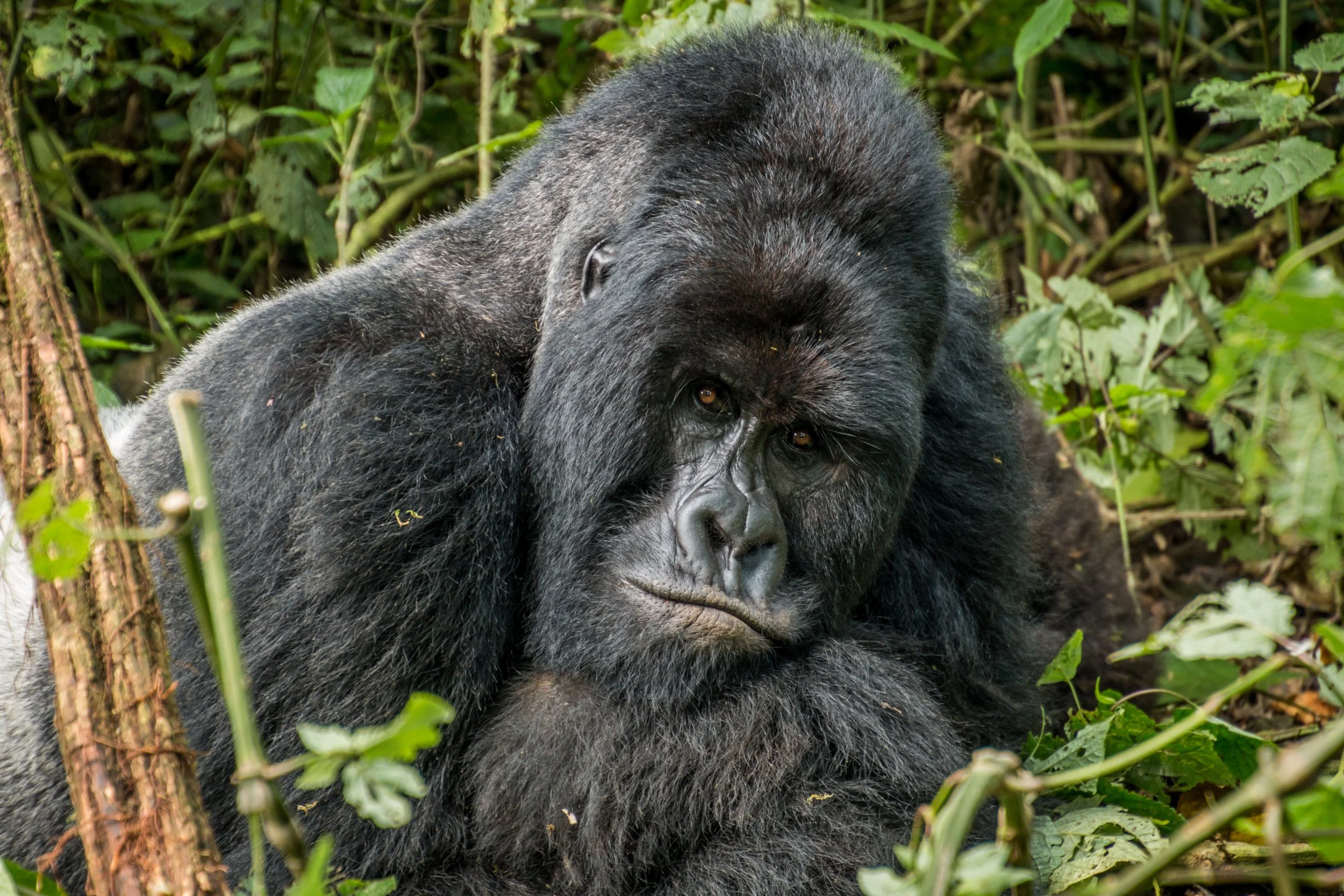
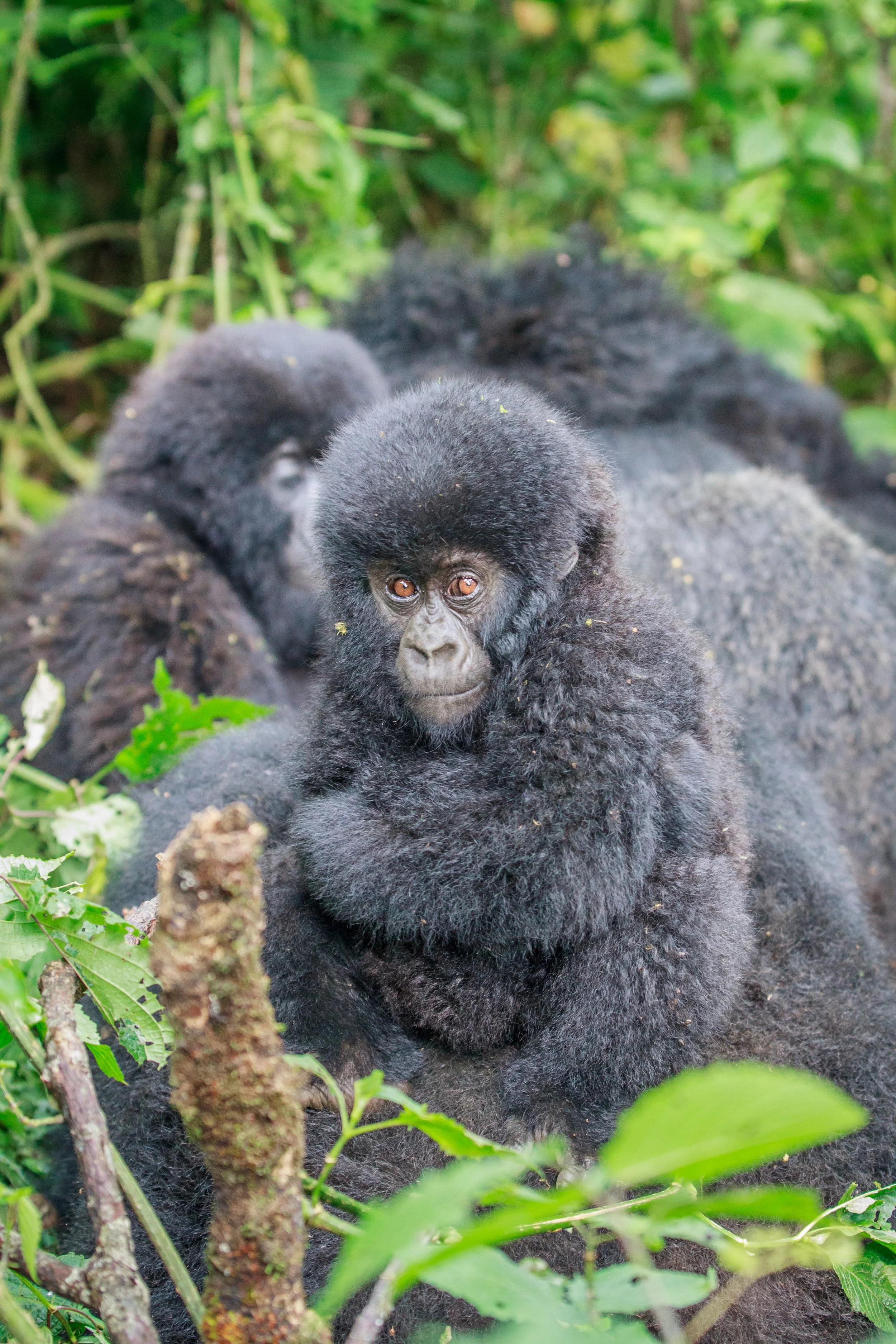
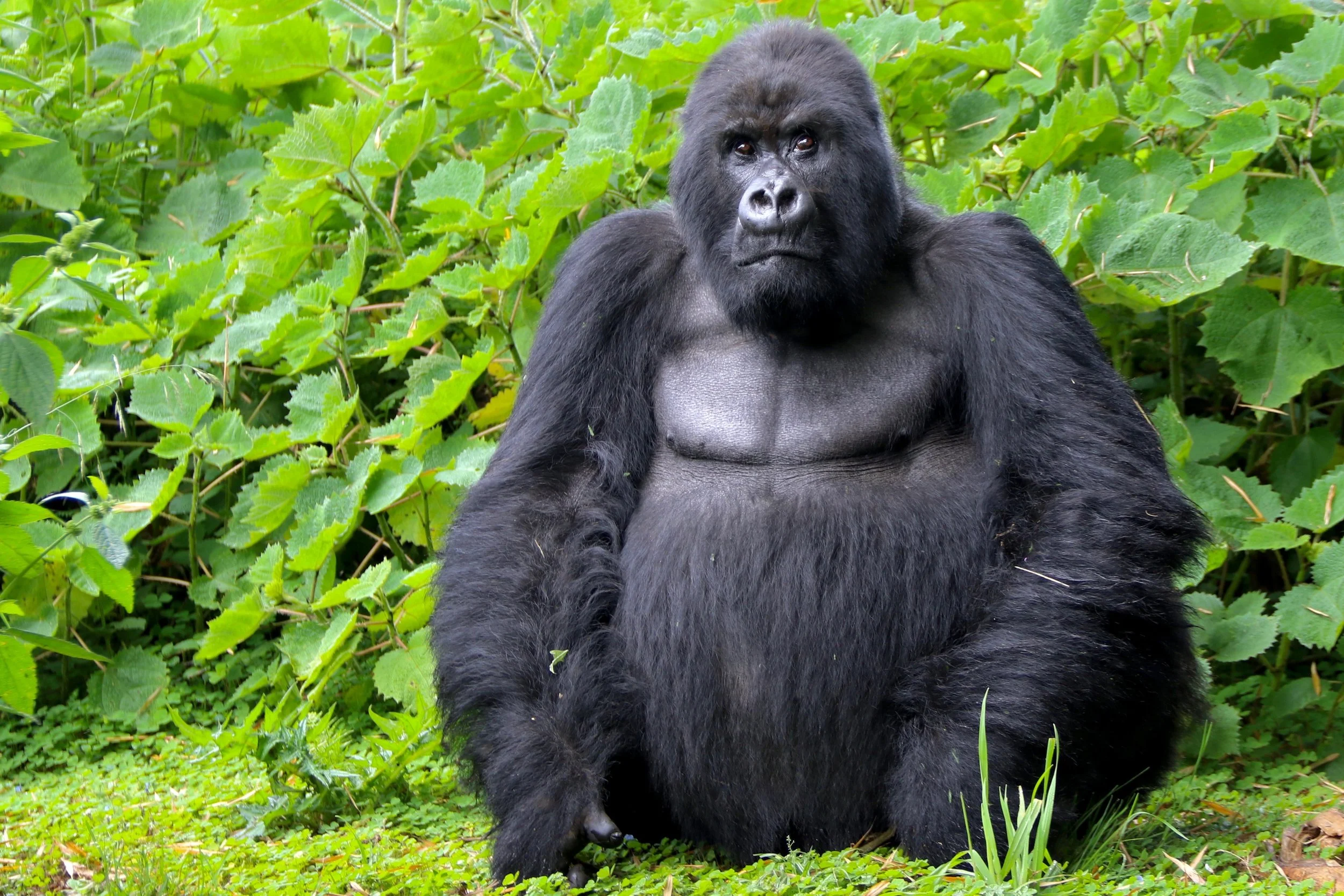
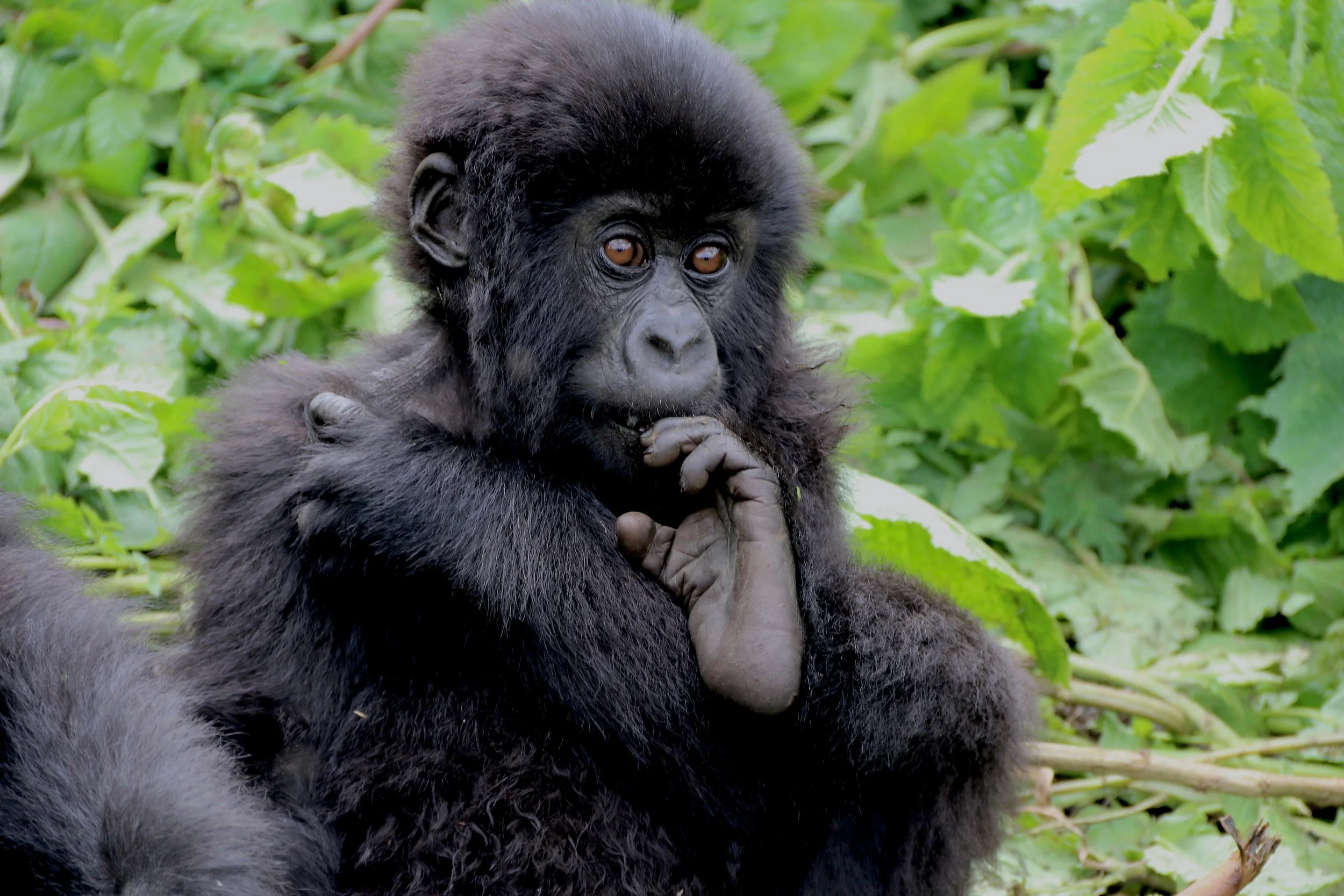
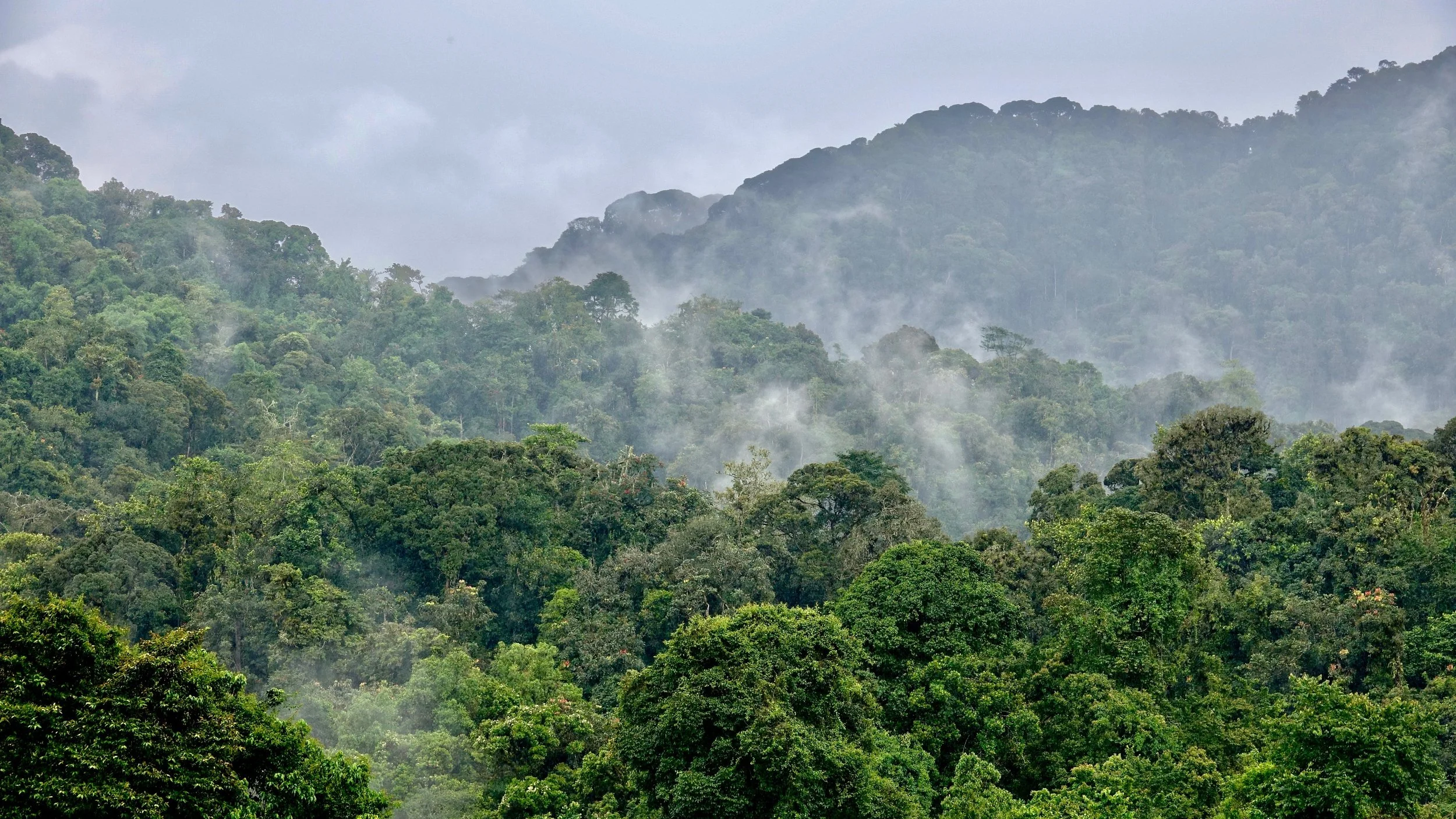
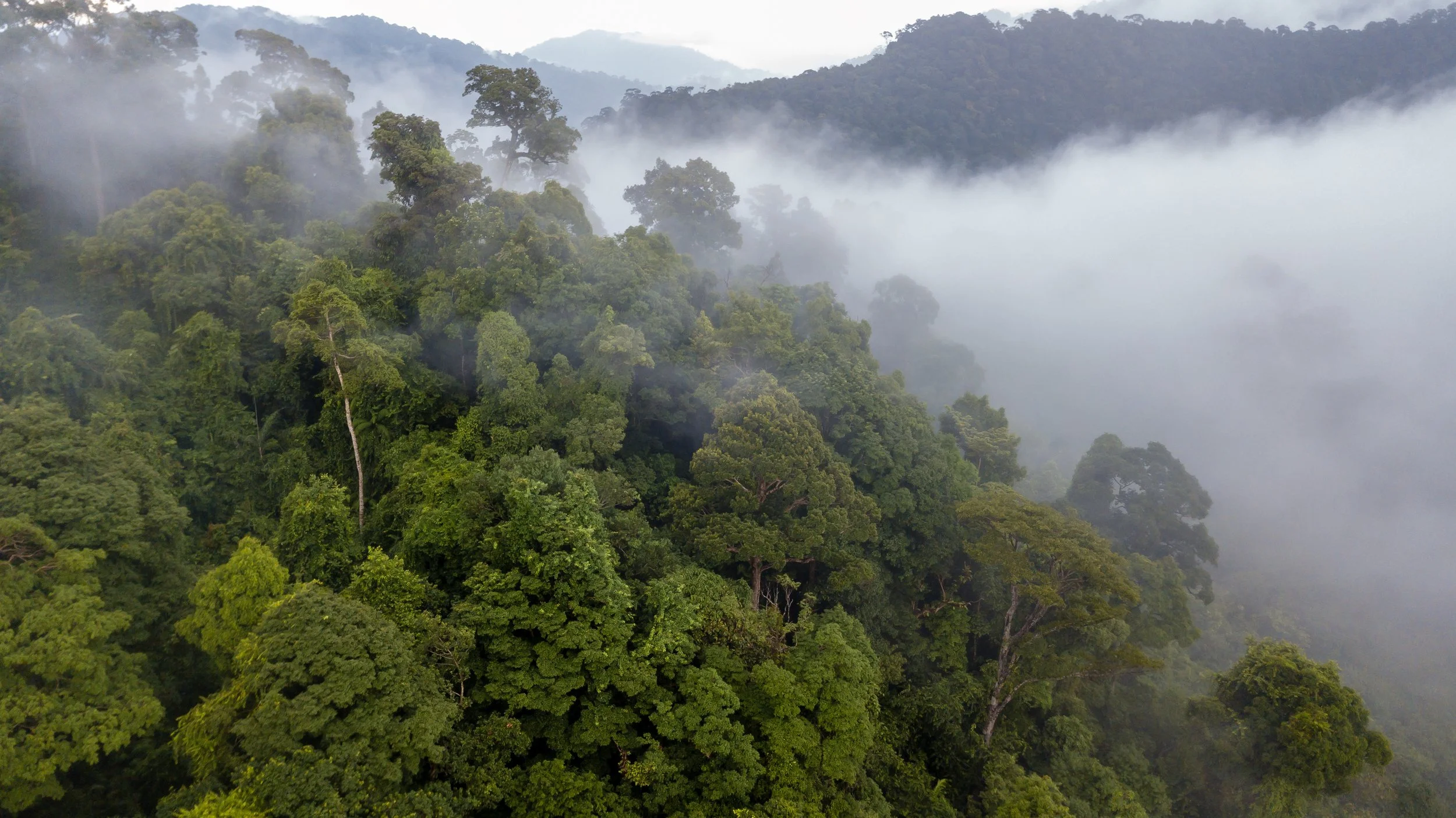
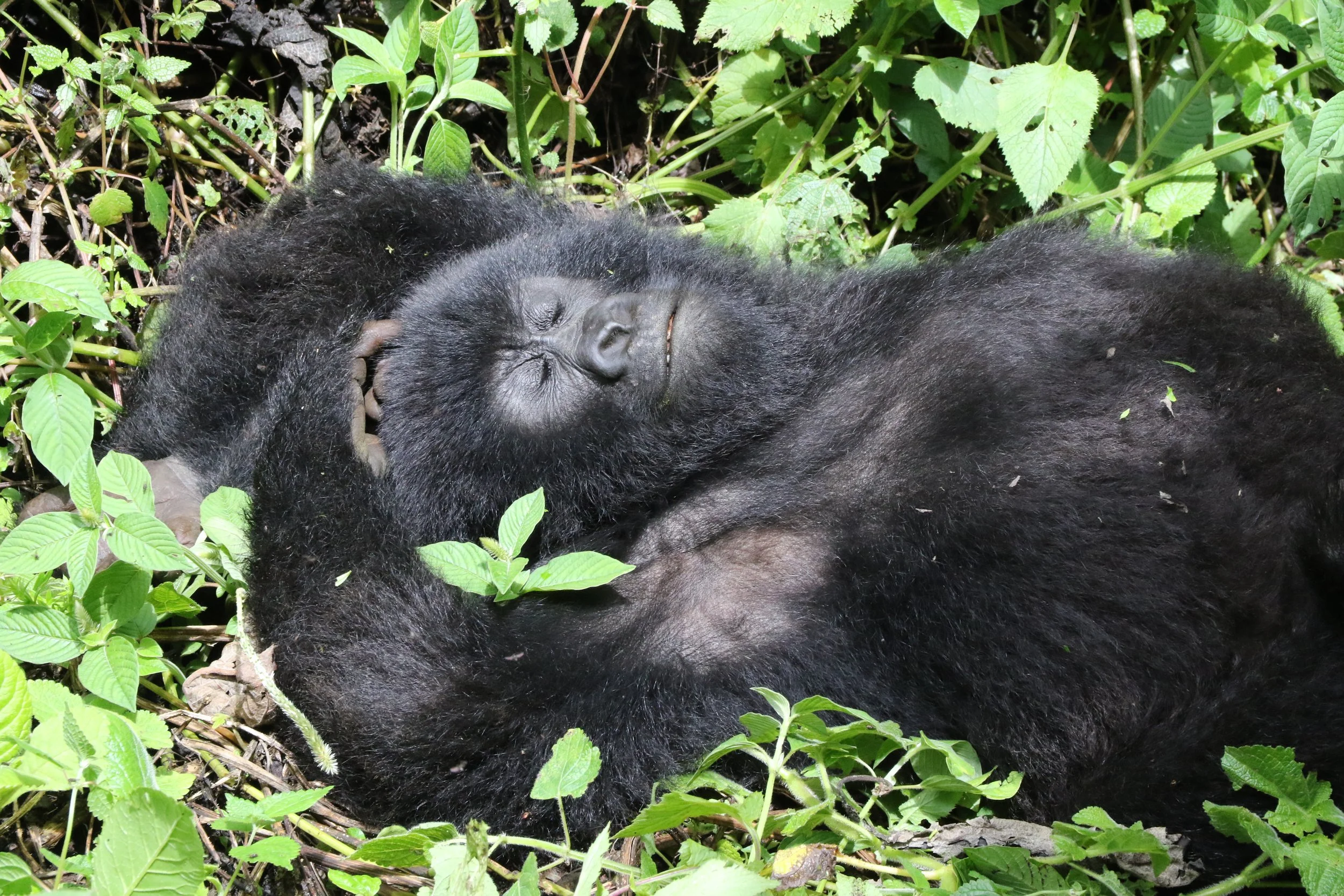
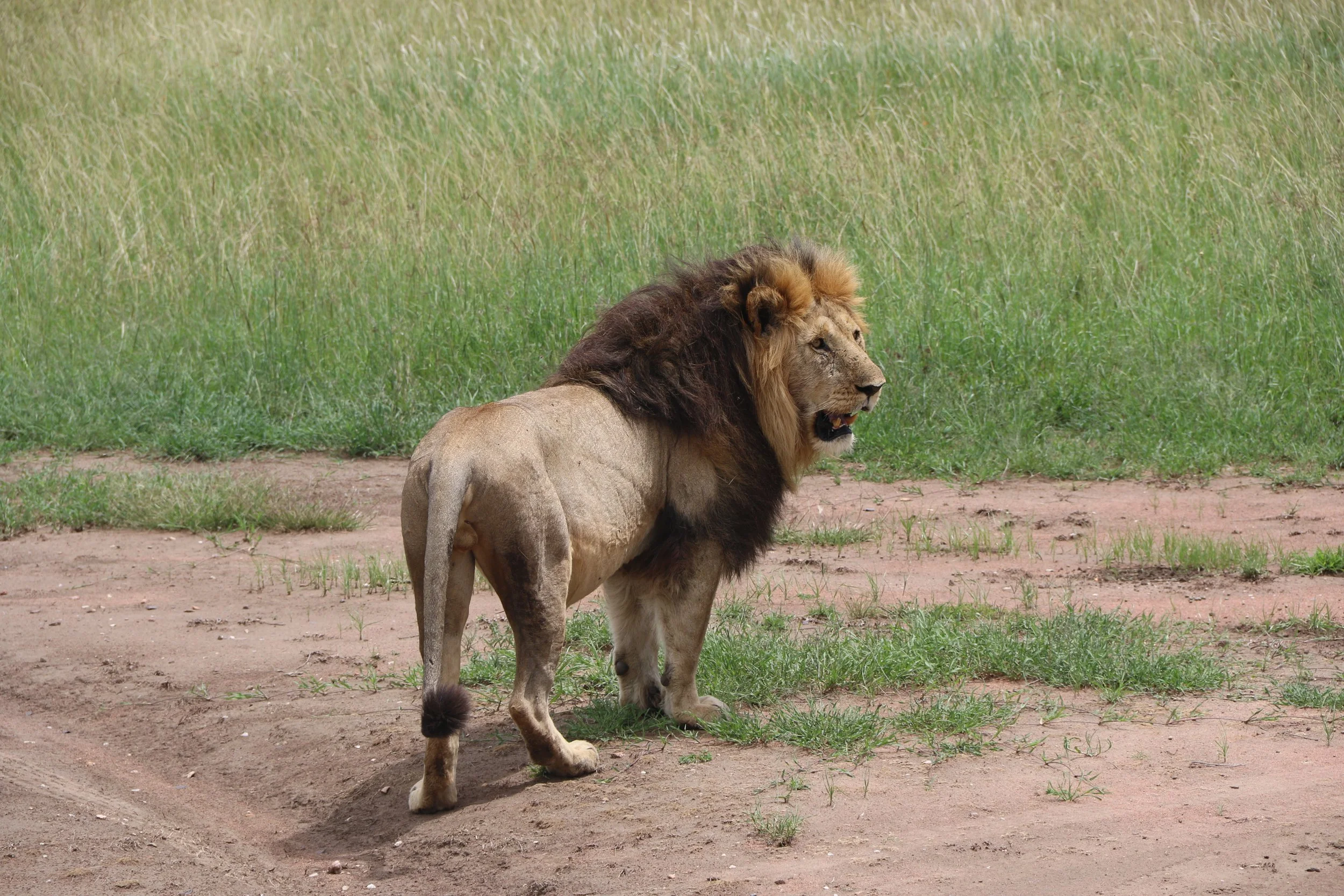
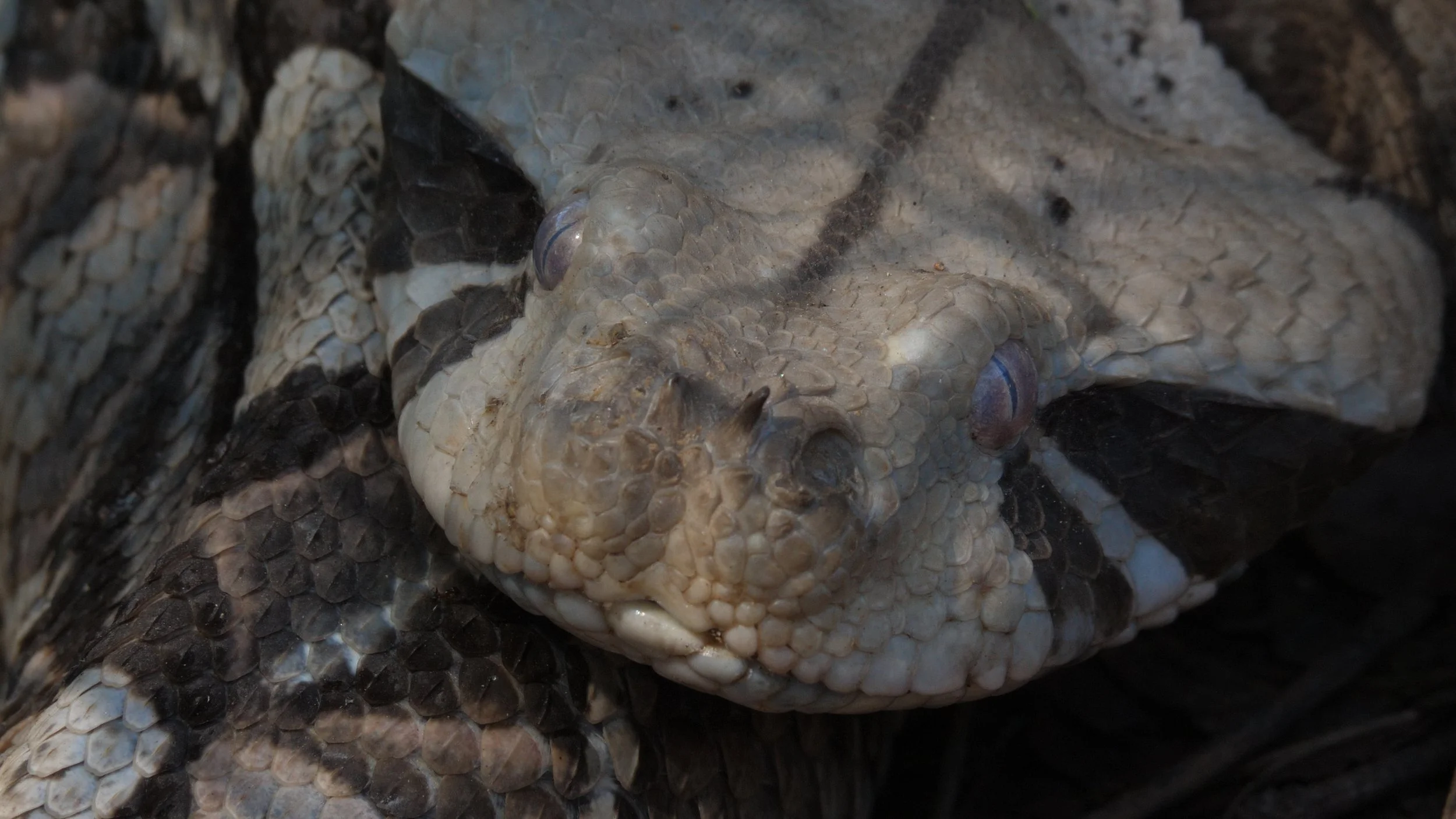
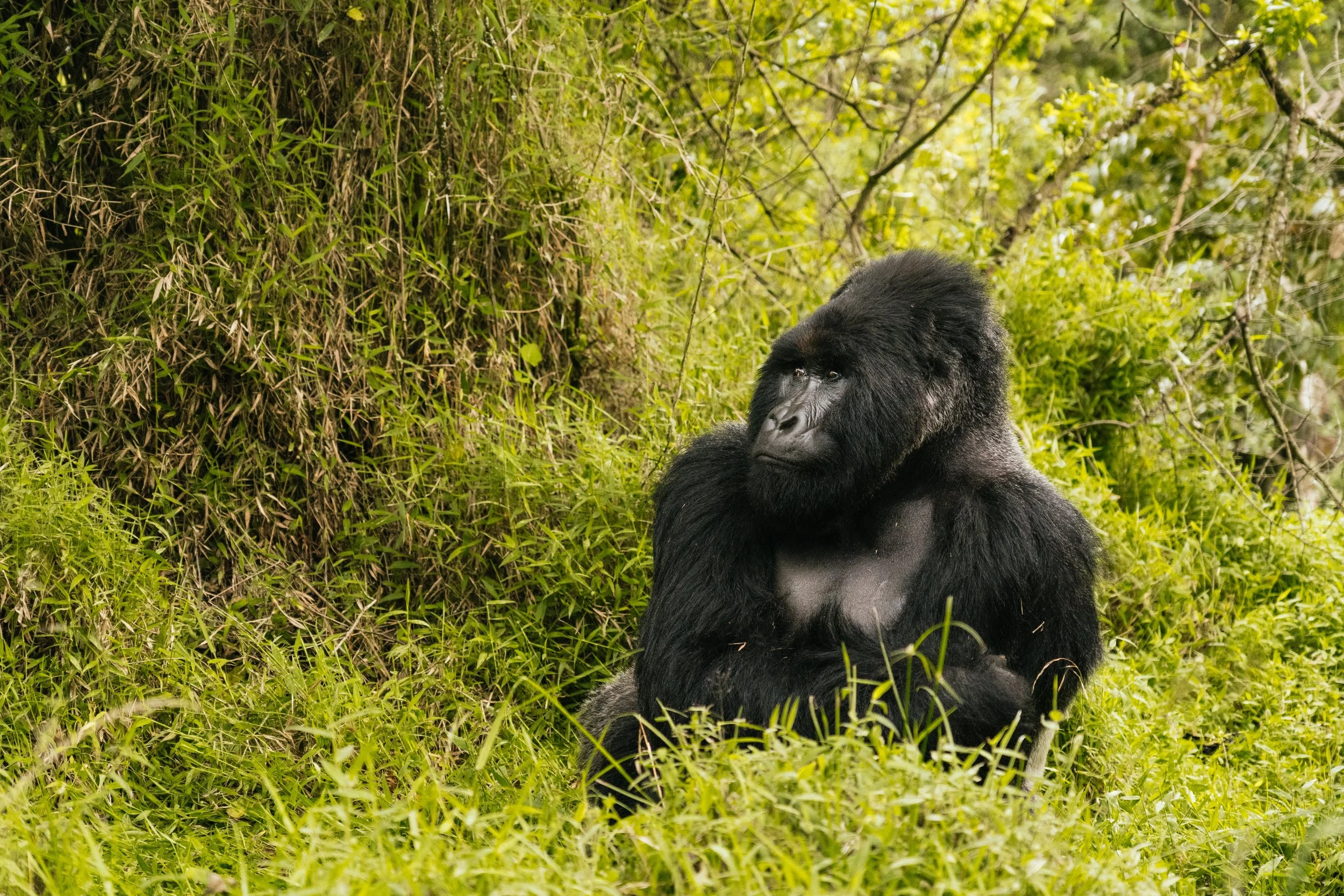
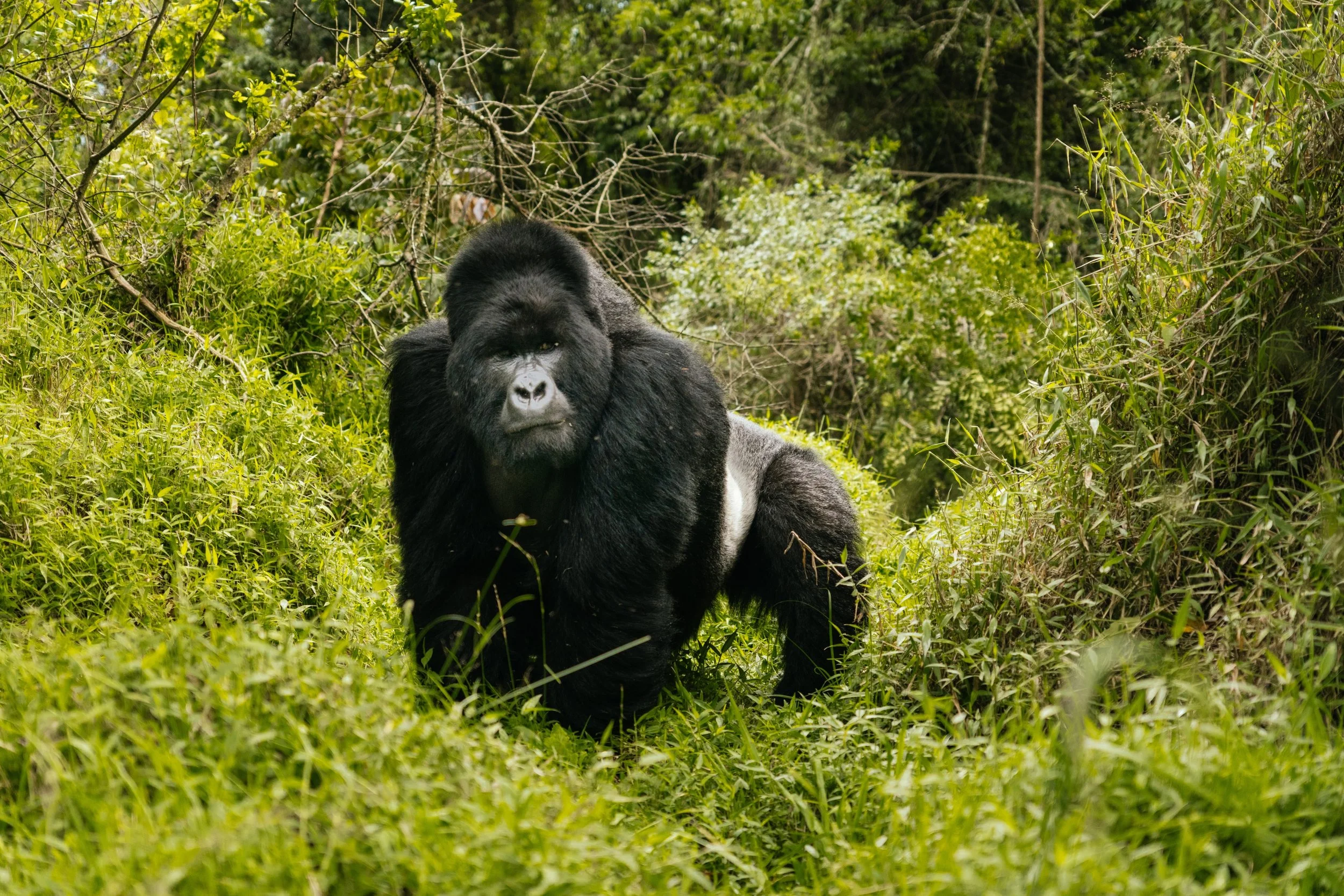
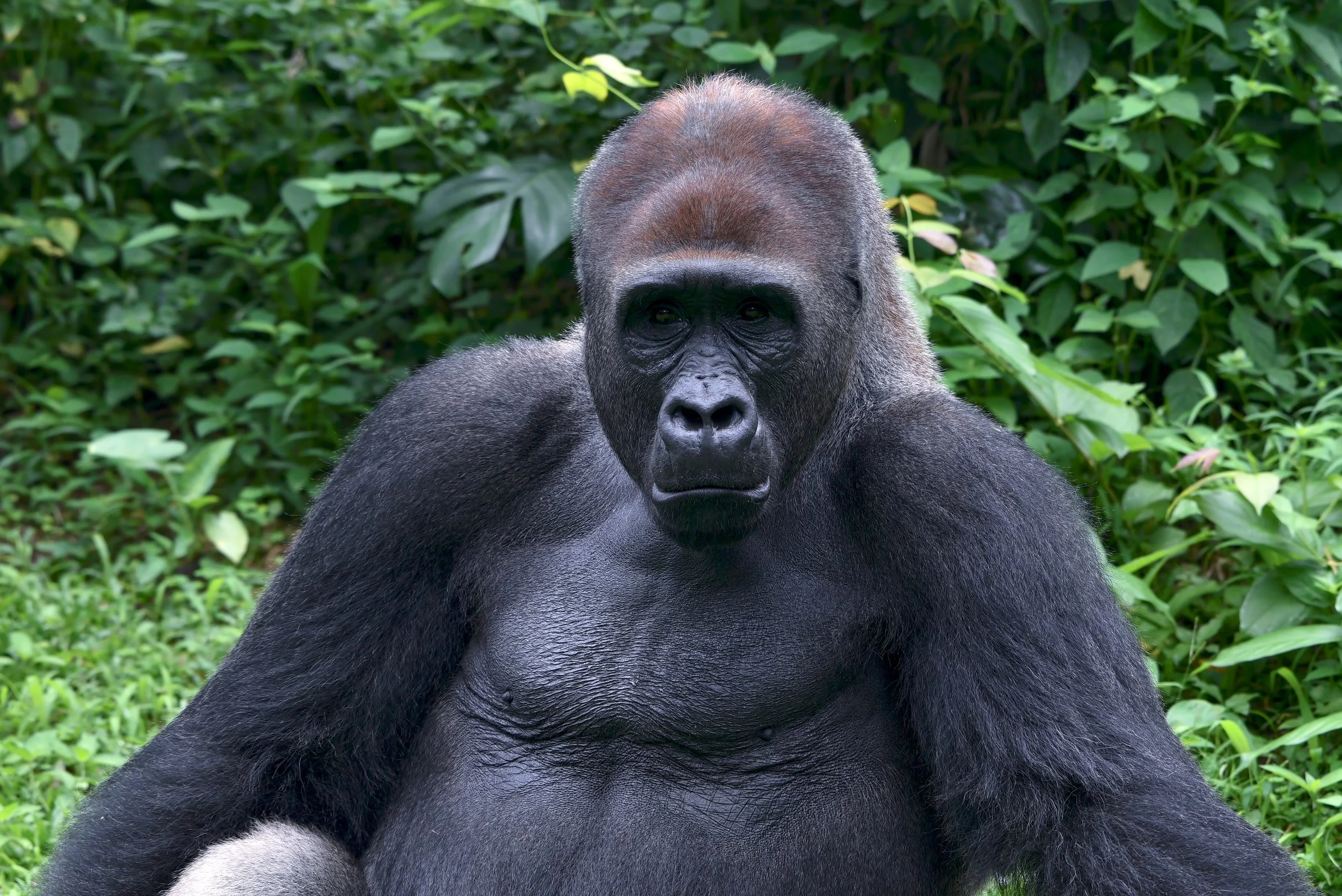
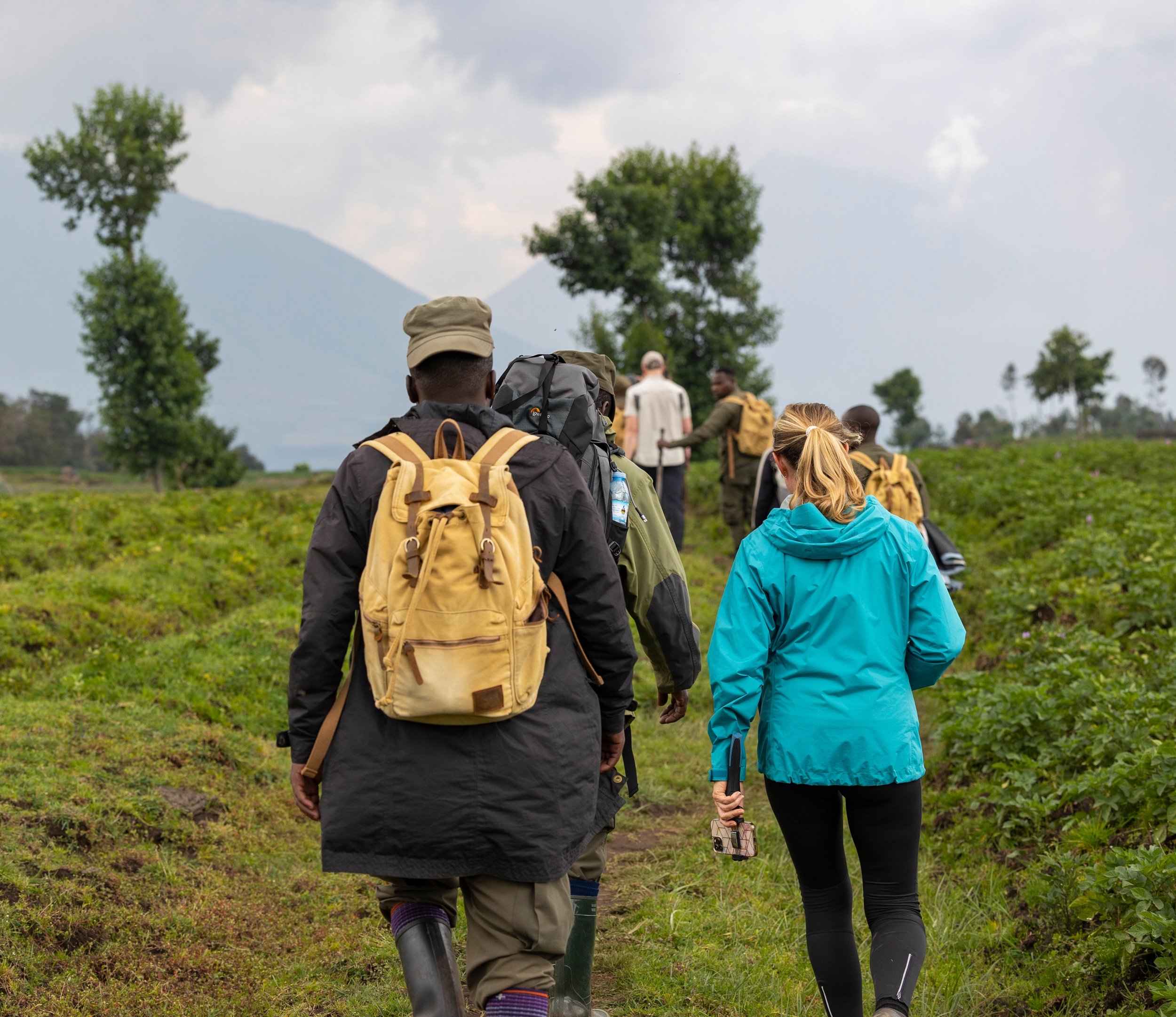
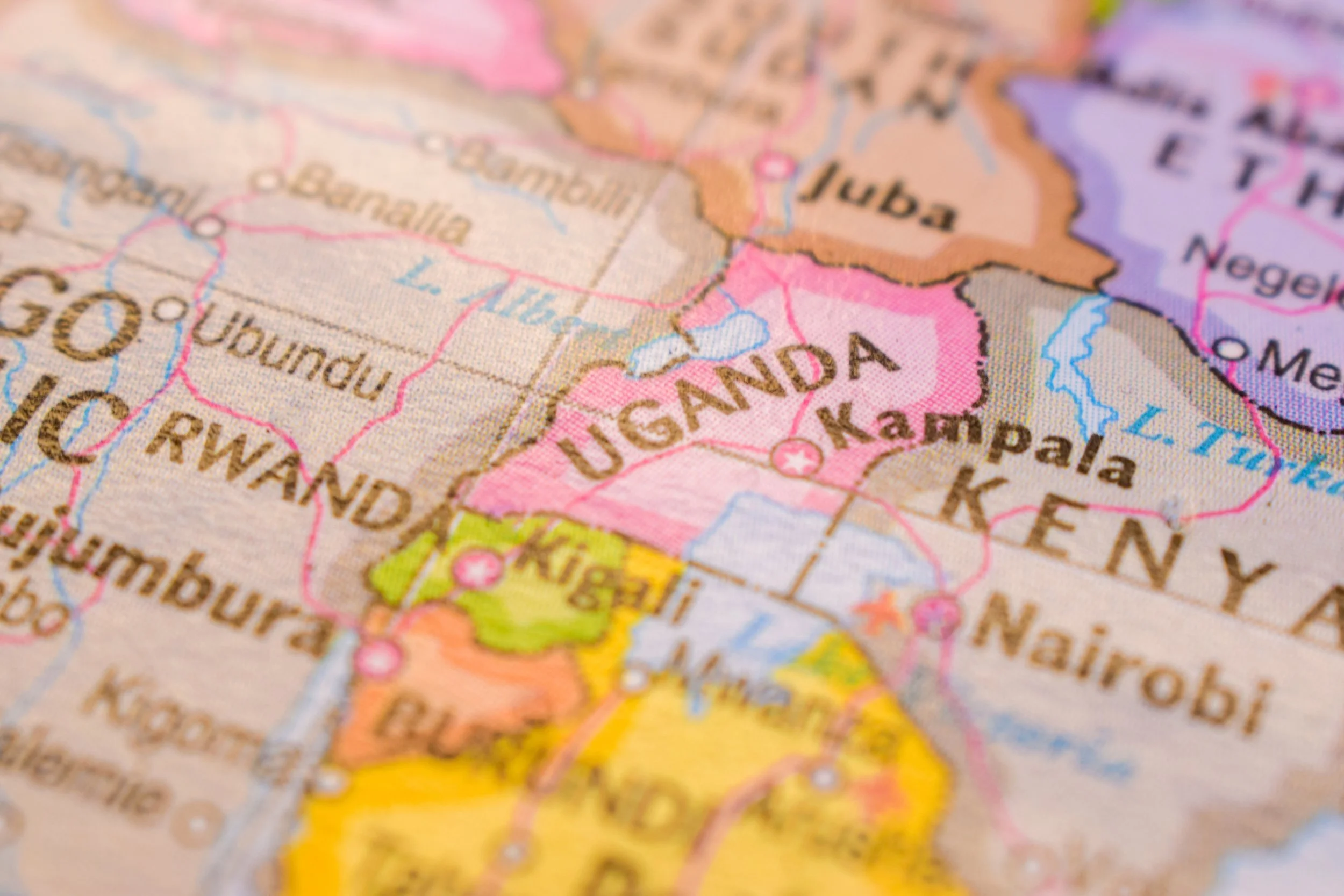
The Albertine Rift is exceptionally rich in biodiversity due to the fact that it was formed by tectonic plate movements that created mountains, valleys, and lakes, producing varied altitudes and isolated habitats where diverse and often endemic species can evolve and thrive- such as the endangered mountain gorilla, which we share approximately 98-99% of our DNA with. It began forming around 20–25 million years ago as part of the western branch of the East African Rift system and is still tectonically active today.
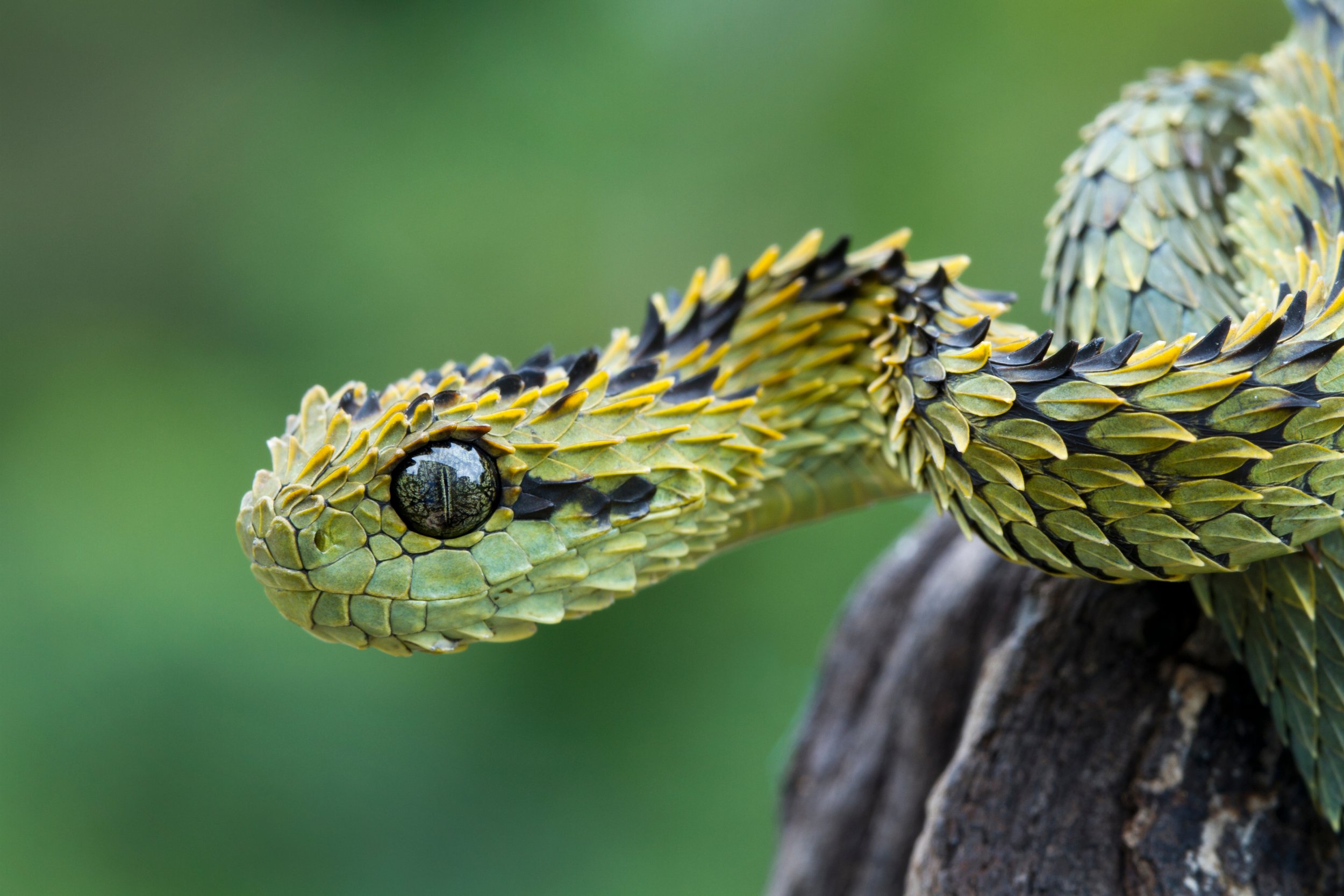
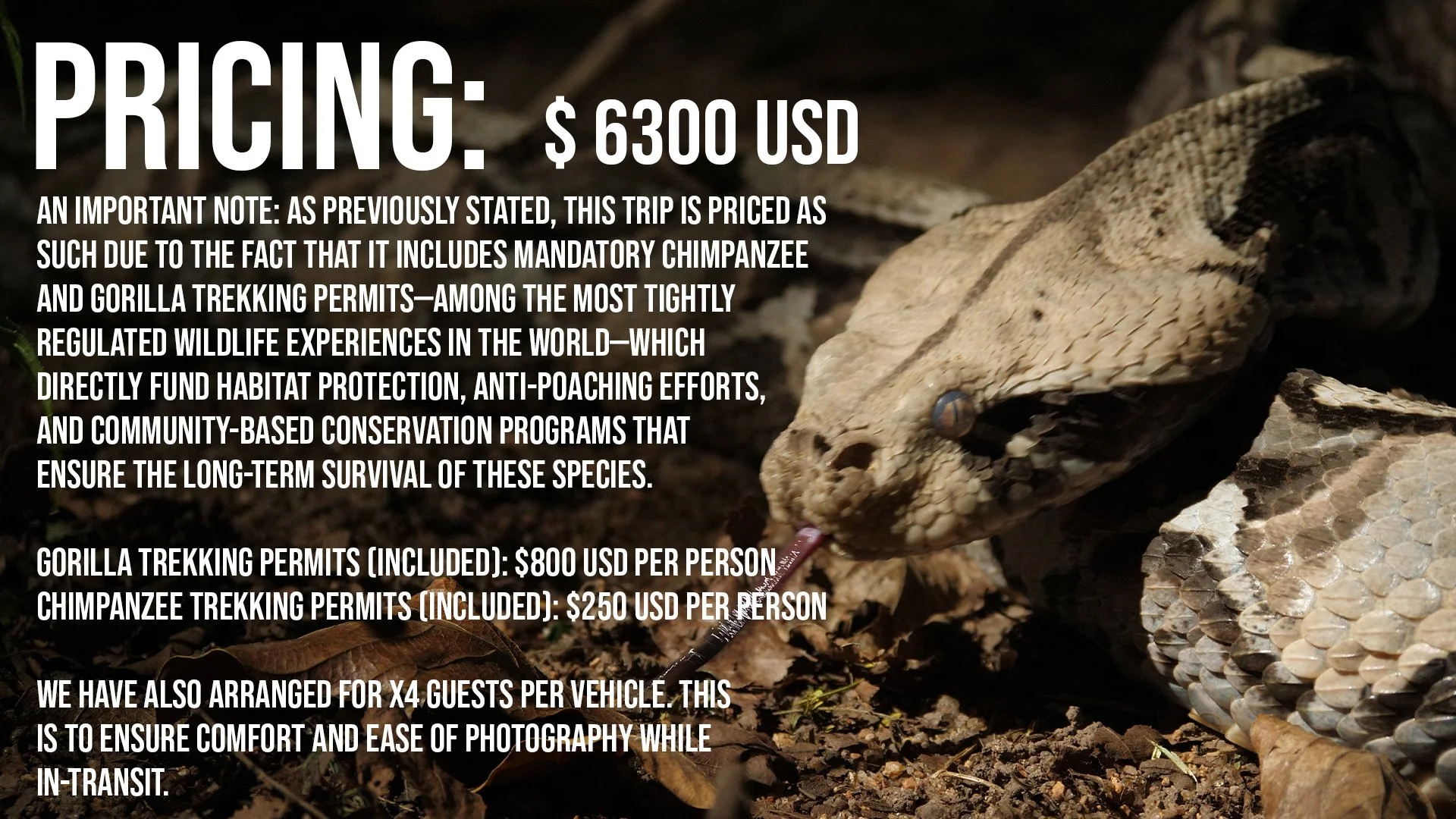
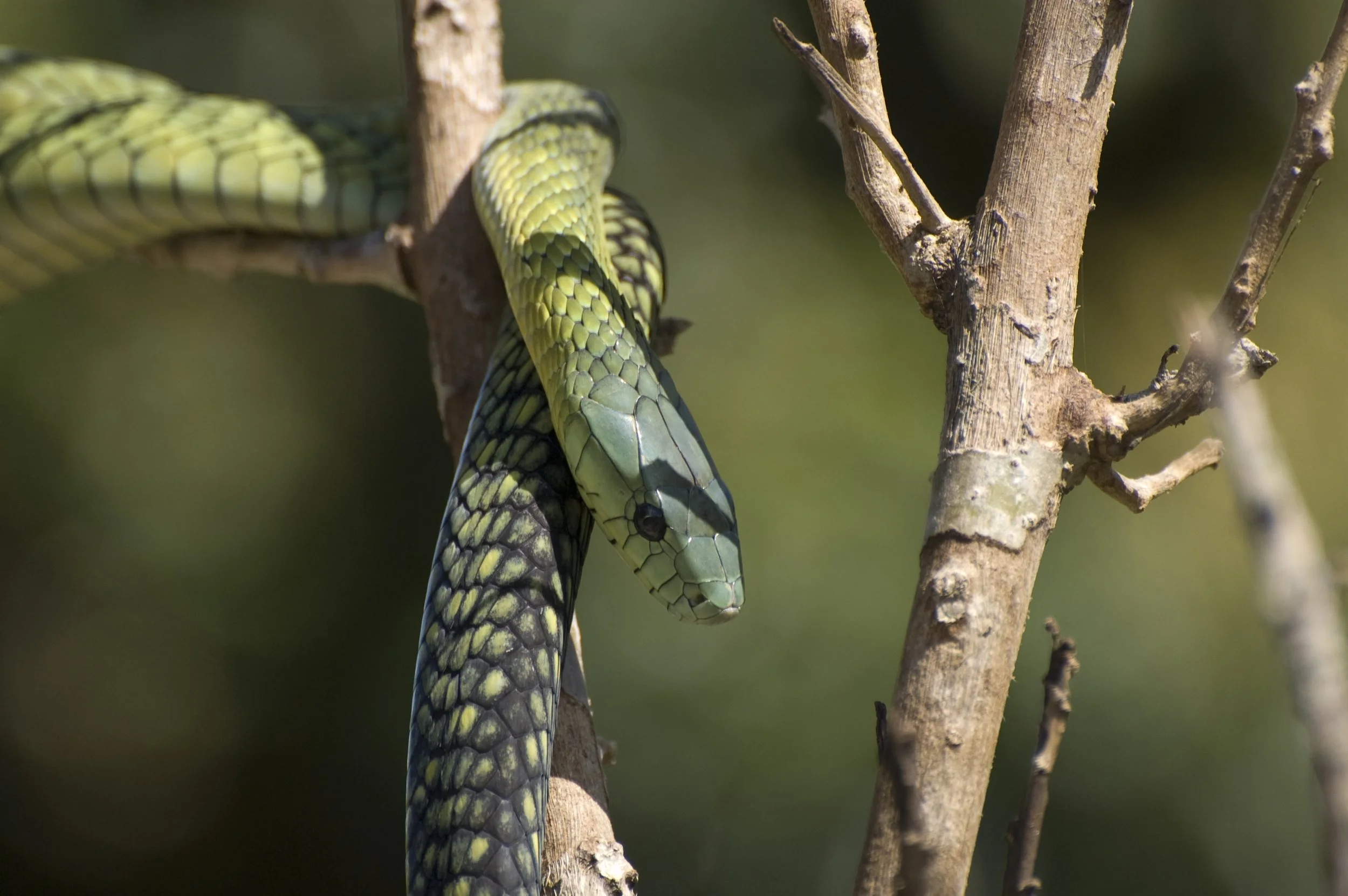
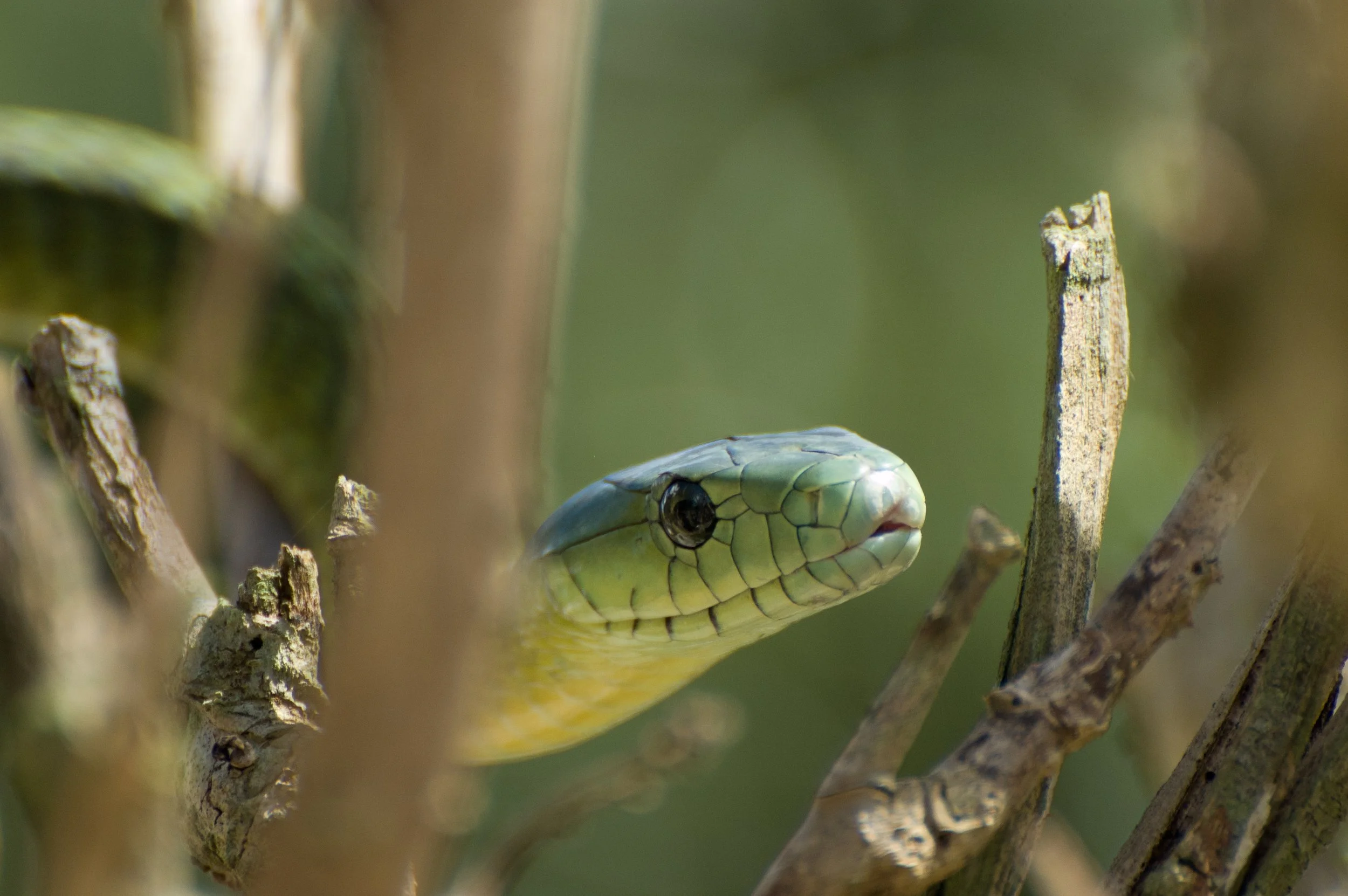
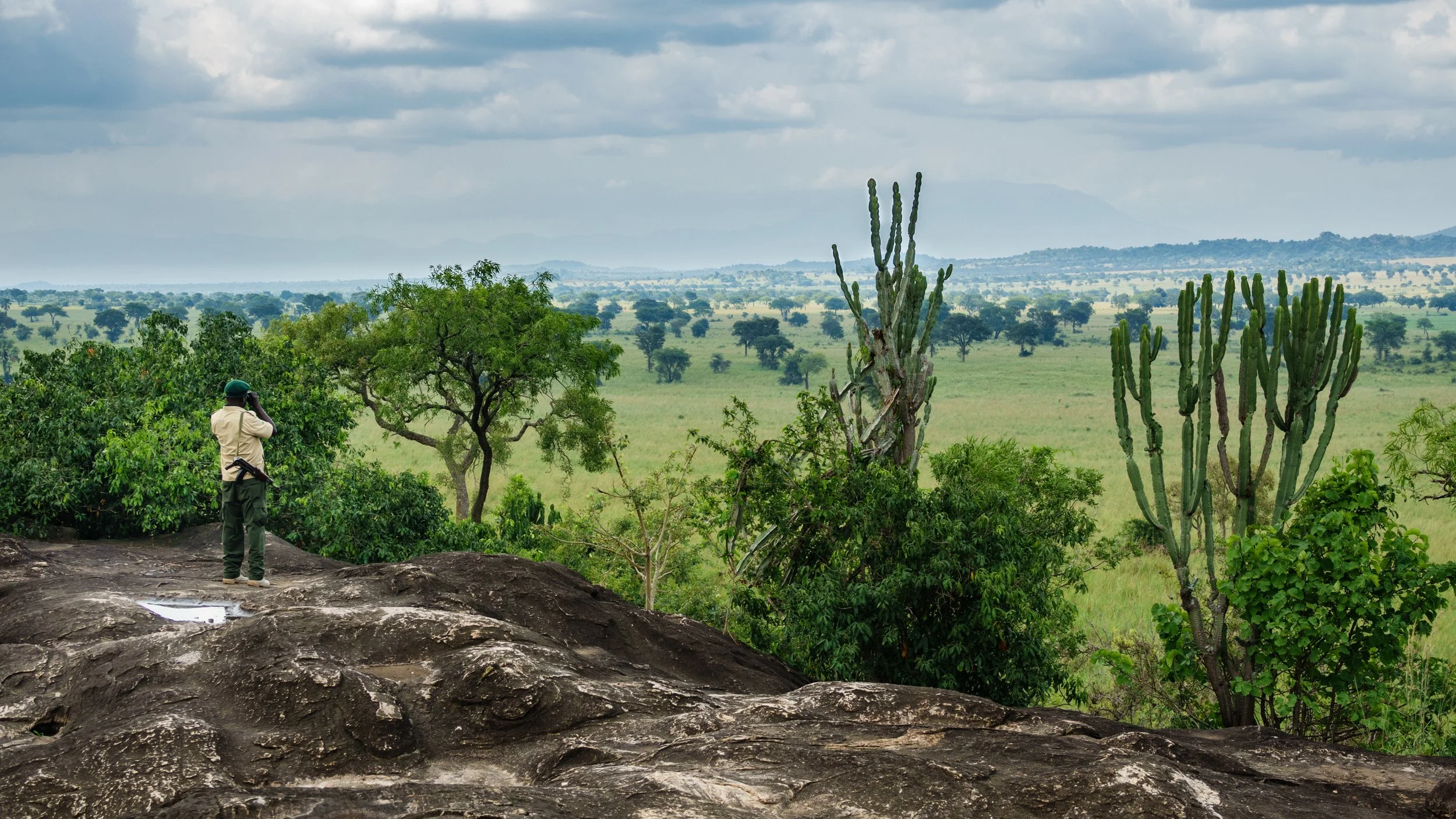
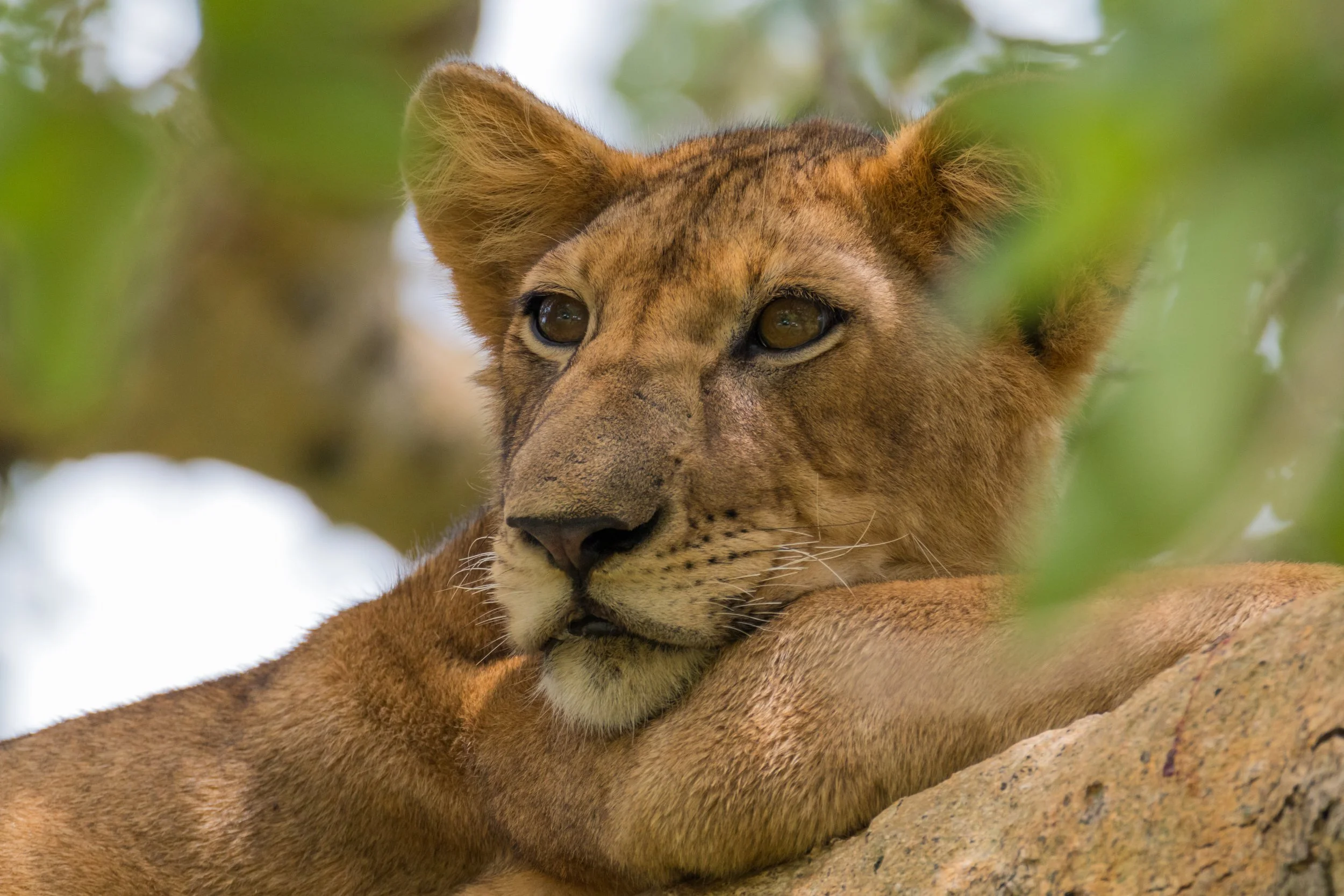
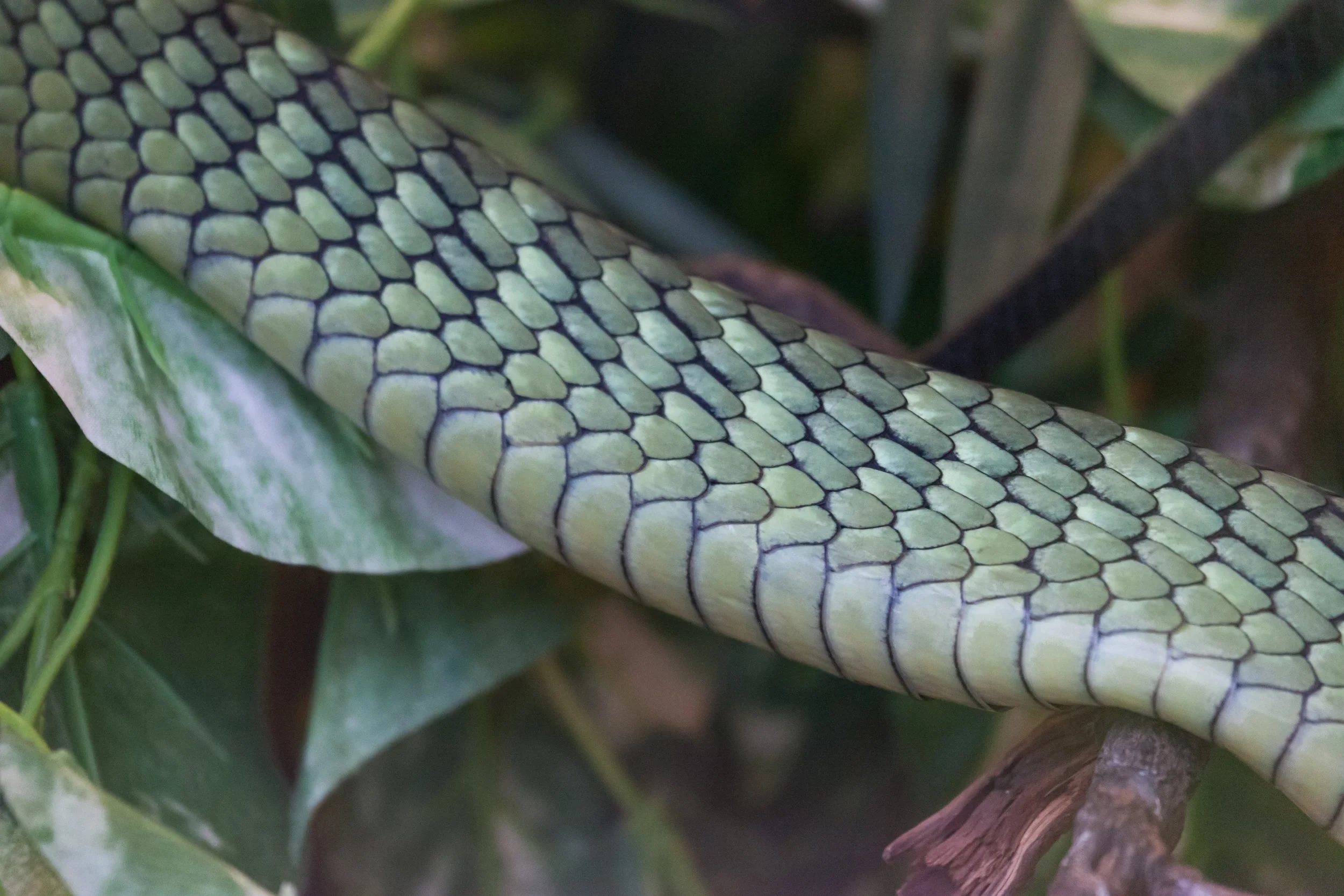
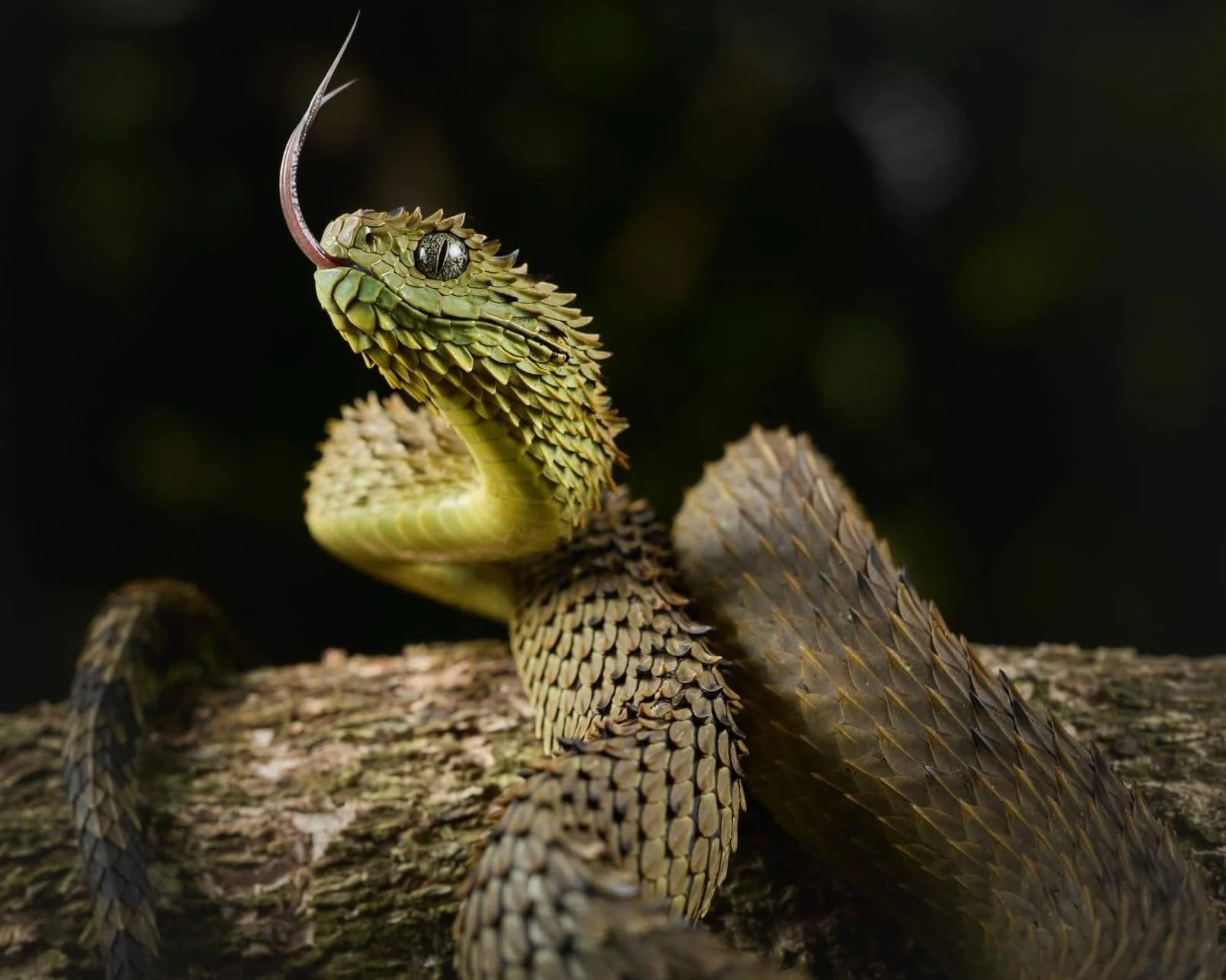
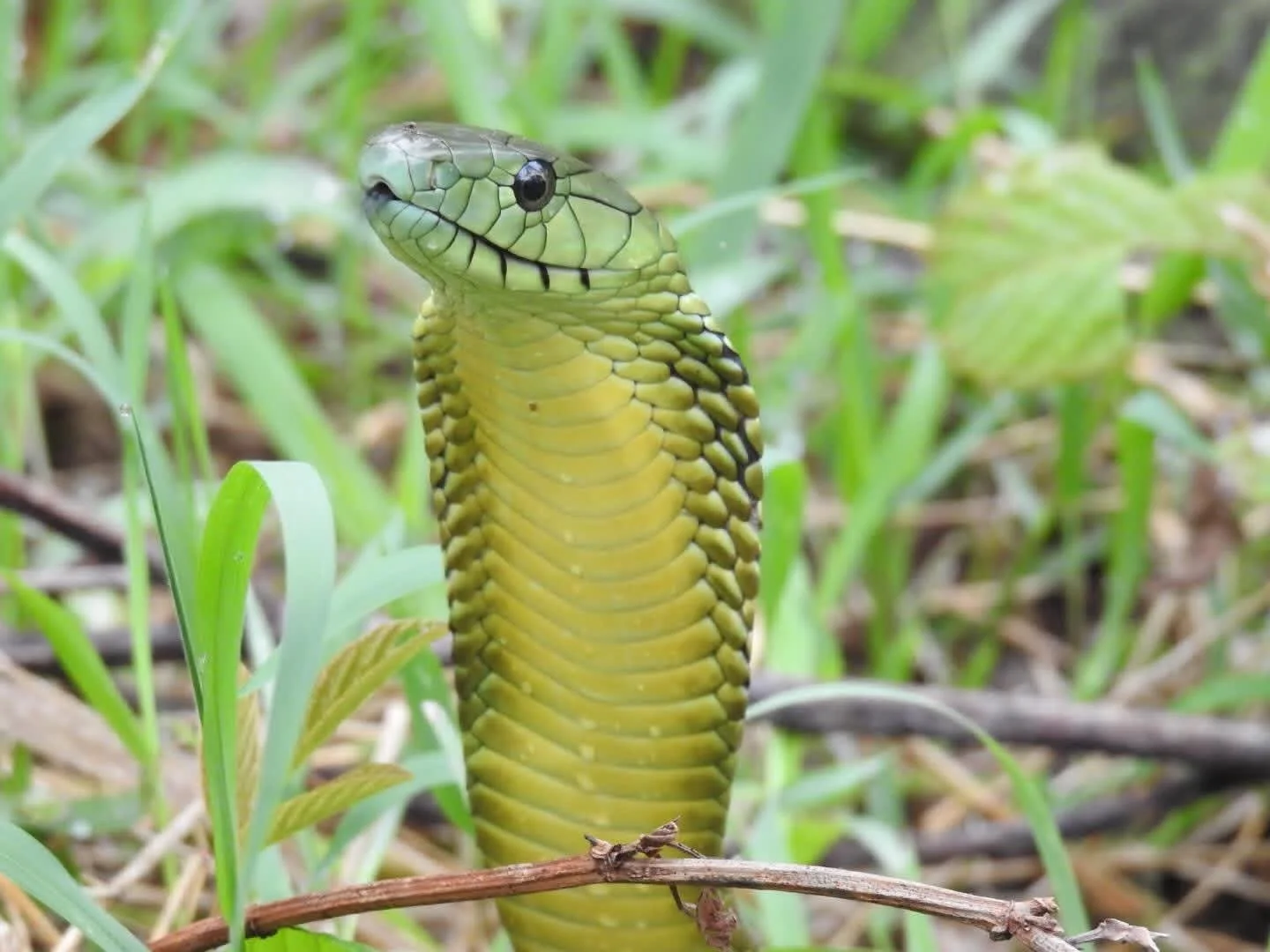
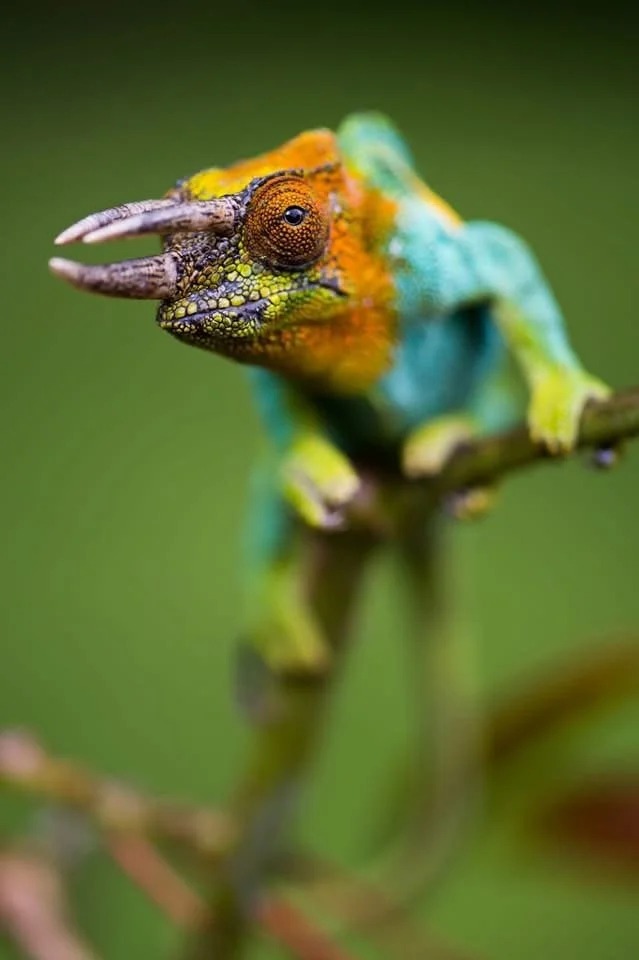
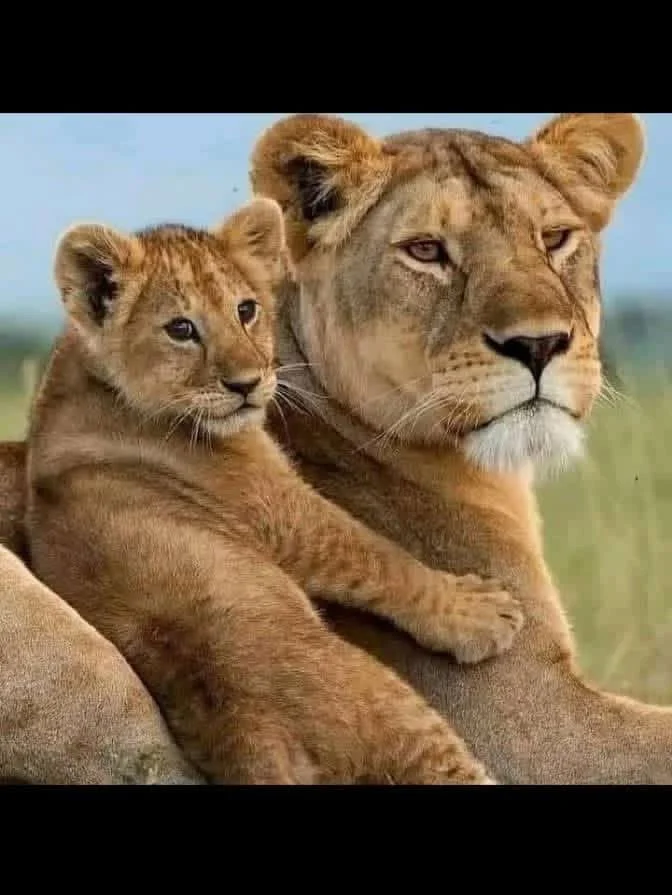
On this expedition, we’ll course through six different locations, all unique in their own special ways. This includes lowland savannah habitat, moist woodland, submontane tropical rainforest, and montane cloud forest ecosystems. Our search for life here will center around chimpanzees, gorillas, lions, Nile crocodiles, gaboon vipers, rhinoceros vipers, Jameson’s mambas, chameleon diversity, and the shoebill stork (if you’ve never heard of this bird, you’re in for a treat).
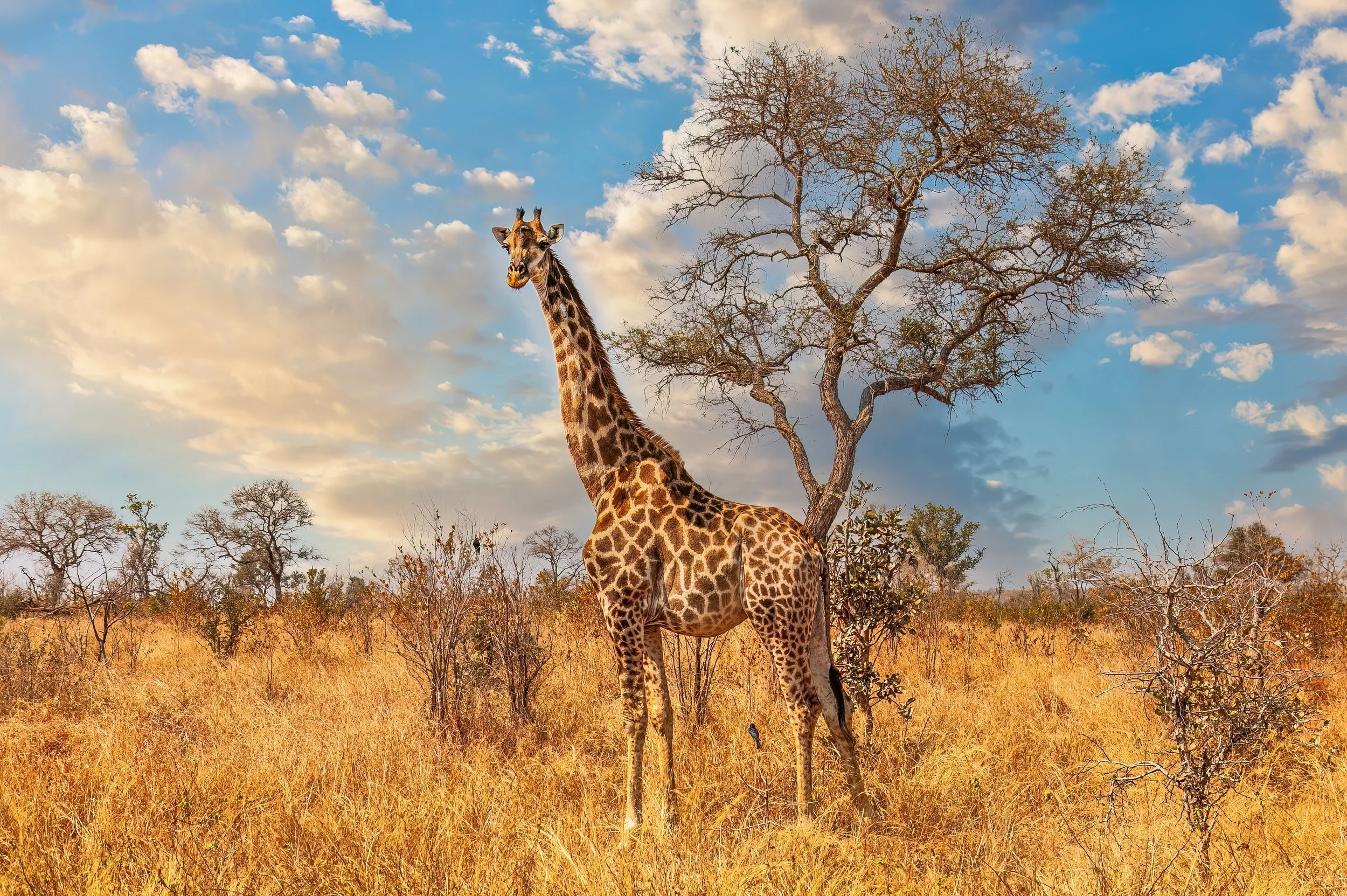
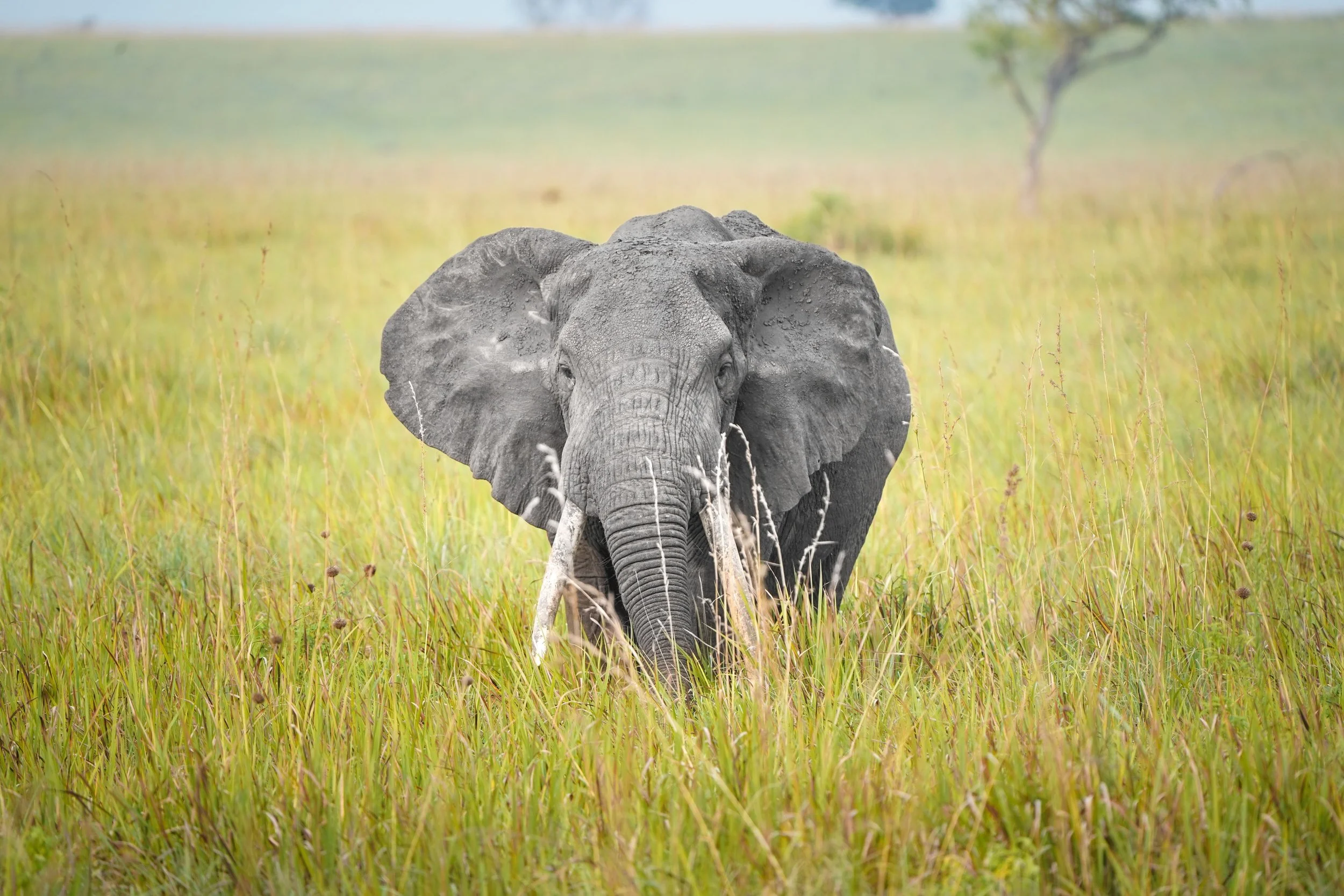
THE COUNTRY OF UGANDA BOASTs ~180 reptile SPECIES, ~90 amphibians, ~1,080 birds, AND ~350 MAMMAL SPECIES. THE DIVERSITY OF All four groups are elevated by the country’s position in the Albertine Rift biodiversity hotspot, one of Africa’s most species-dense regions.
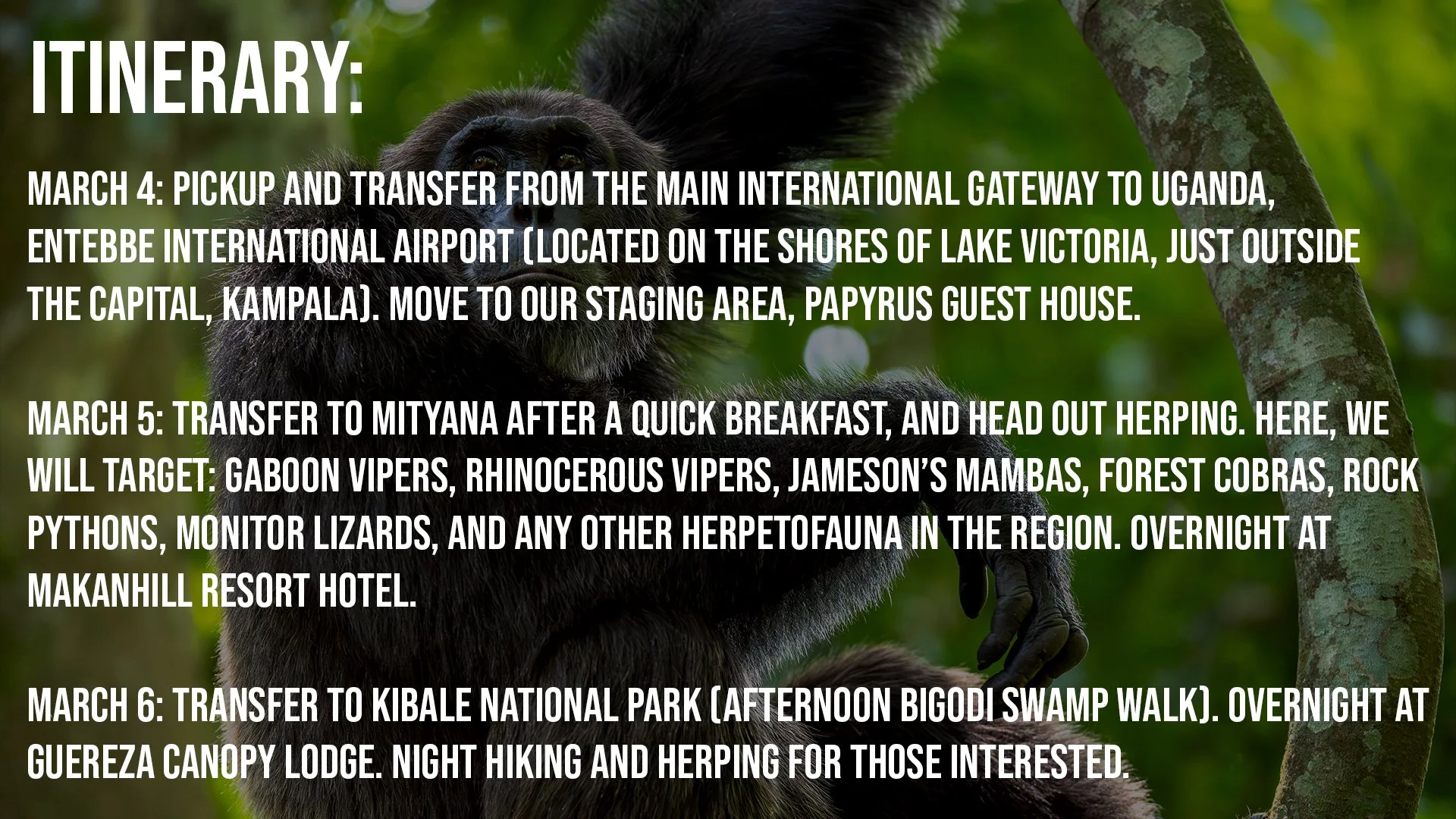
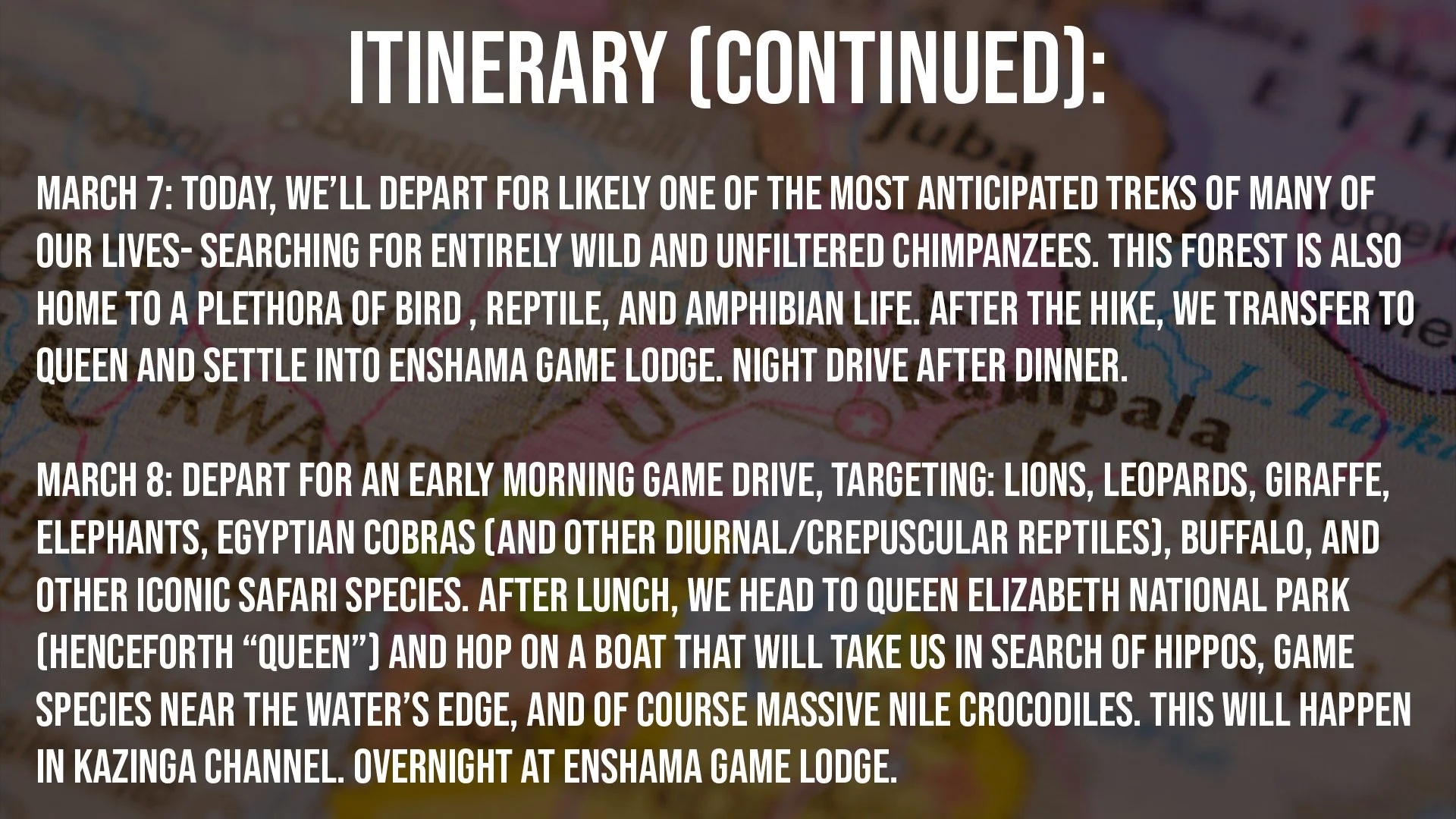
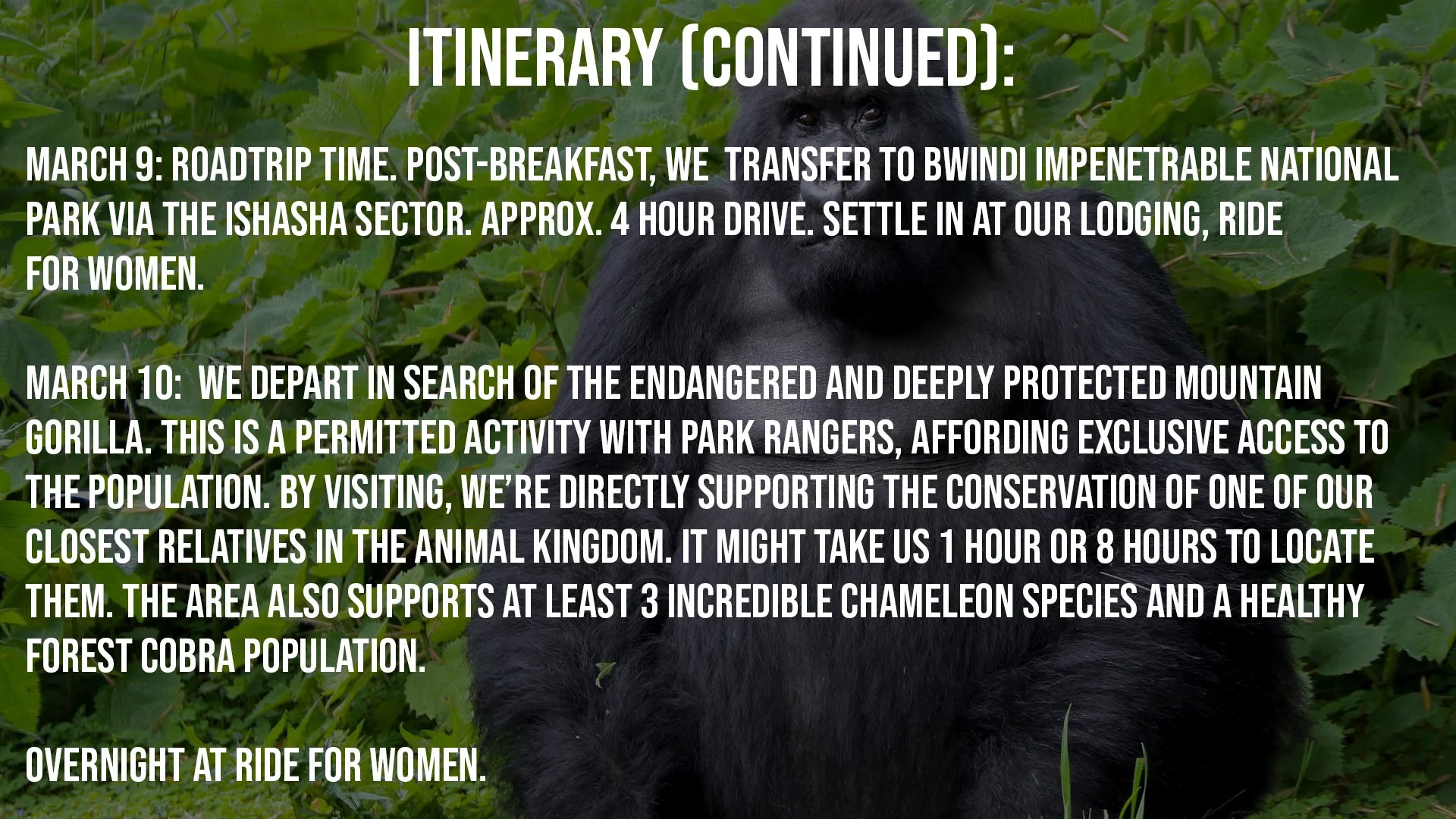
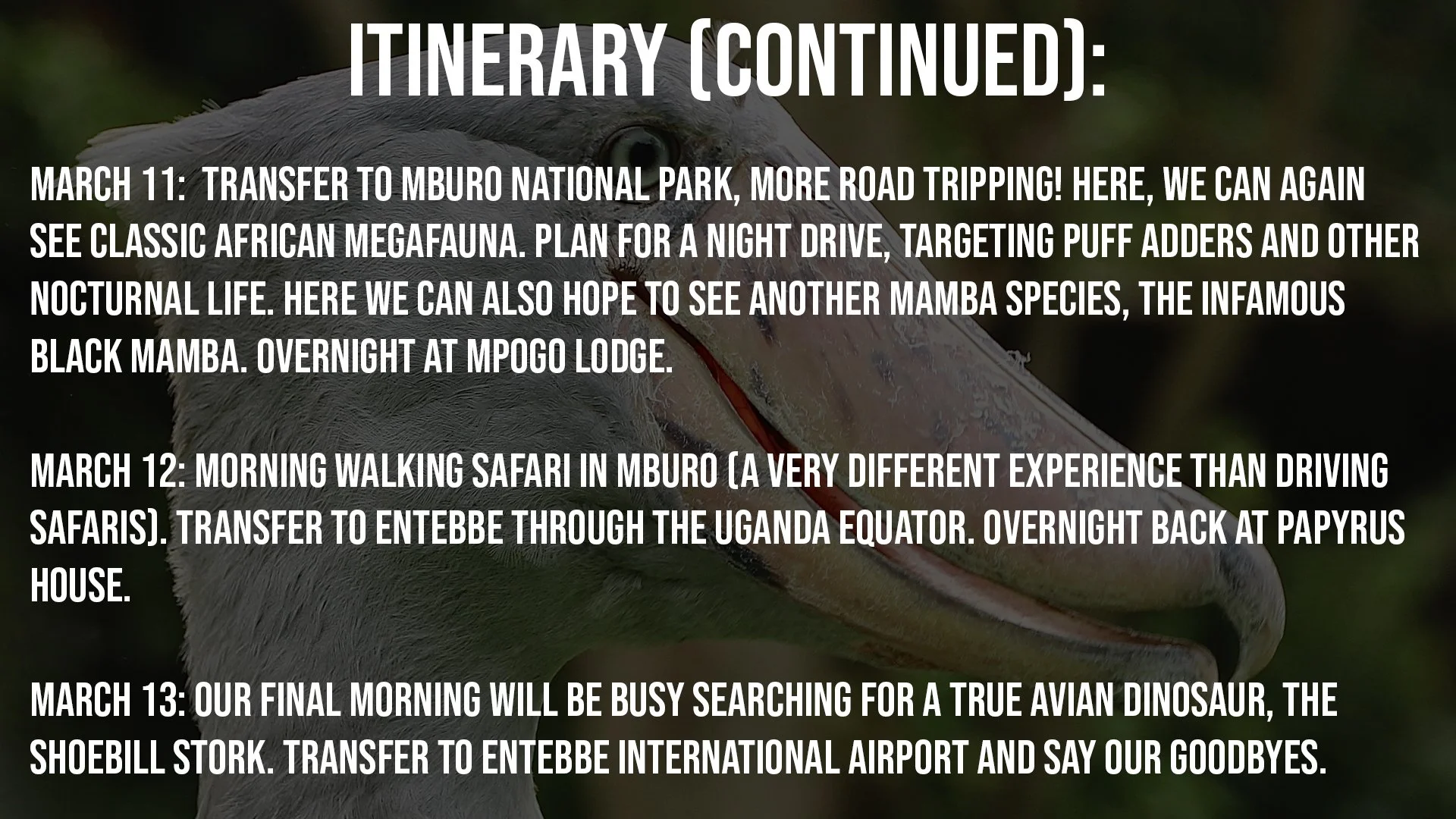
EXPLORE THE FULL ITINERARY BELOW.
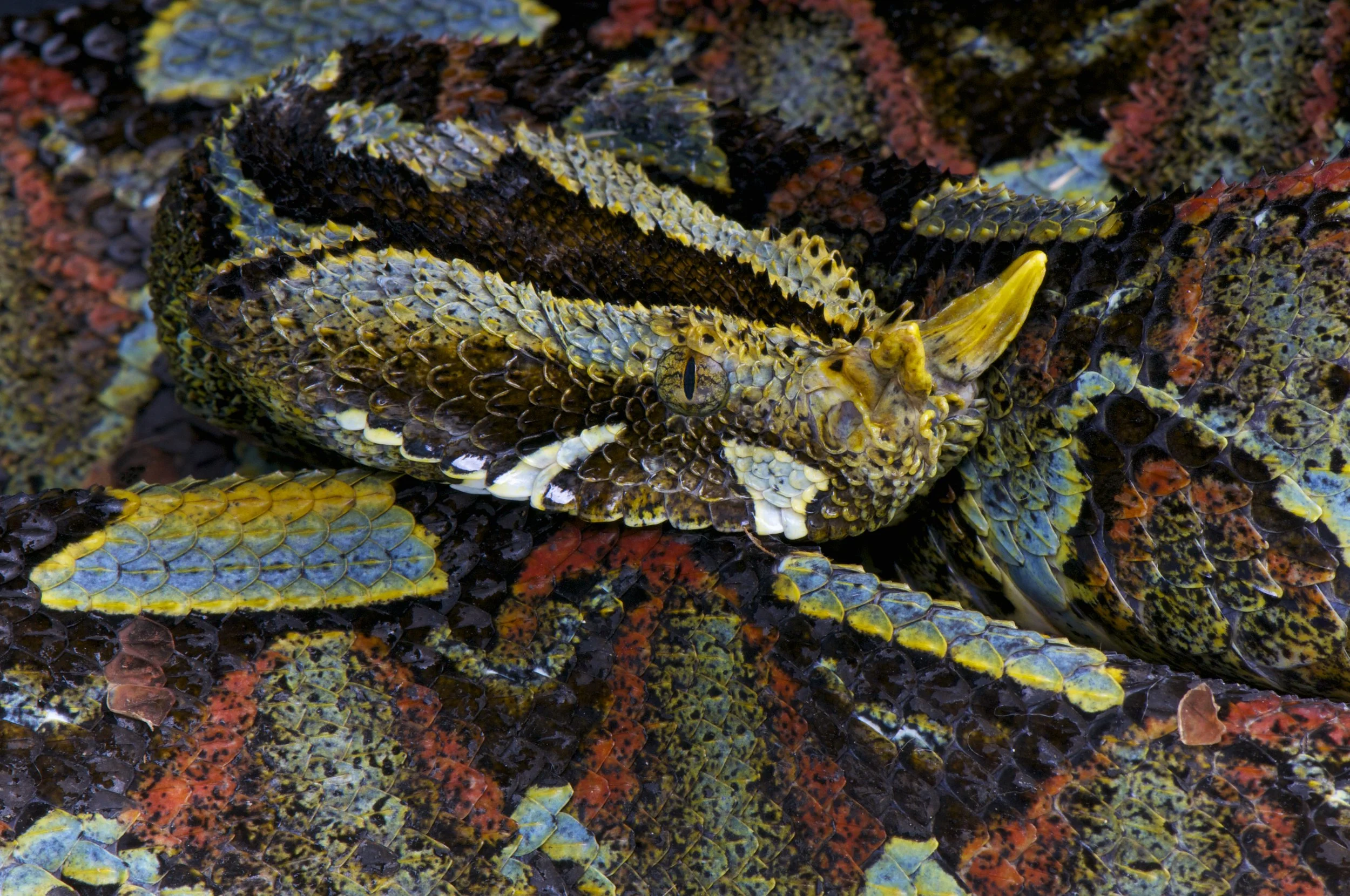
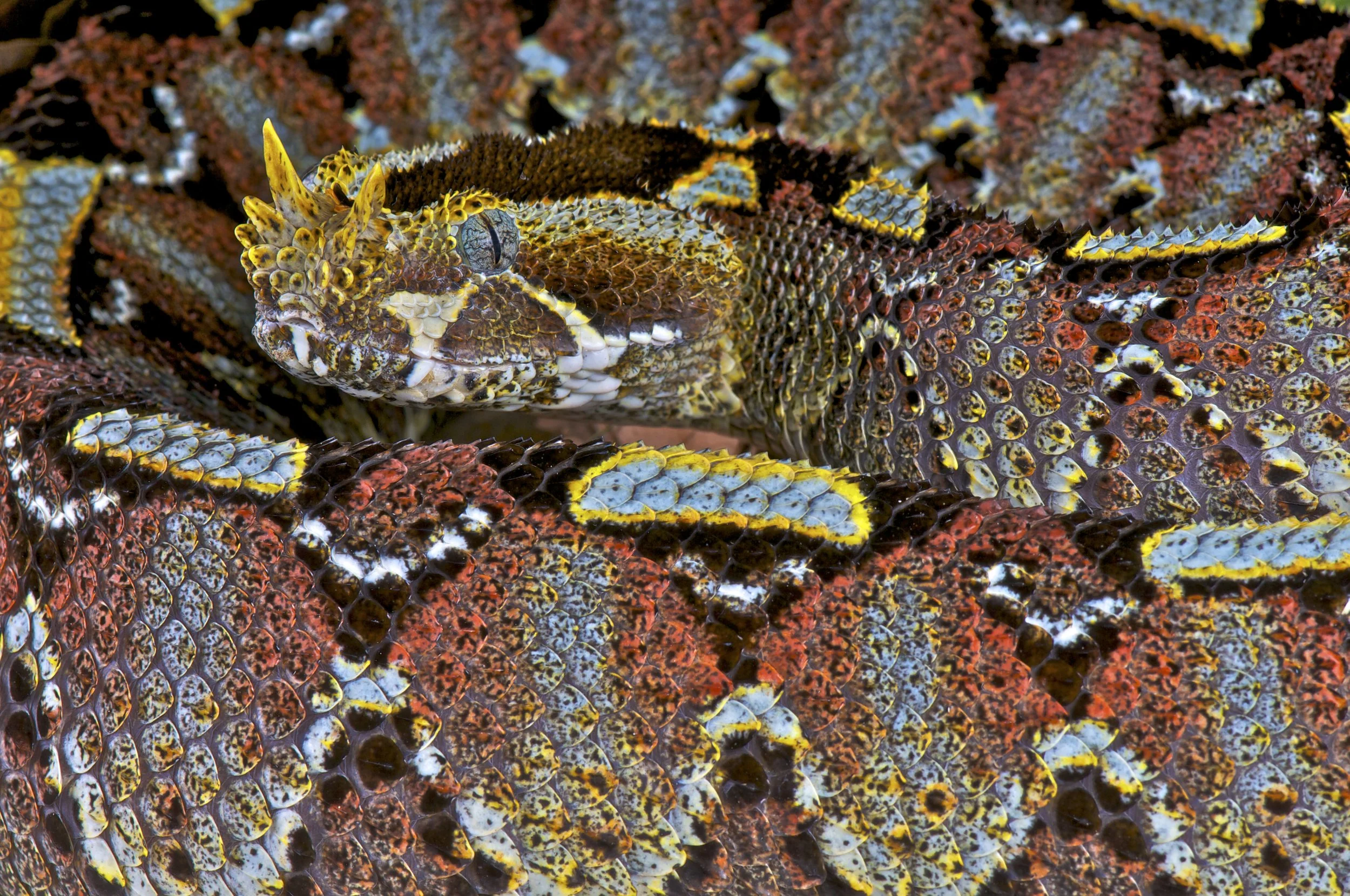
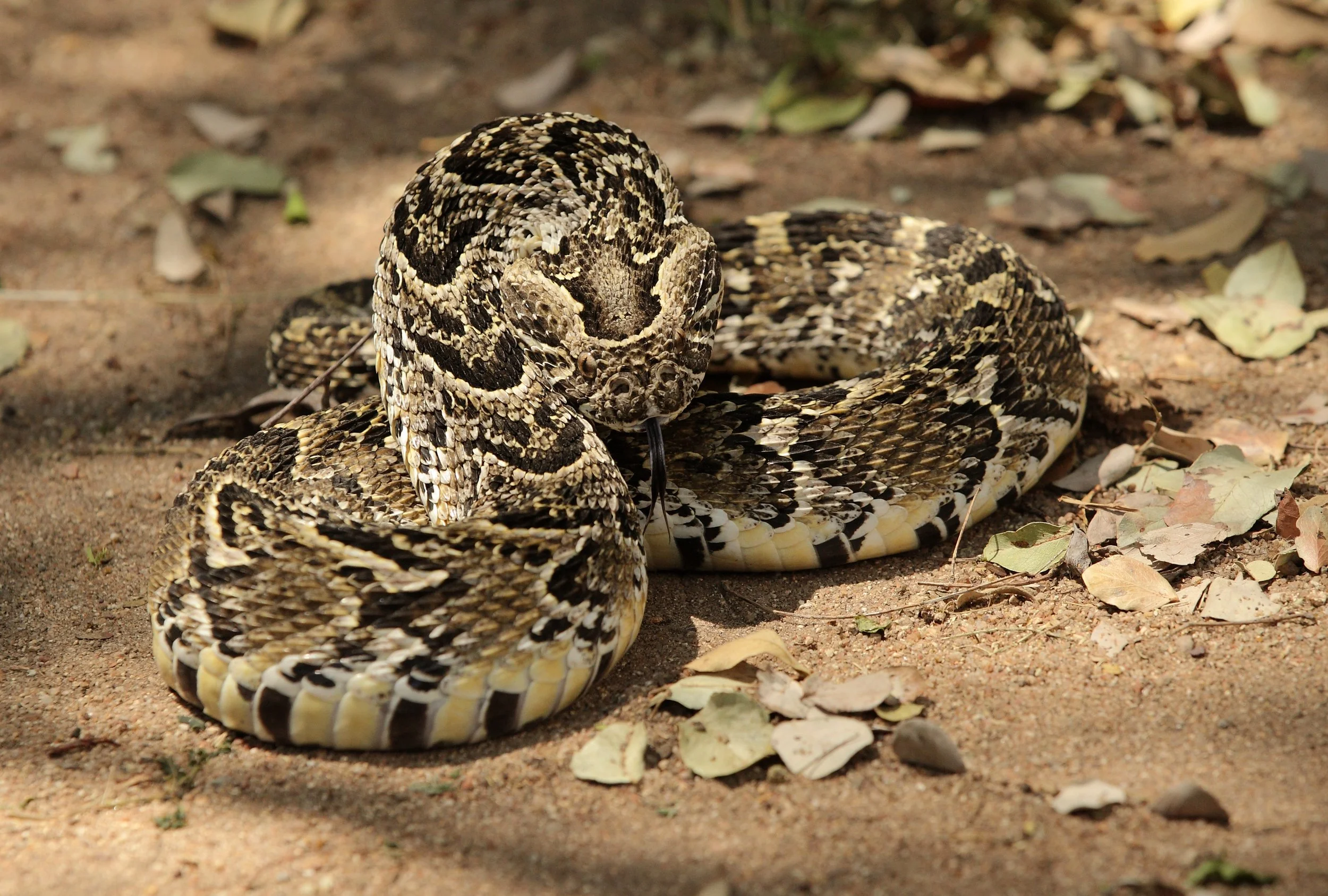
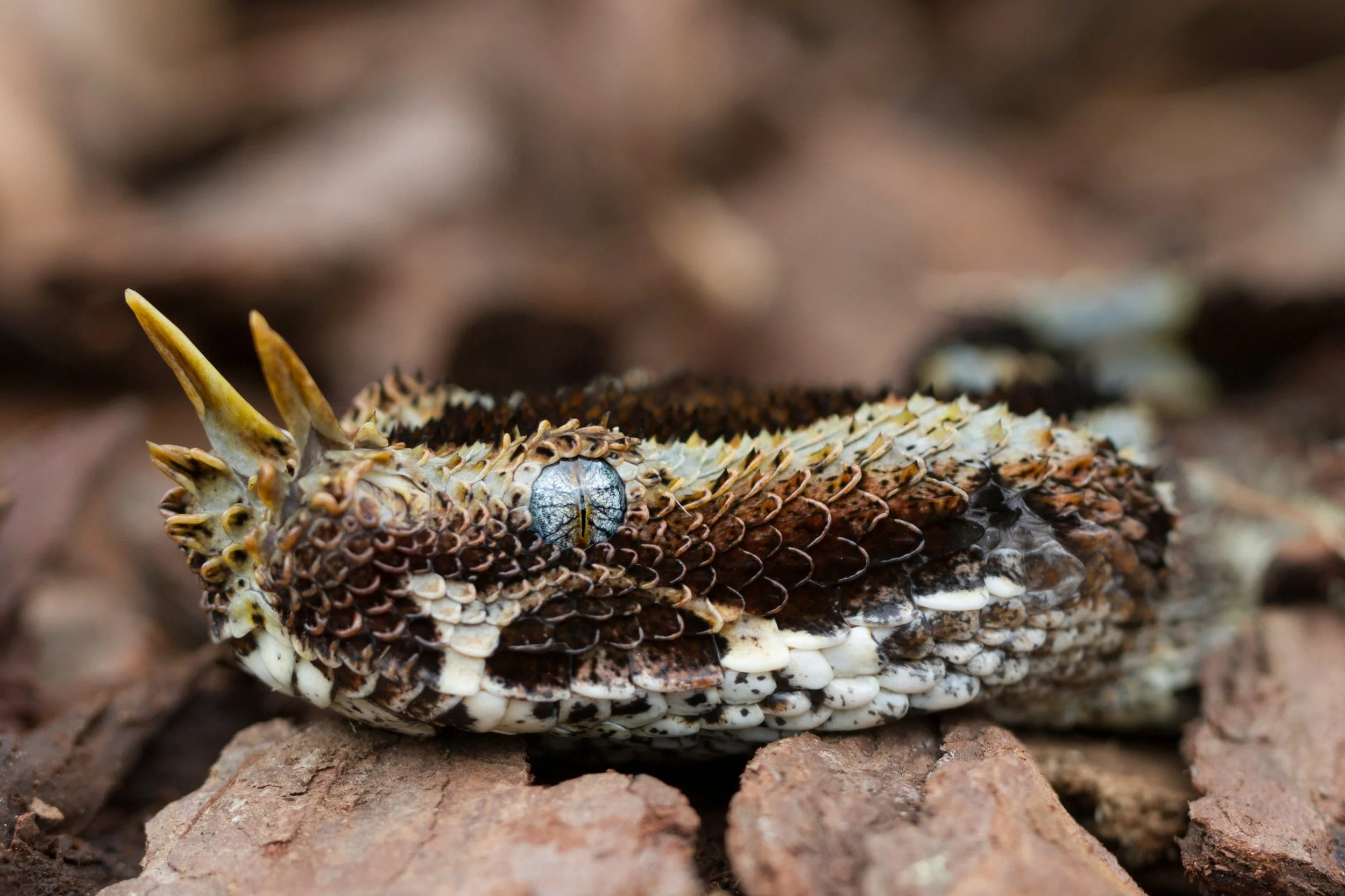
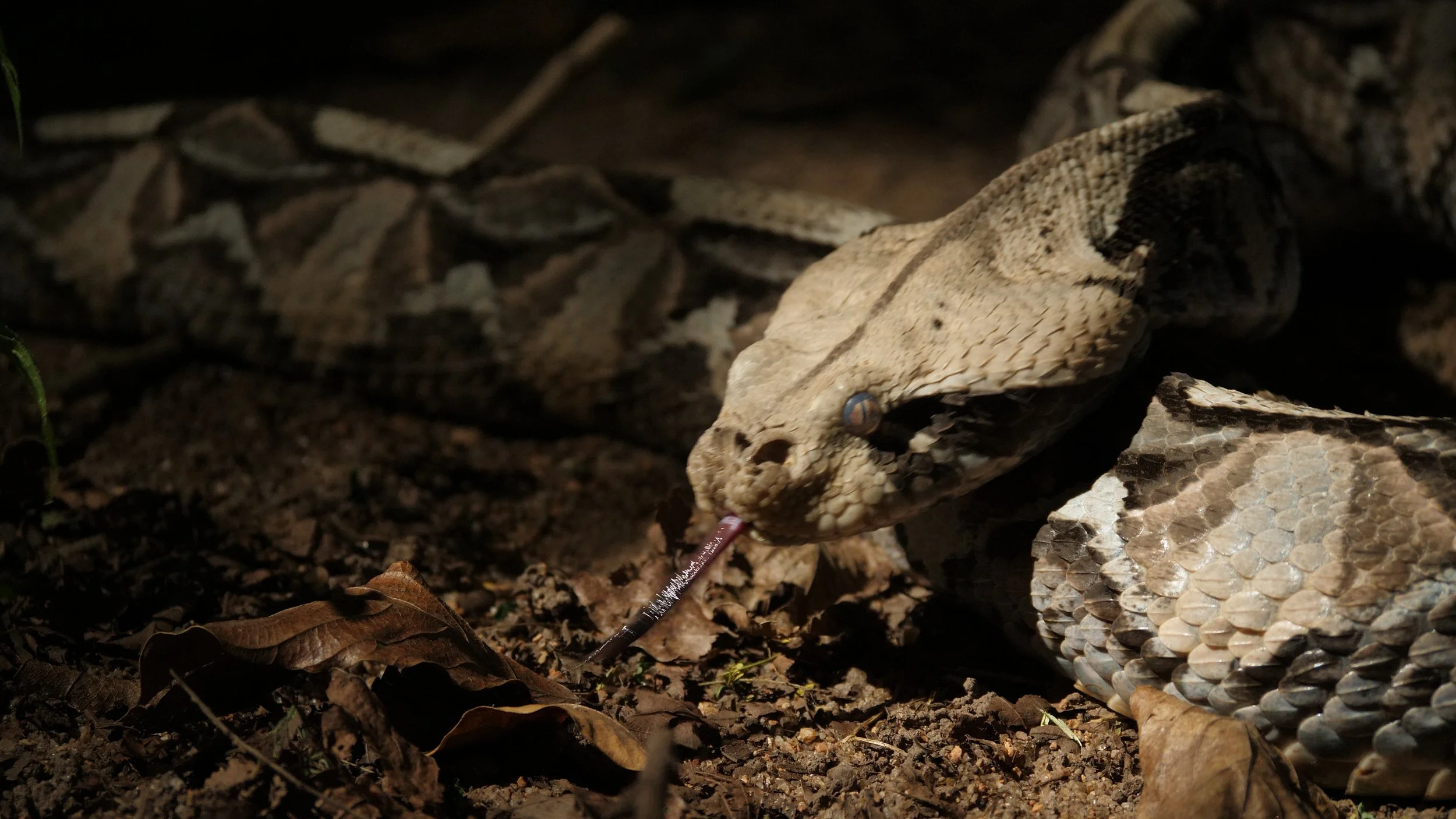
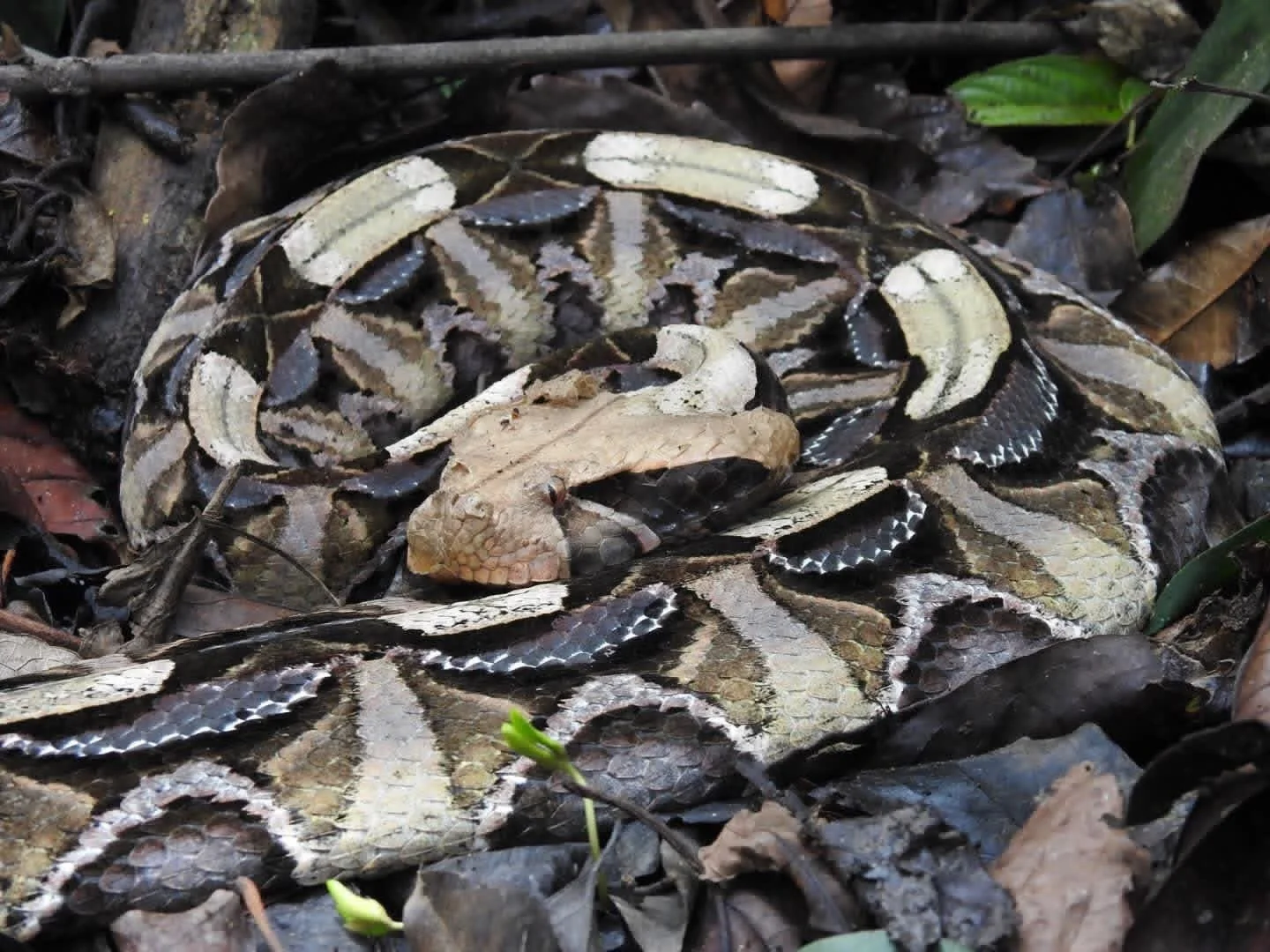
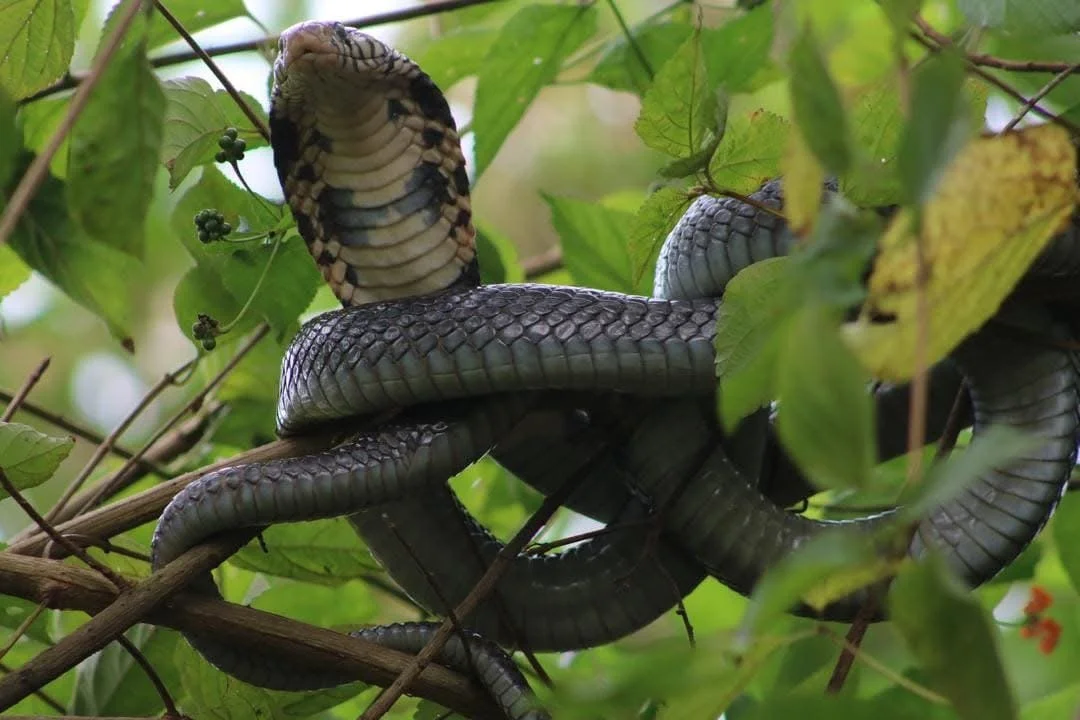
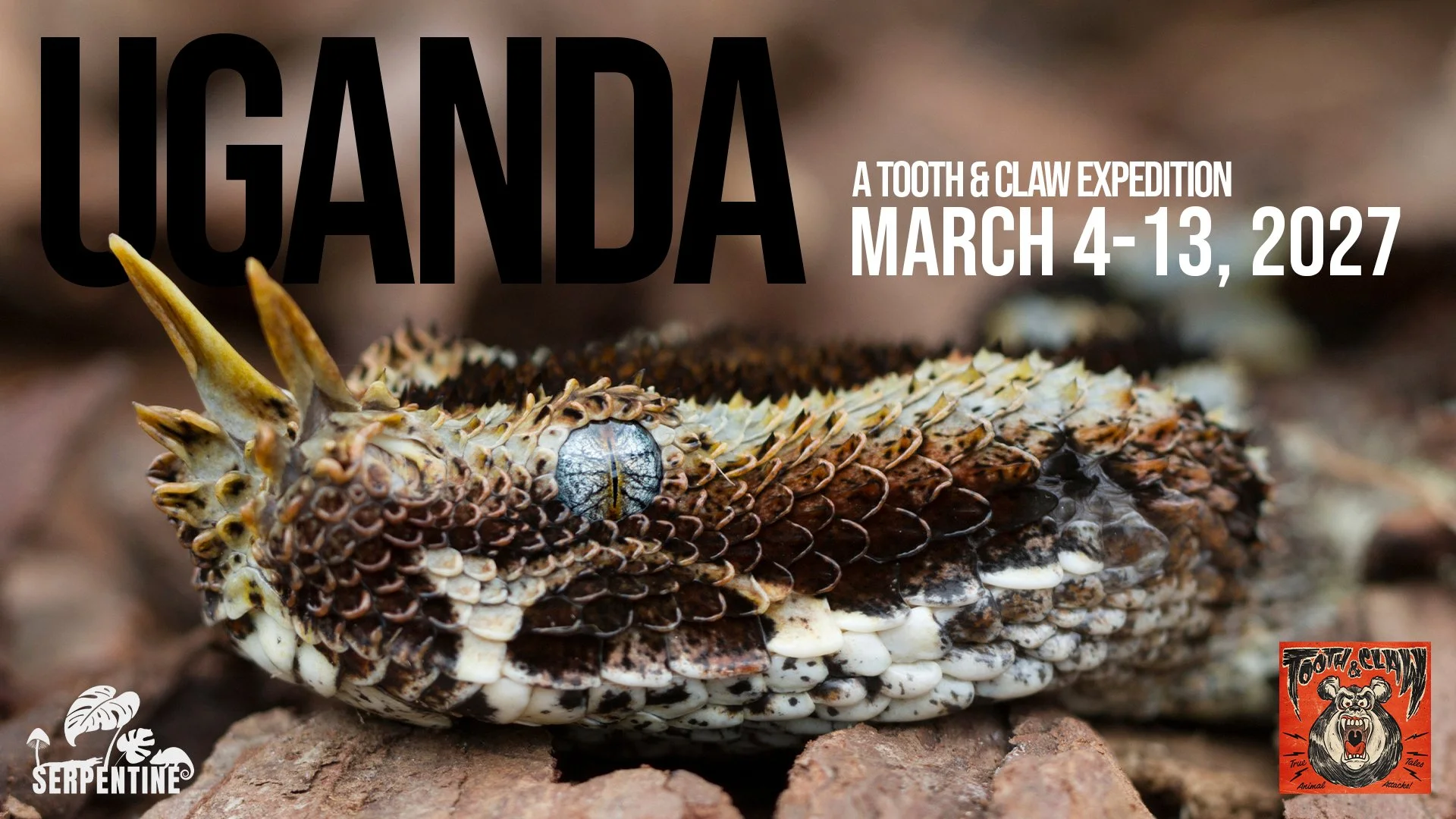
One of the most striking snakes in existence is known to call the lowlands of UGANDA HOME: Bitis nasicornis, THE RHINOCEROS VIPER.
WE’LL HAVE A CHANCE AT SPOTTING ONE, IF WE’RE LUCKY.
THE ENDANGERED mountain gorilla population declined to fewer than 300 individuals in the late 20th century due to habitat loss, poaching, and disease. intensive, multi-decaDE conservation interventions—including transboundary protected area management, veterinary programs, and community-based ecotourism—have driven a gradual recovery to over 1,000 individuals, marking one of the few great ape population increases under sustained anthropogenic pressure.
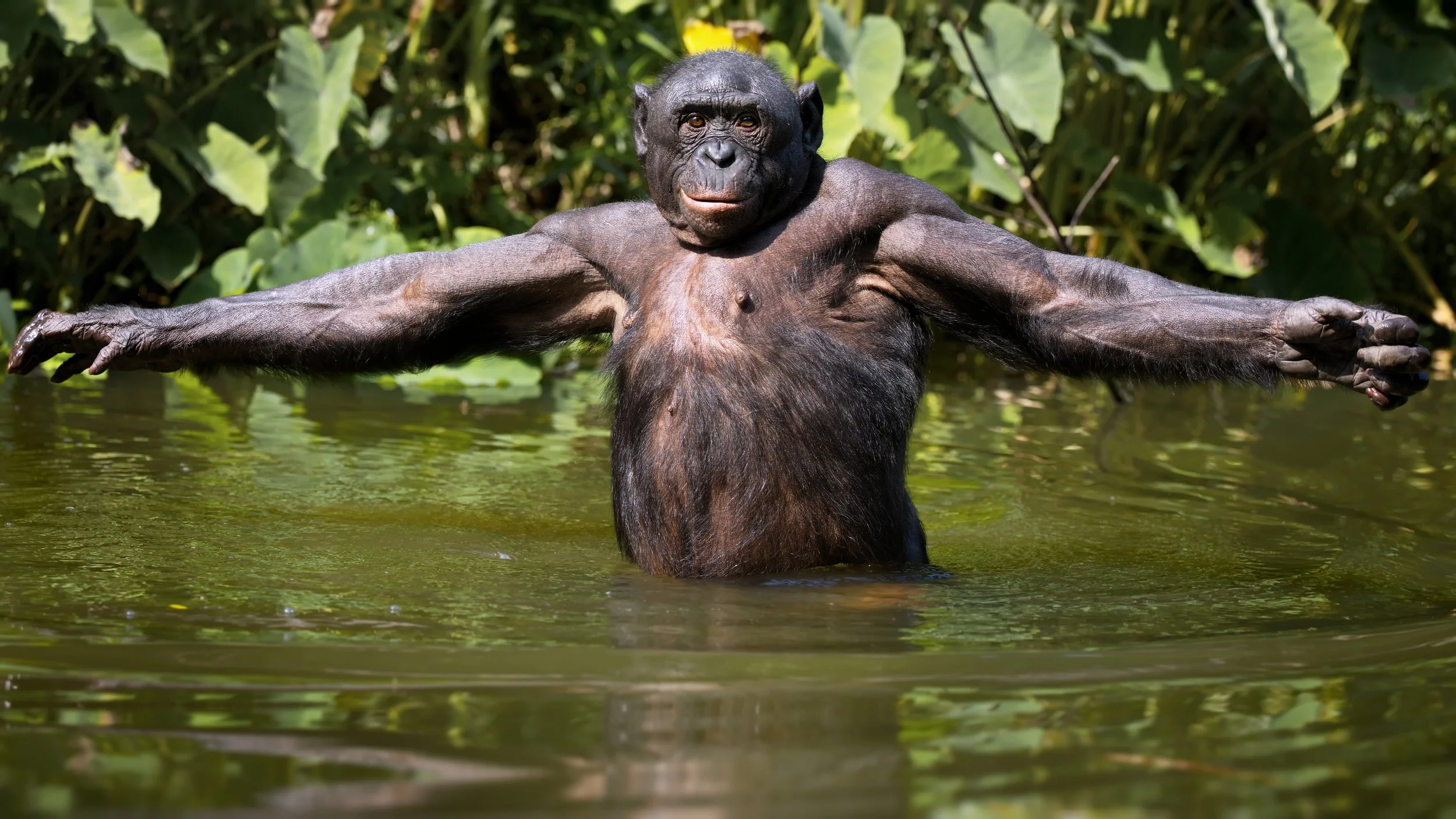
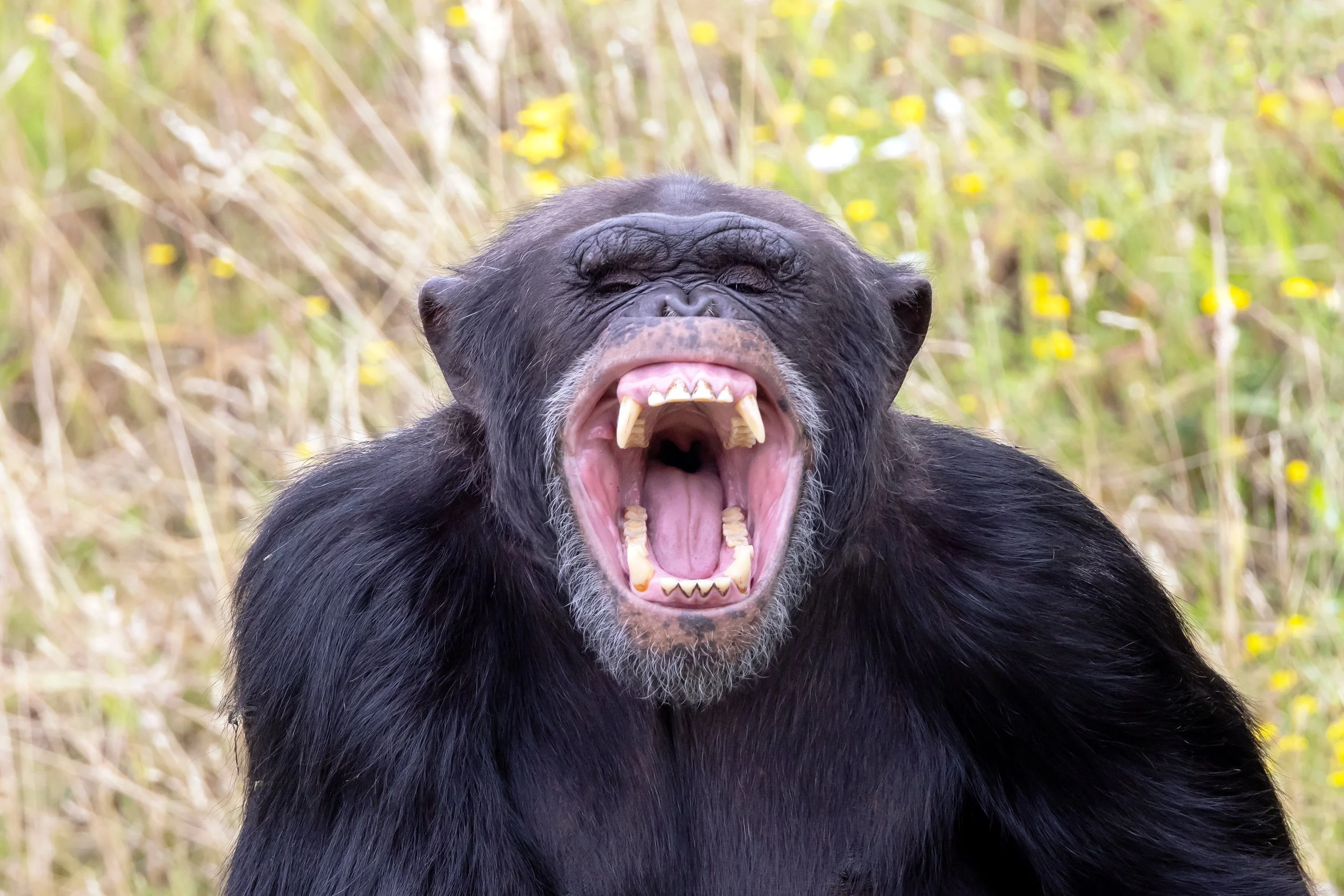
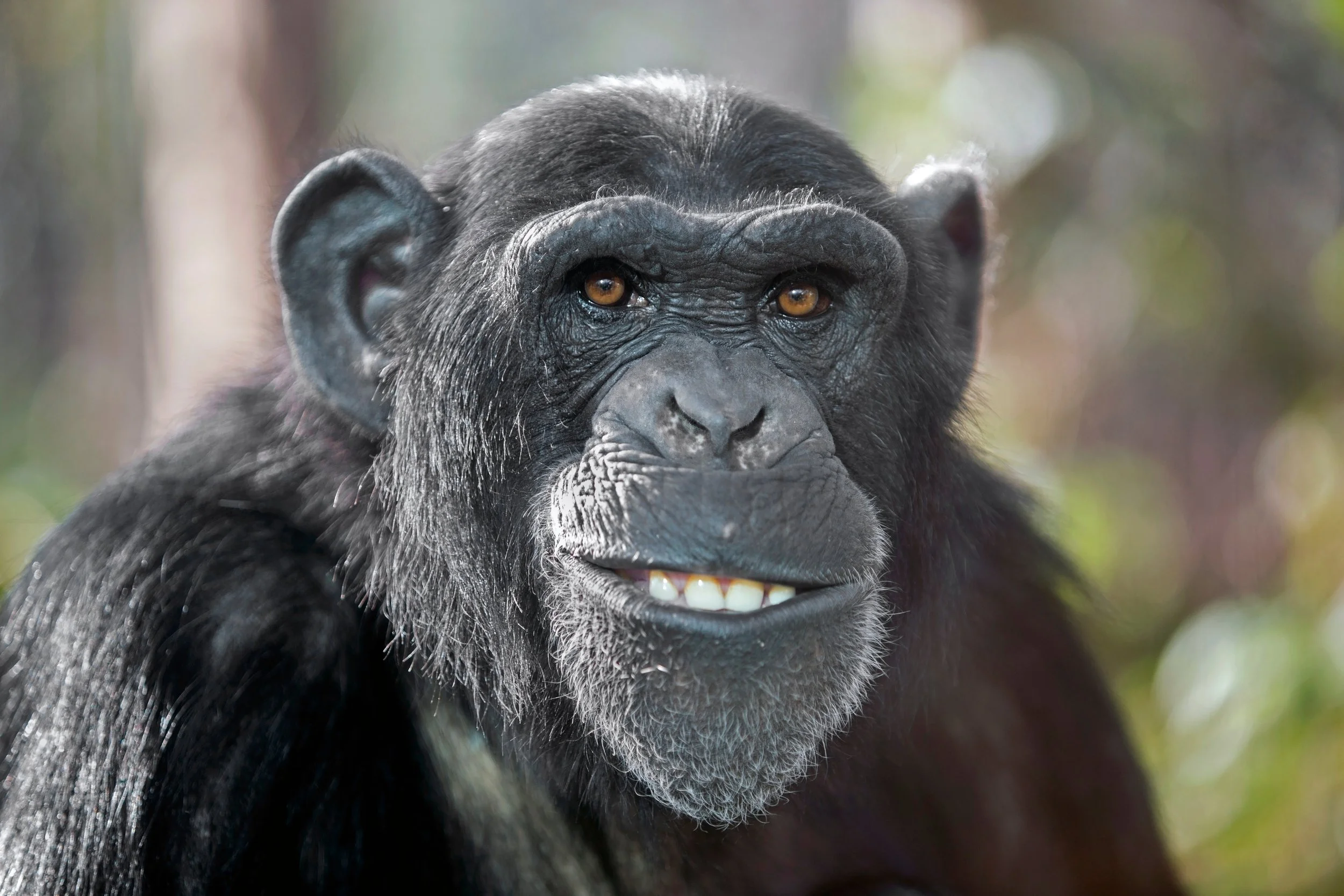
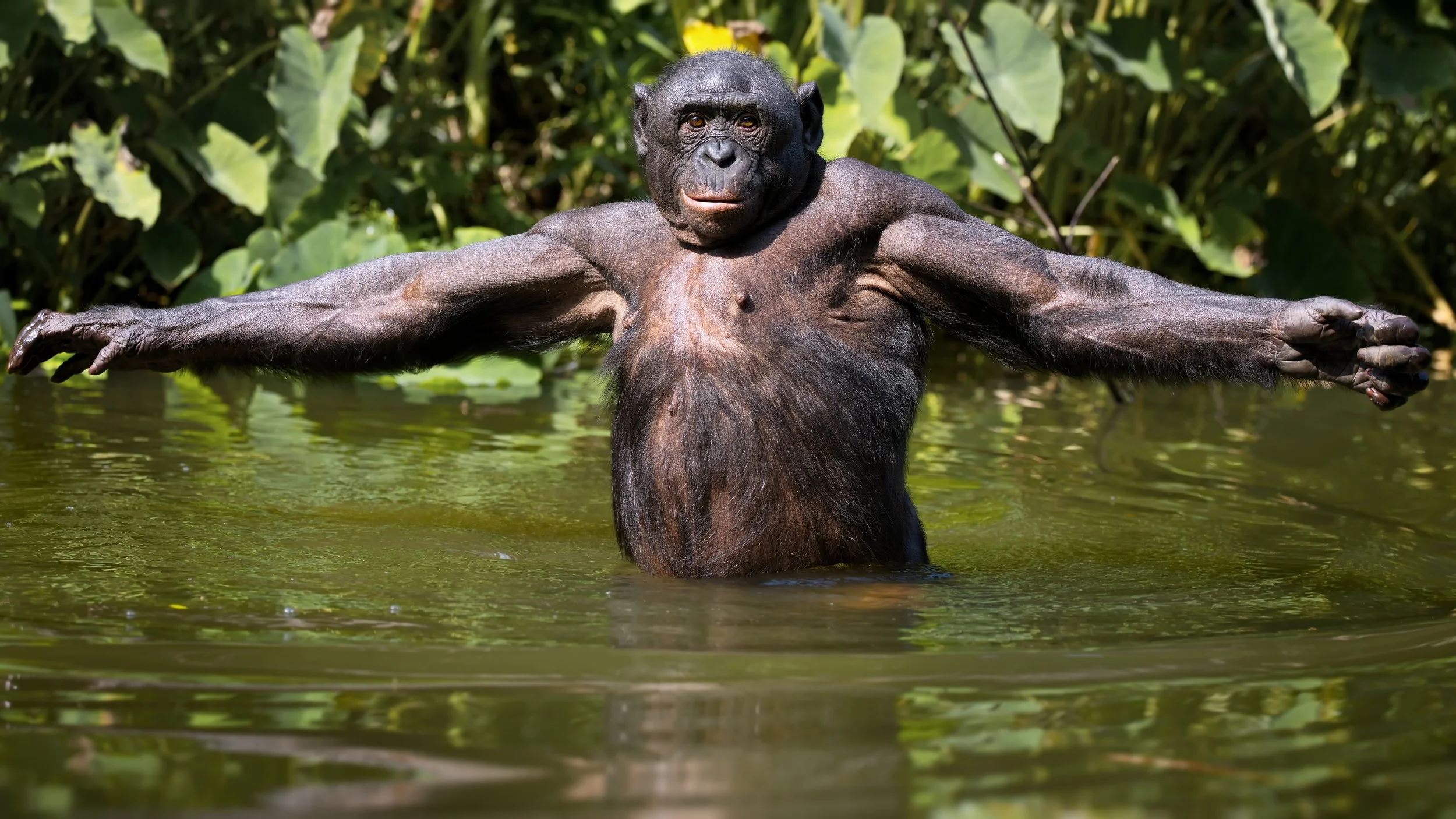
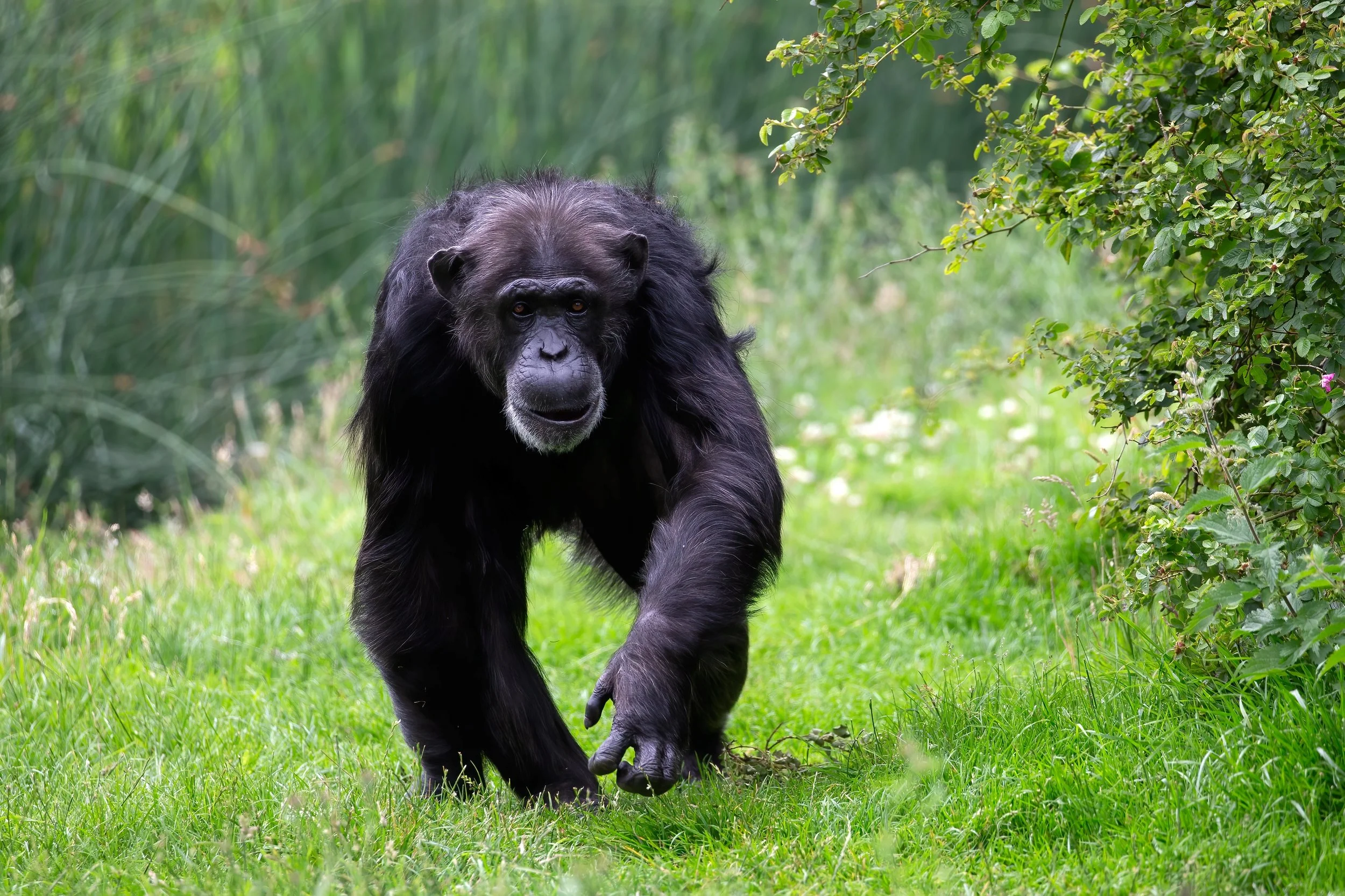
ANOTHER CRITICAL REASON TO VISIT THE PEARL OF AFRICA: RAW AND UNFILTERED ACCESS TO WILD CHIMPANZEES.
coordinated male coalitions conduct lethal intergroup raids, use context-specific tool kits (e.g., termite fishing probes and leaf sponges), and exhibit cultural transmission of foraging strategies.
THEY DISPLAY advanced social cognition and proto-cultural complexity, SOMETHING ALL HUMANS SHOULD WITNESS WITH THEIR OWN EYES.
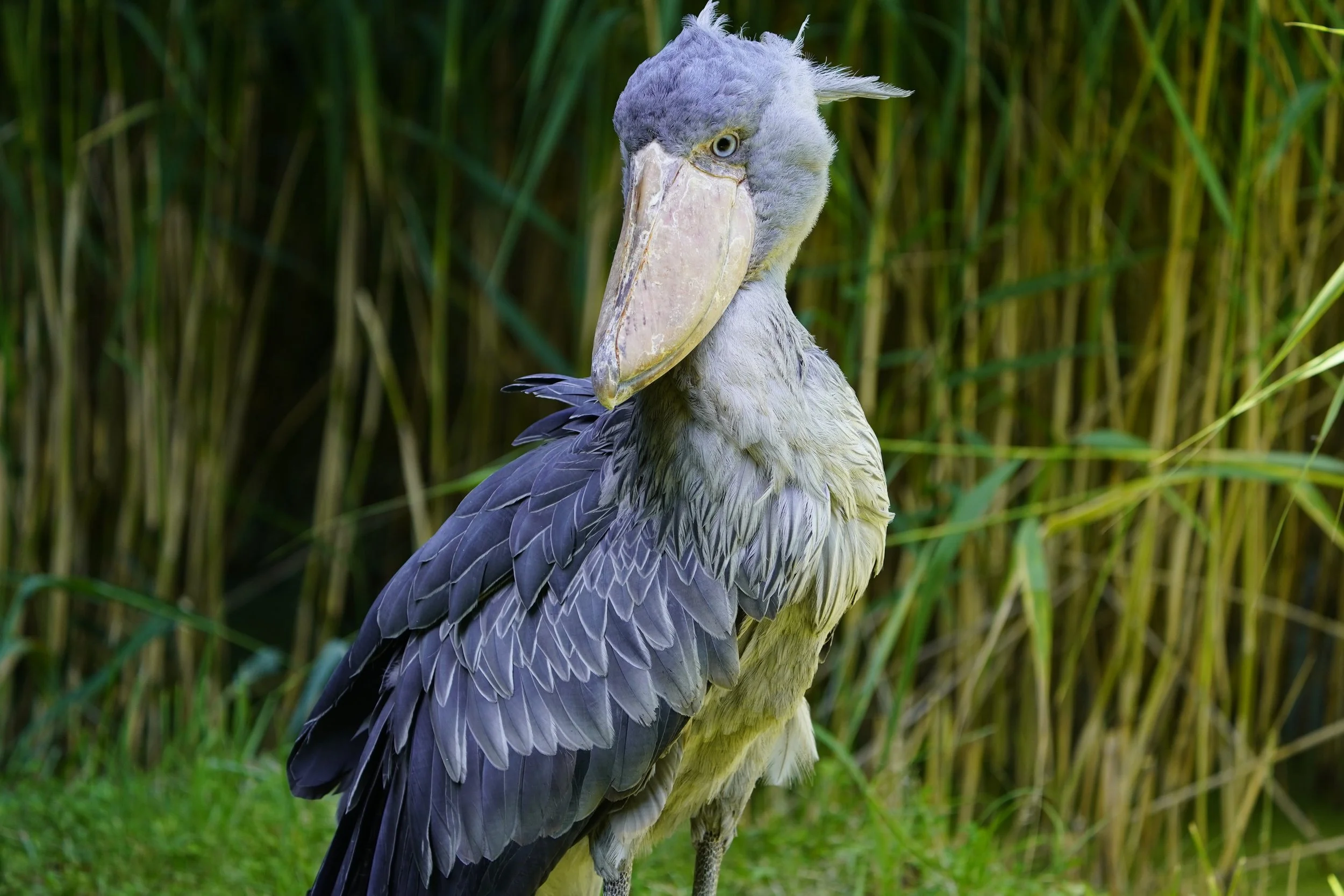
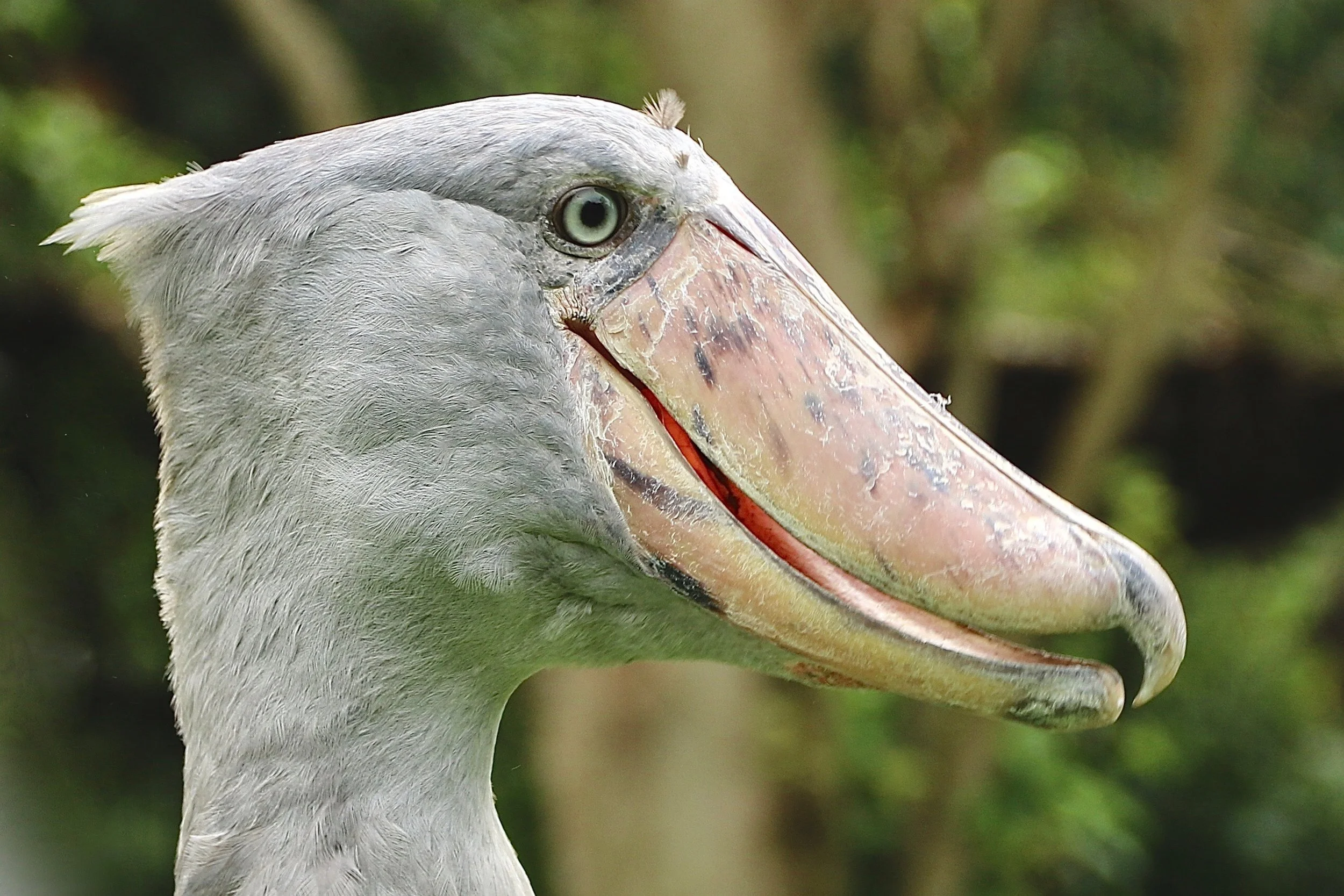
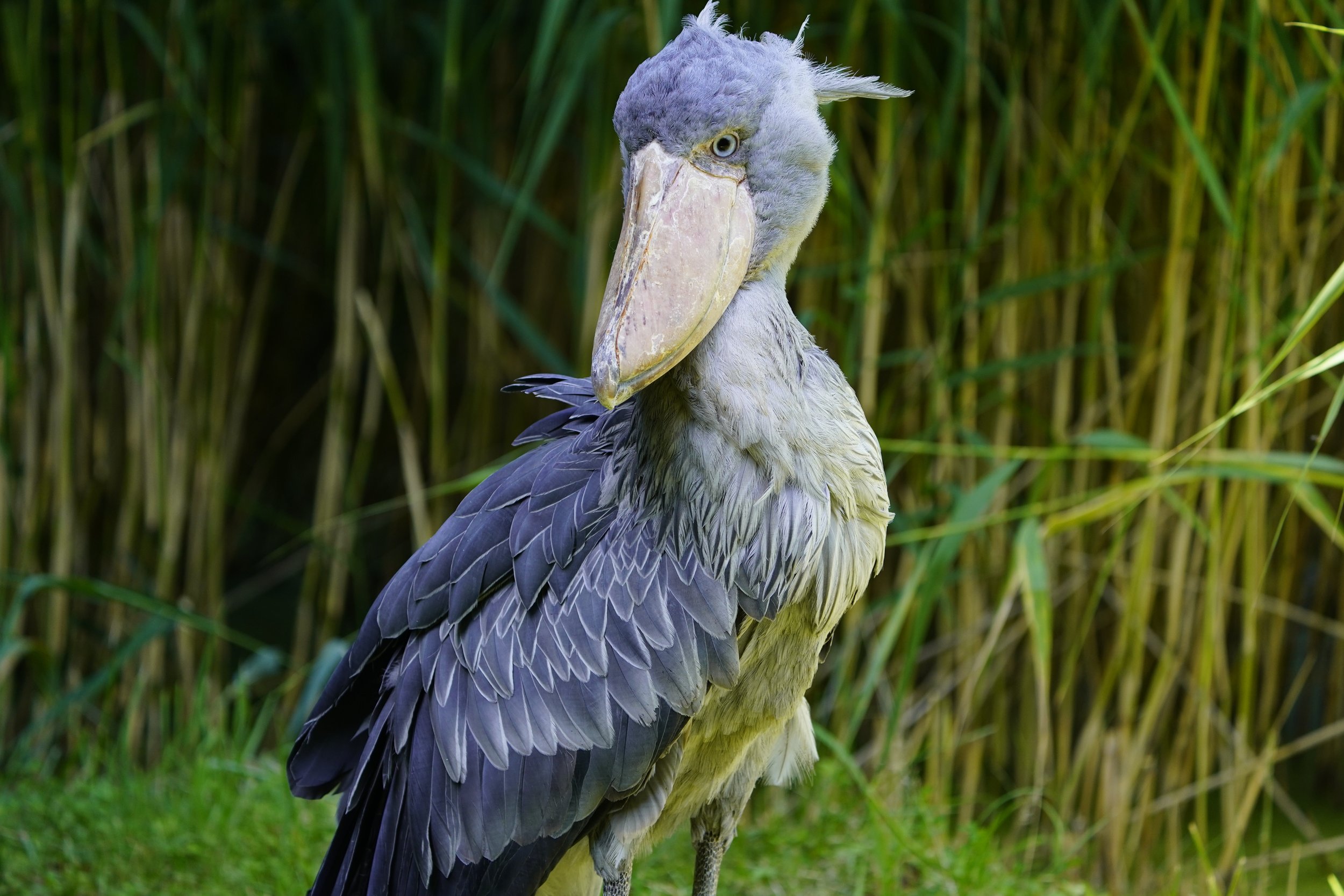
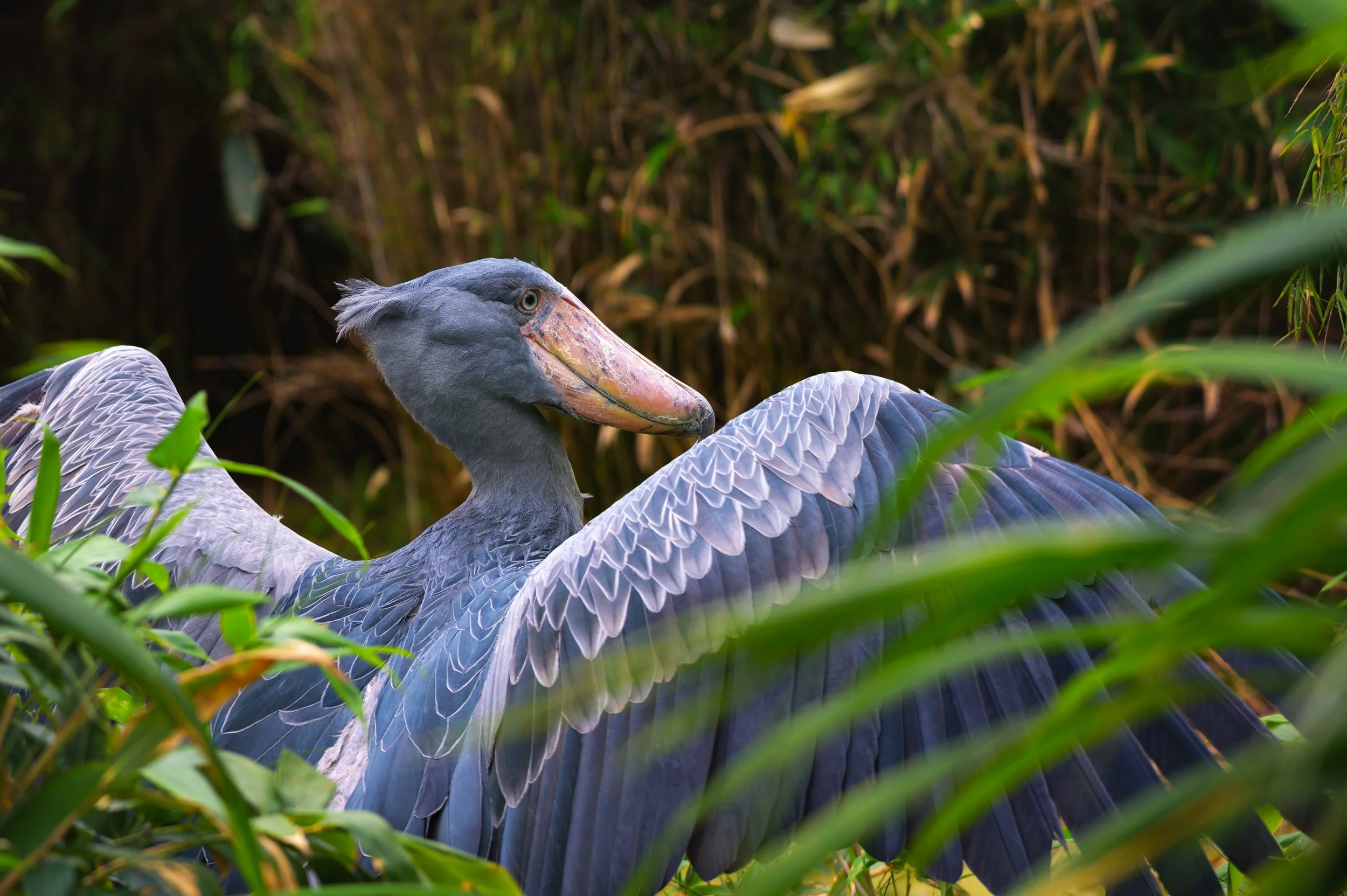
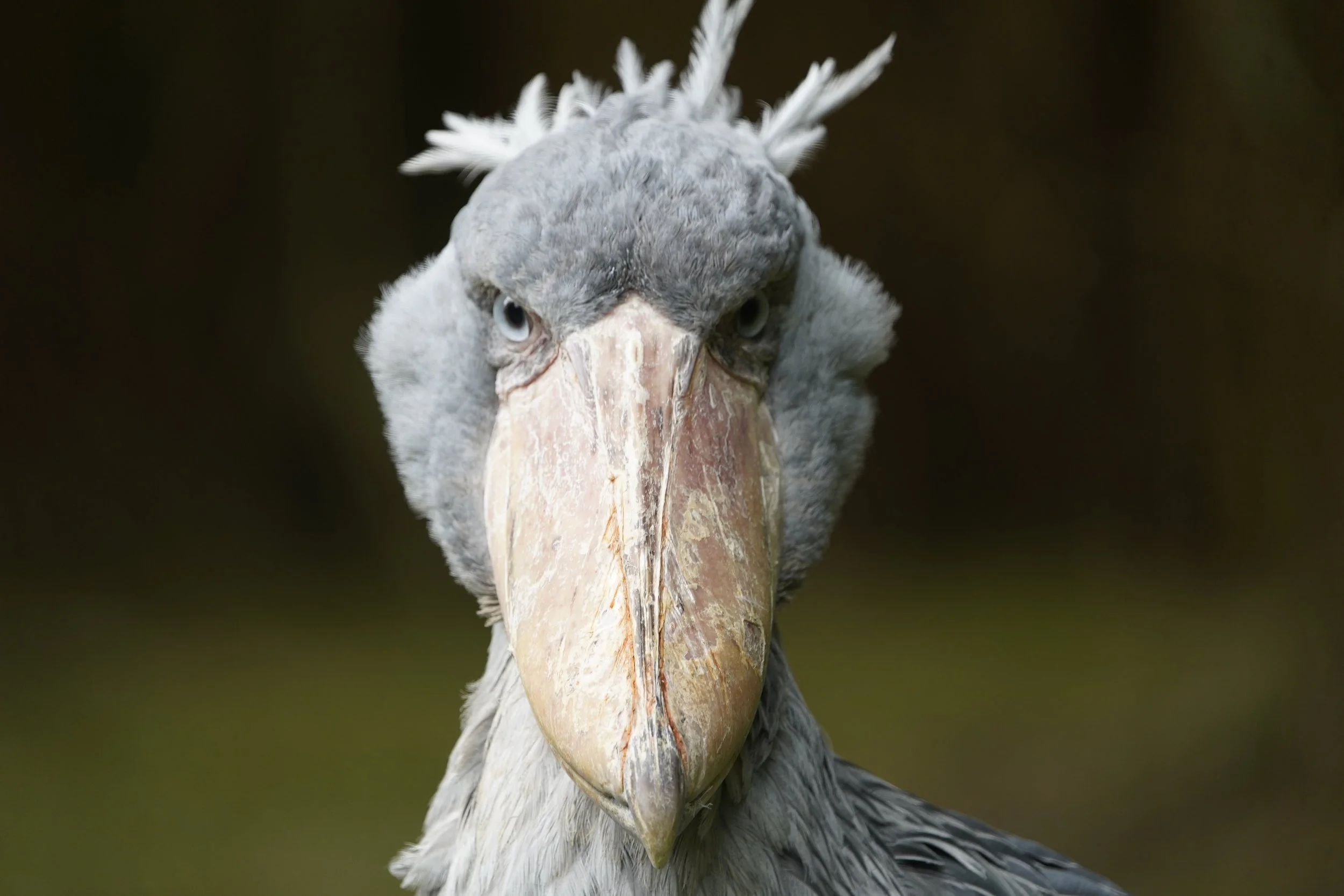
THE SHOEBILL STORK IS IN A LEAGUE OF ITS OWN. a massive hook-tipped bill delivers lightning-fast ambush strikes on lungfish, FROGS, and EVEN YOUNG crocodiles- while its eerie, “statuE hunting” style and solitary nature make it one of the most formidable wetland predators.
it is now classified as Vulnerable due to habitat loss, wetland drainage, and human disturbance across its fragmented range in central and eastern Africa.
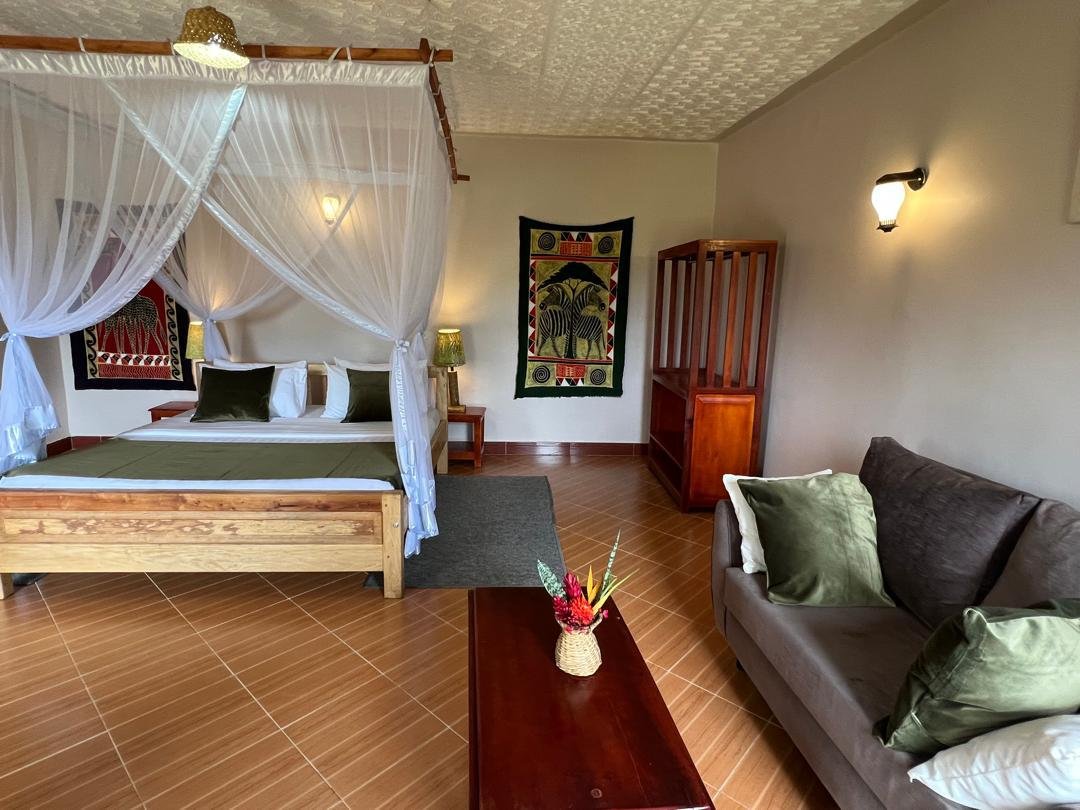
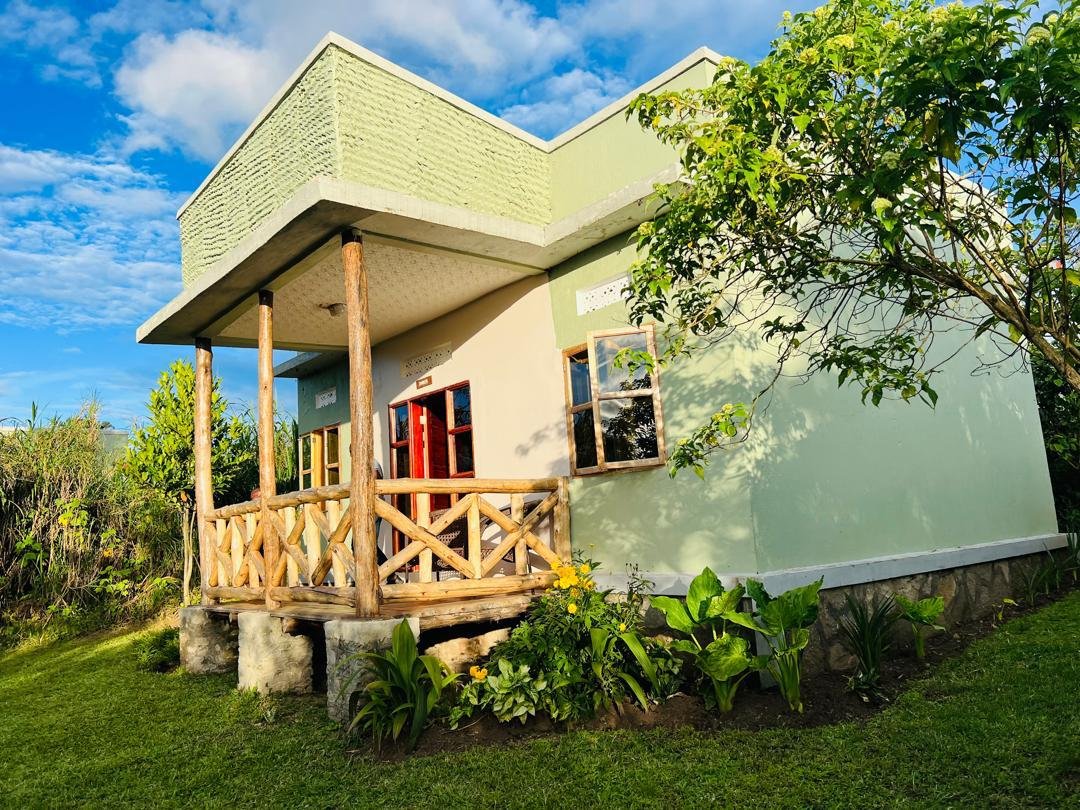
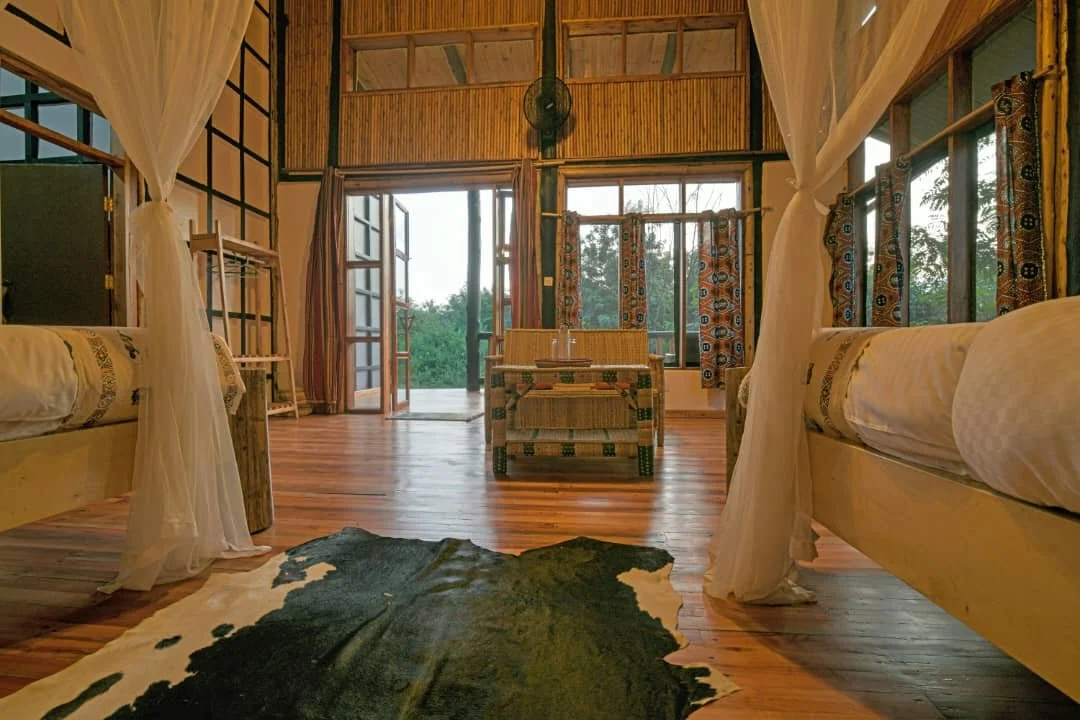
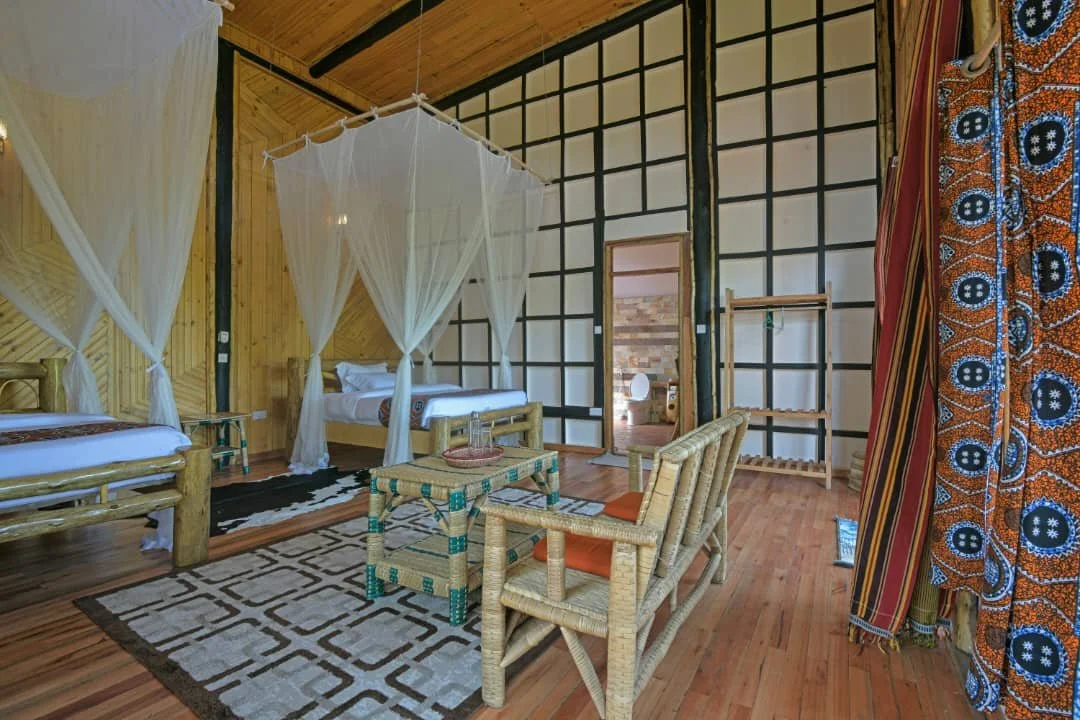
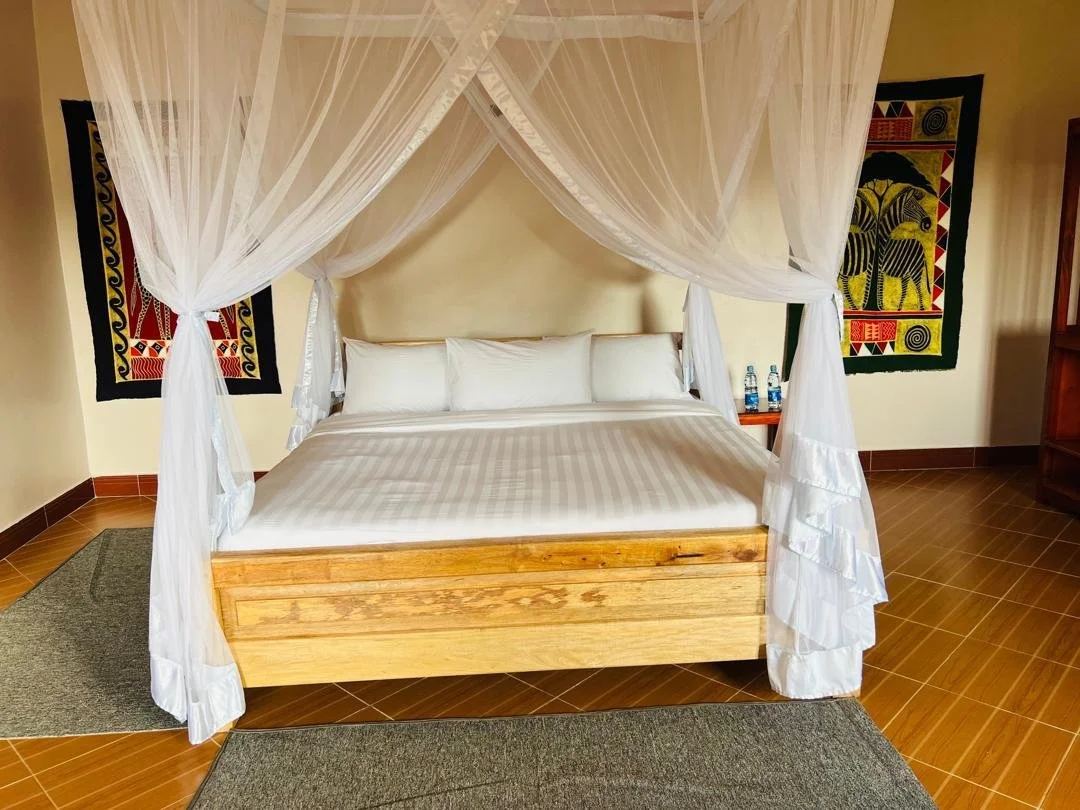
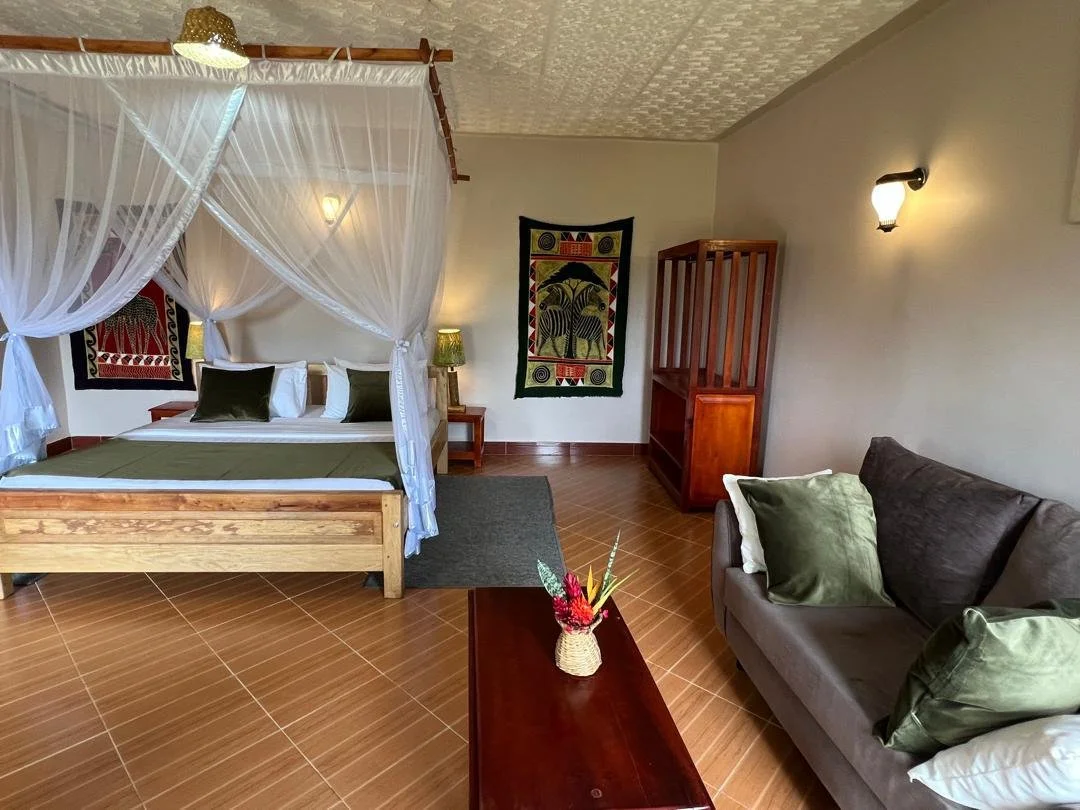
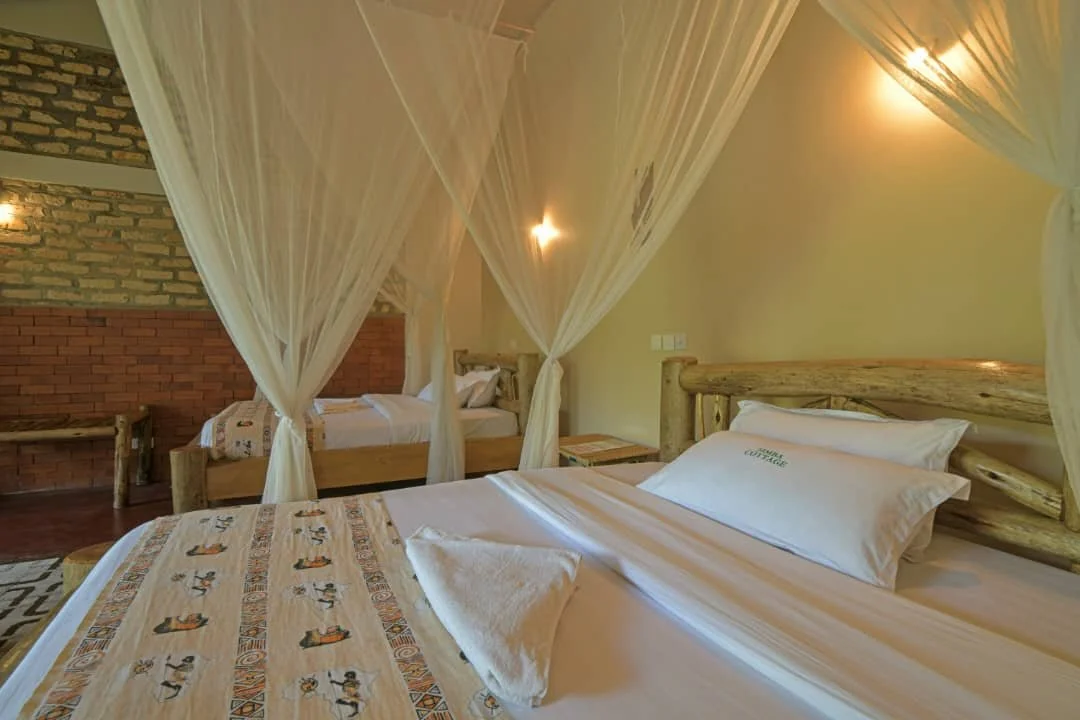
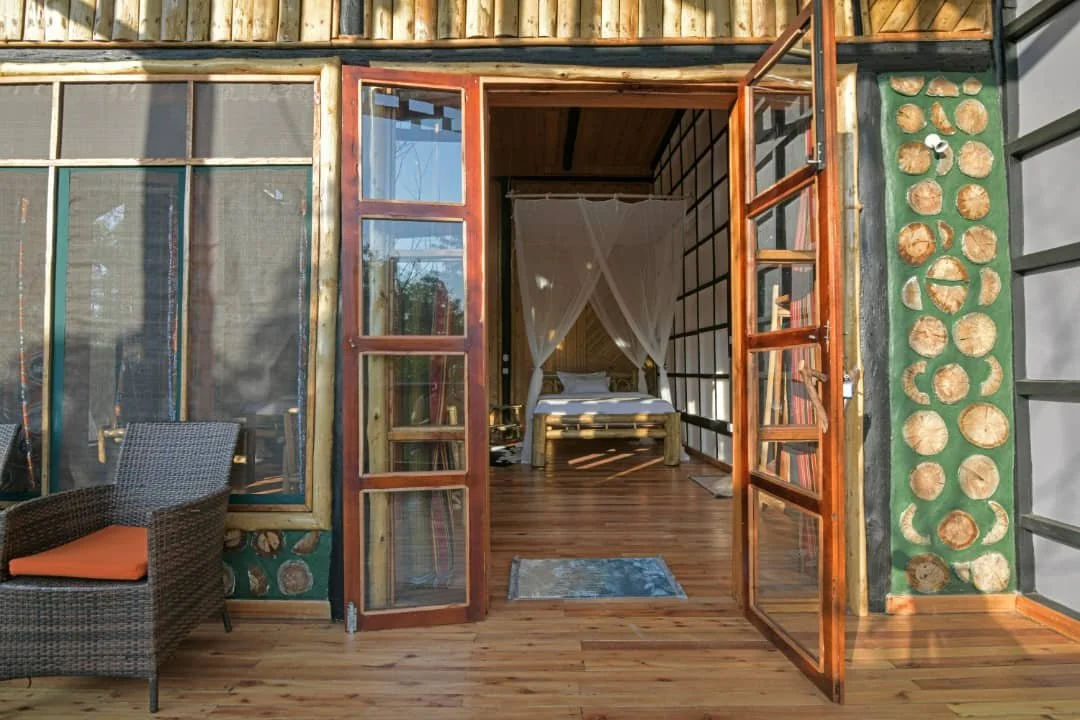
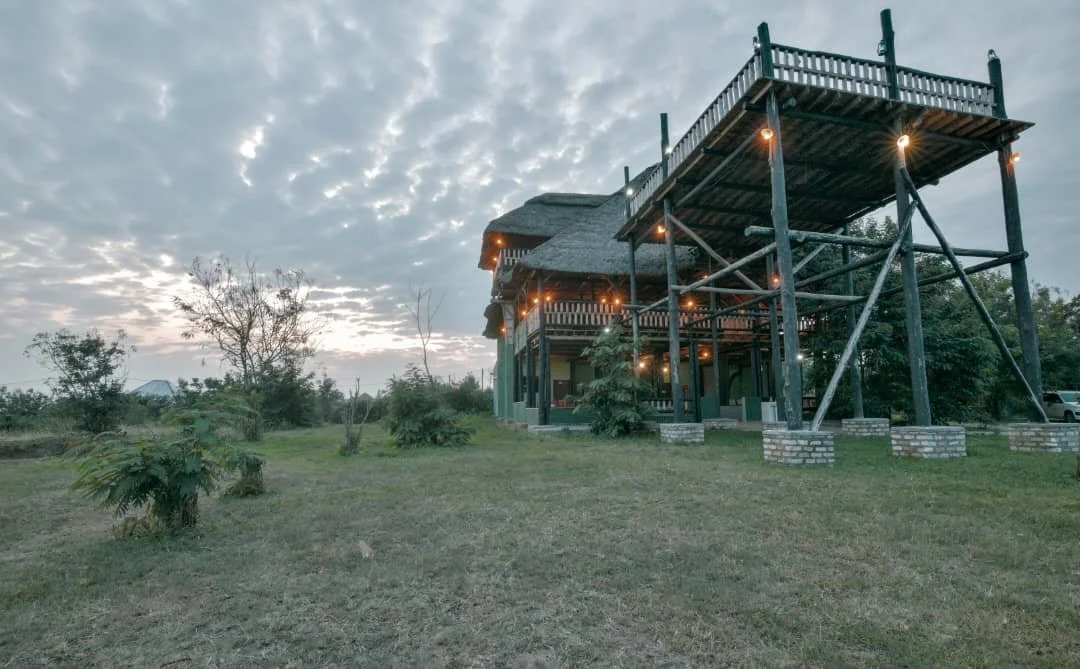
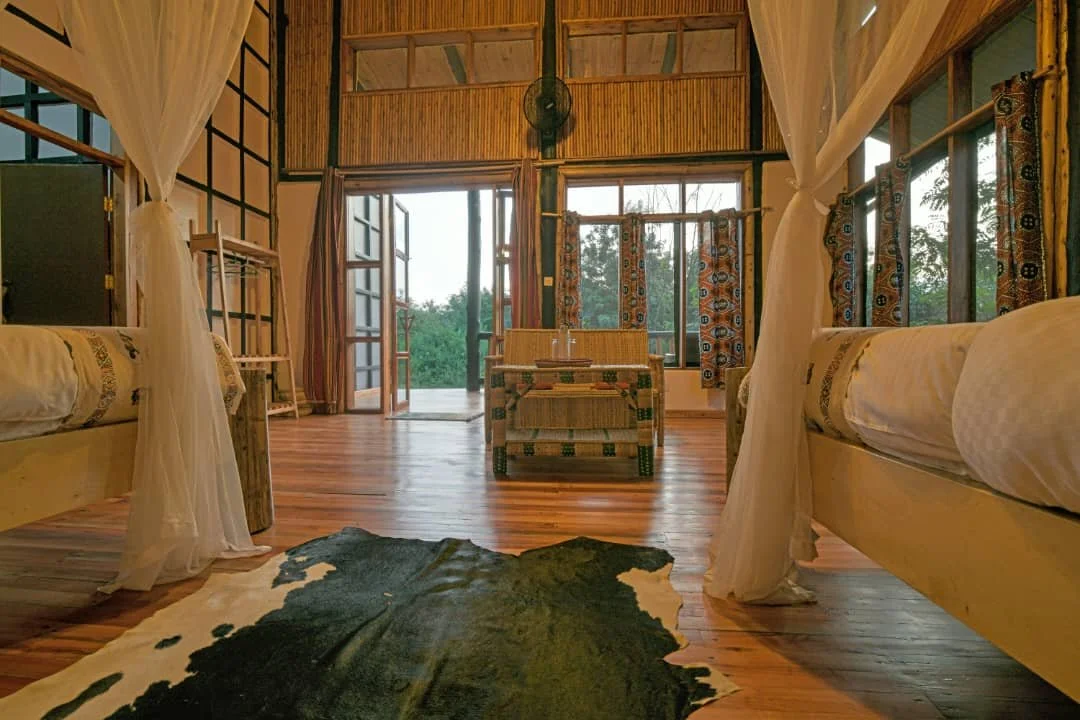
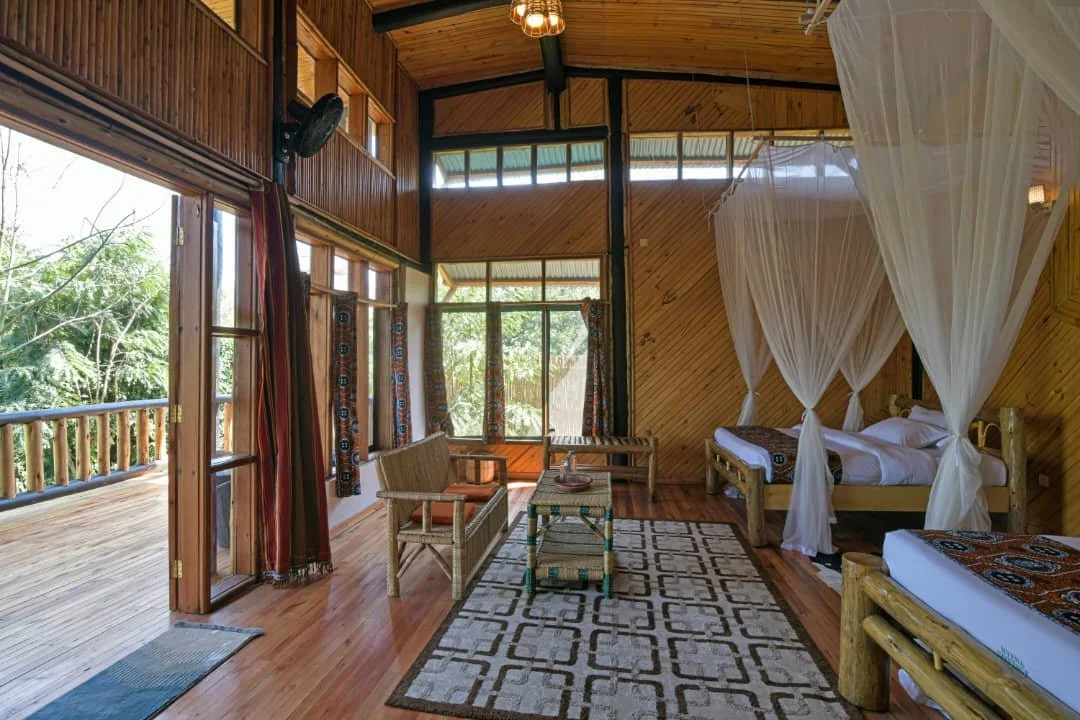
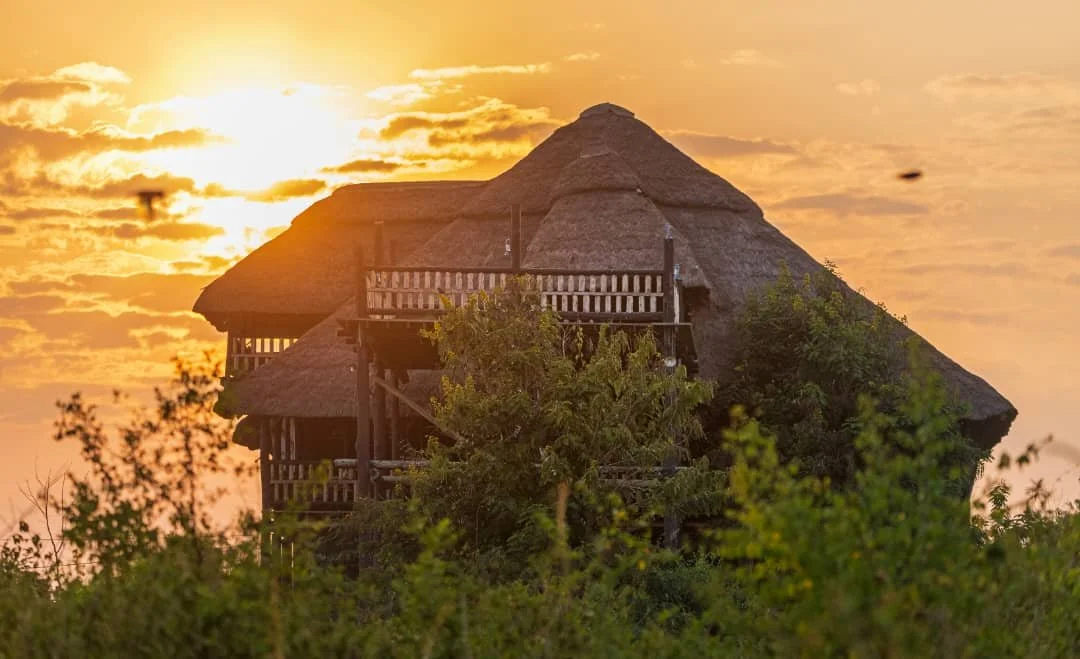
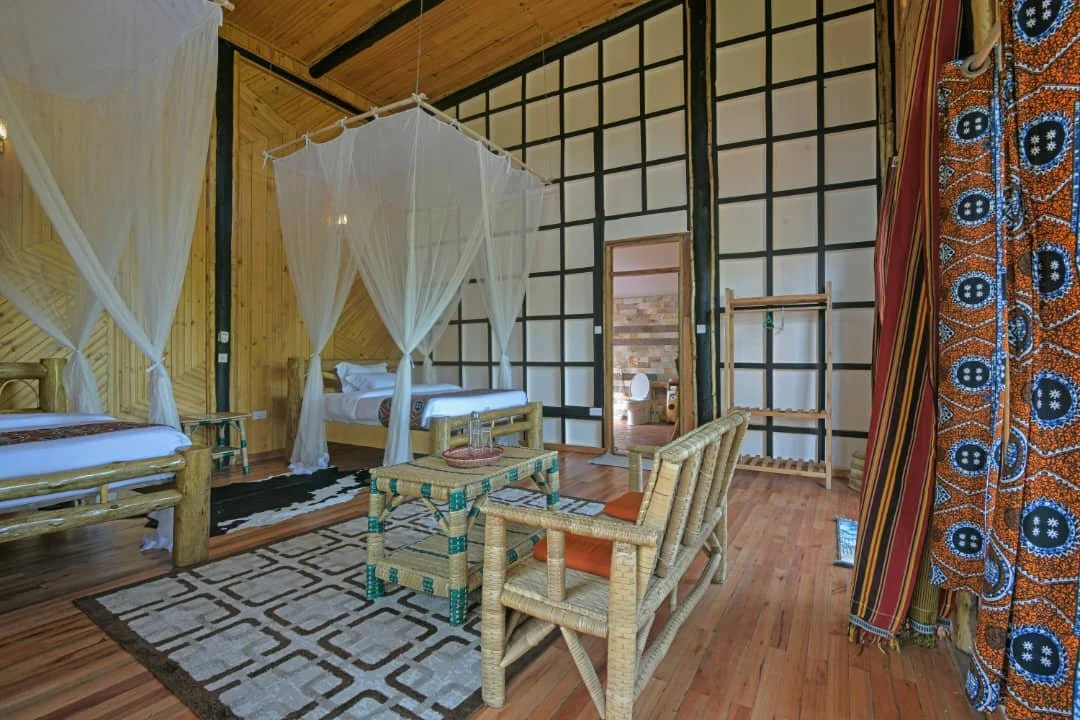
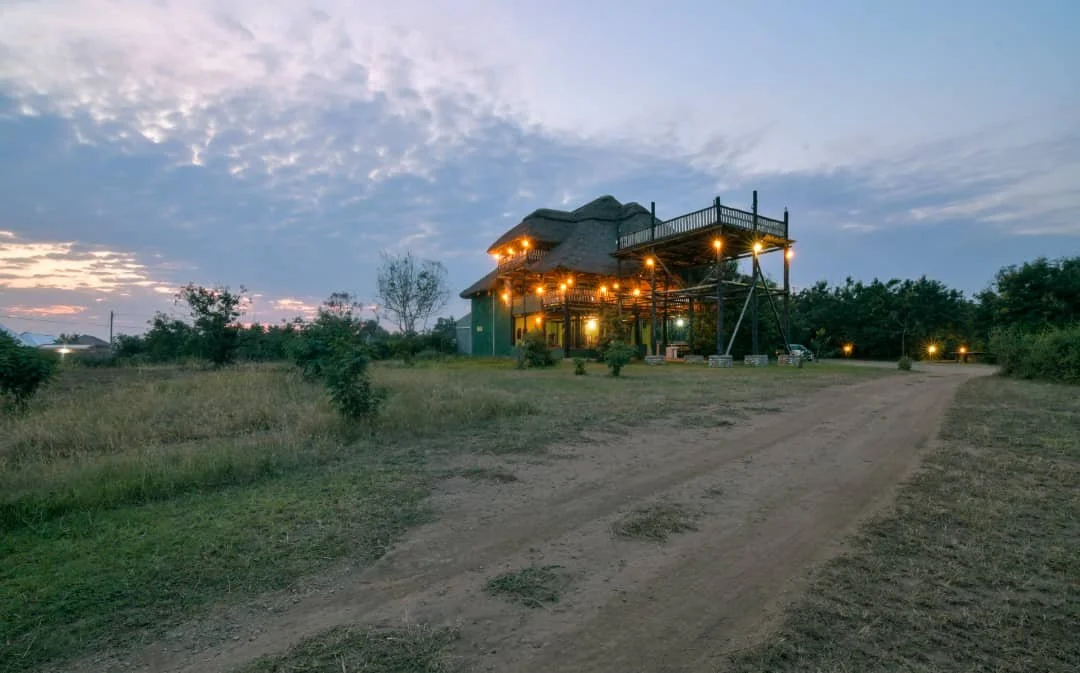
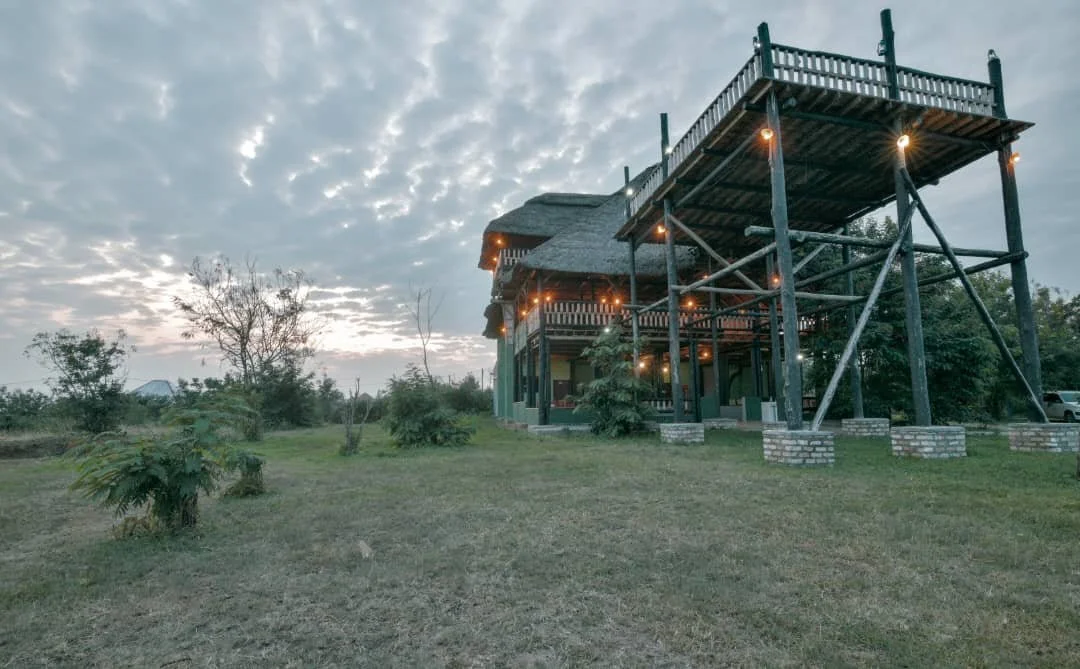
A GLIMPSE INTO OUR LODGING AT ENSHAMA GAME RESERVE AND Guereza Canopy (Kibale National Park).
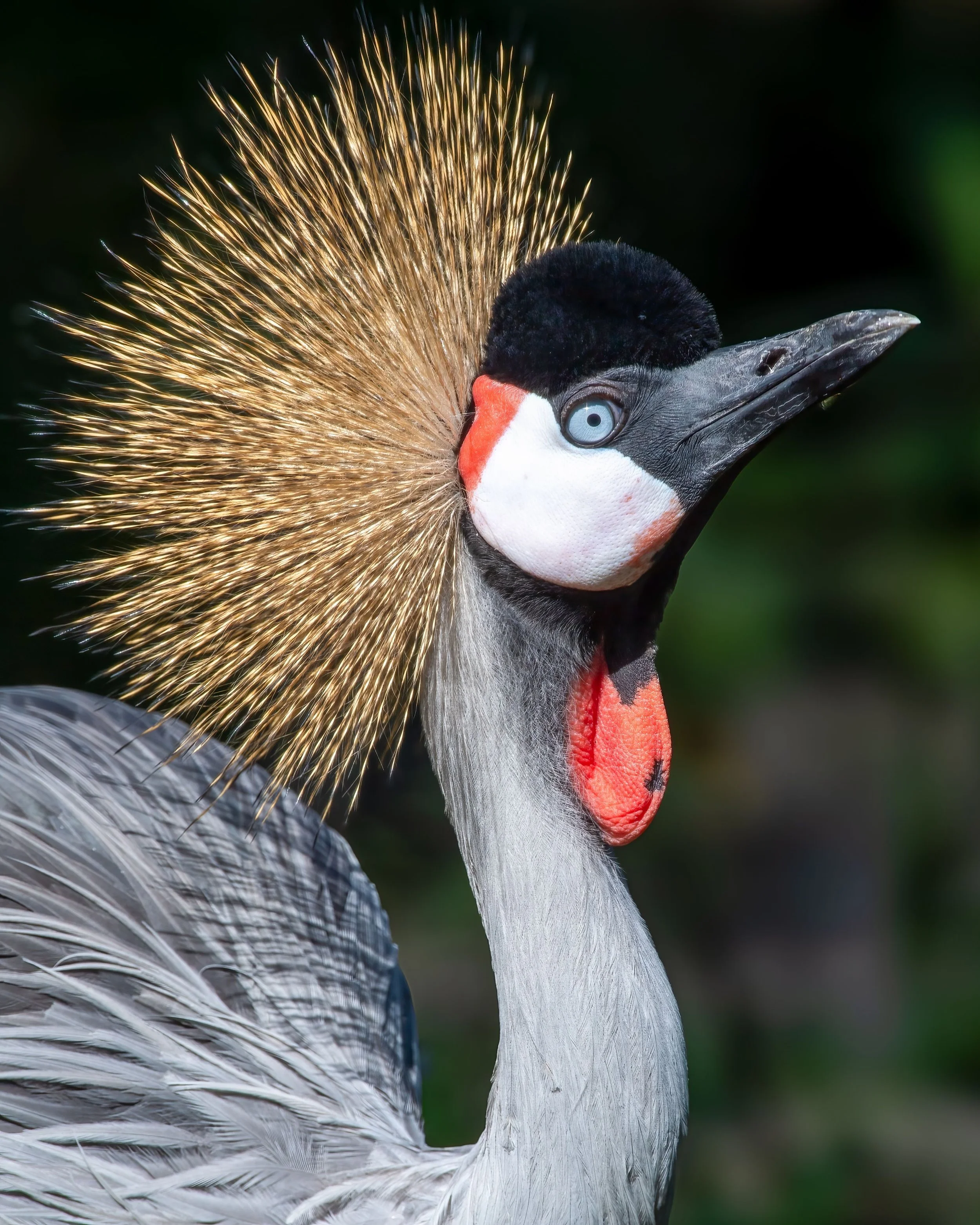
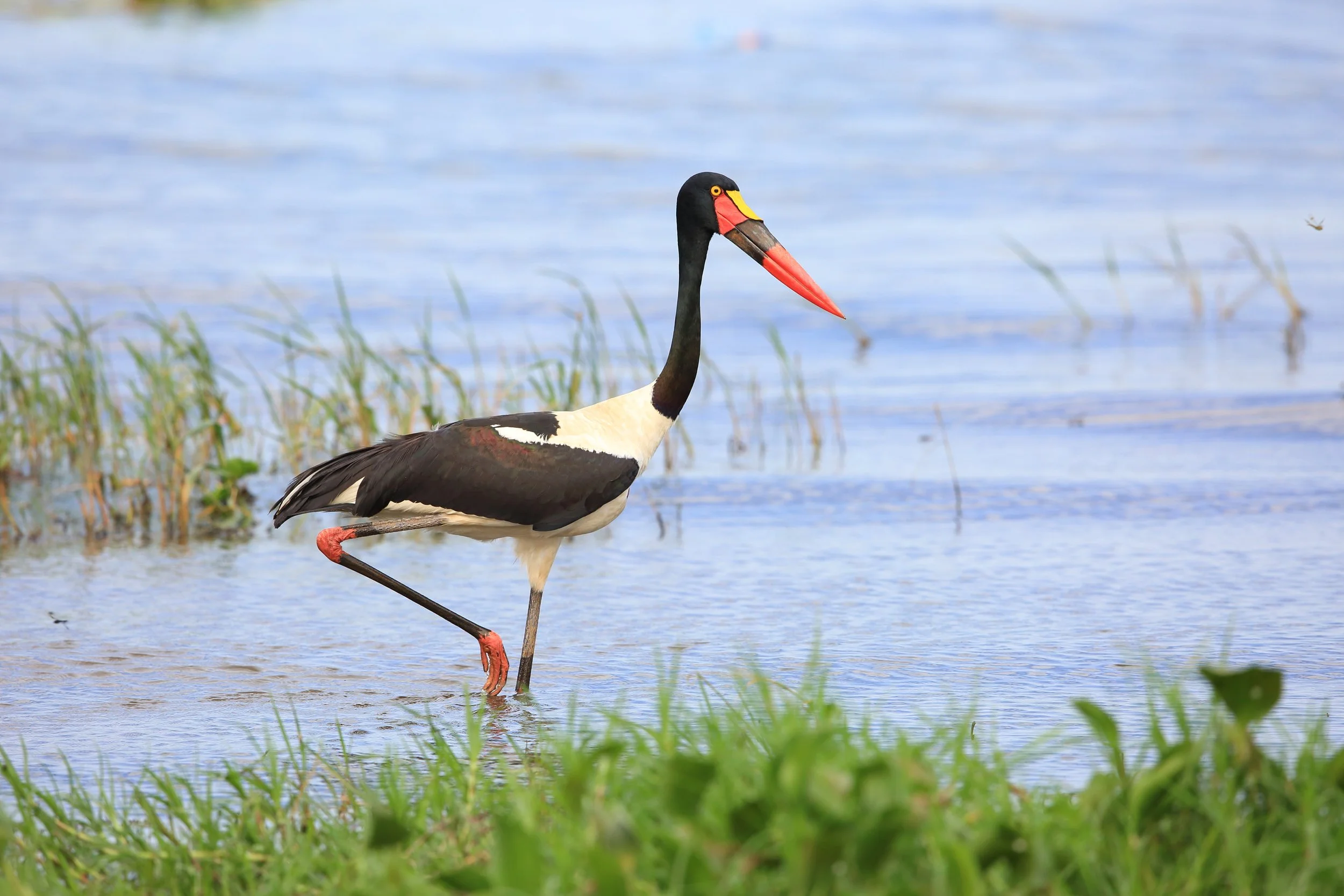
the bird diiversity throughout uganda is a spectacle in its own right. species such as the Saddle-billed Stork (left) and the gray crowned crested Crane (right, the national bird of uganda) take full advantage of the region’s wetland ecosystems.