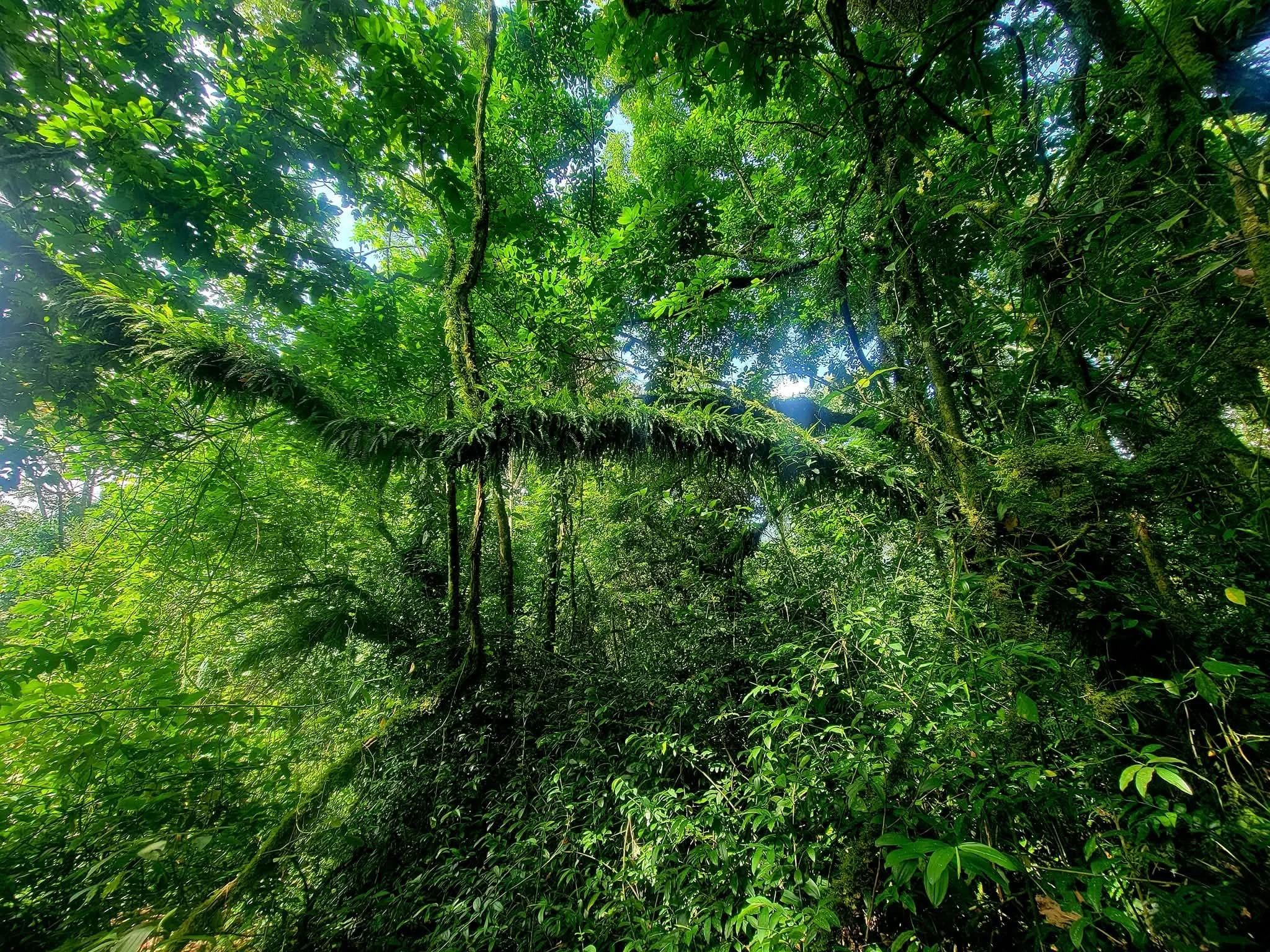
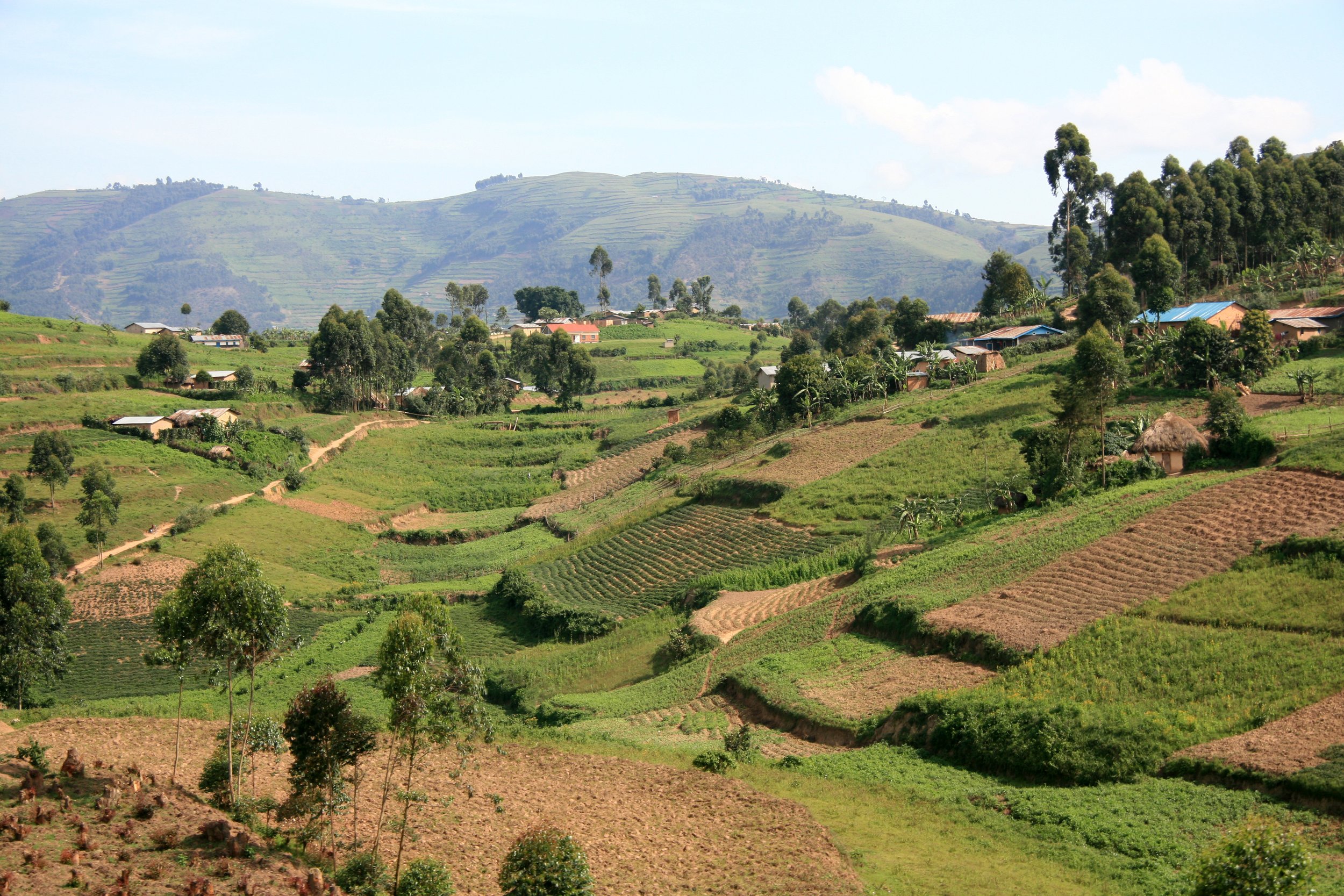
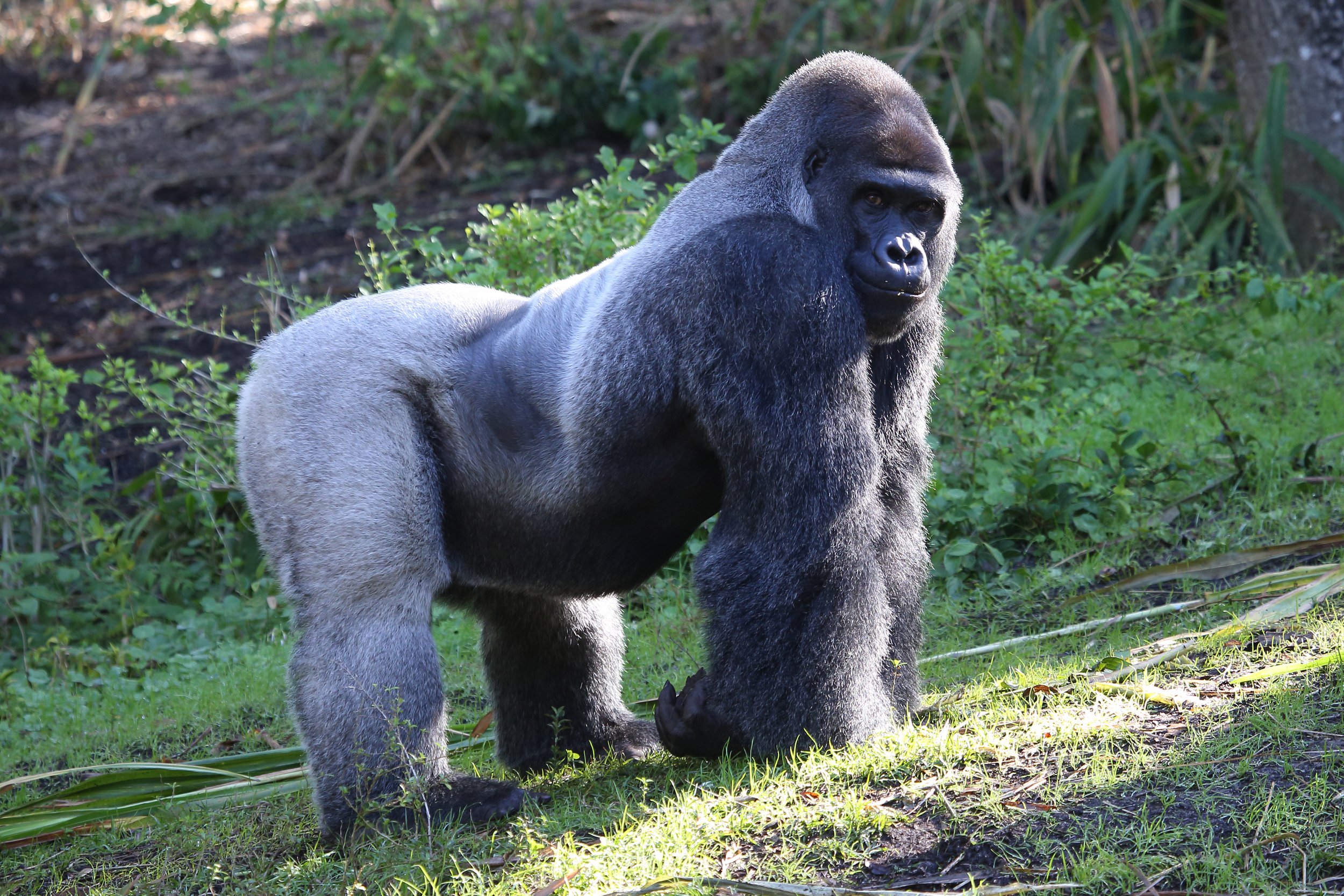
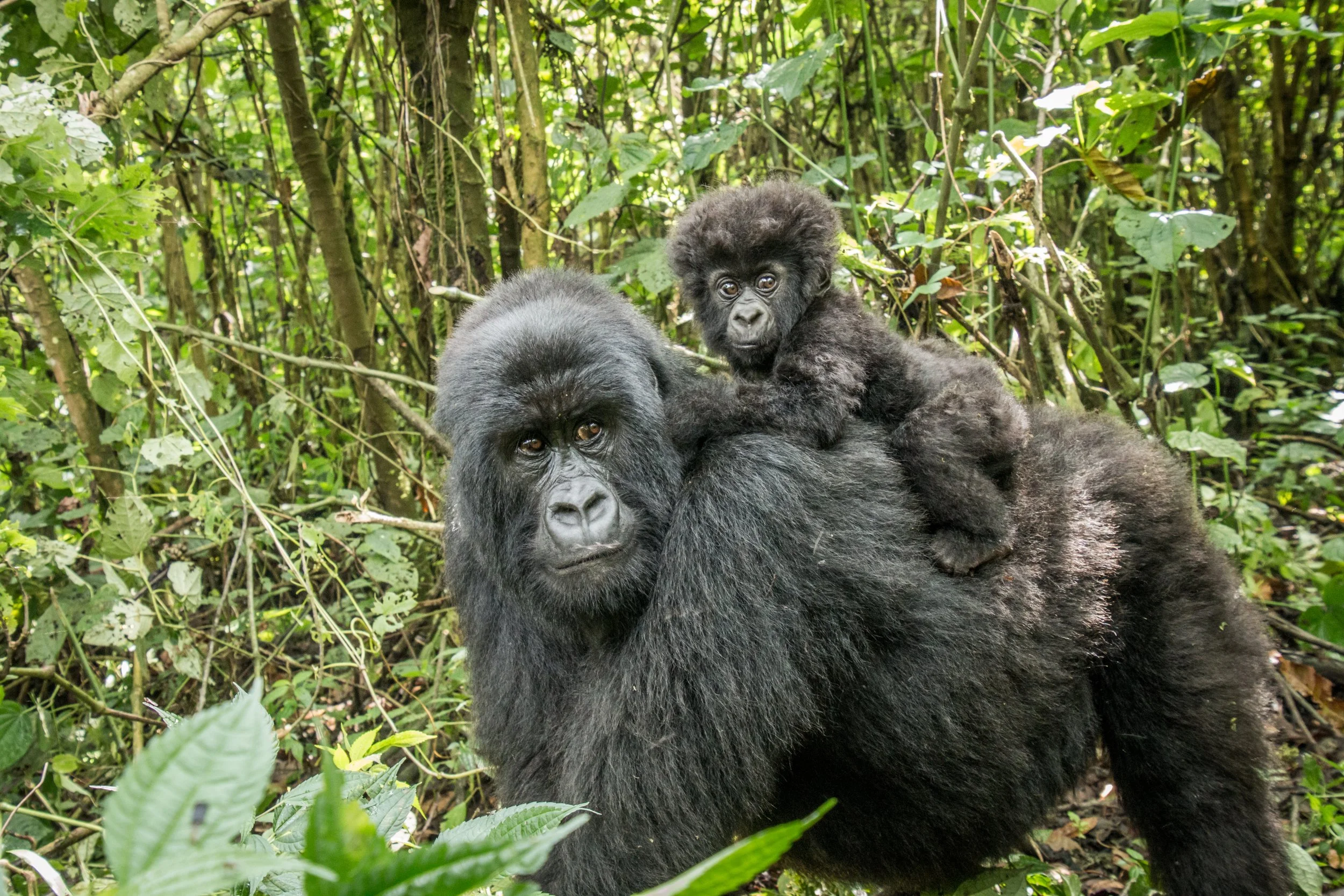
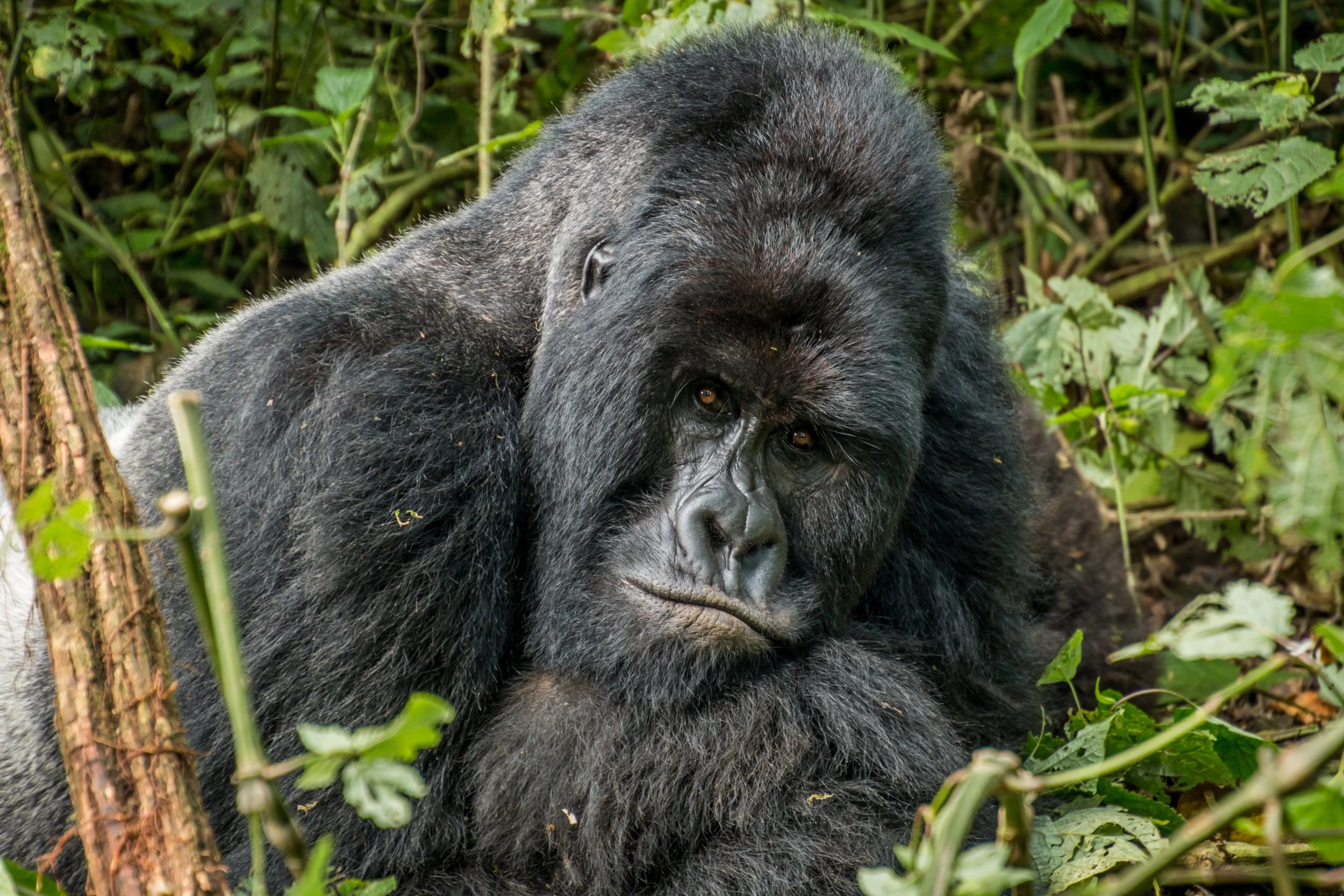
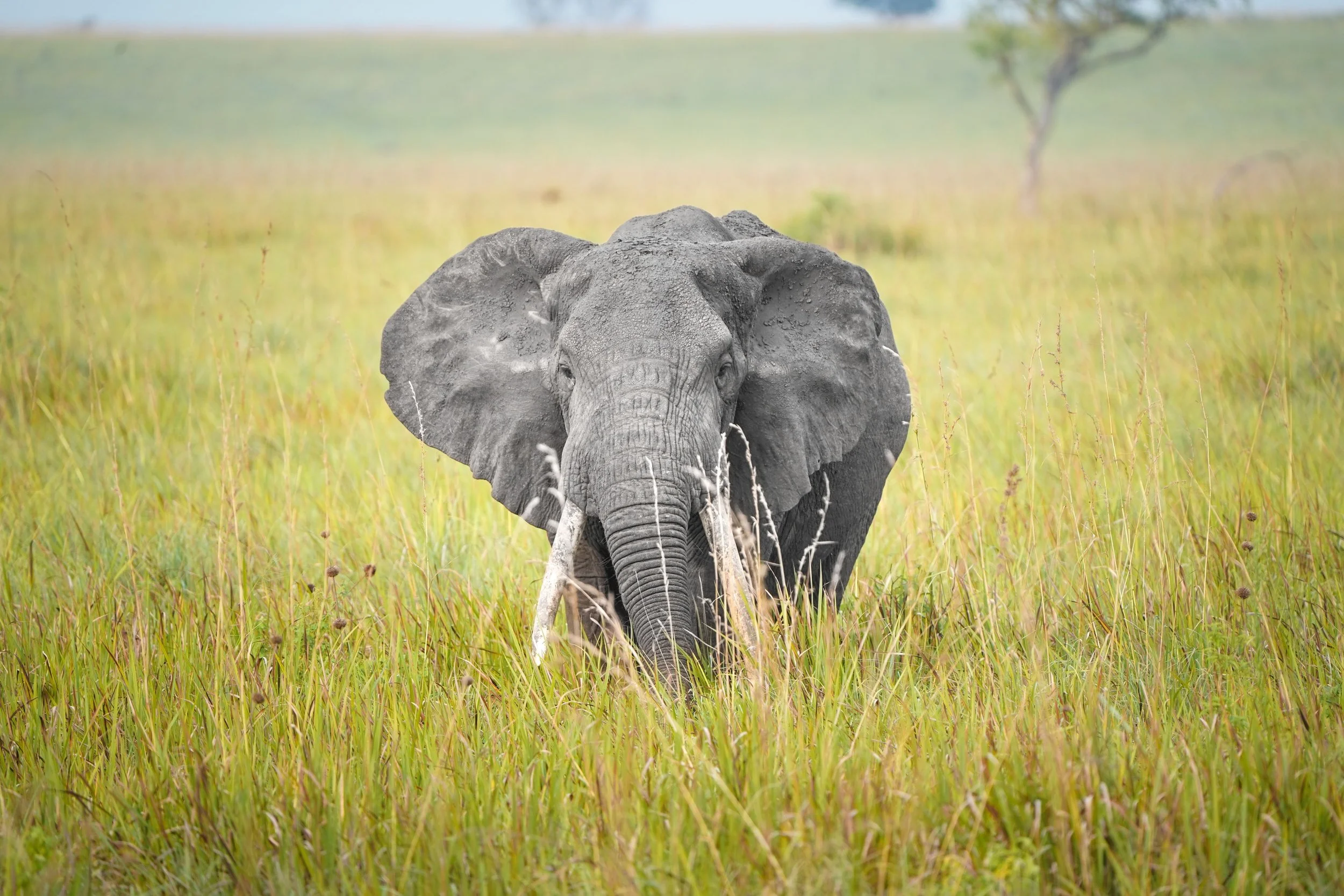
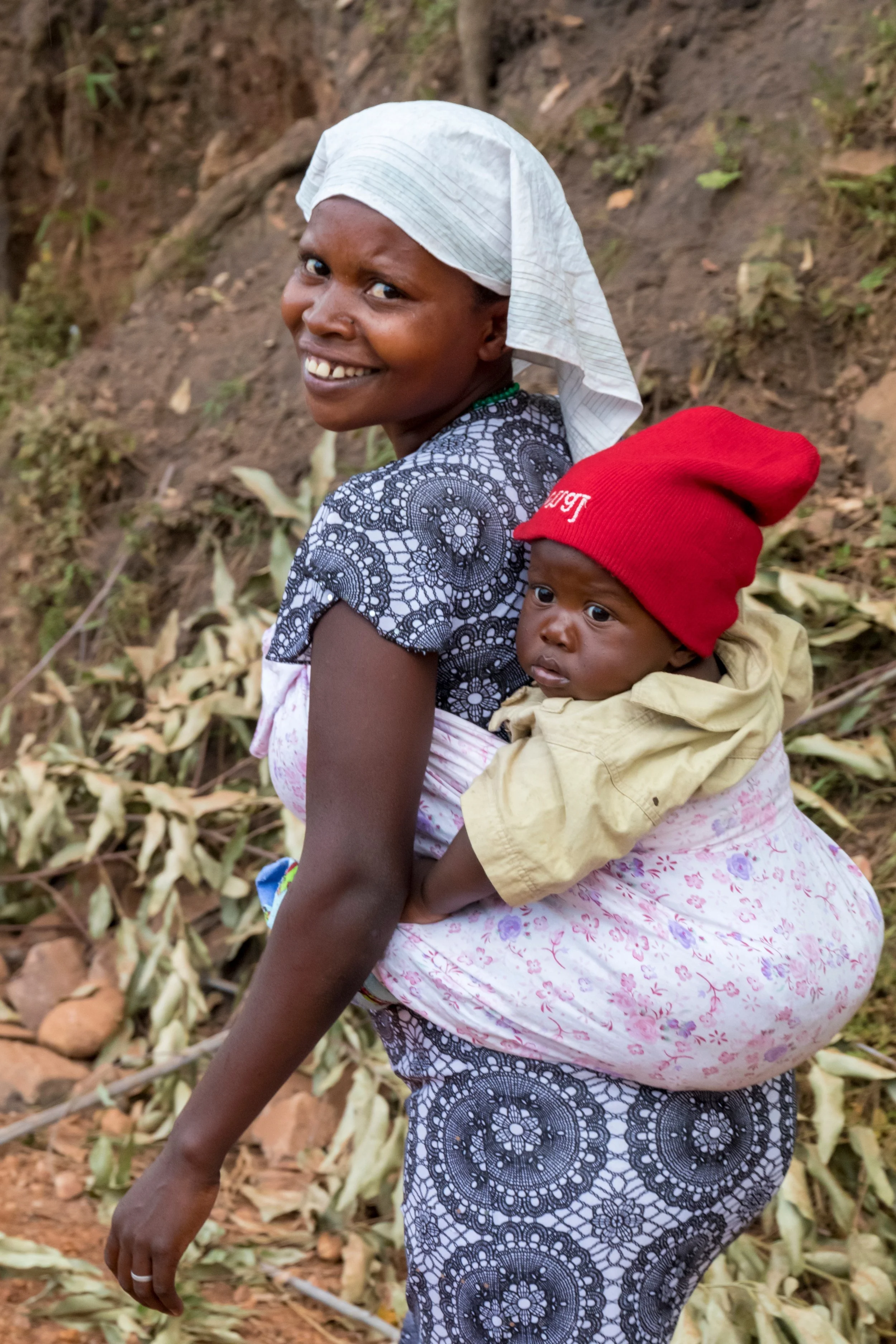
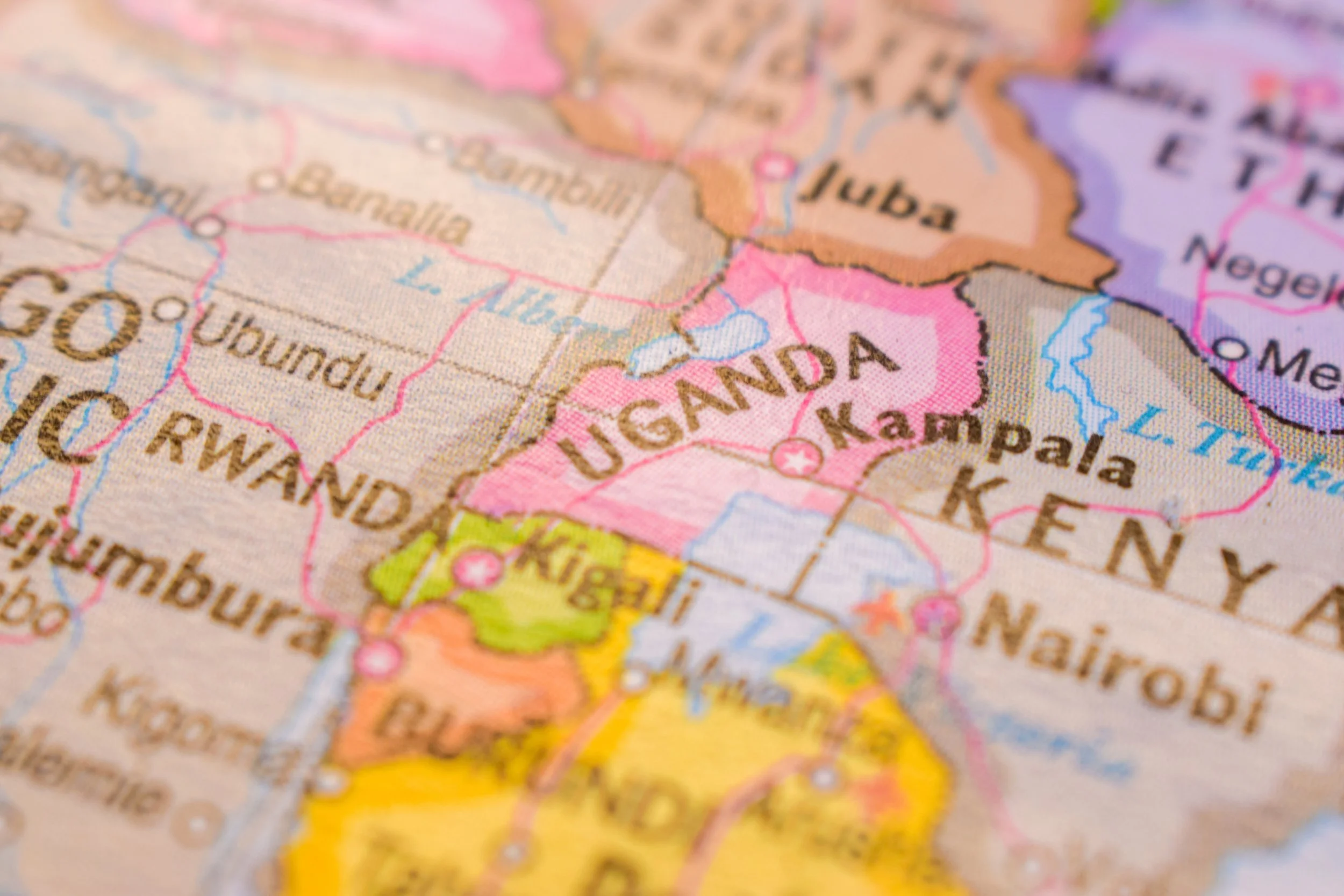
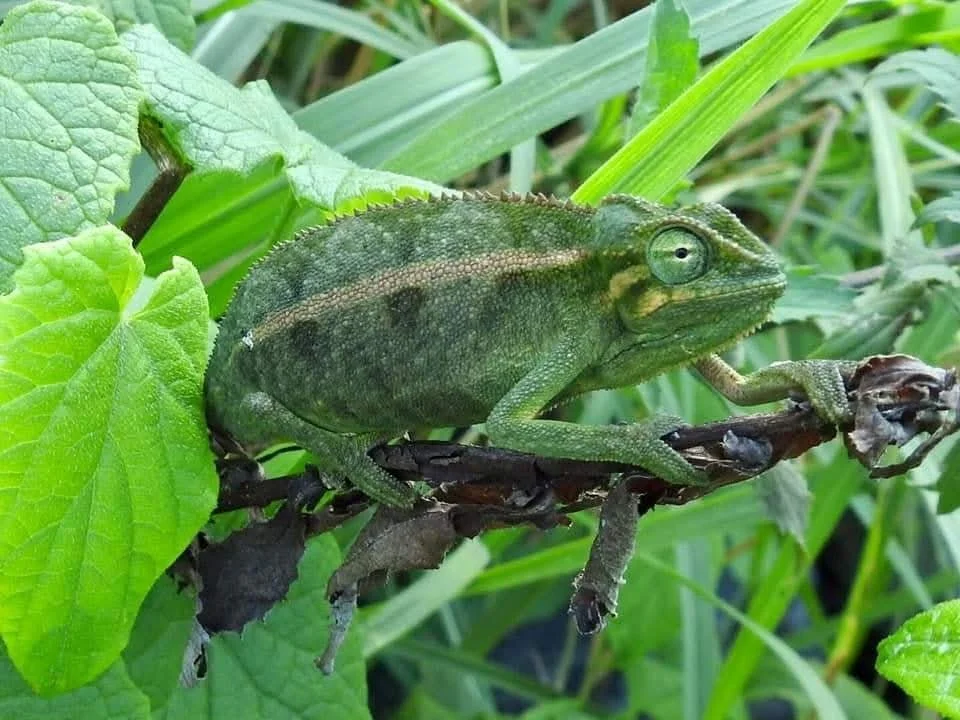
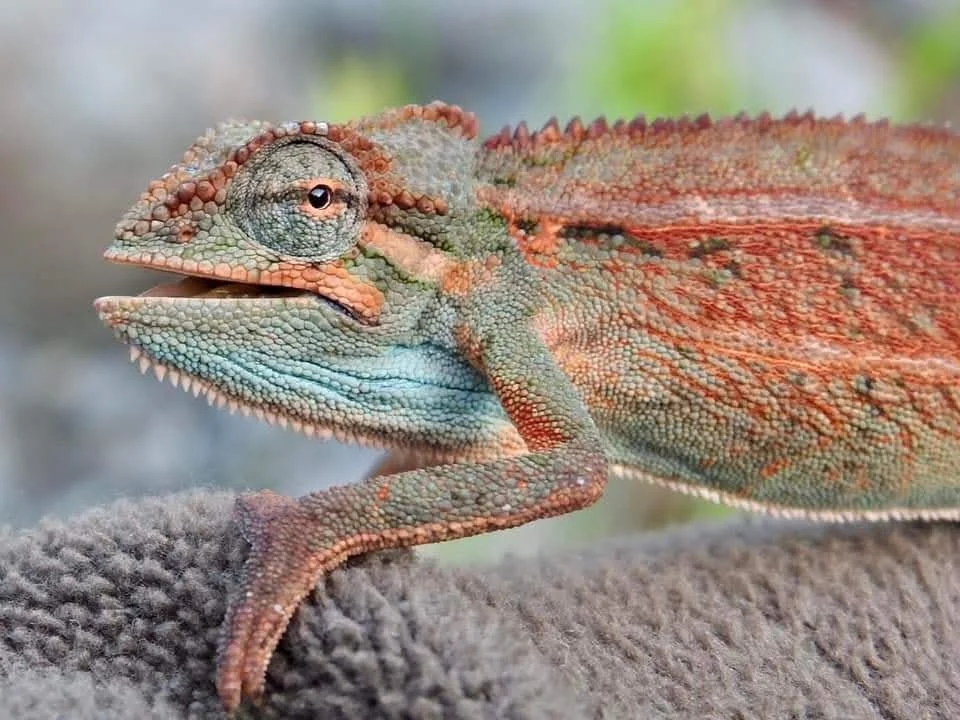
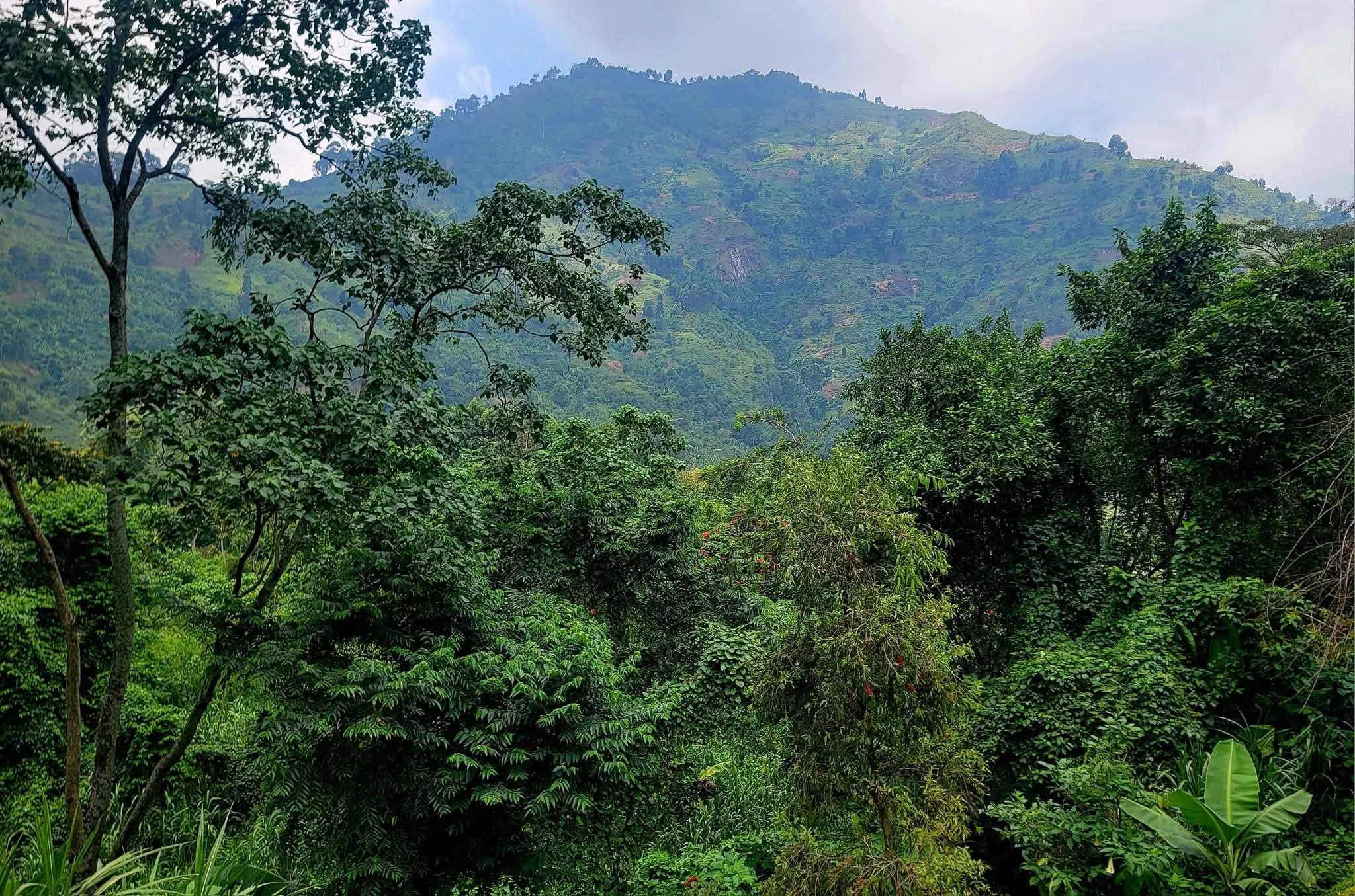
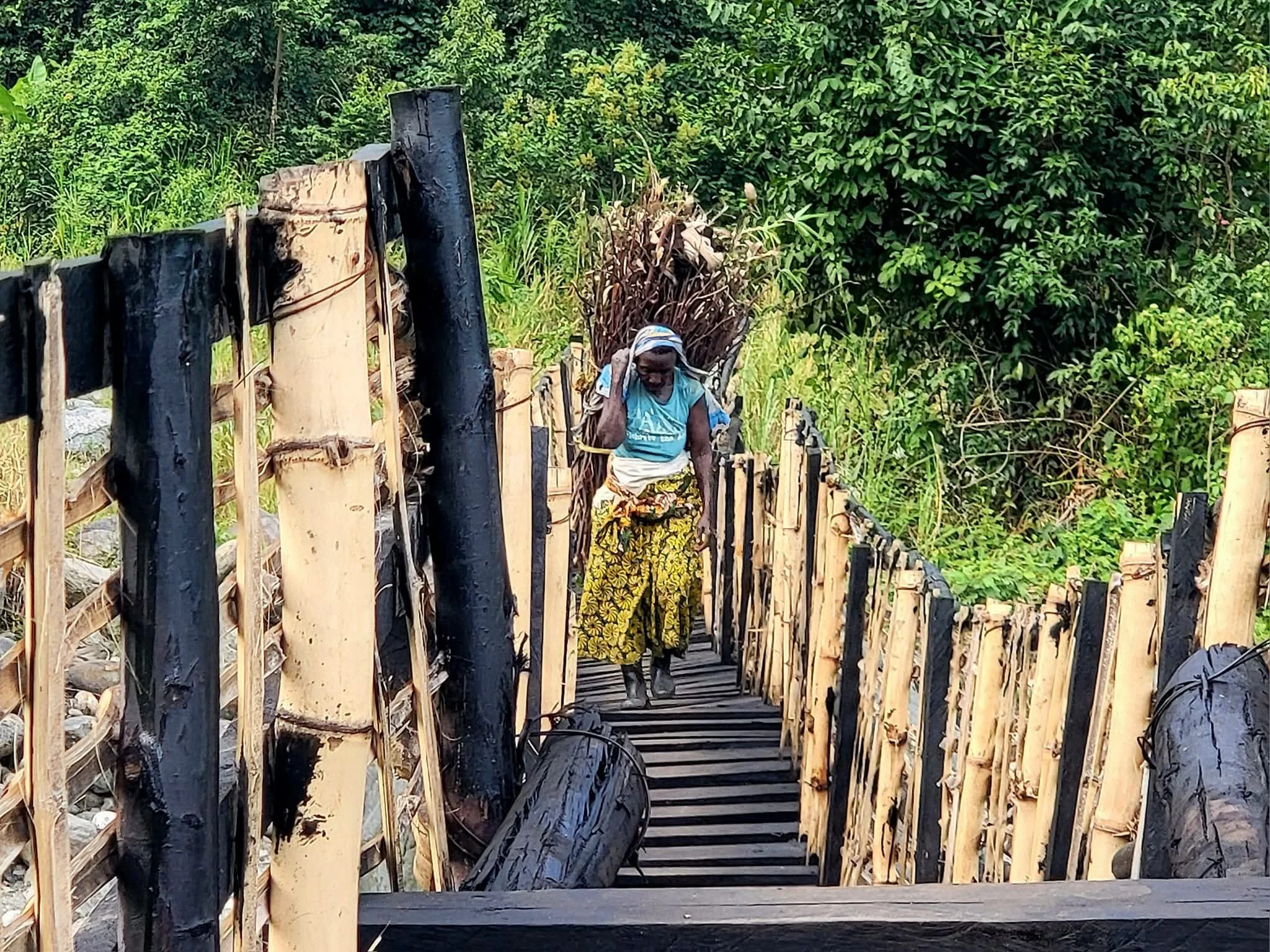
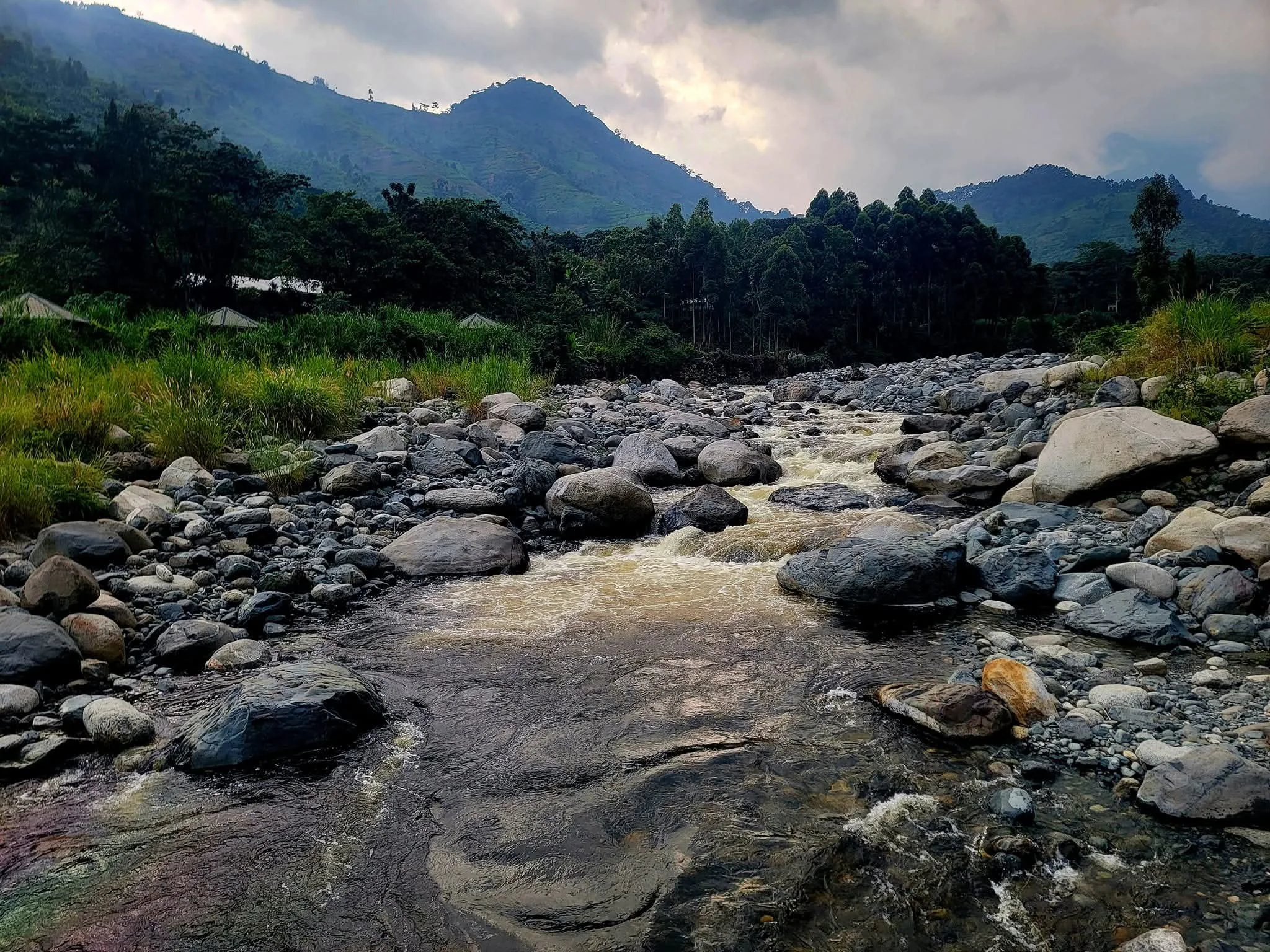
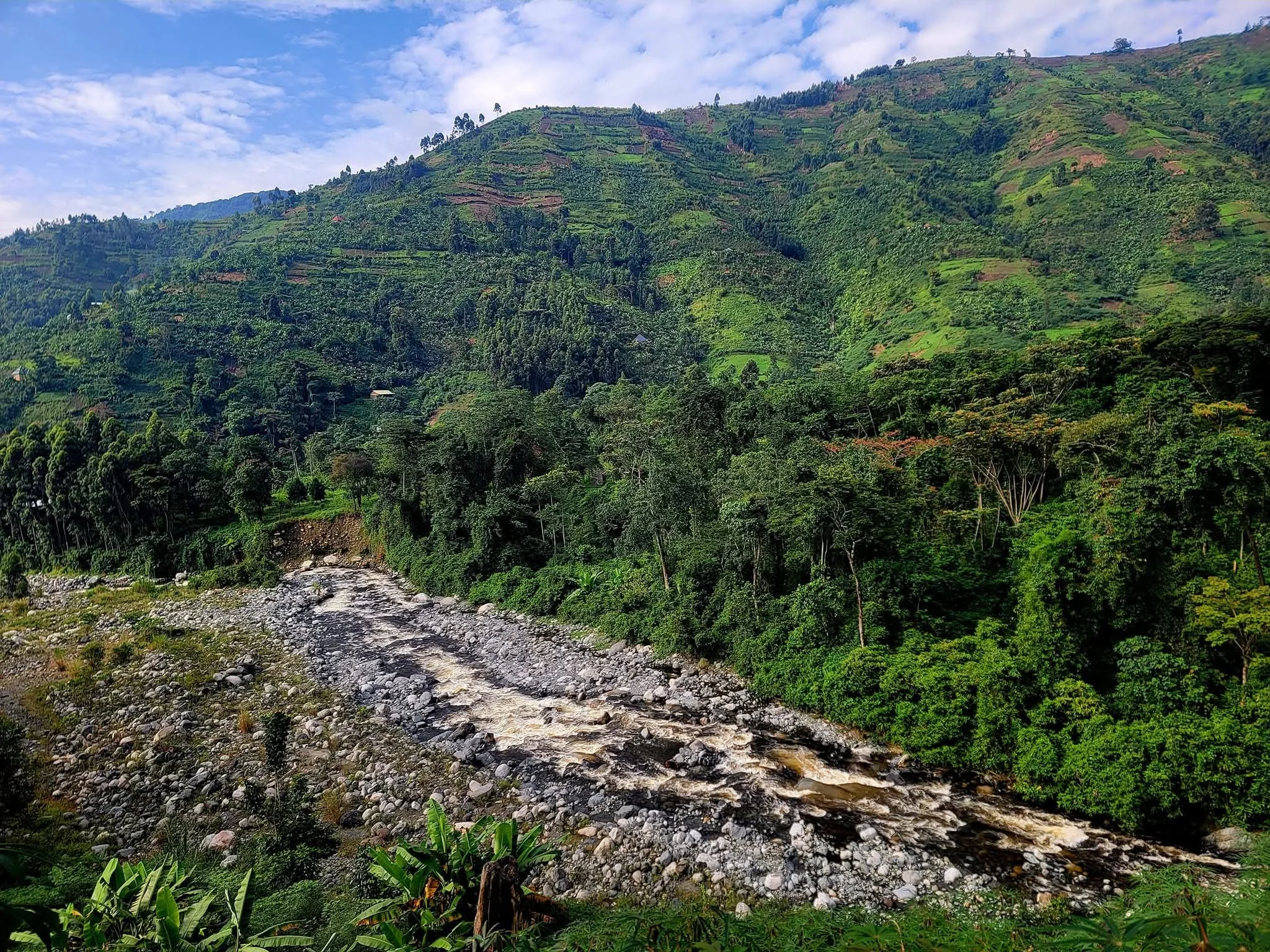
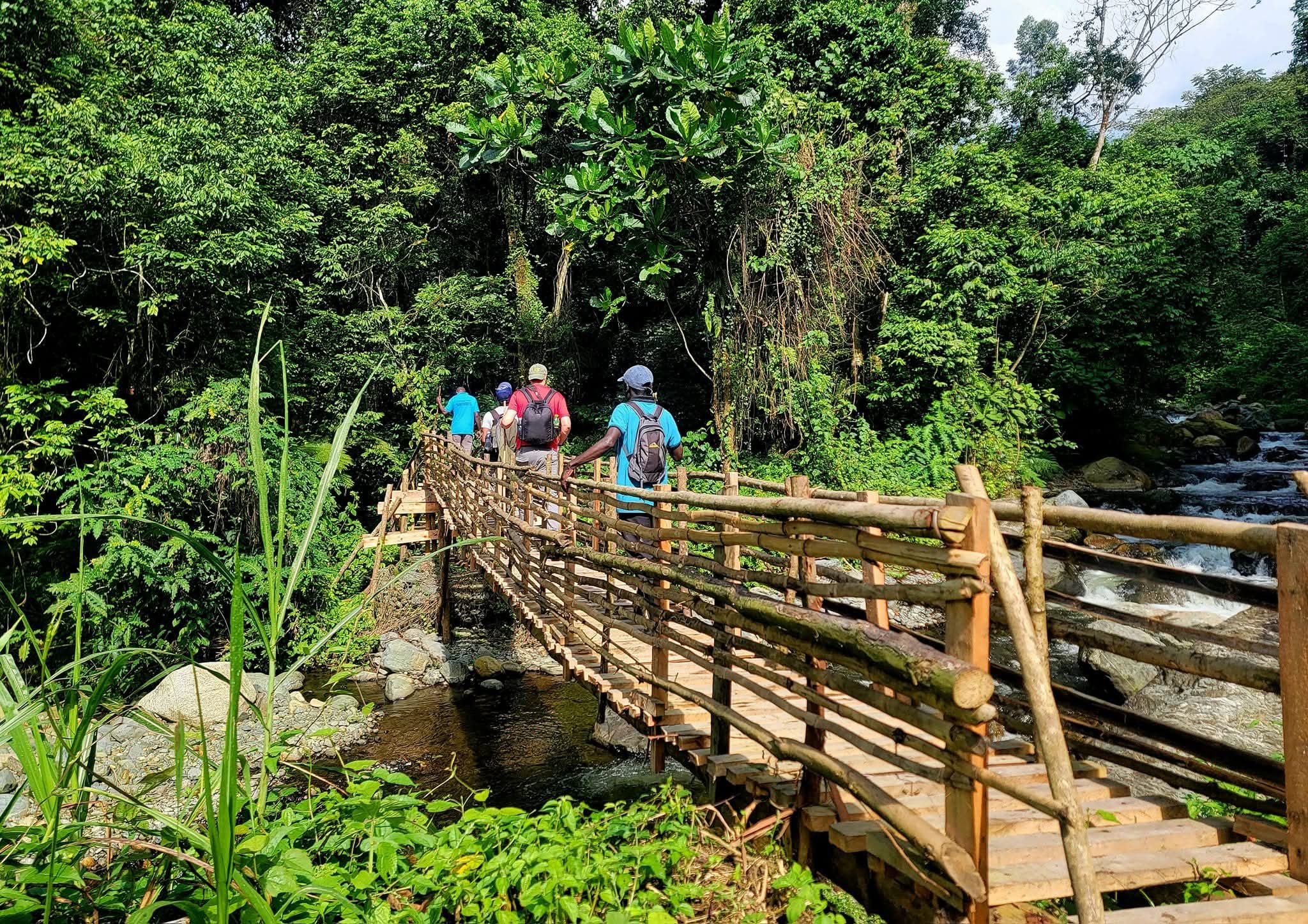
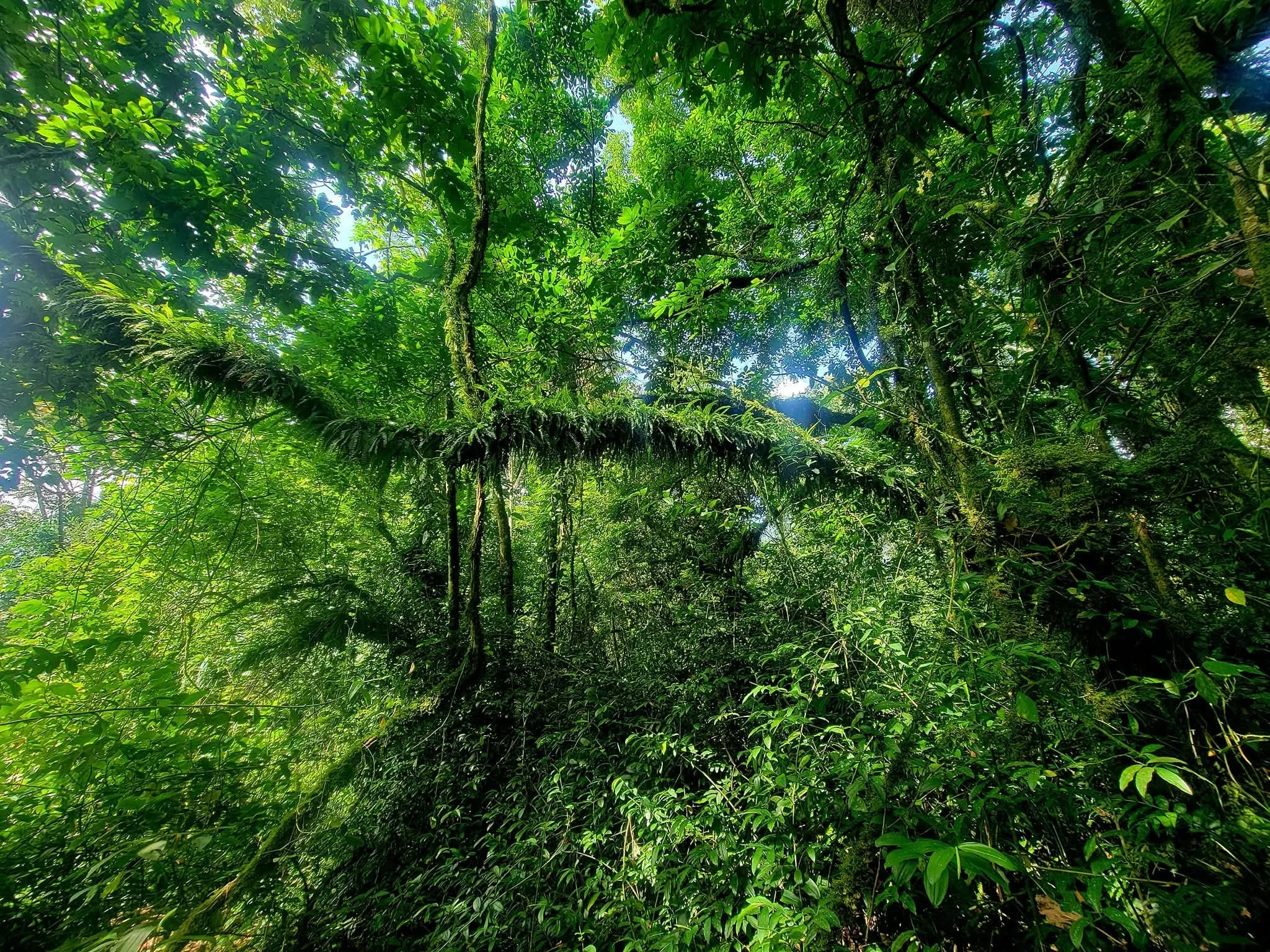
The Albertine Rift is exceptionally rich in biodiversity due to the fact that it was formed by tectonic plate movements that created mountains, valleys, and lakes, producing varied altitudes and isolated habitats where diverse and often endemic species can evolve and thrive- such as the endangered mountain gorilla, which we share approximately 98-99% of our DNA with. It began forming around 20–25 million years ago as part of the western branch of the East African Rift system and is still tectonically active today.
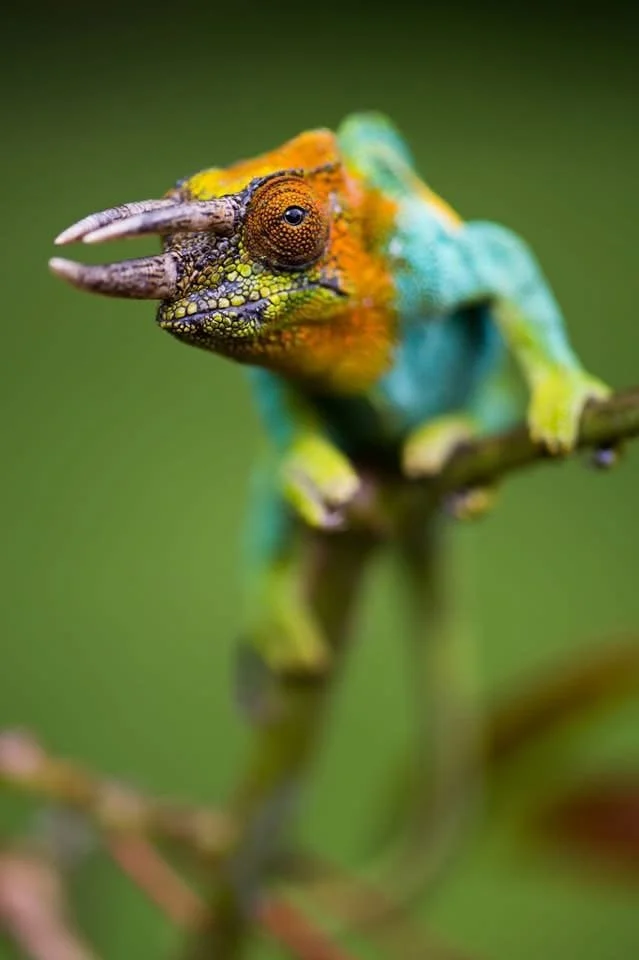
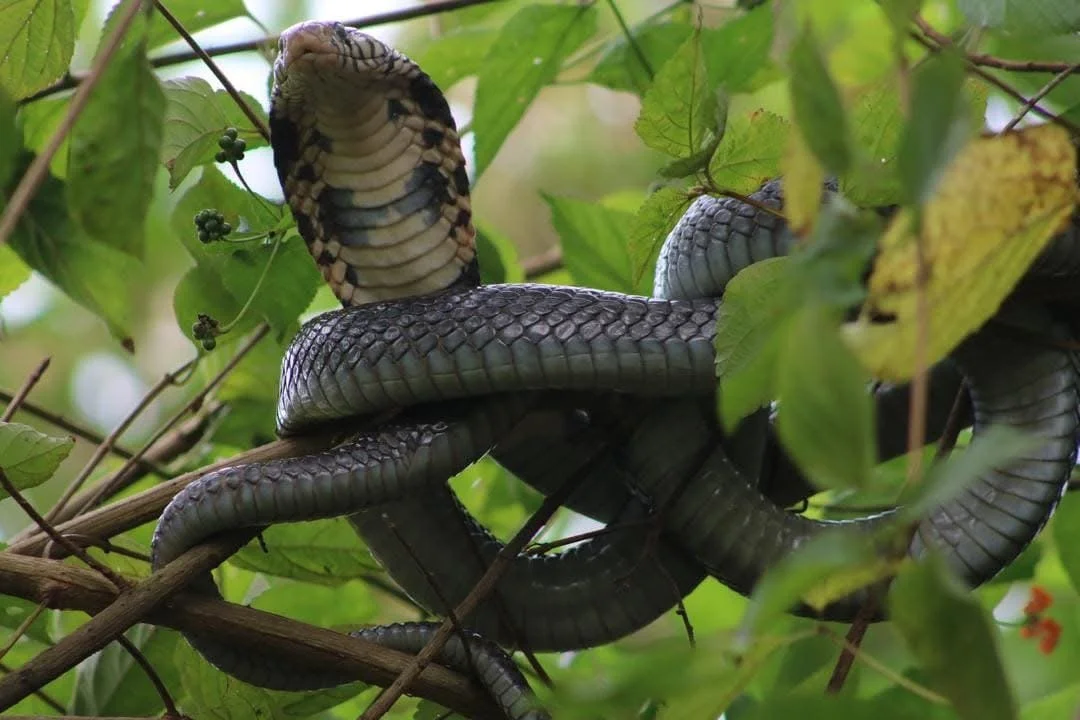
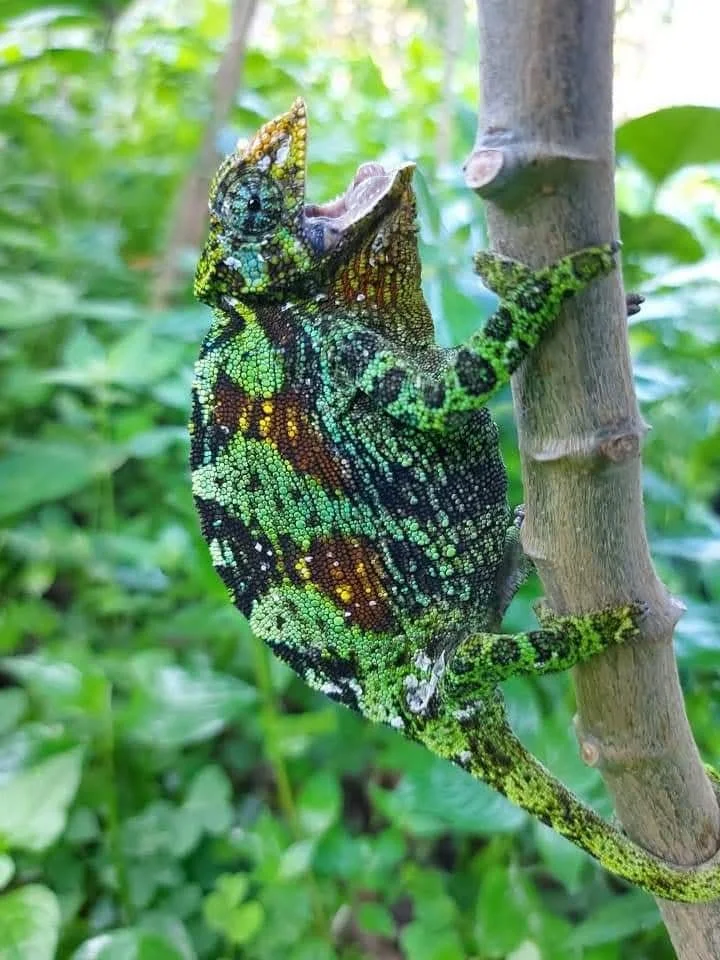
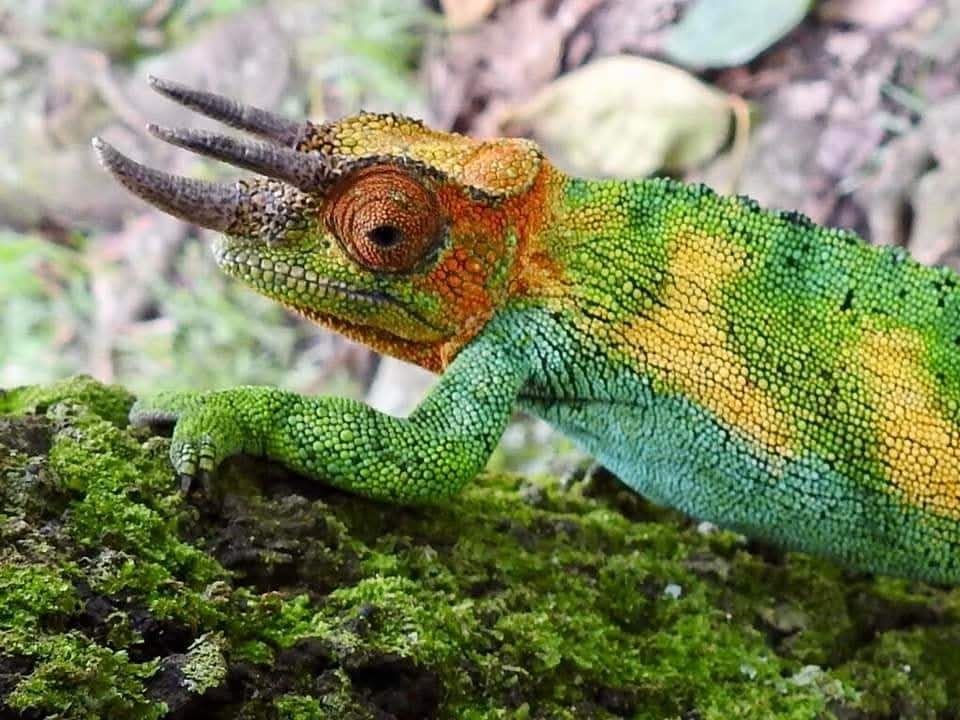
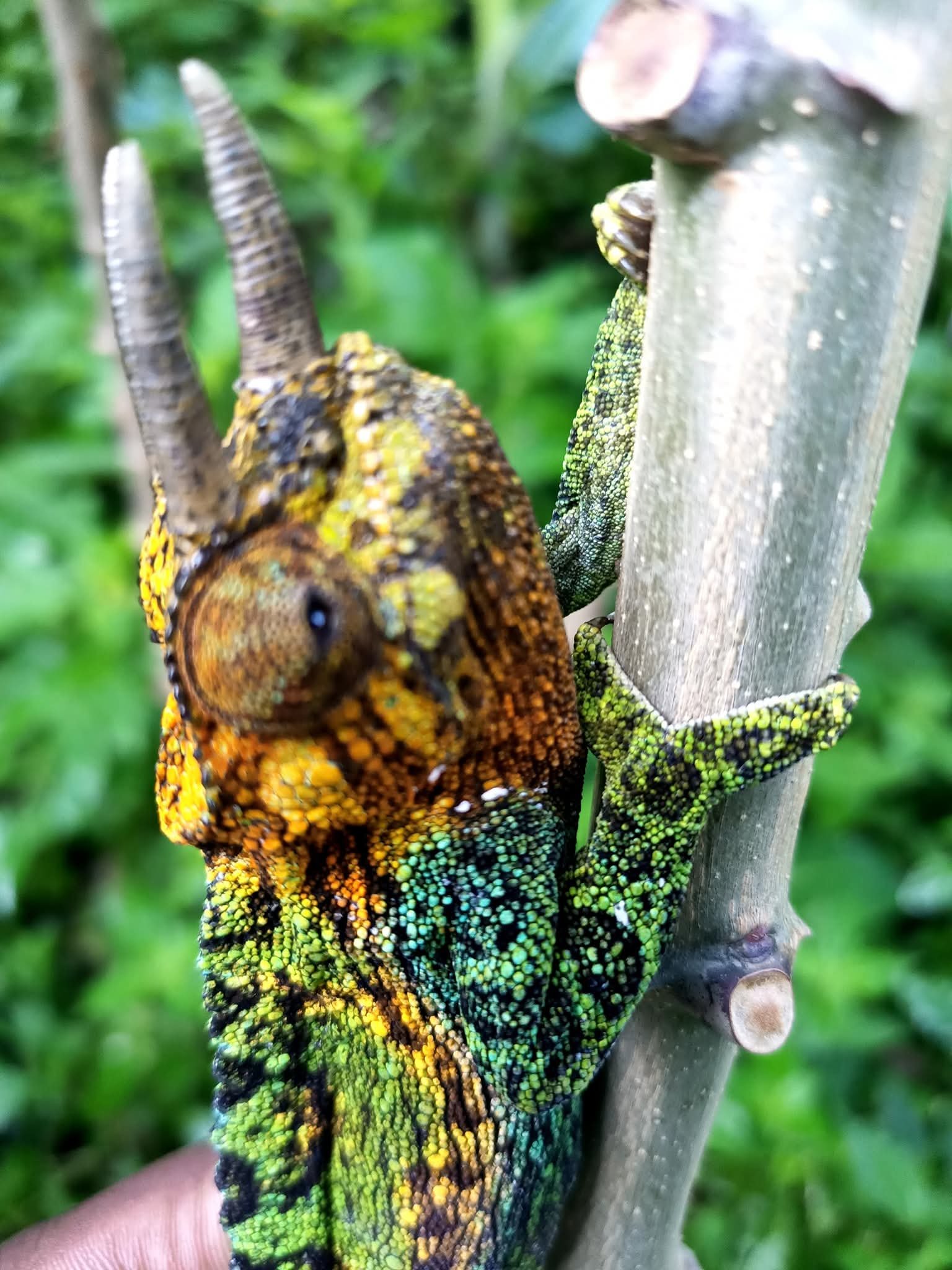
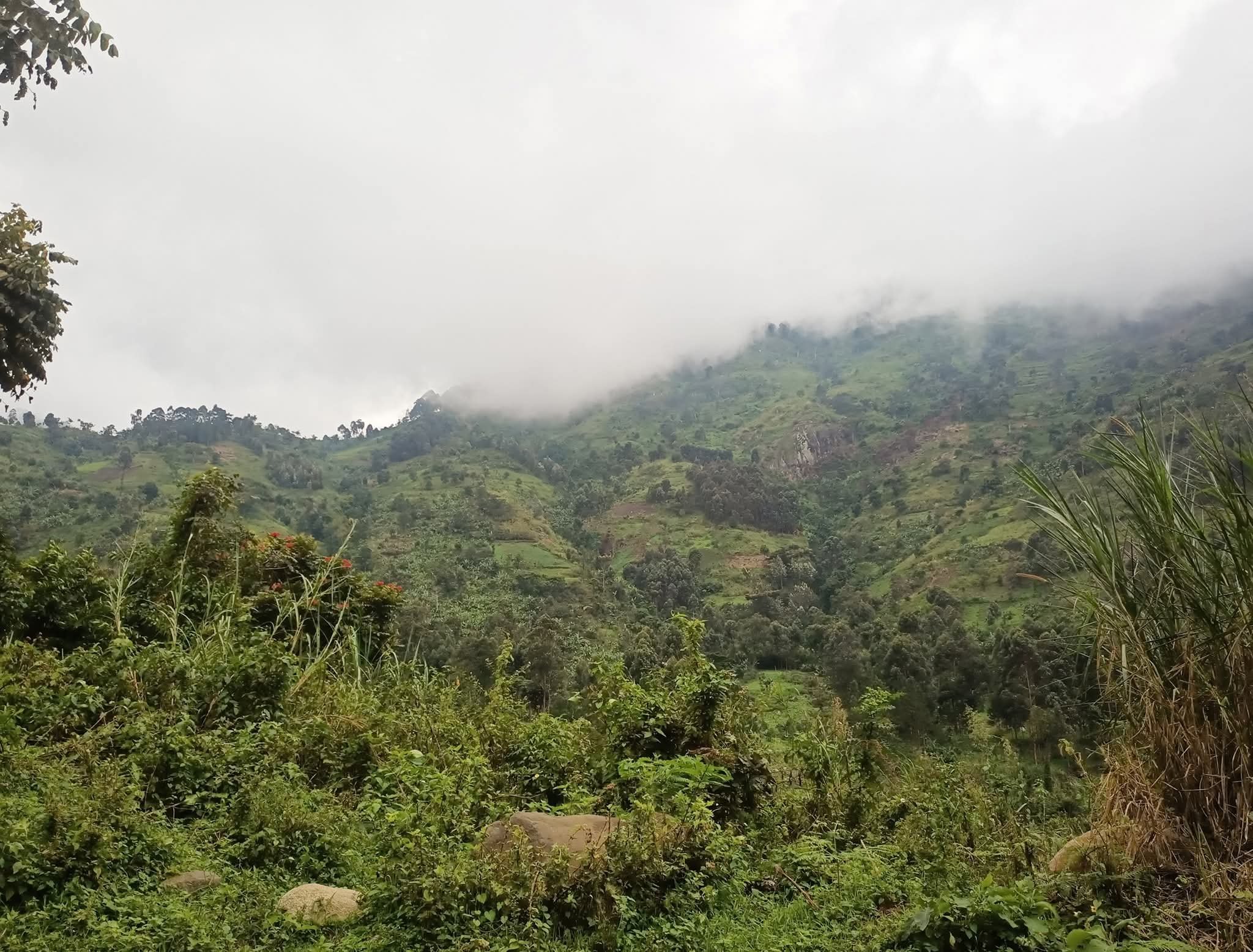
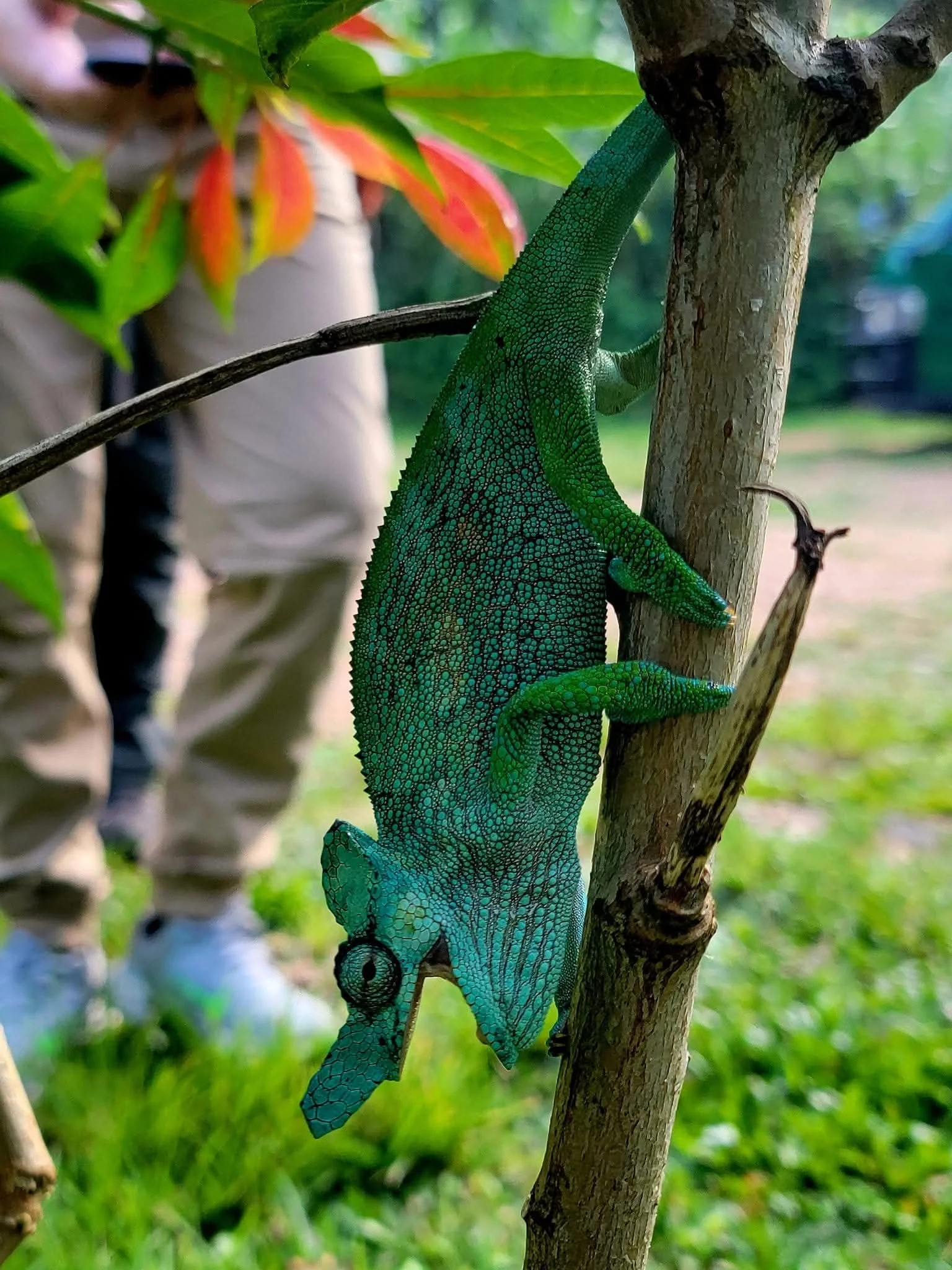
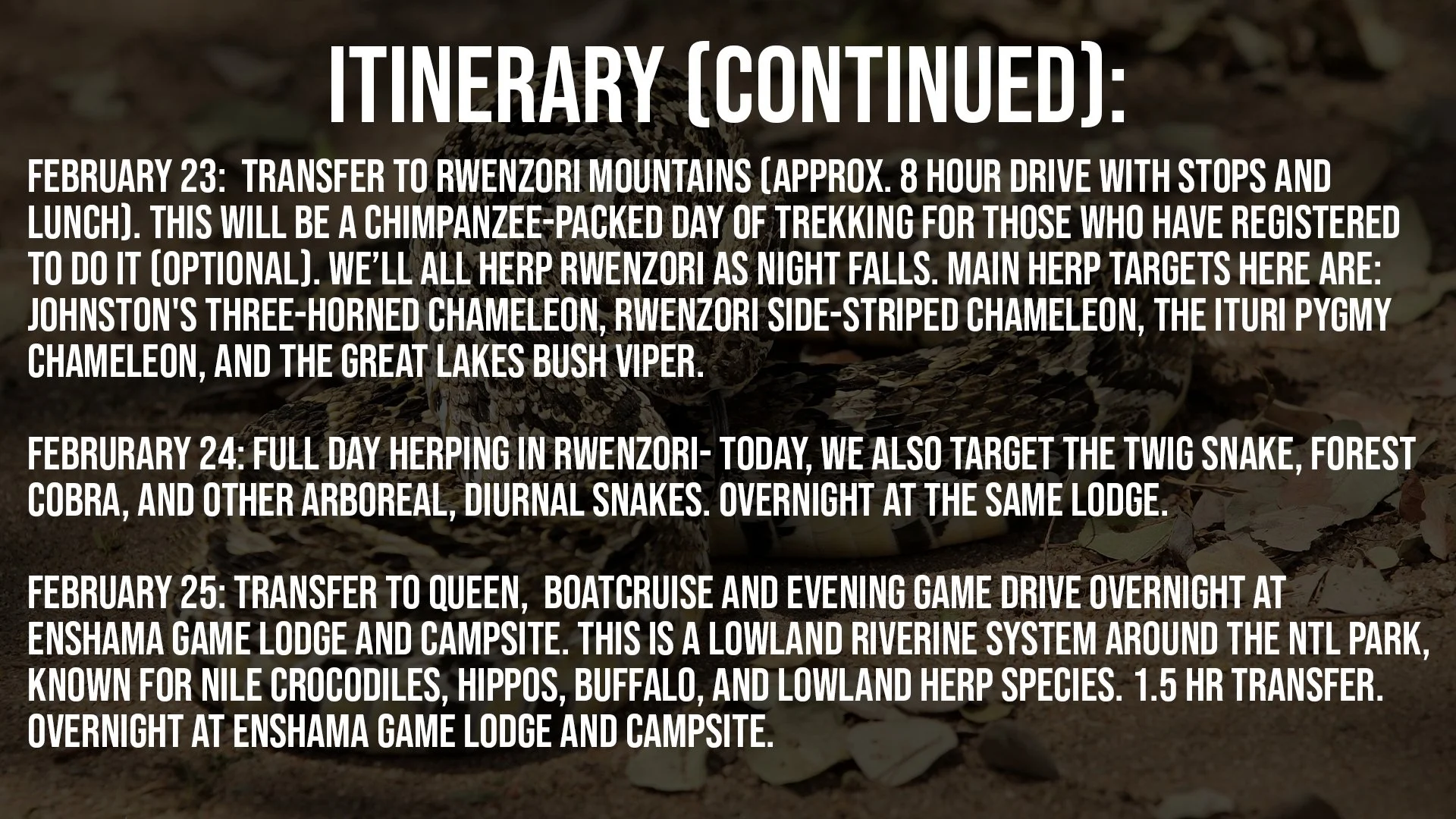
As a reminder, this expedition is different from the one we are hosting with the Tooth & Claw Podcast. This trip provides: 2 additional days herping, optional Chimpanzee Trekking, a stay in the Rwenzori mountains targeting endemic chameleons, and an excursion to Musambwa island- known for its extremely high density of forest cobras. The trips are built differently, with favorable options for all types of naturalists regardless of which trip you choose to join. We do recommend this trip as an option to our usual guests- the more herp-oriented folks.
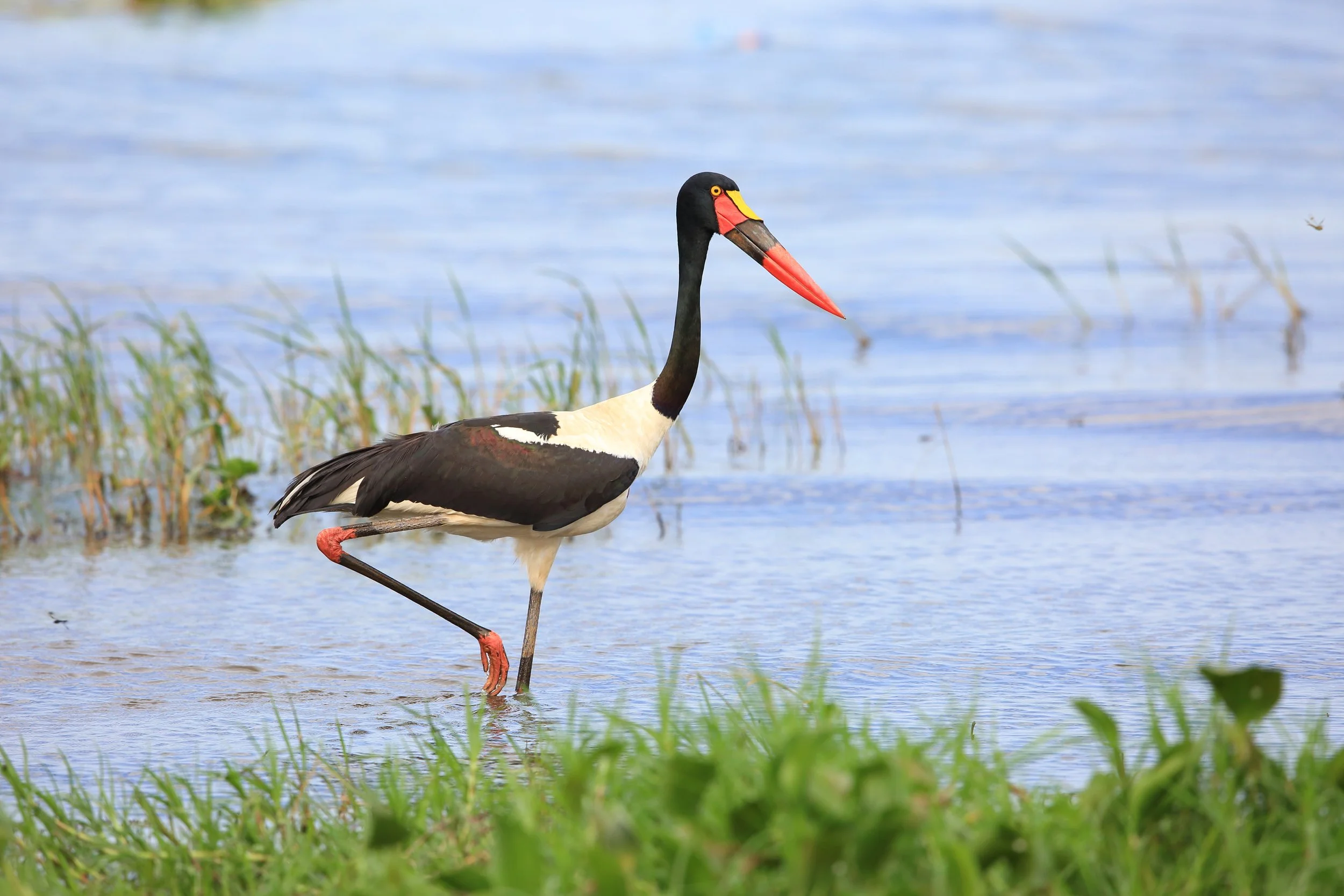
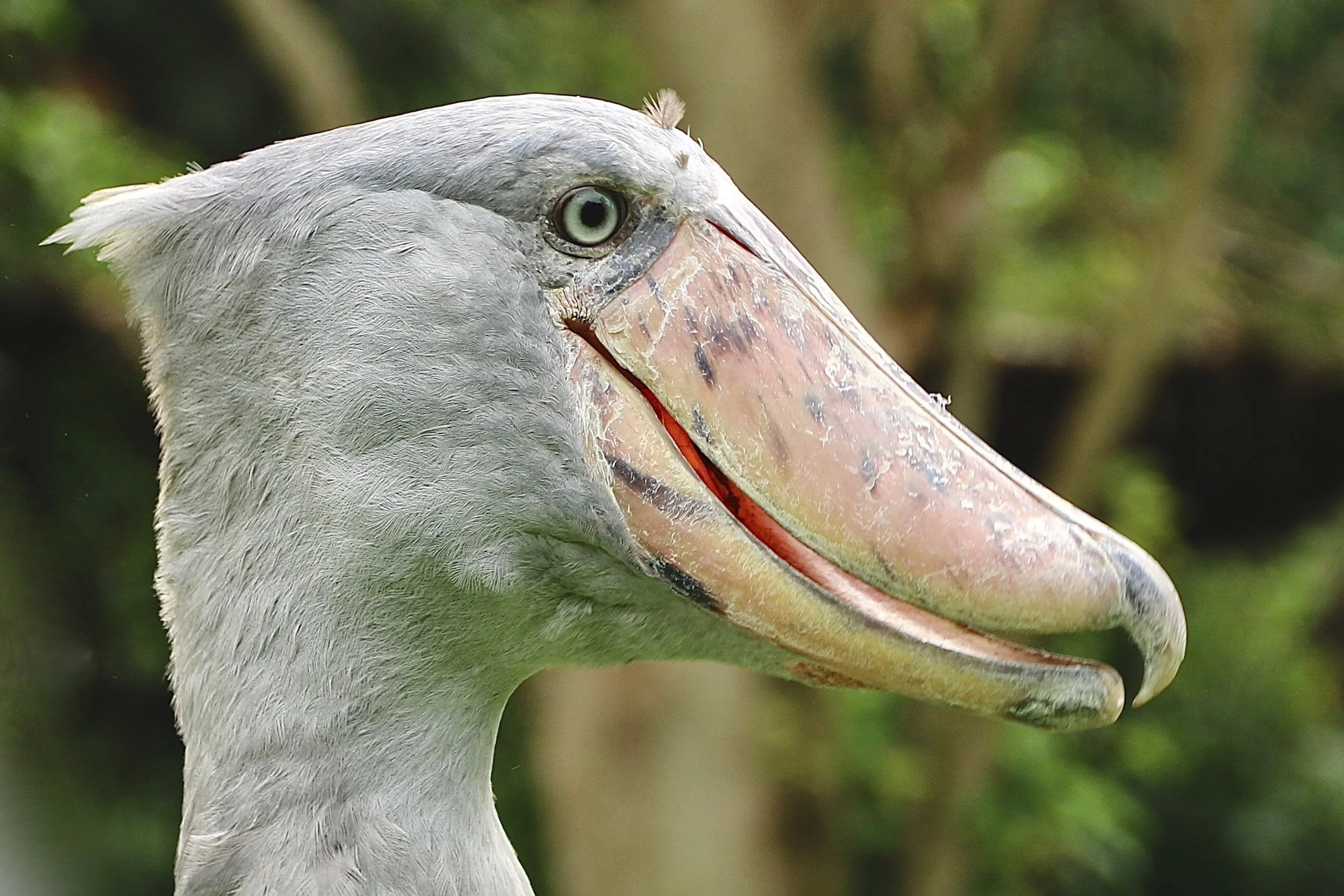
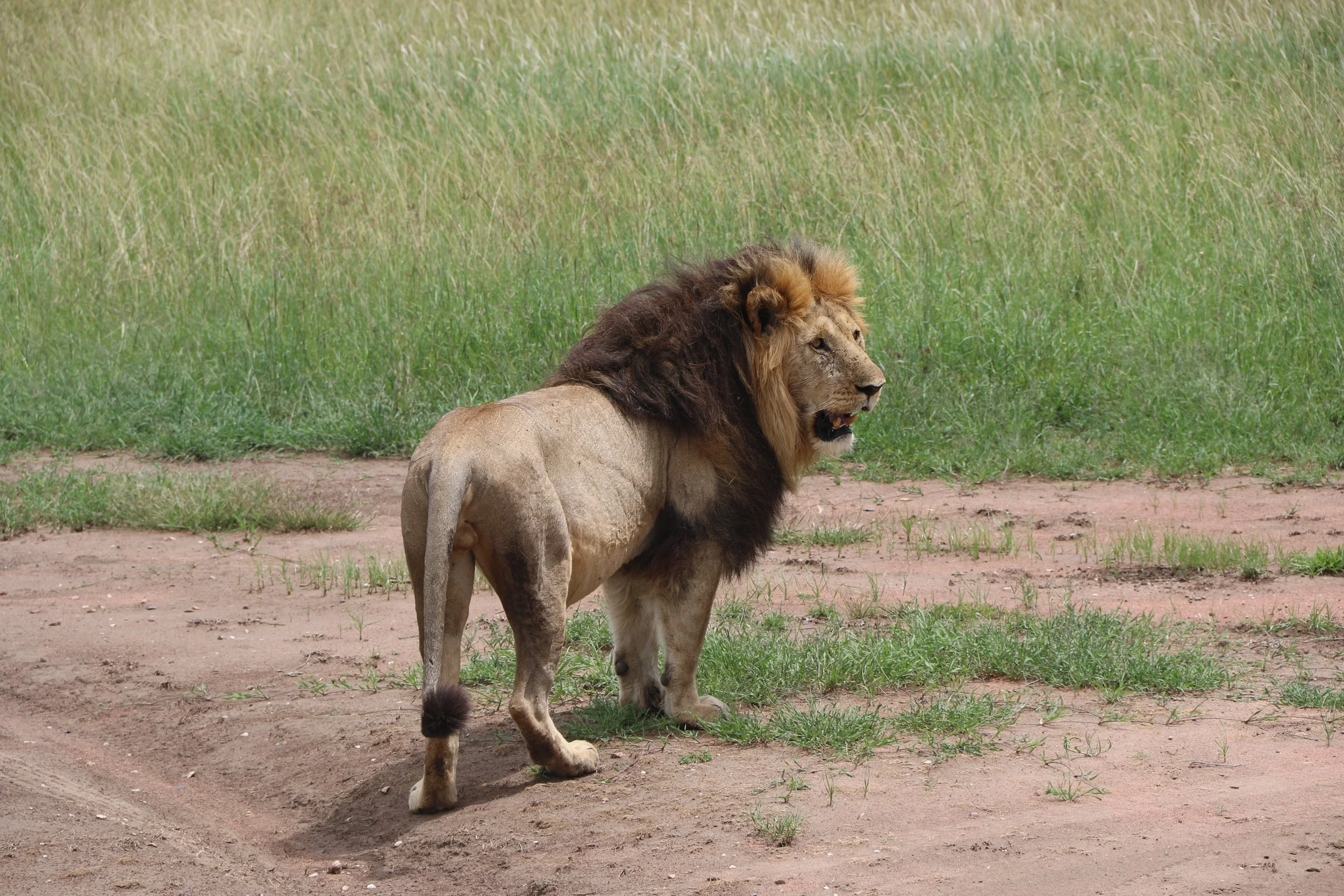
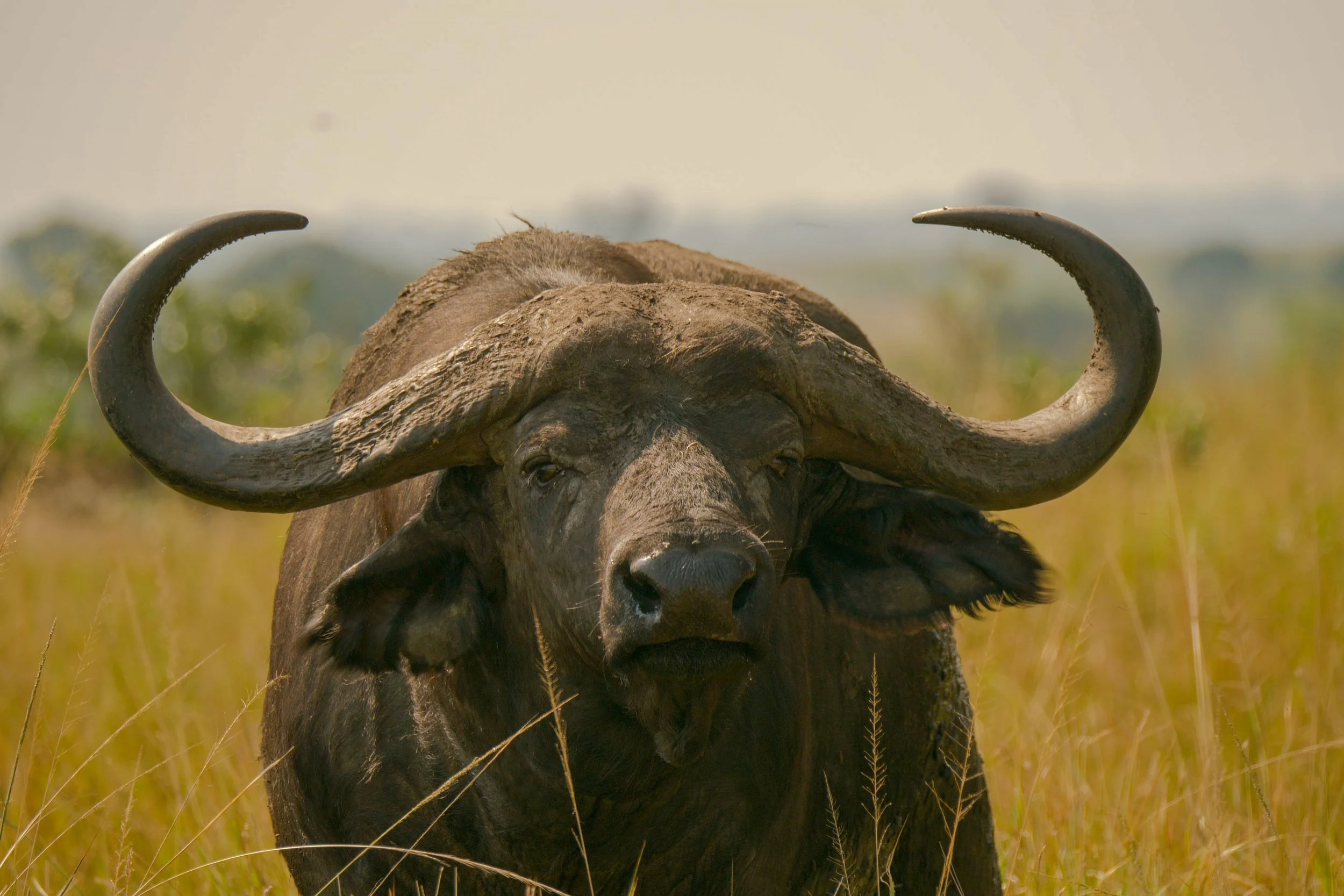
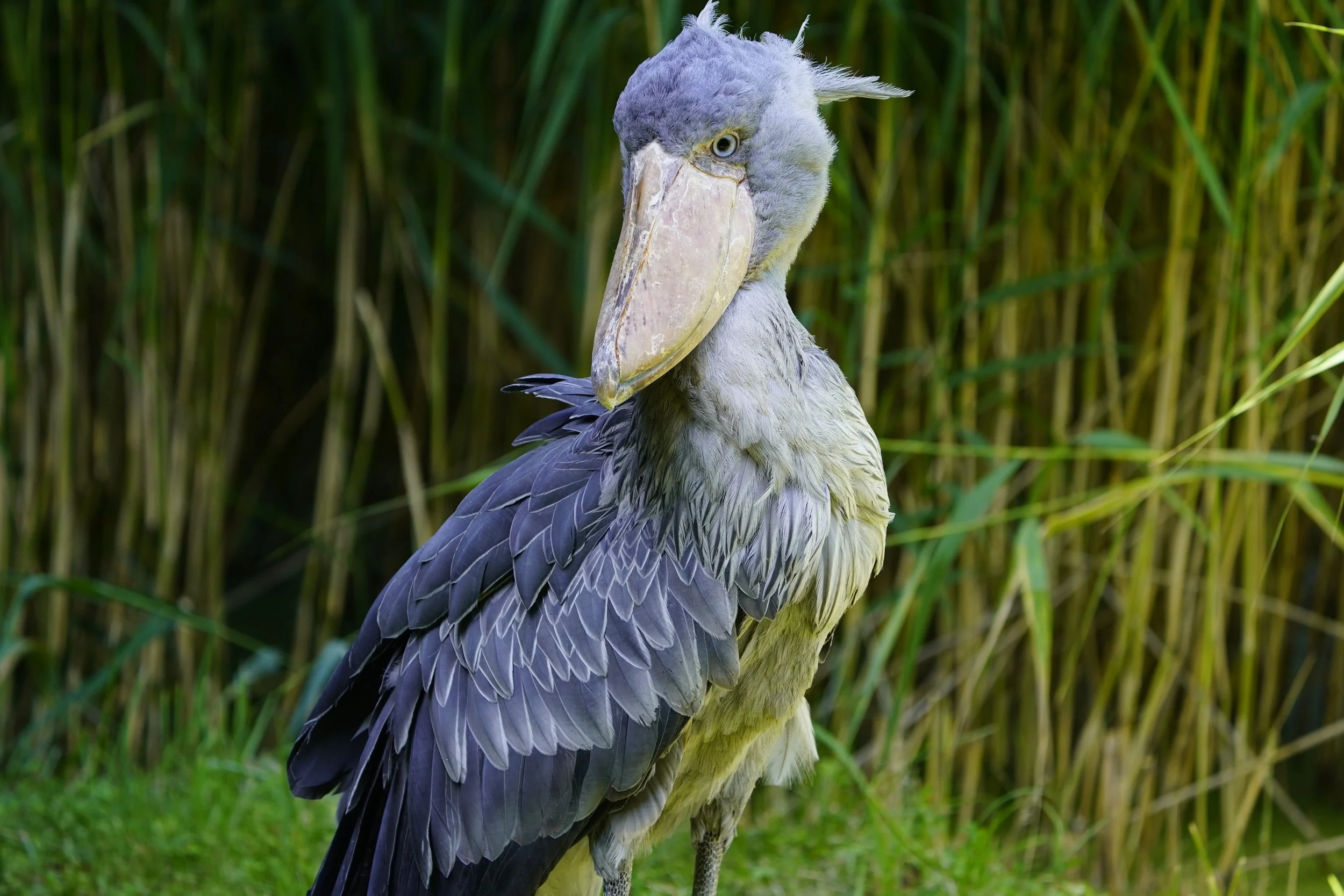
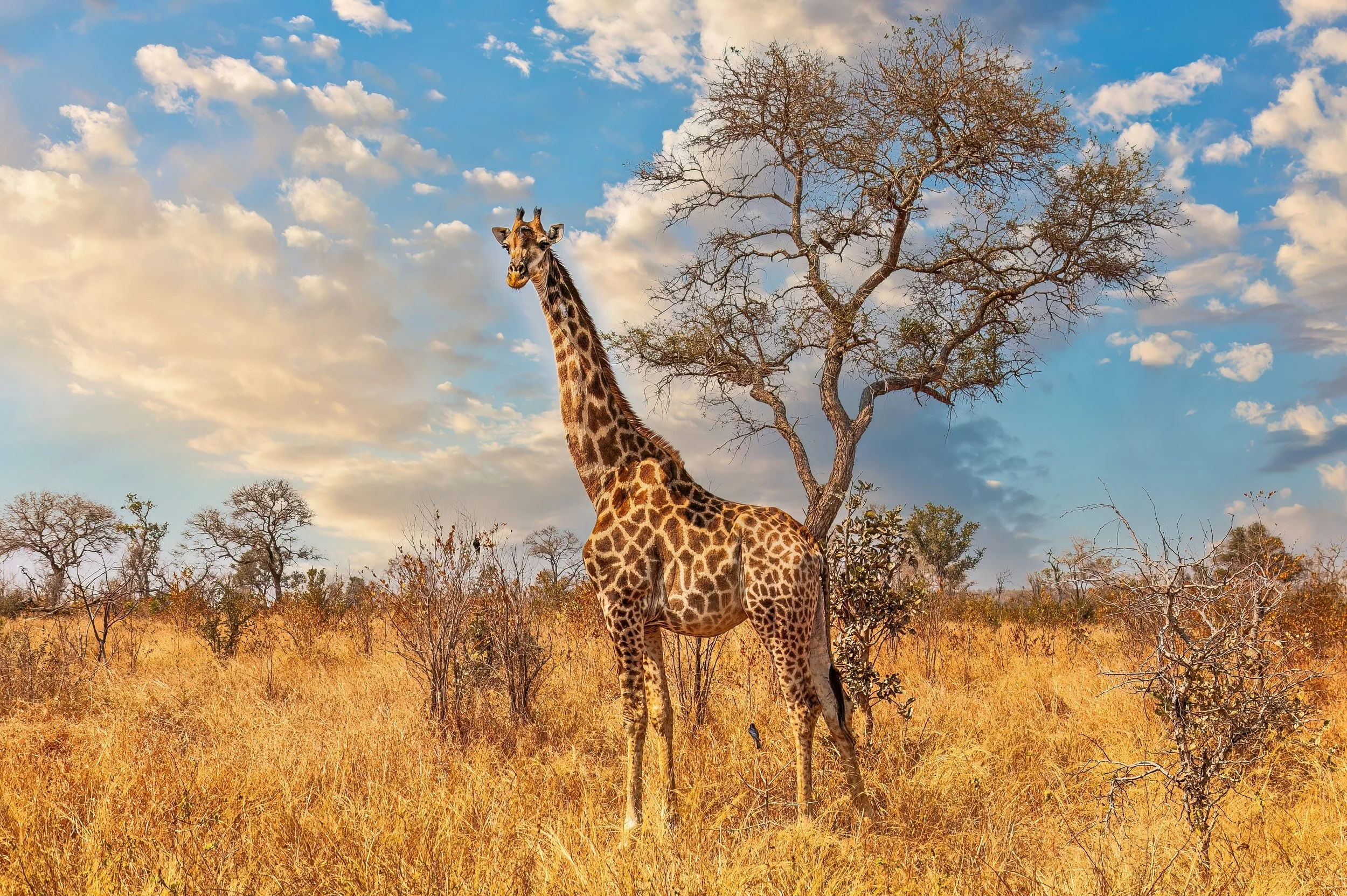
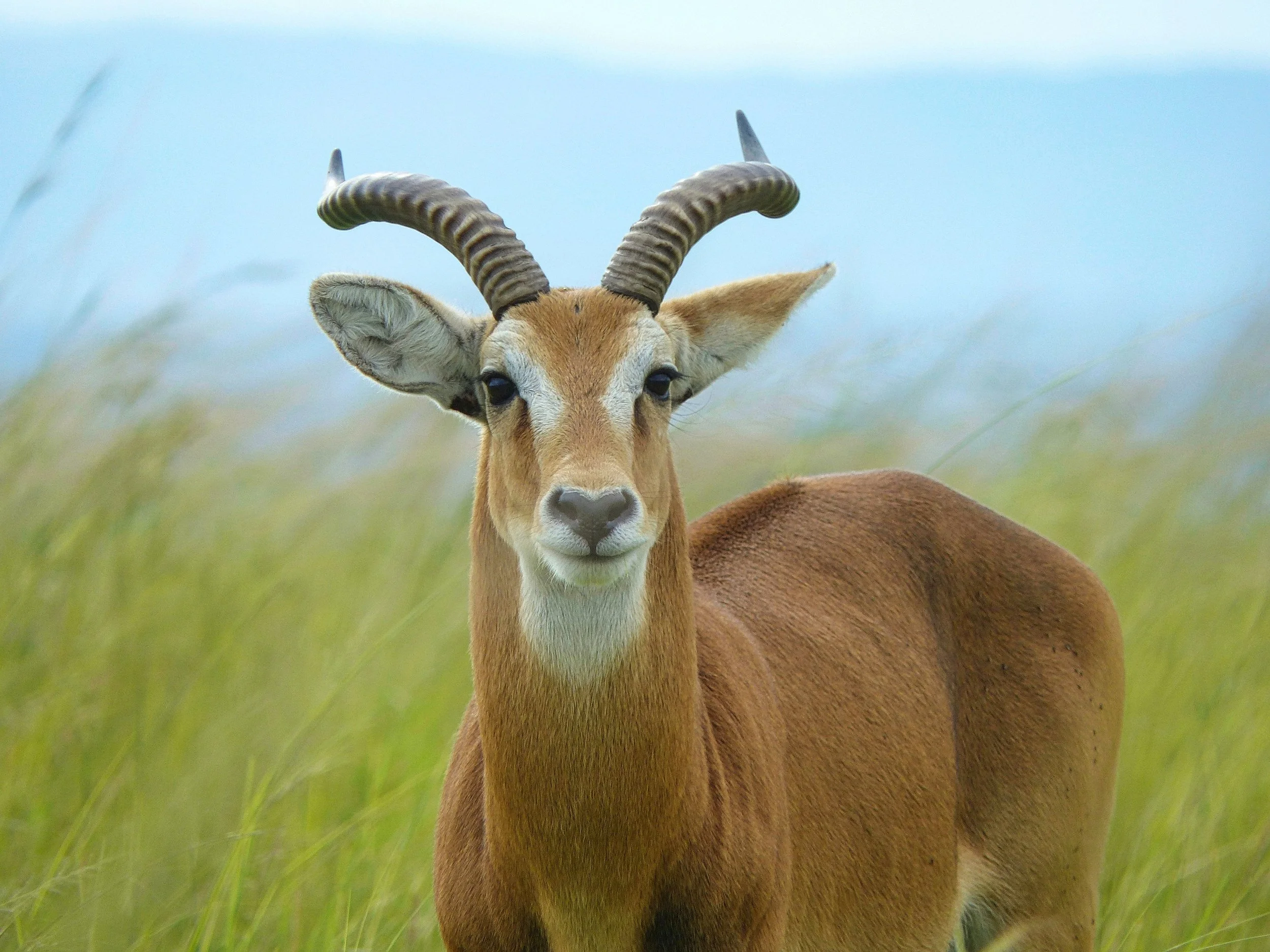
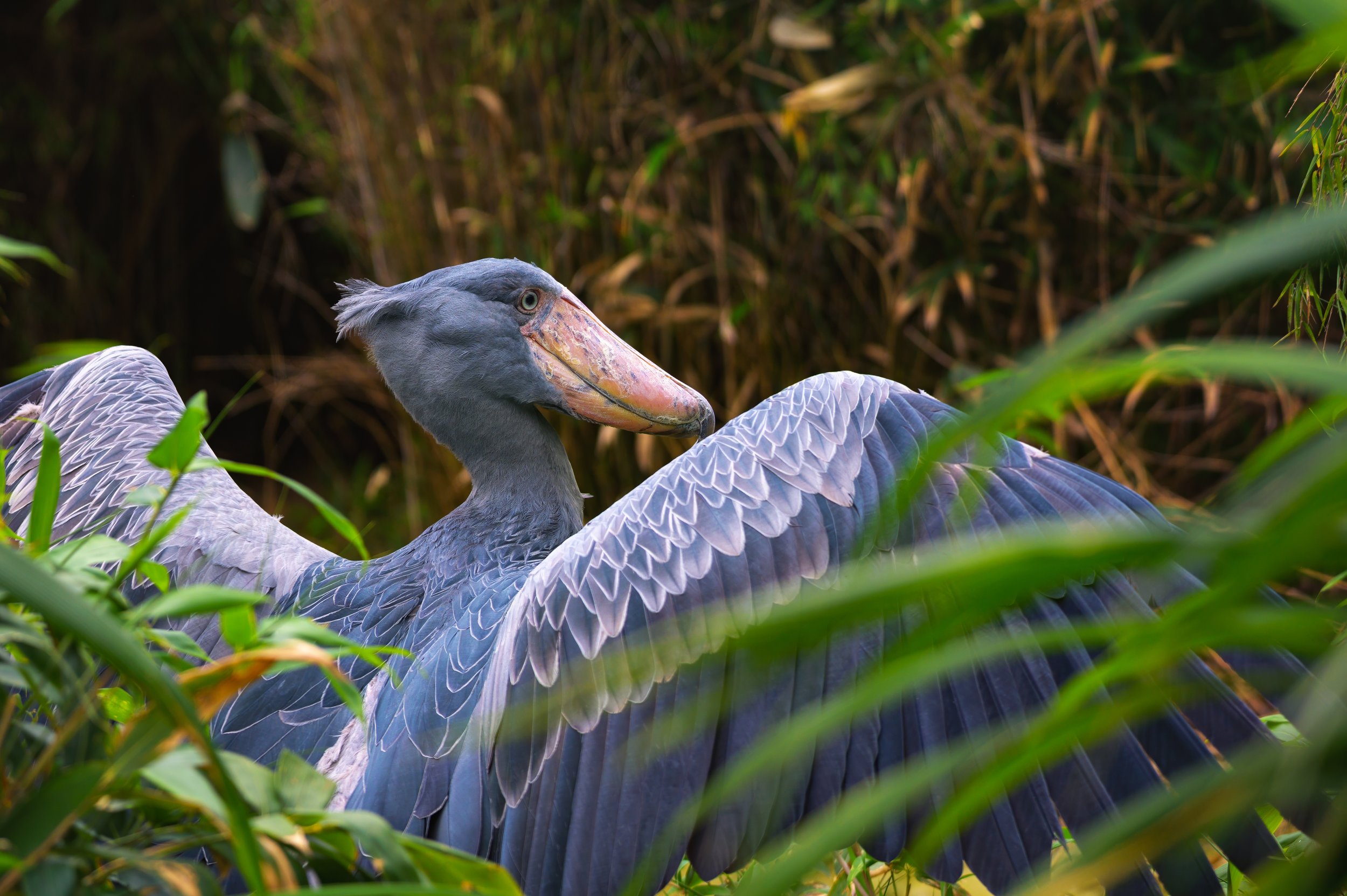
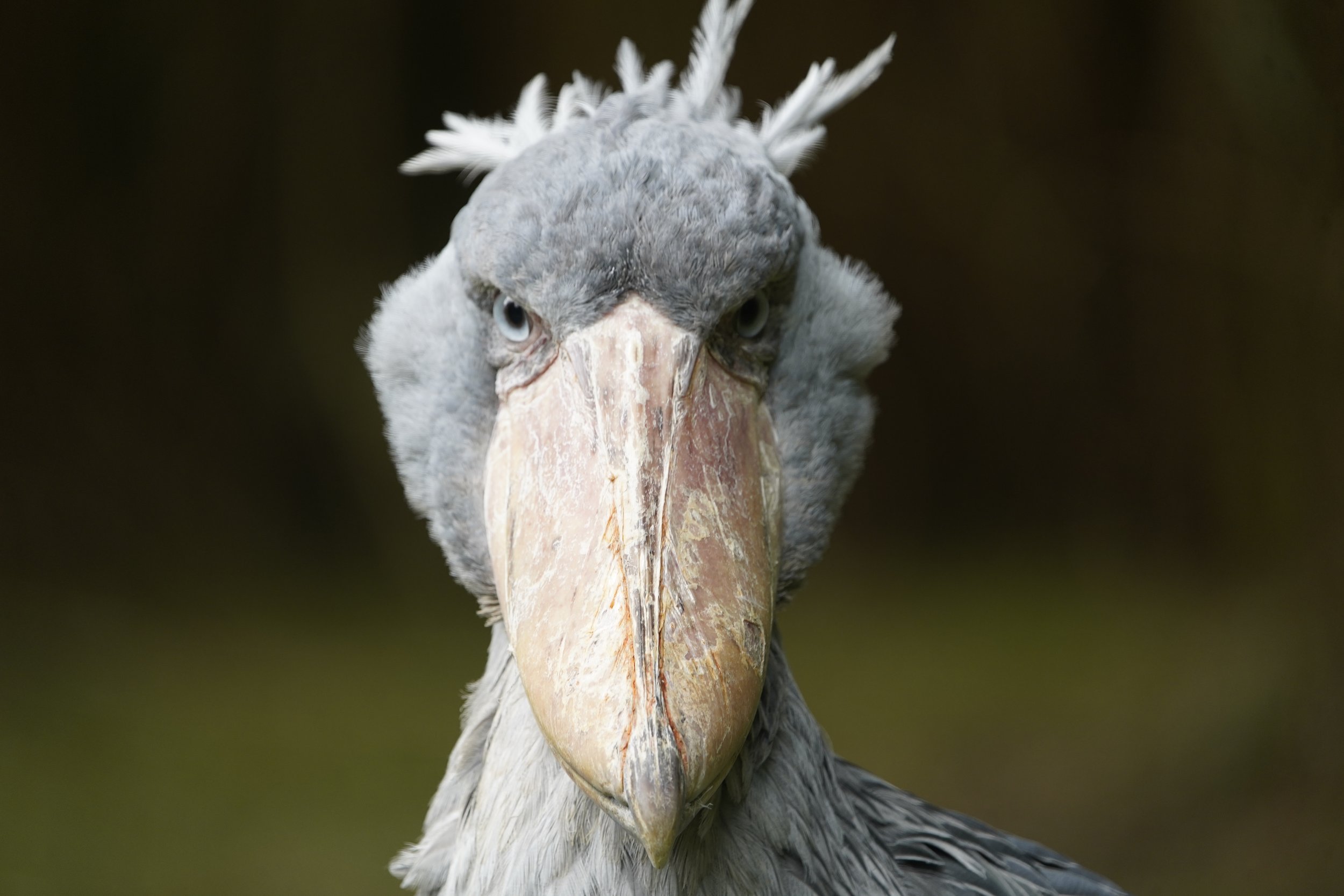
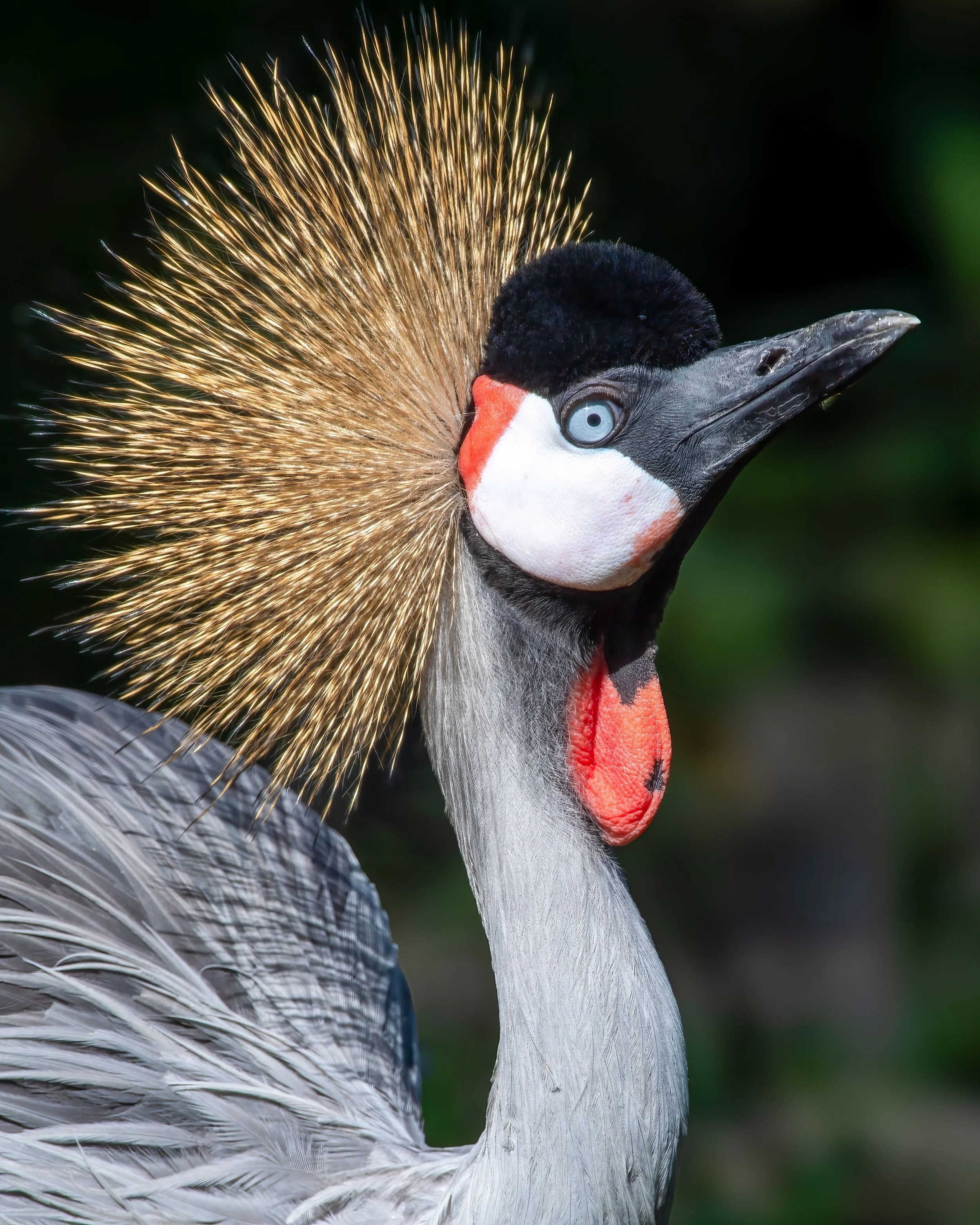
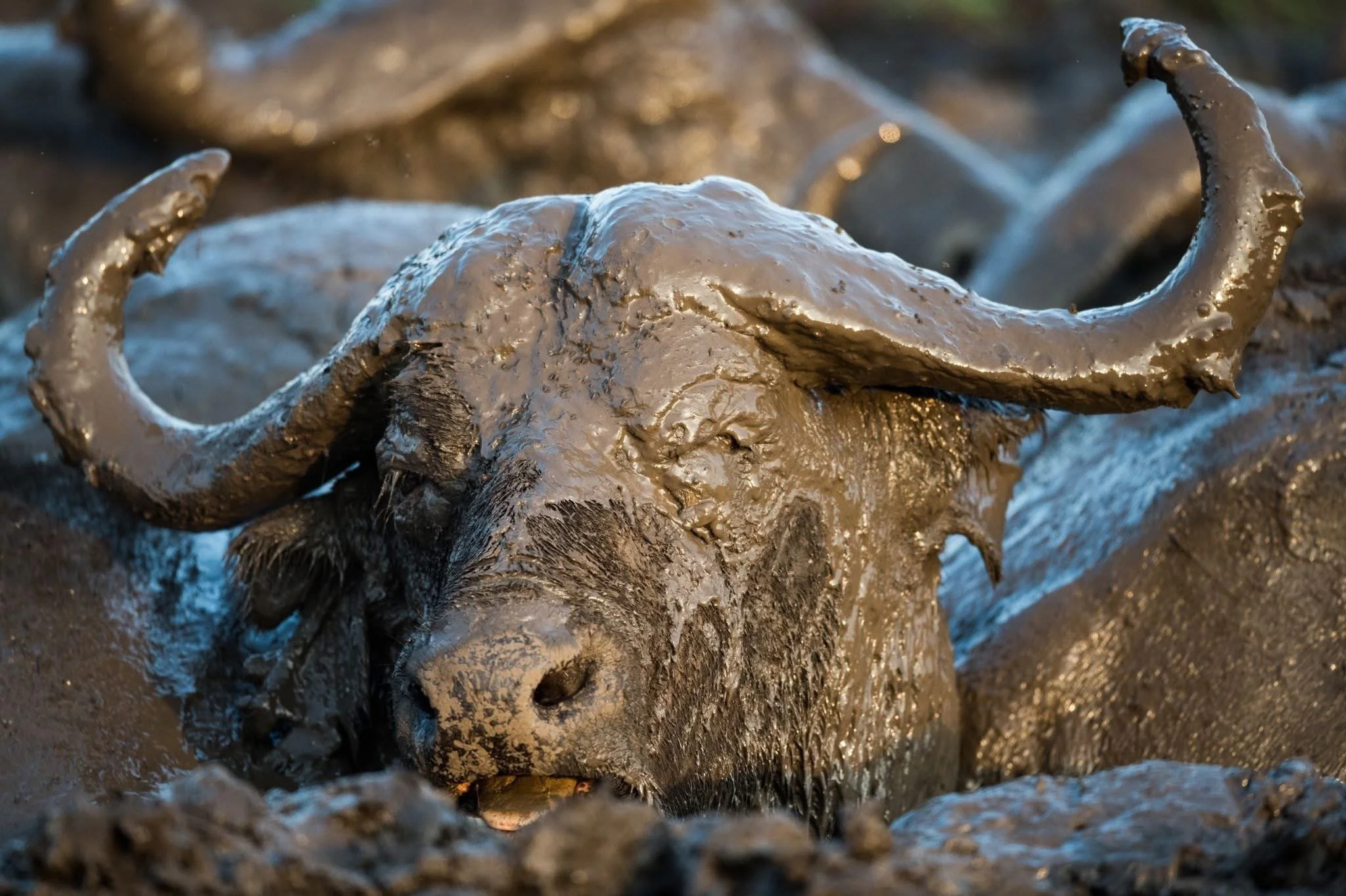
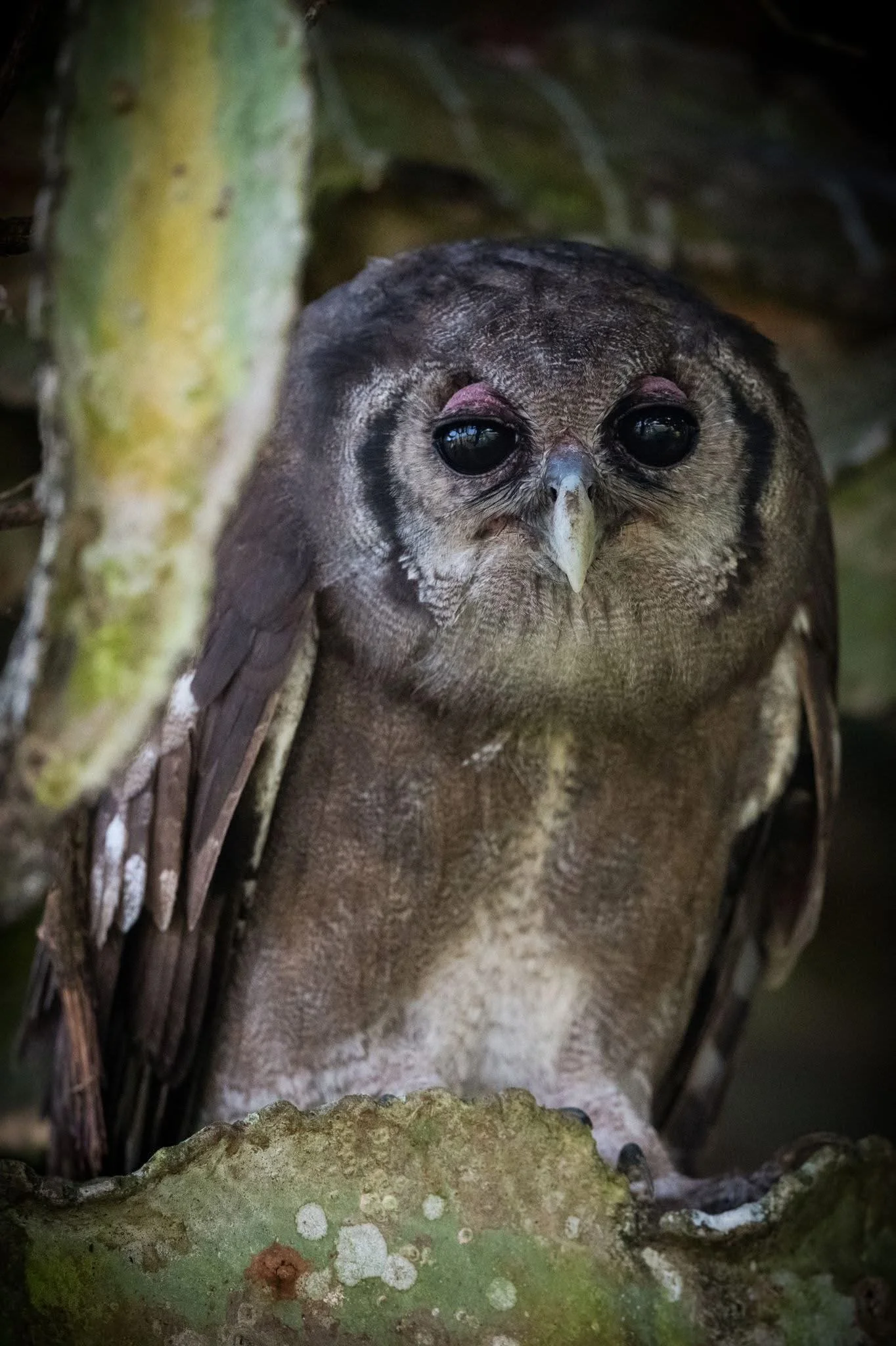
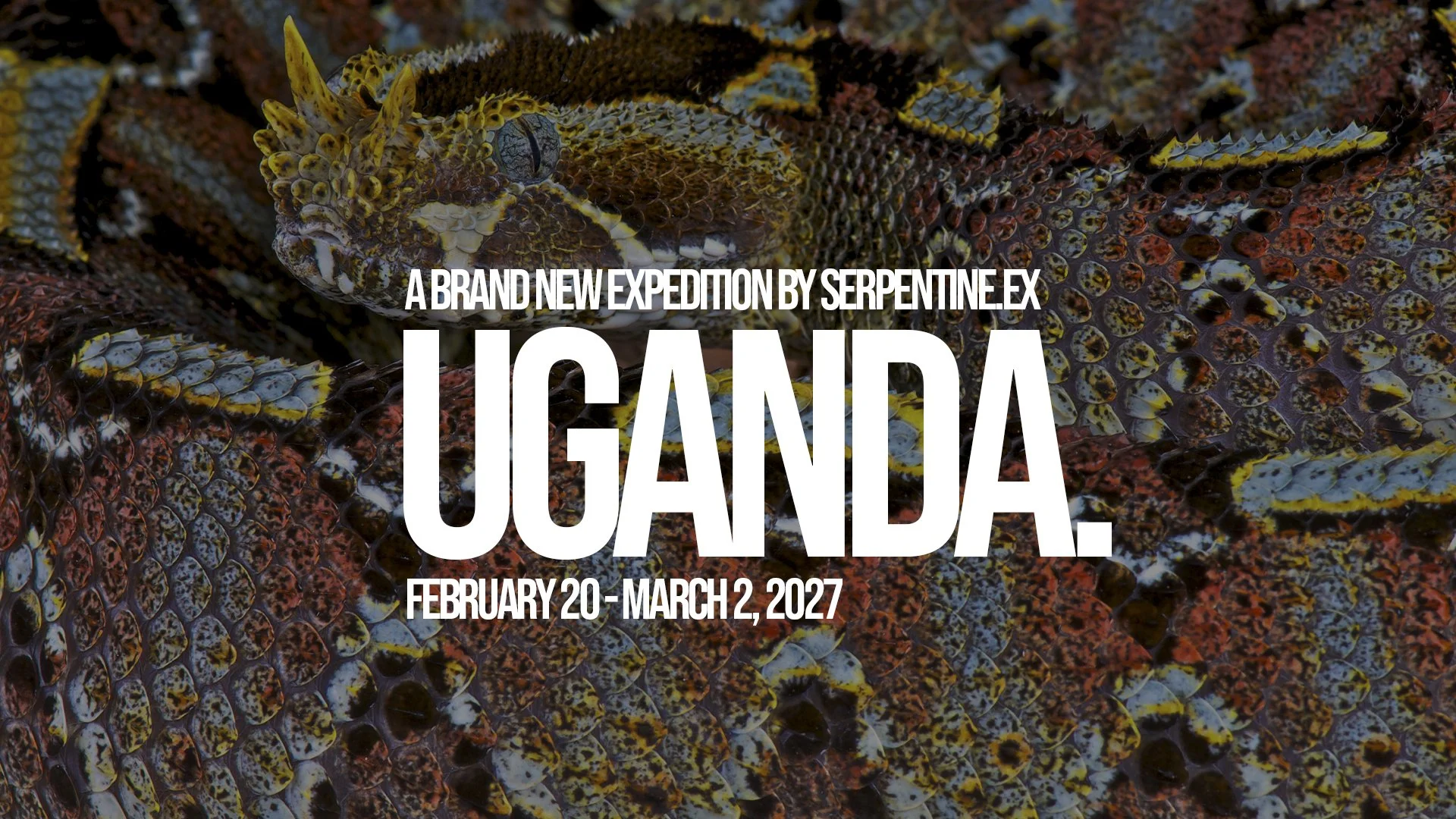
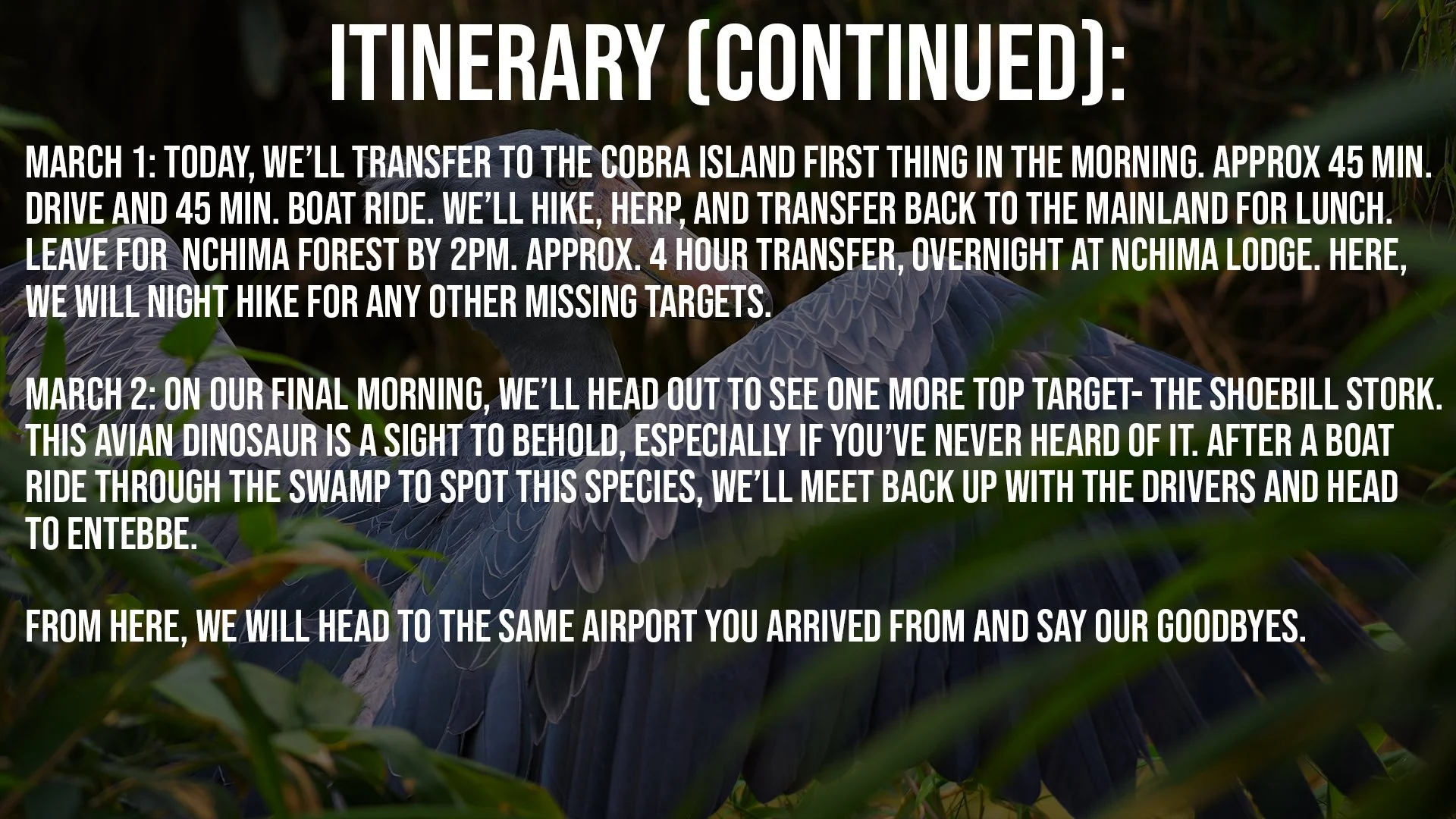
THE COUNTRY OF UGANDA BOASTs ~180 reptile SPECIES, ~90 amphibians, ~1,080 birds, AND ~350 MAMMAL SPECIES. THE DIVERSITY OF All four groups are elevated by the country’s position in the Albertine Rift biodiversity hotspot, one of Africa’s most species-dense regions.
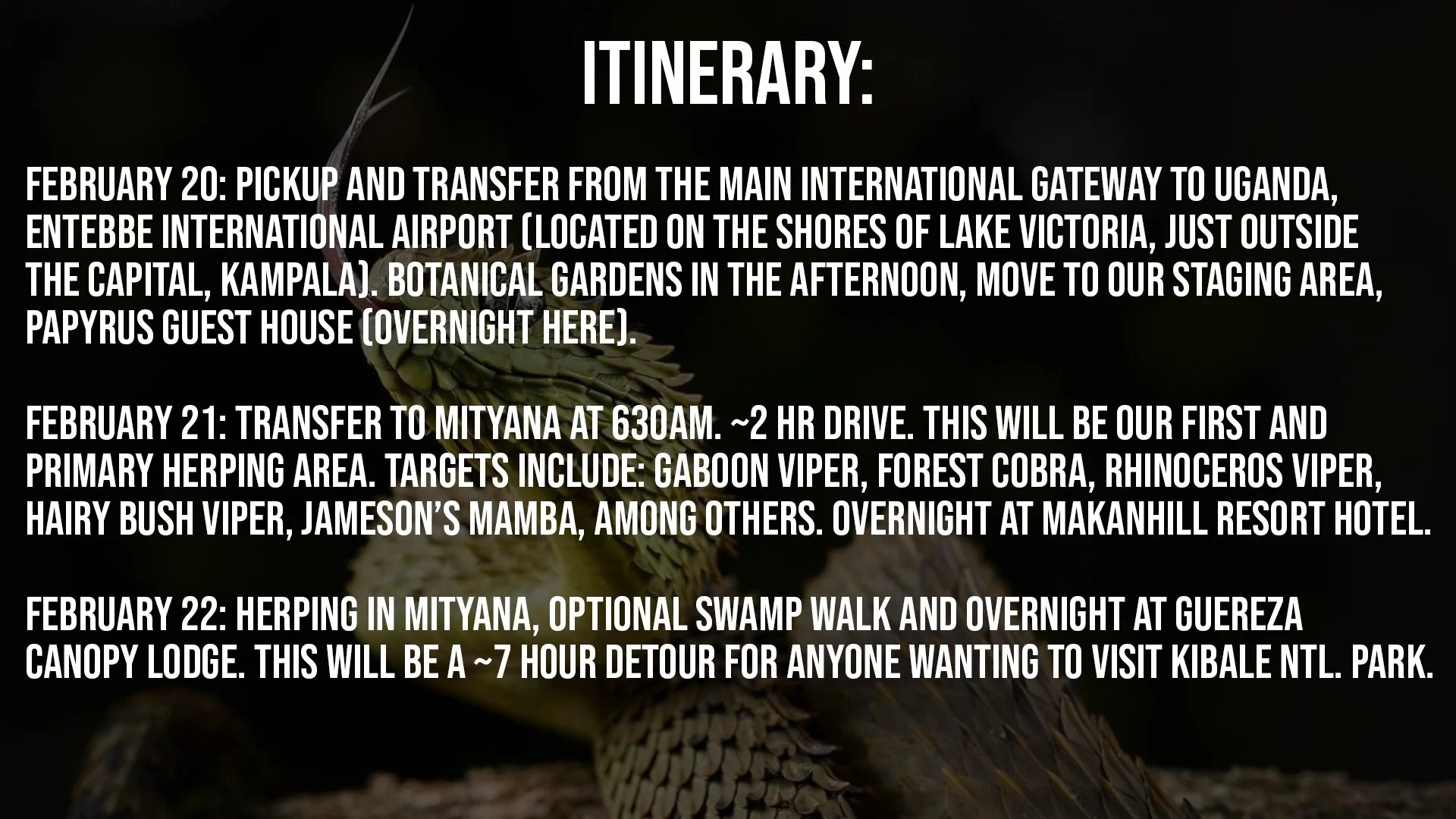
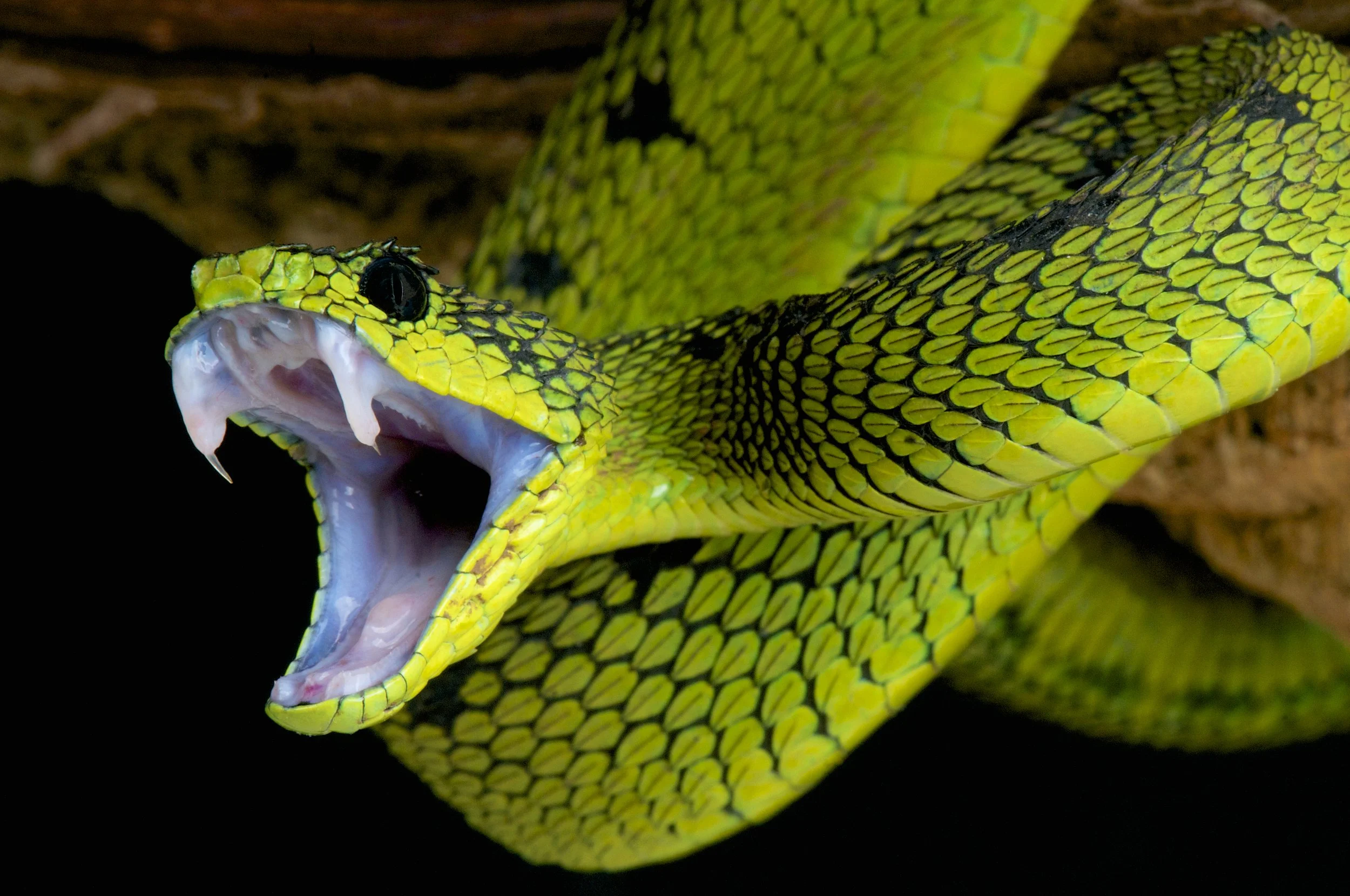
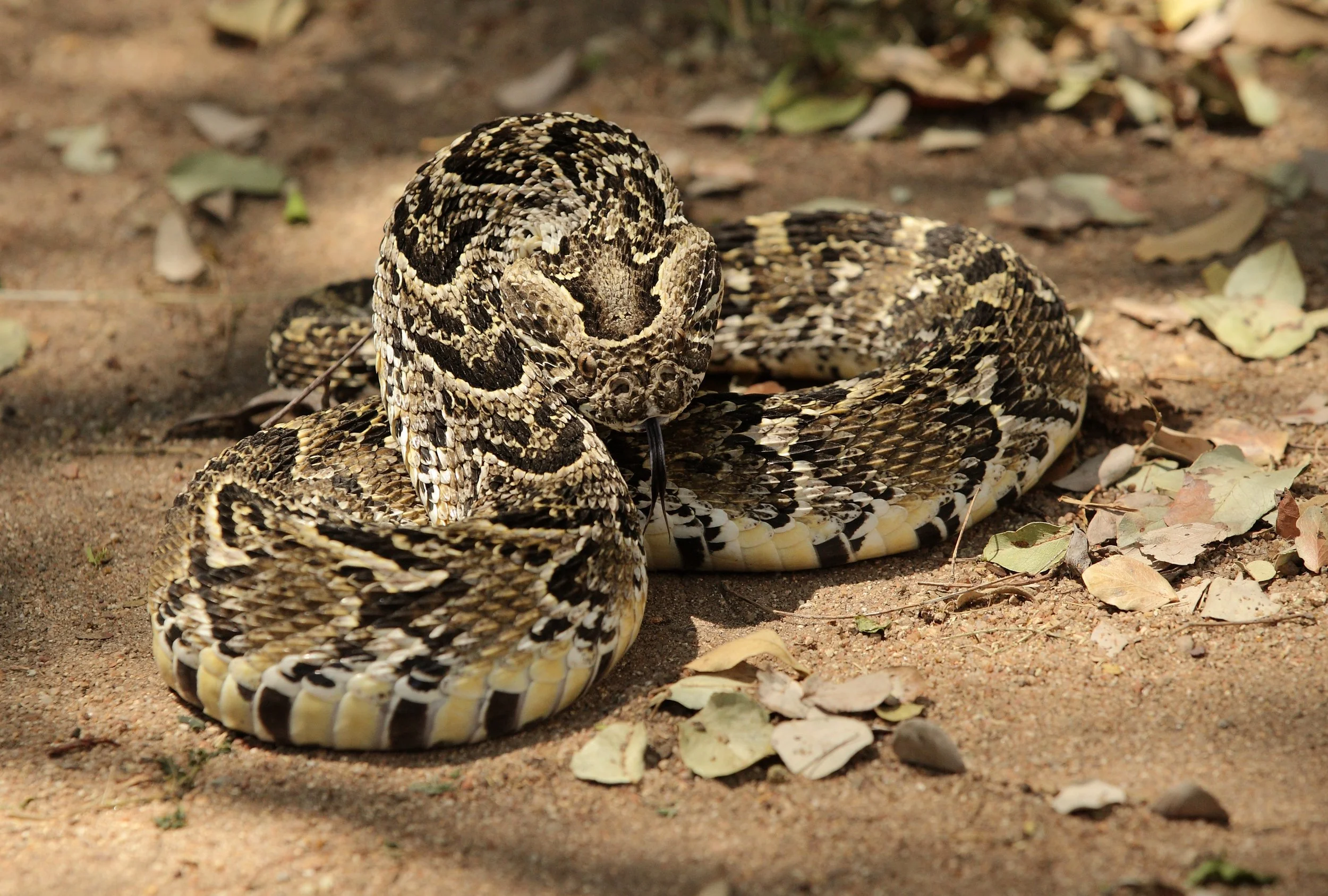
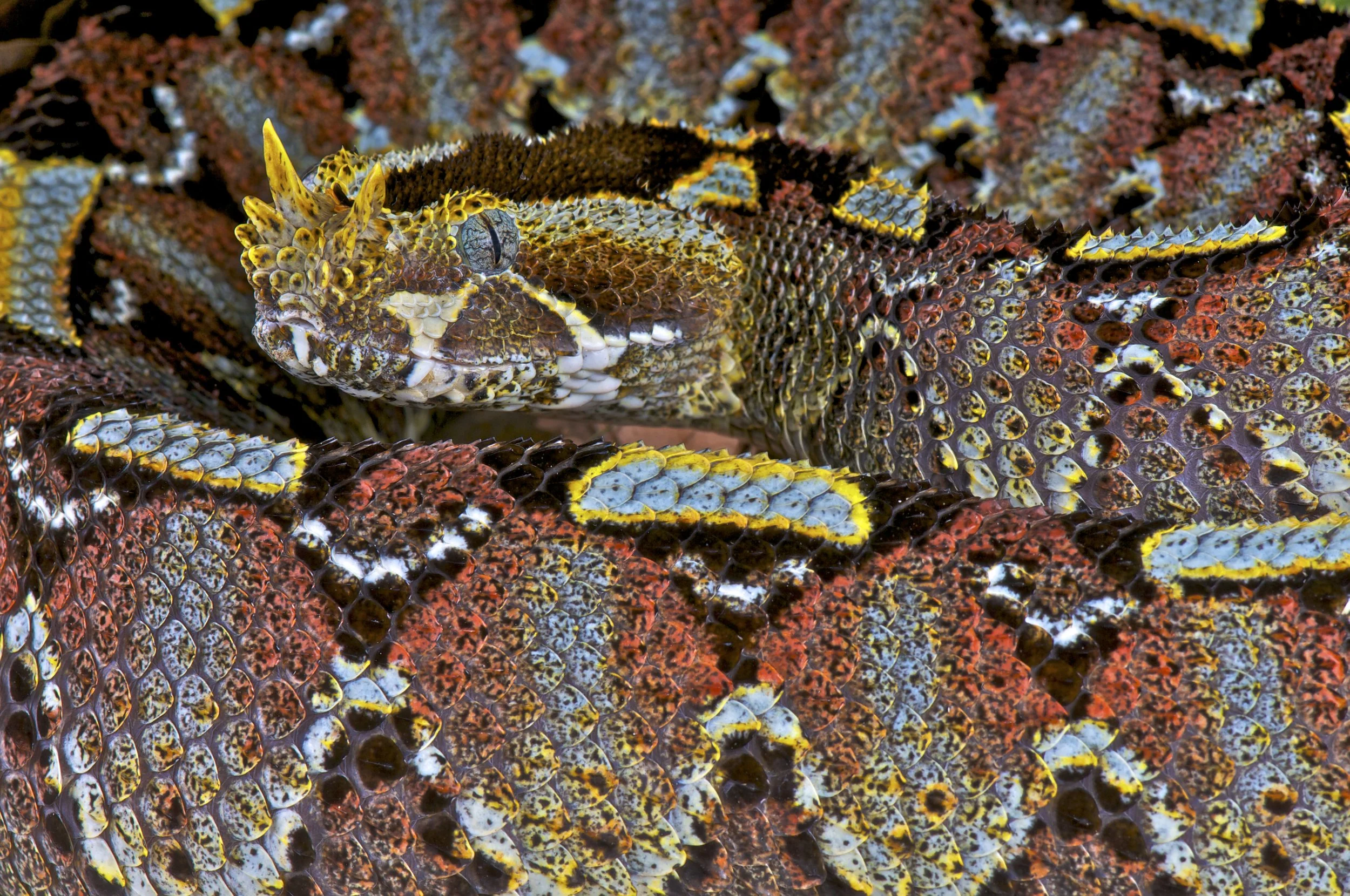
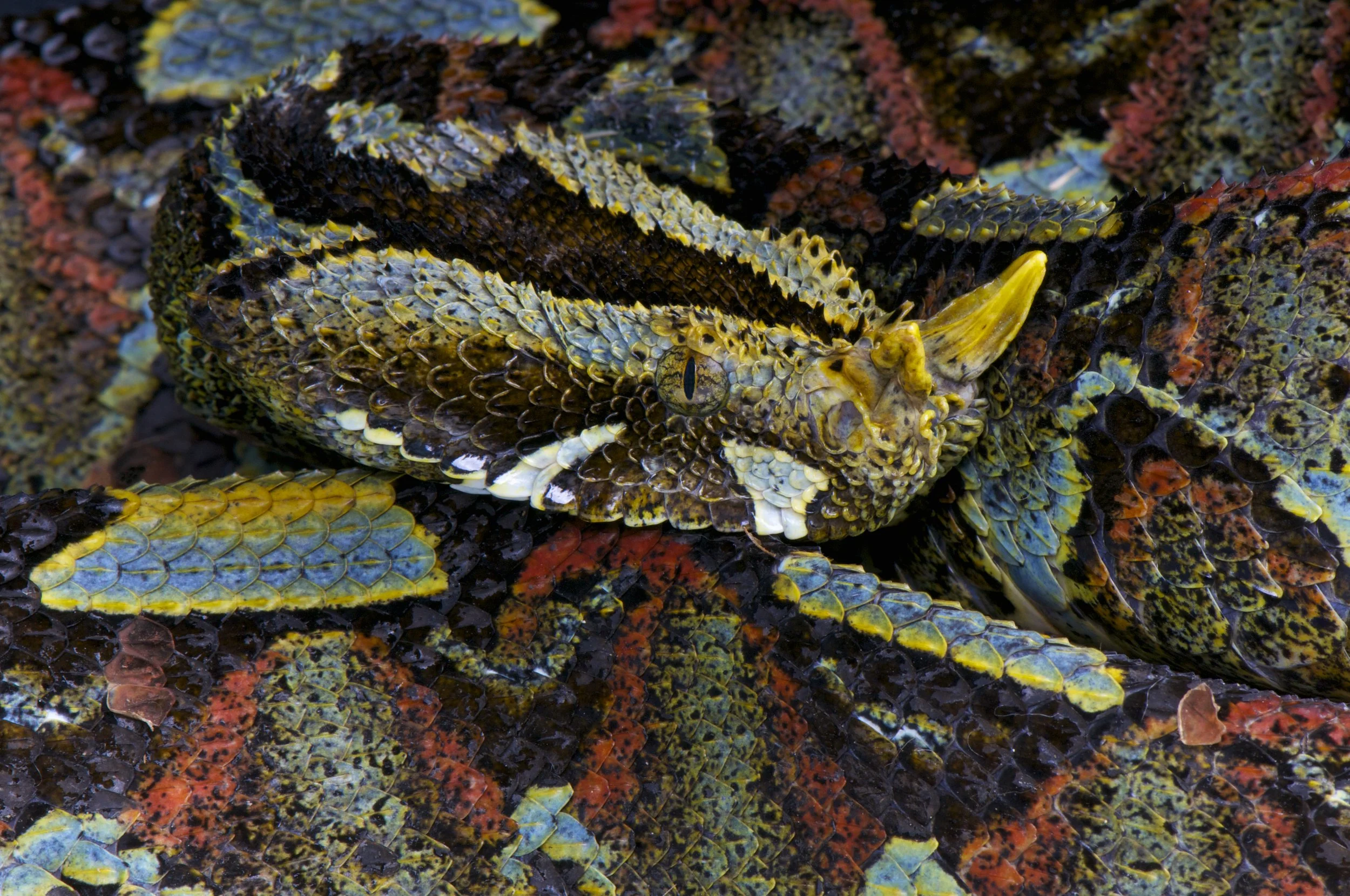
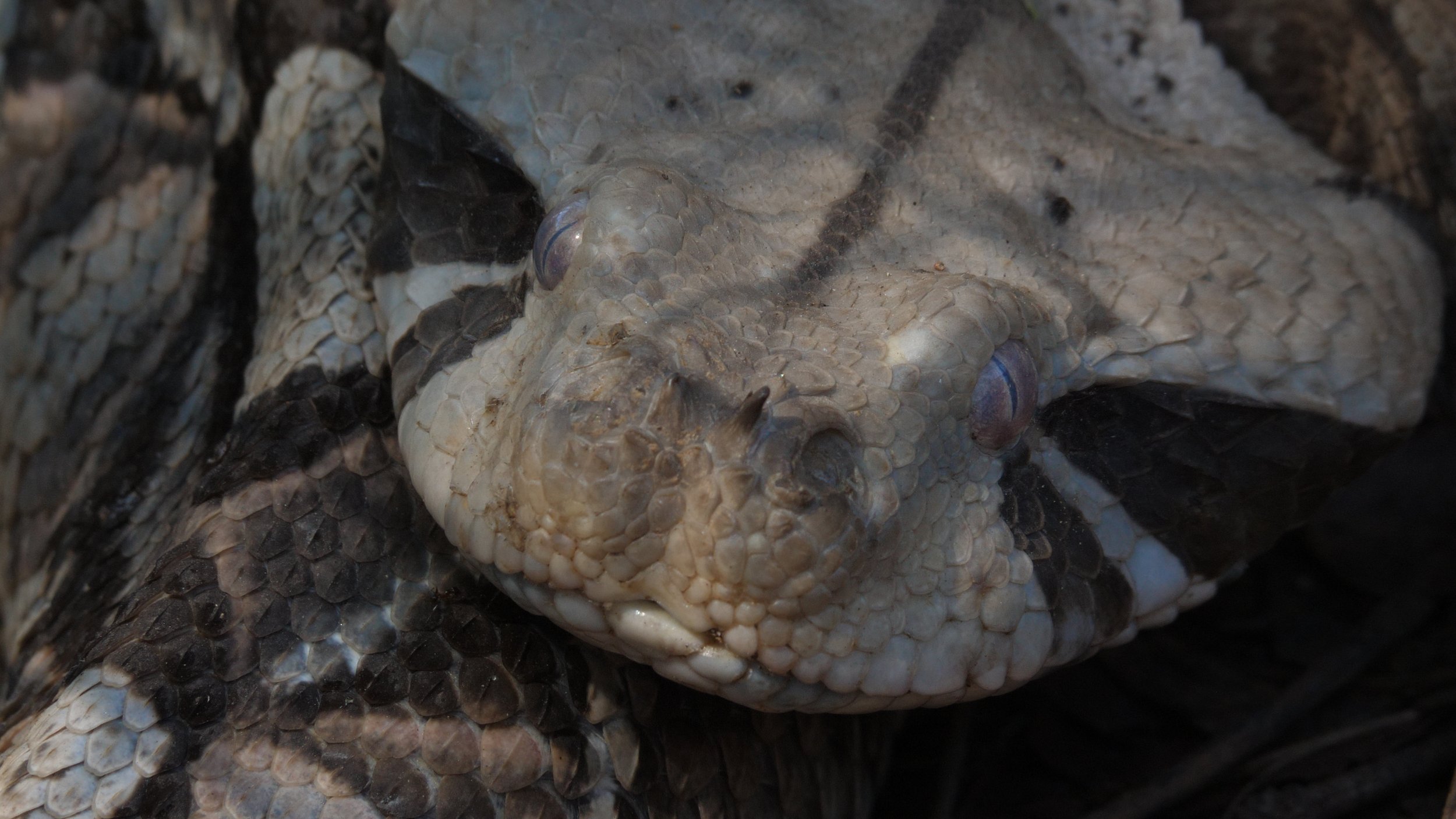
THE INFAMOUS GABOON VIPER IS PROLIFIC IN THE REGION, KNOWN FOR WIELDING ARGUABLY THE LONGEST FANGS OF ANY SNAKE IN THE WORLD.
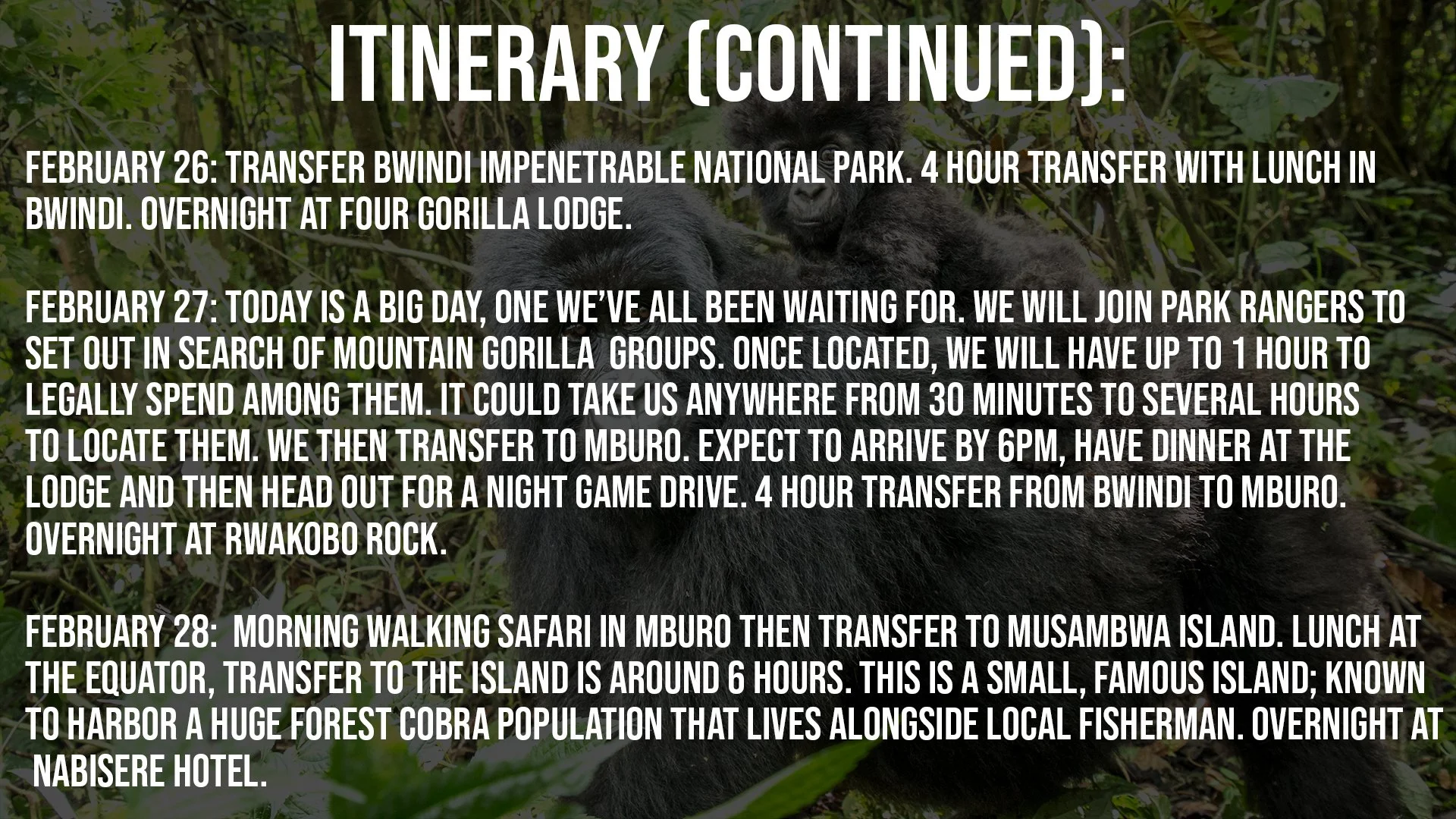
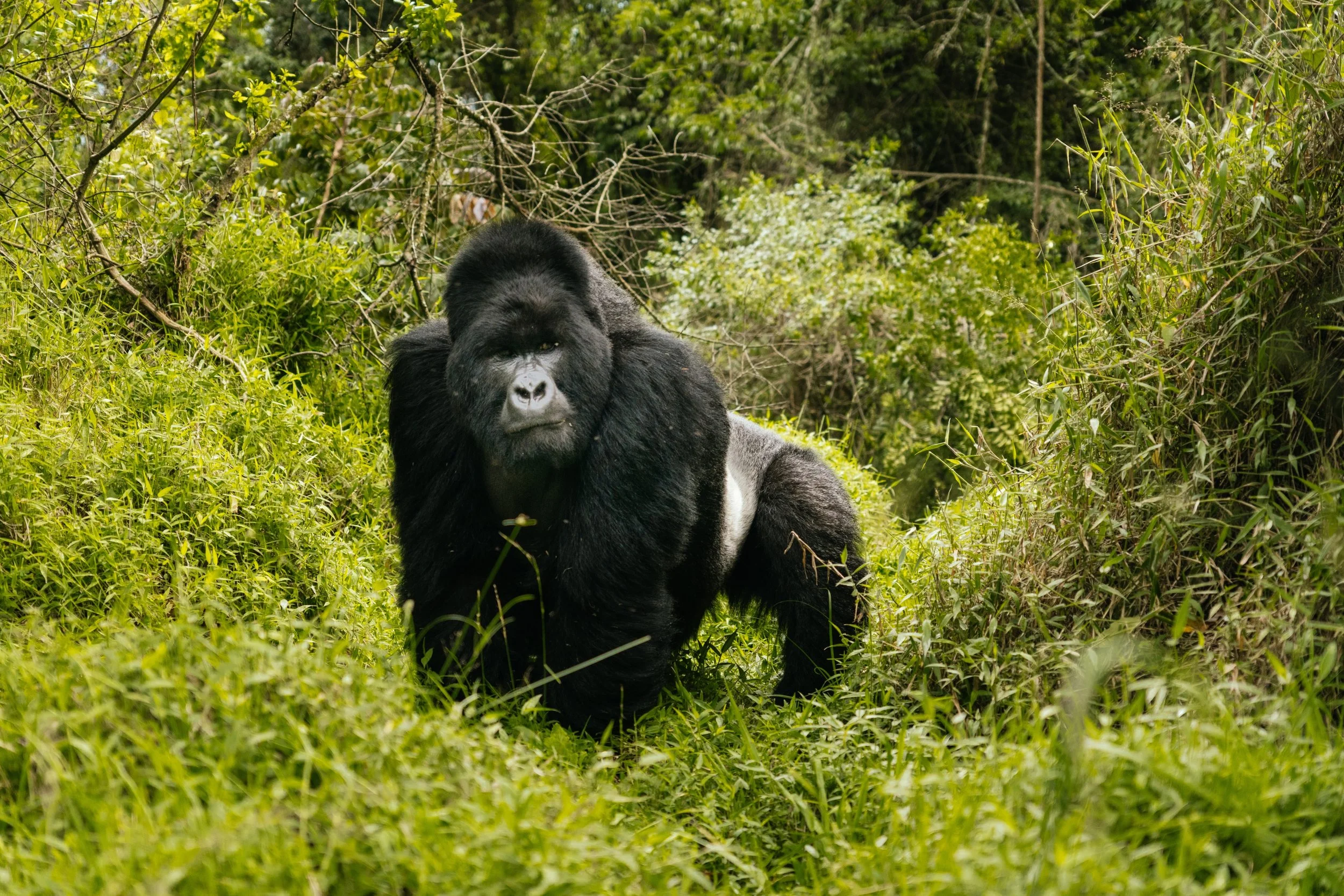
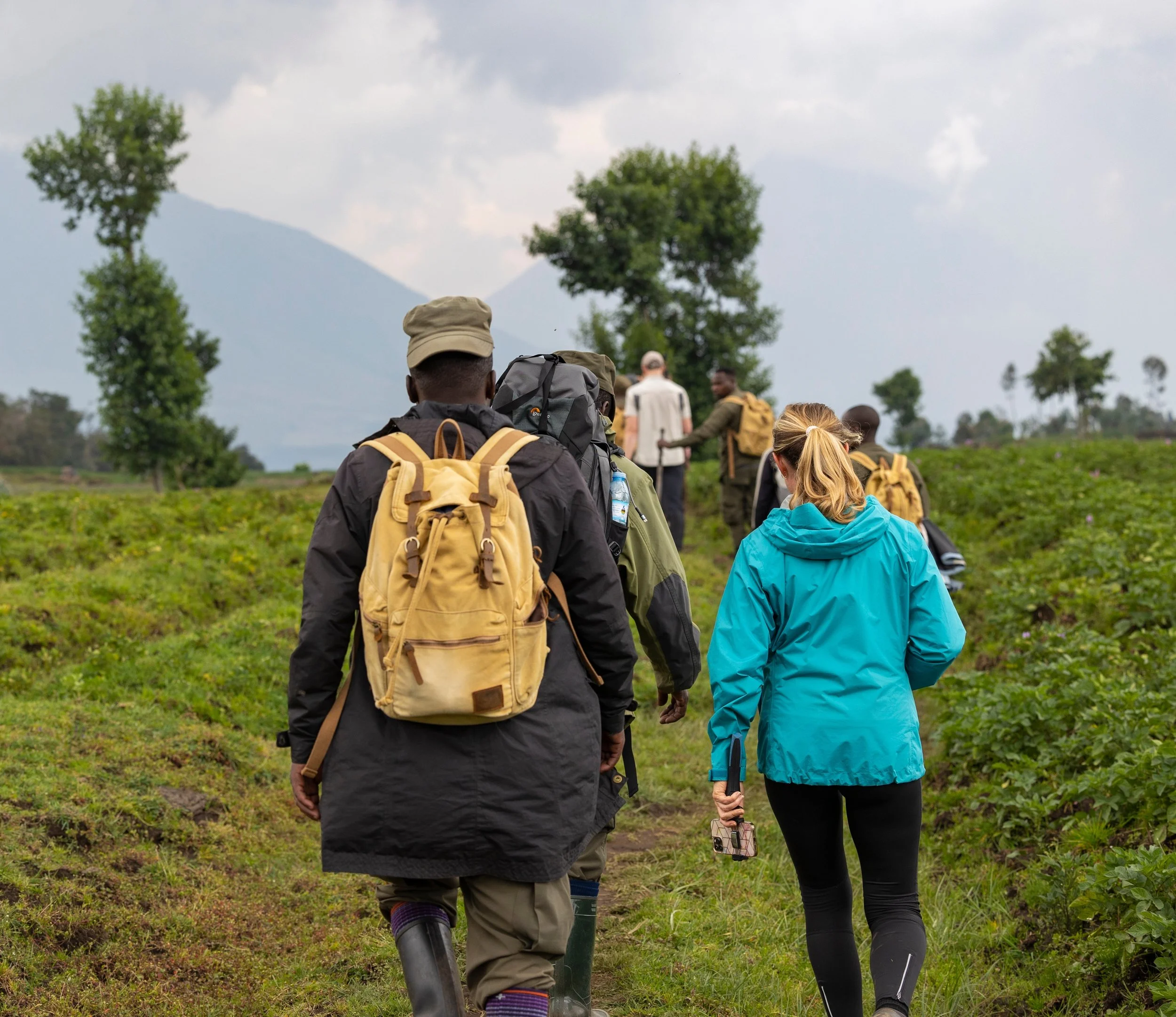
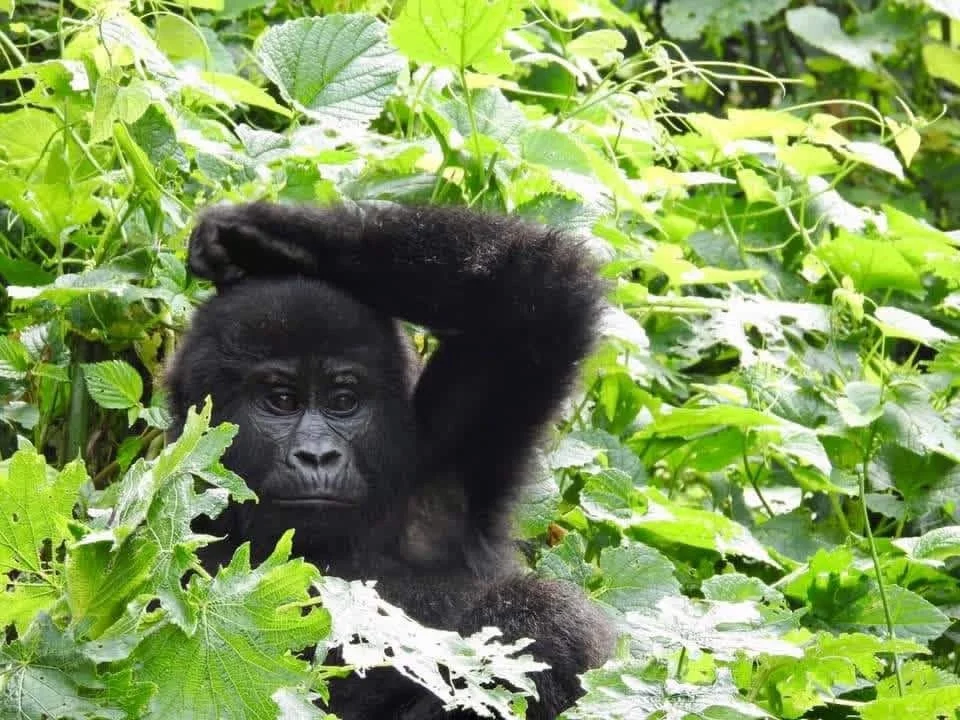
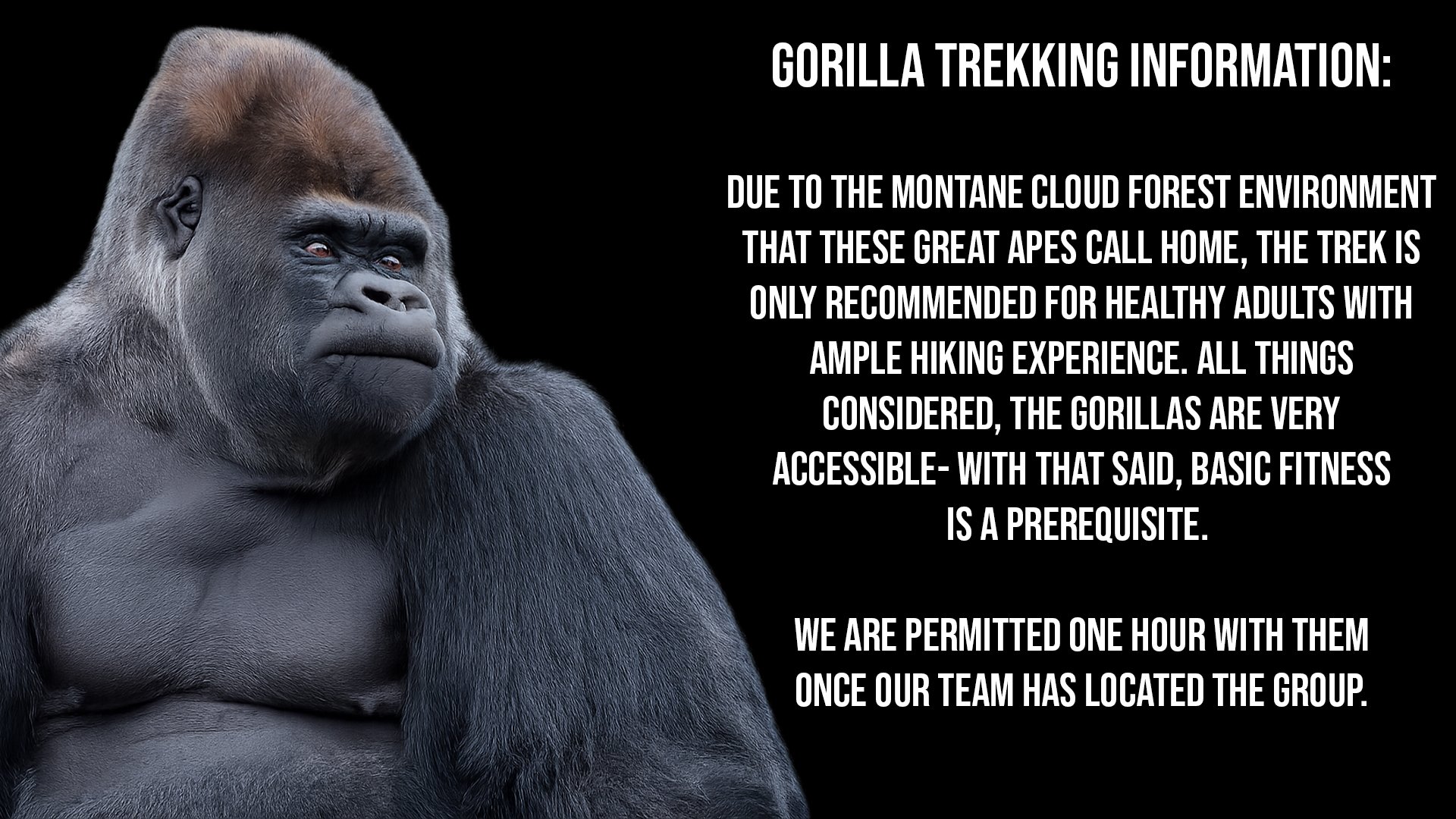
our time with the mountain gorillas in bwindi national park is set to be something special. recently downgraded from critically endangered status, their progress is a symbol of community, federal, and scientific collaboration.
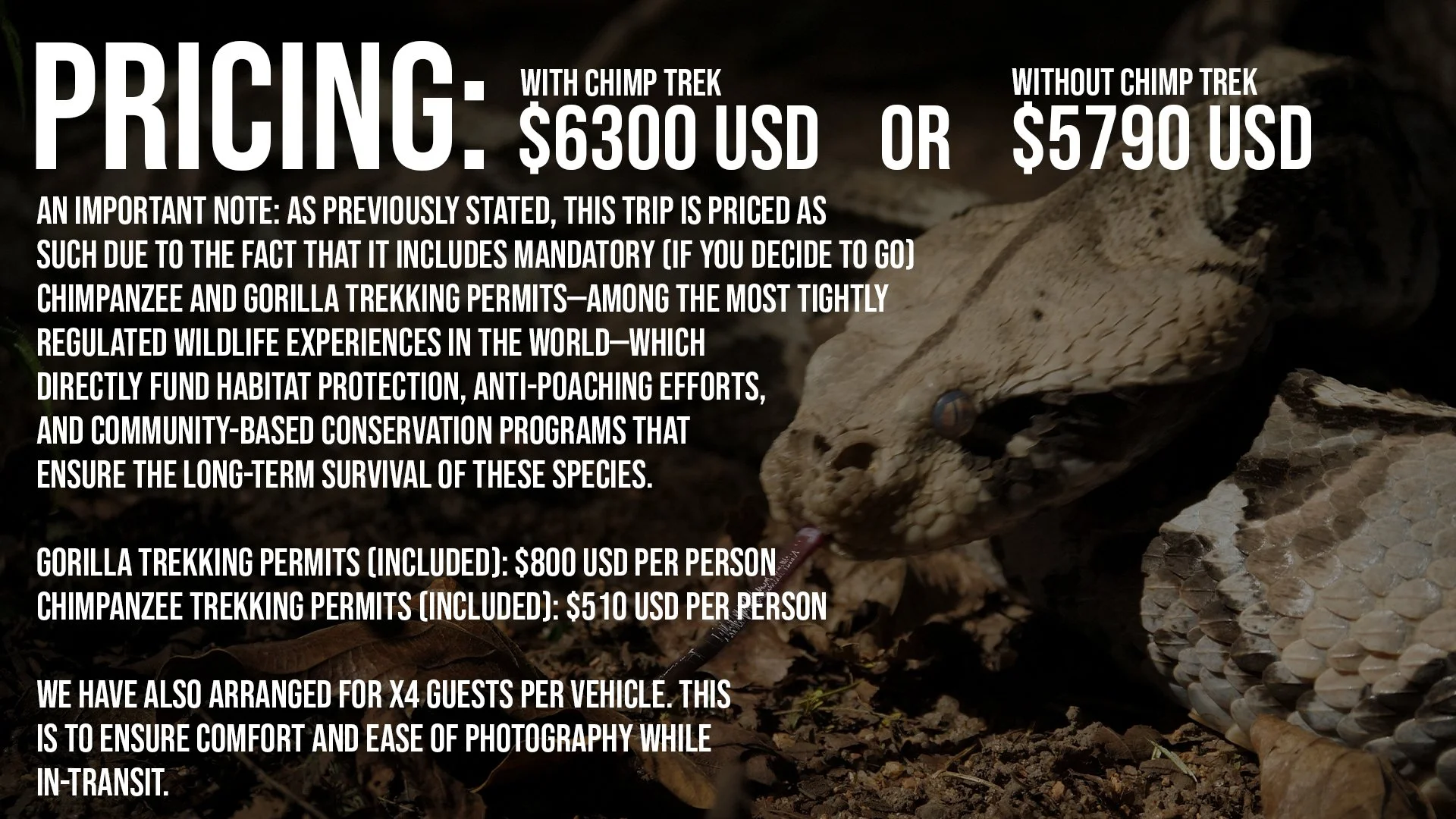
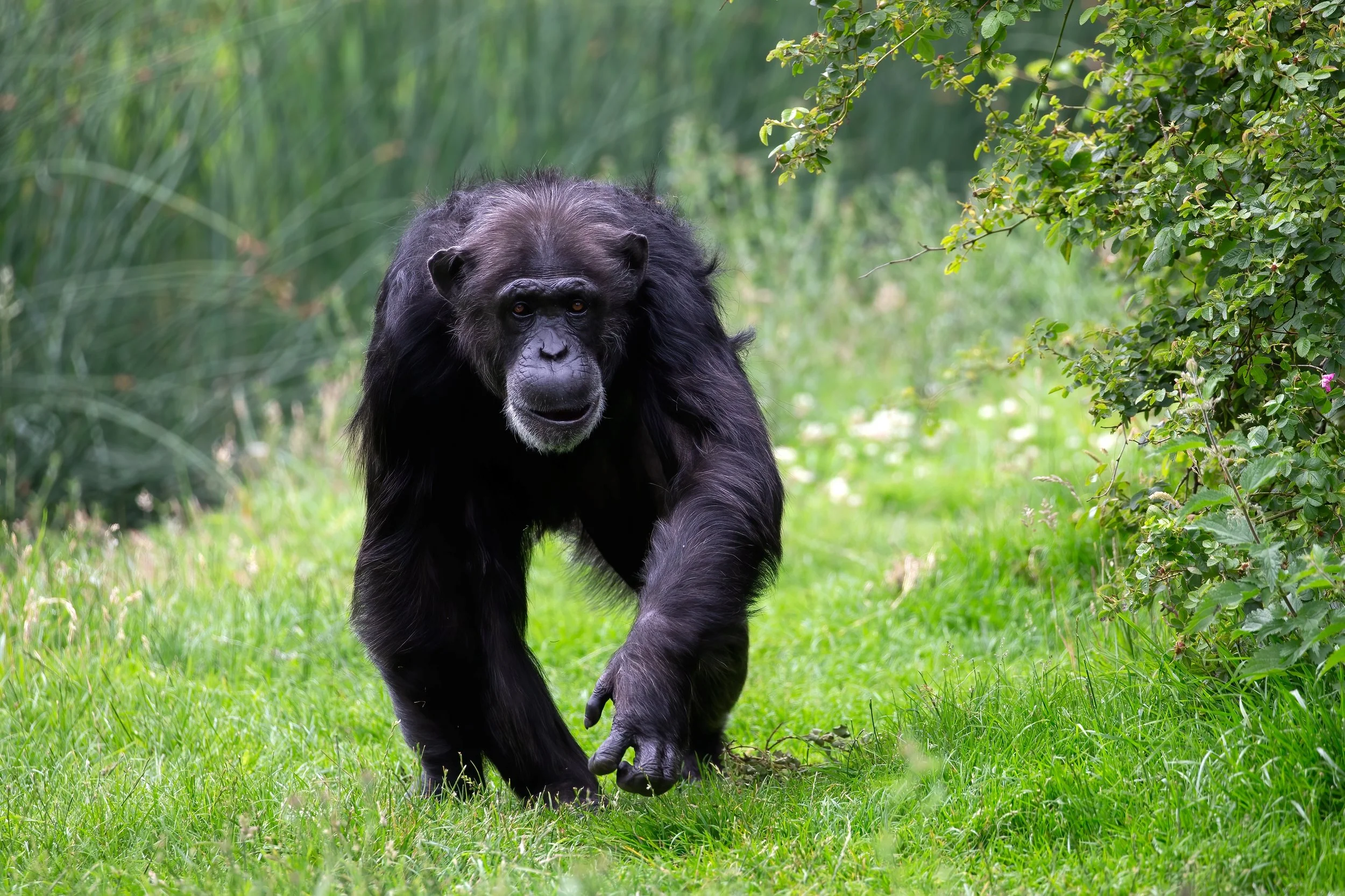
Male chimp coalitions conduct lethal intergroup raids and use culturally transmitted tool sets - from termite-fishing probes to leaf sponges -revealing a level of social intelligence and proto-cultural complexity that is difficult to fully appreciate without seeing chimpanzees in the wild. this optional add-on to our expedition is an additional $510 usd, a fee incurred by the ugandan government to ensure their ongoing protection.
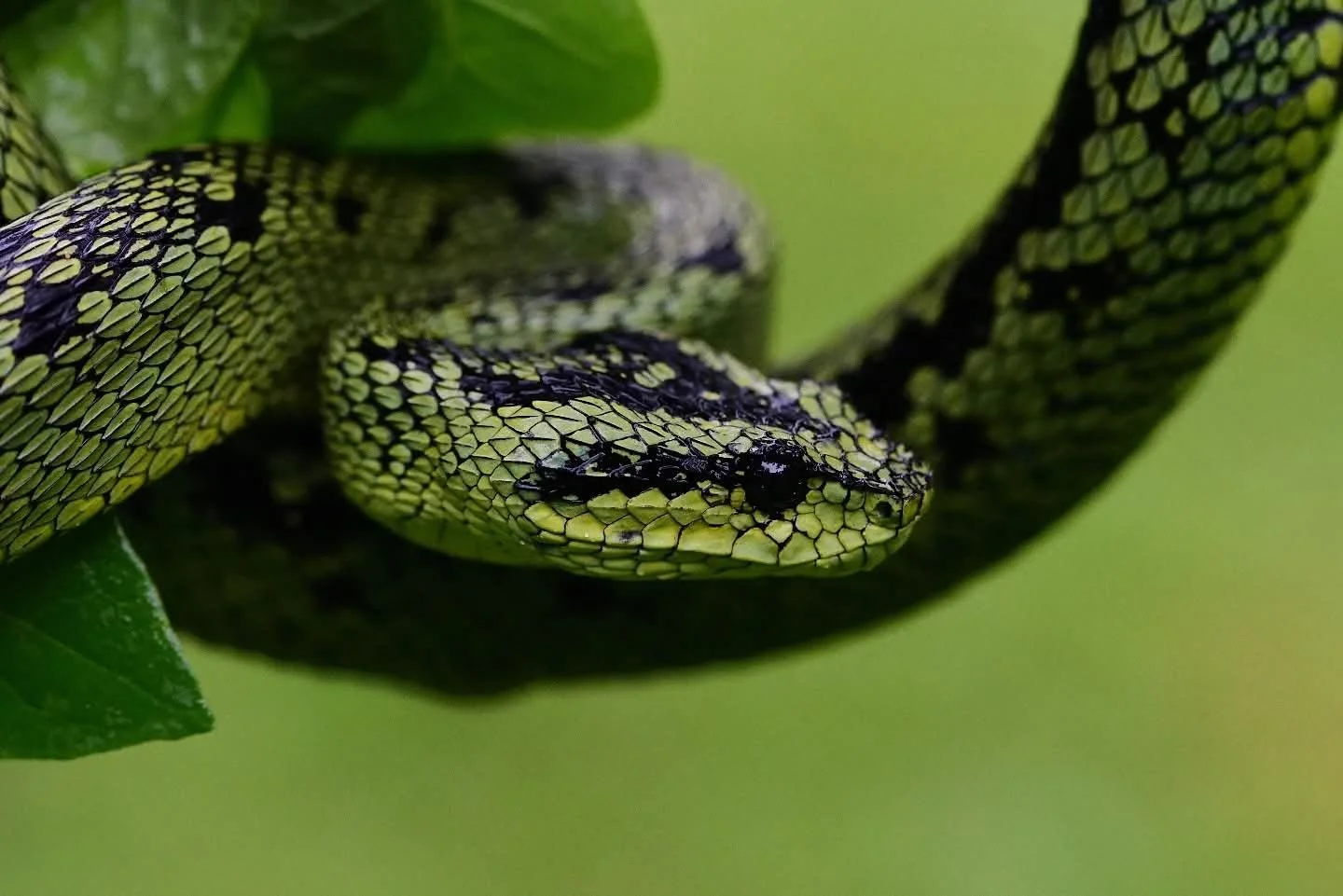
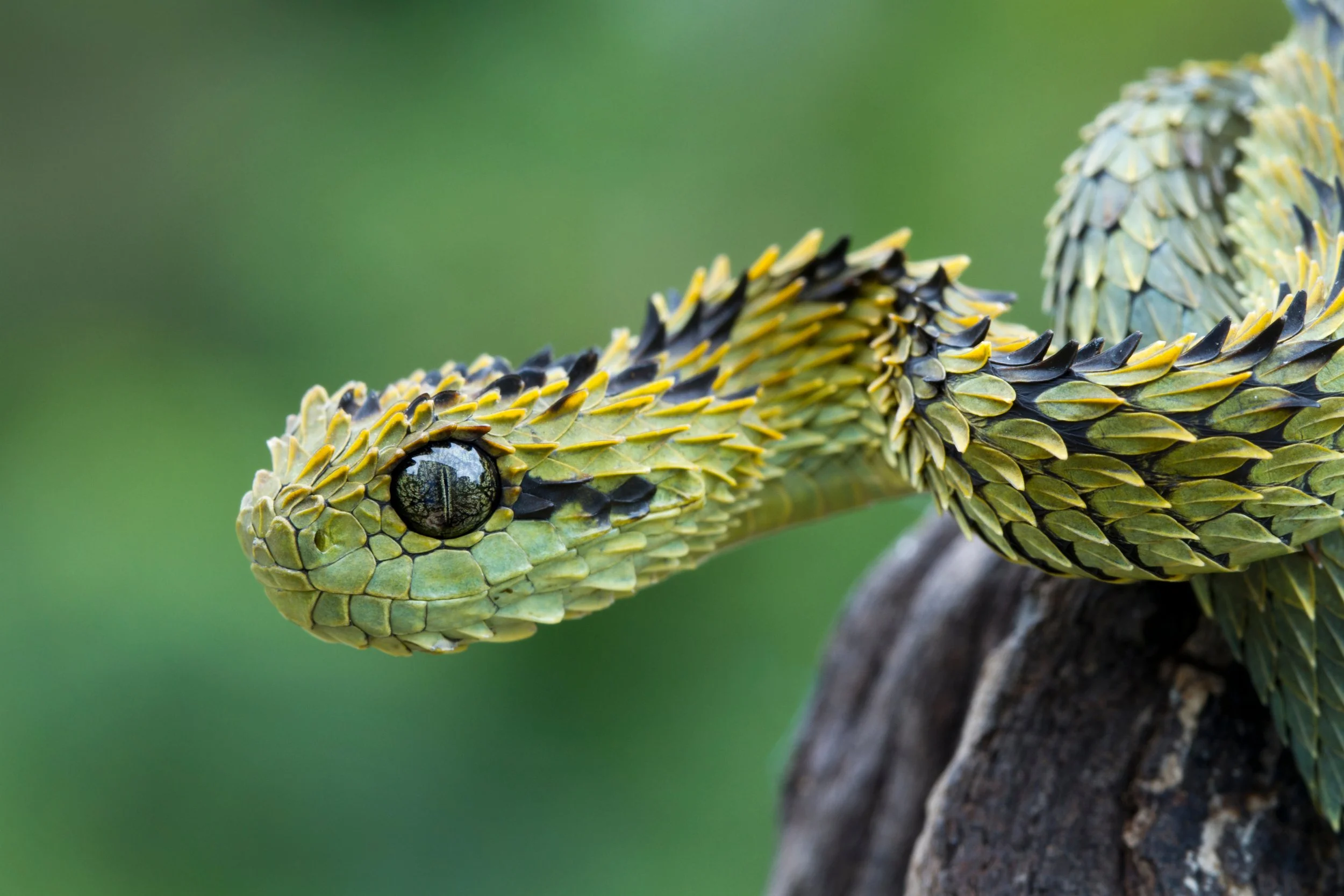
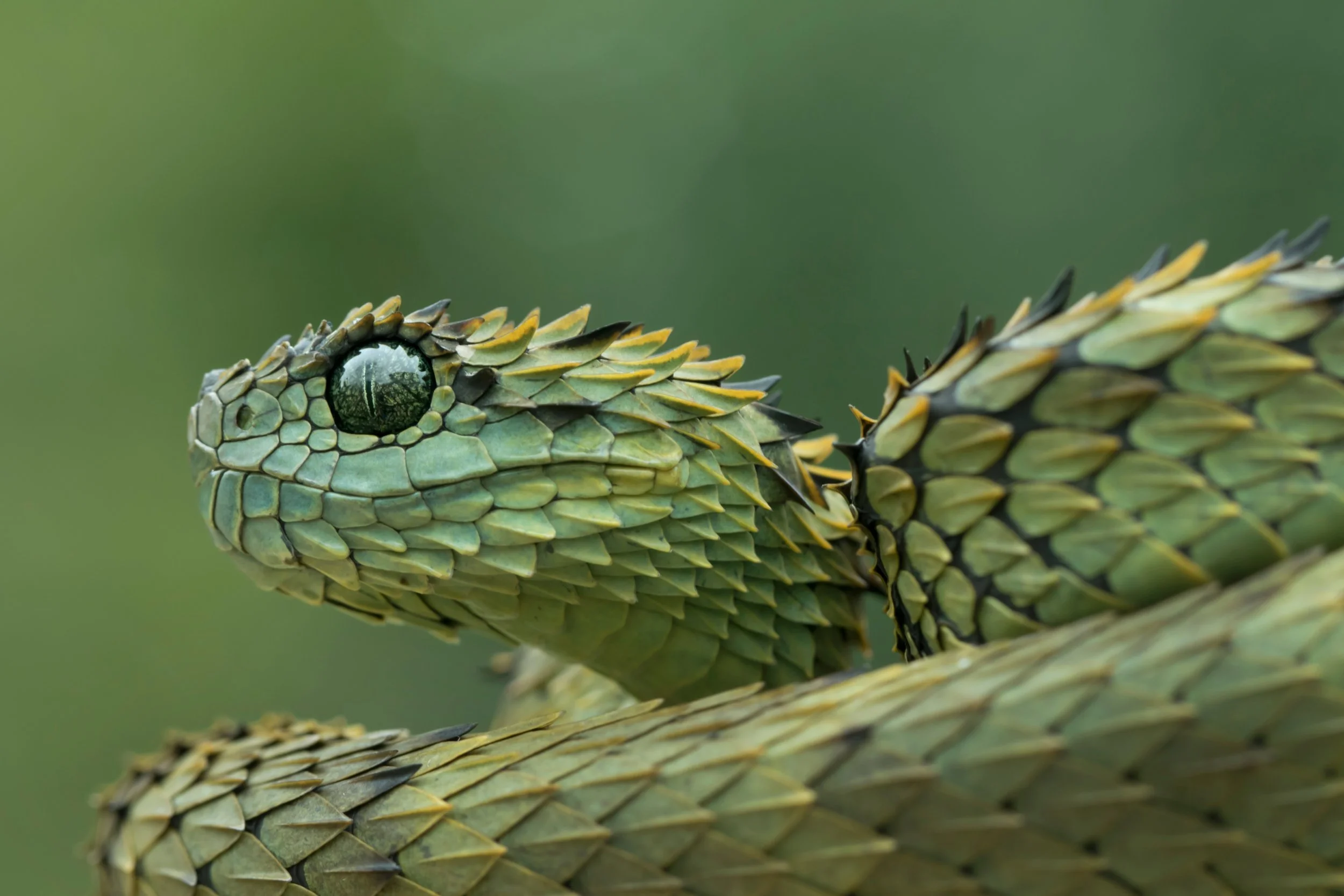
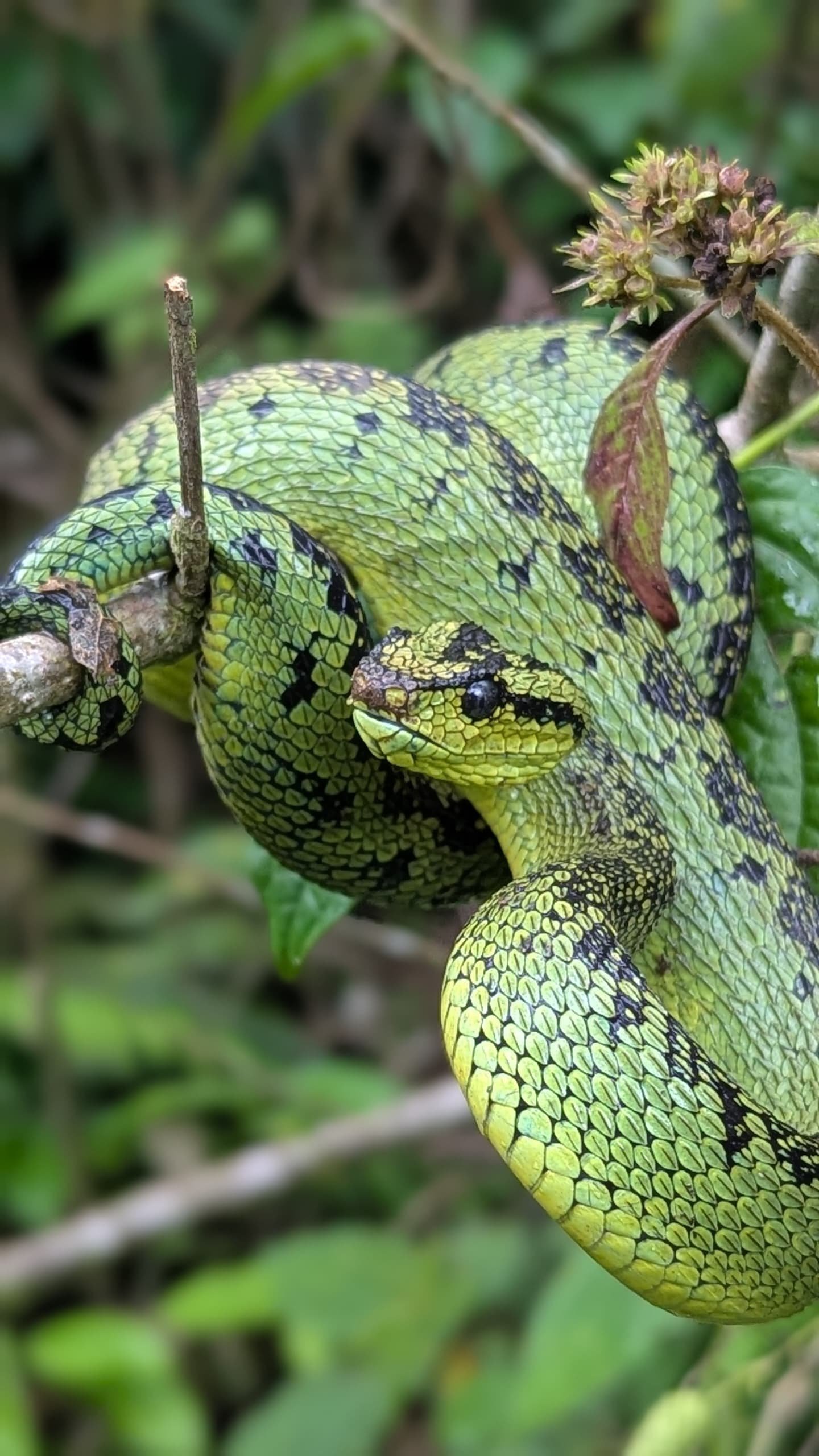
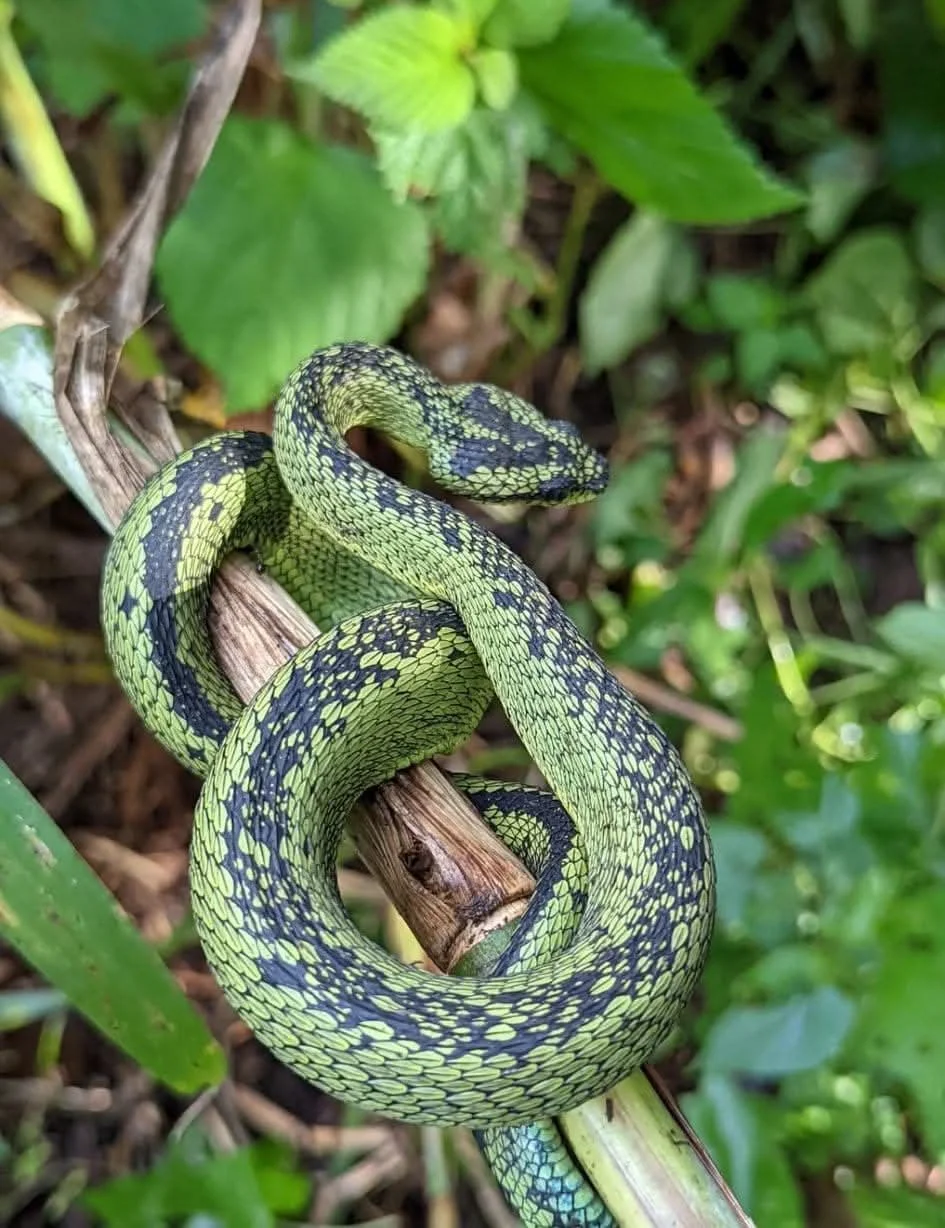
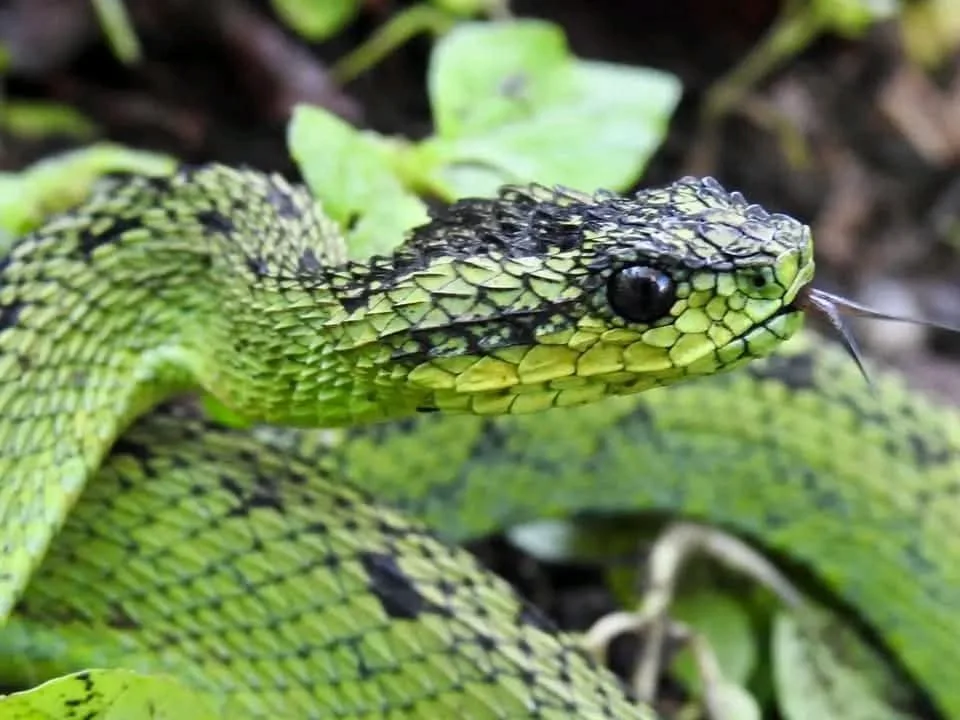
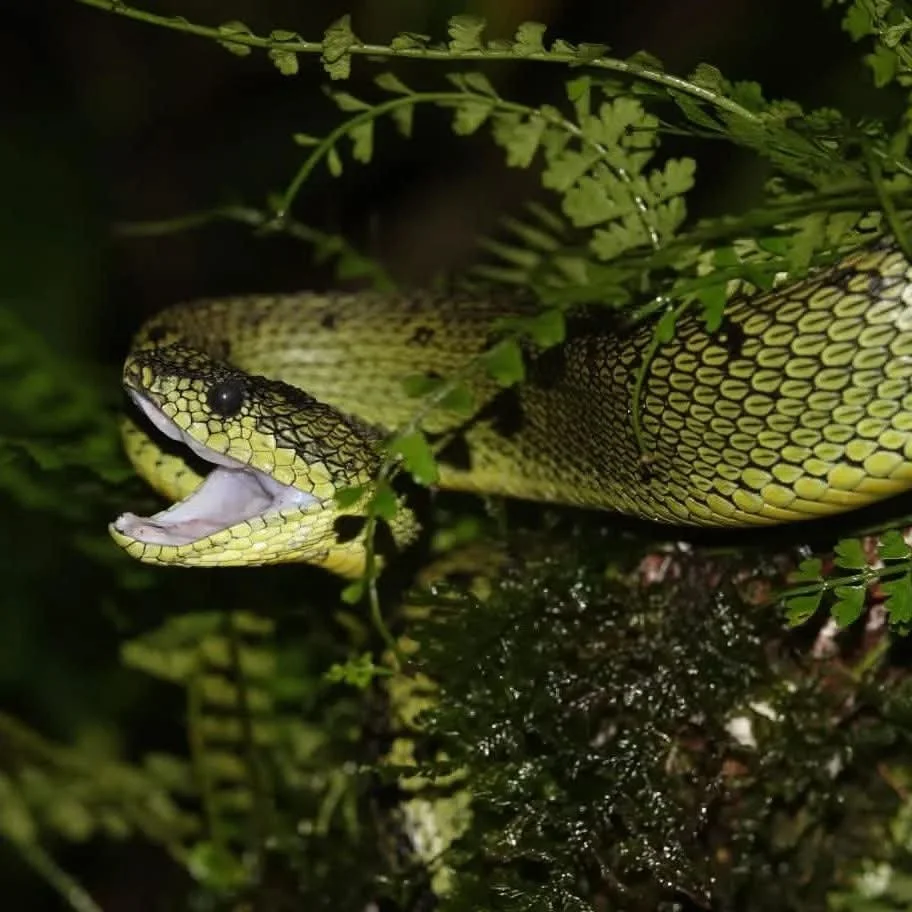
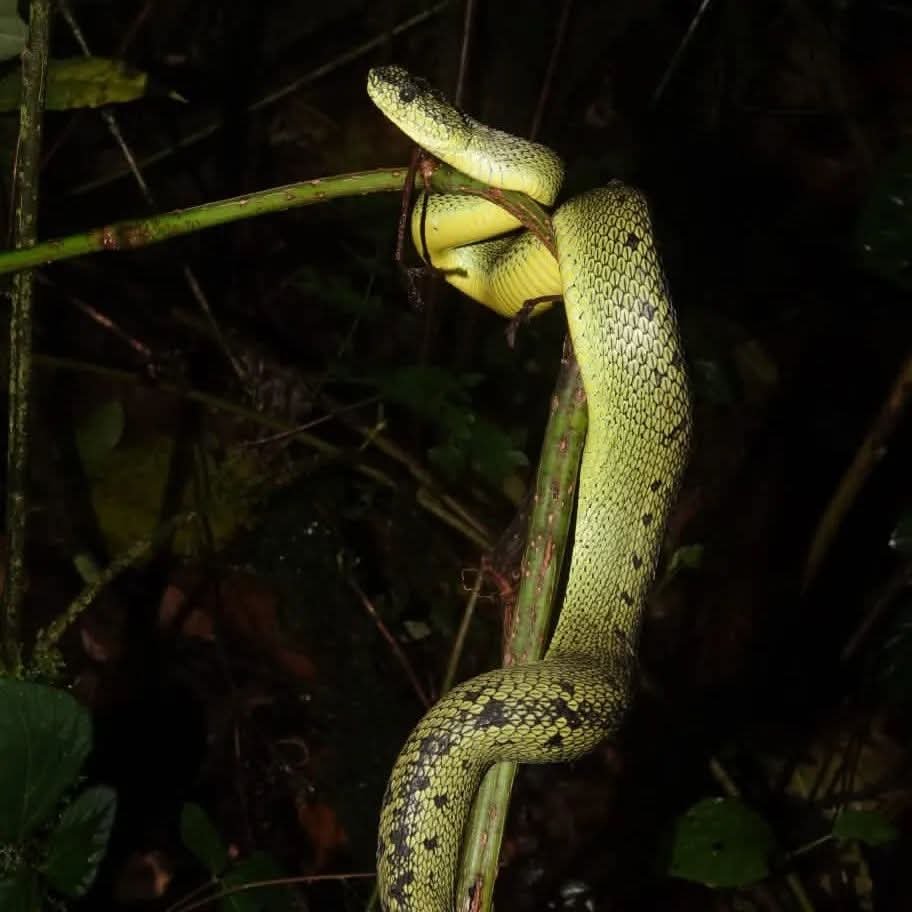
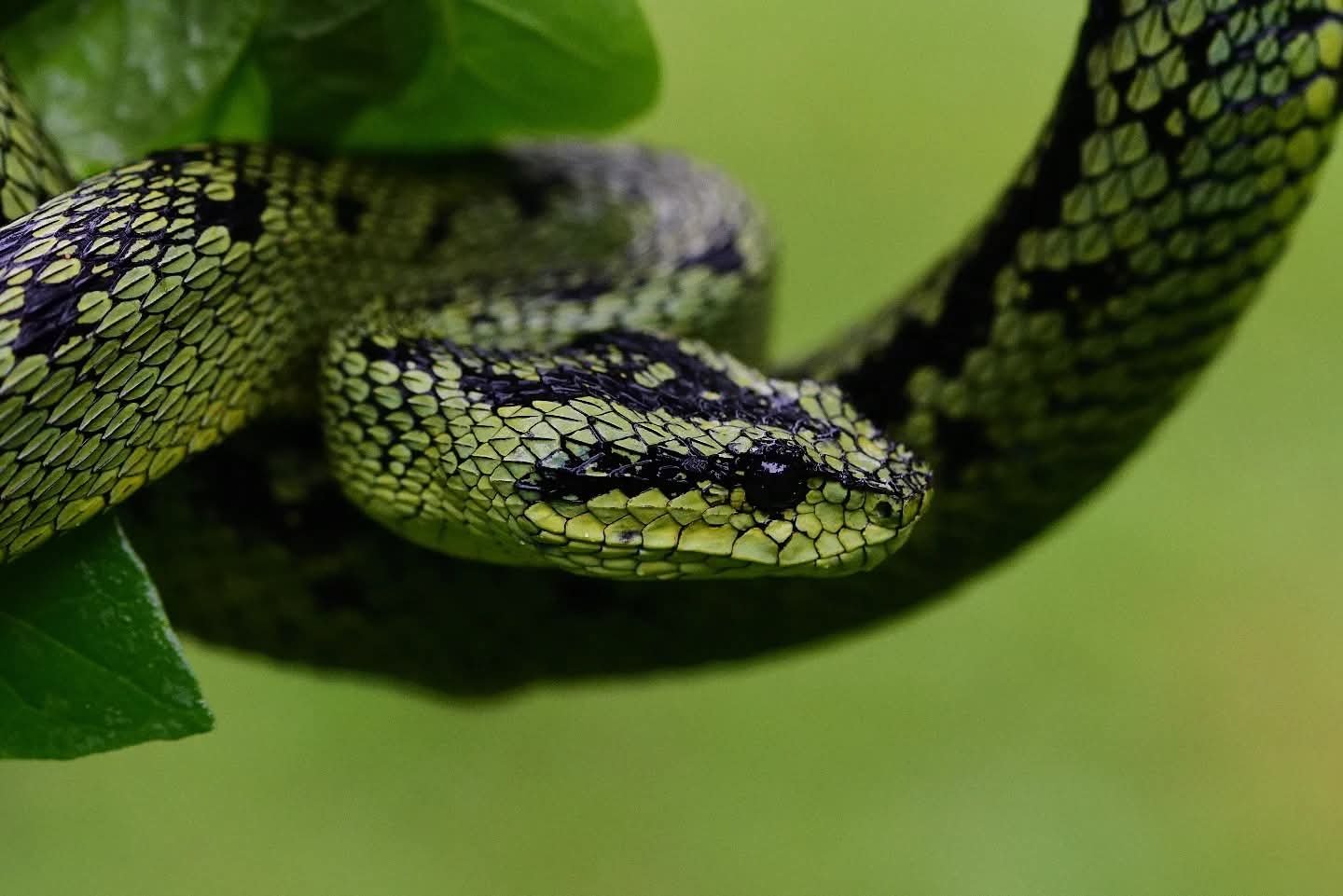
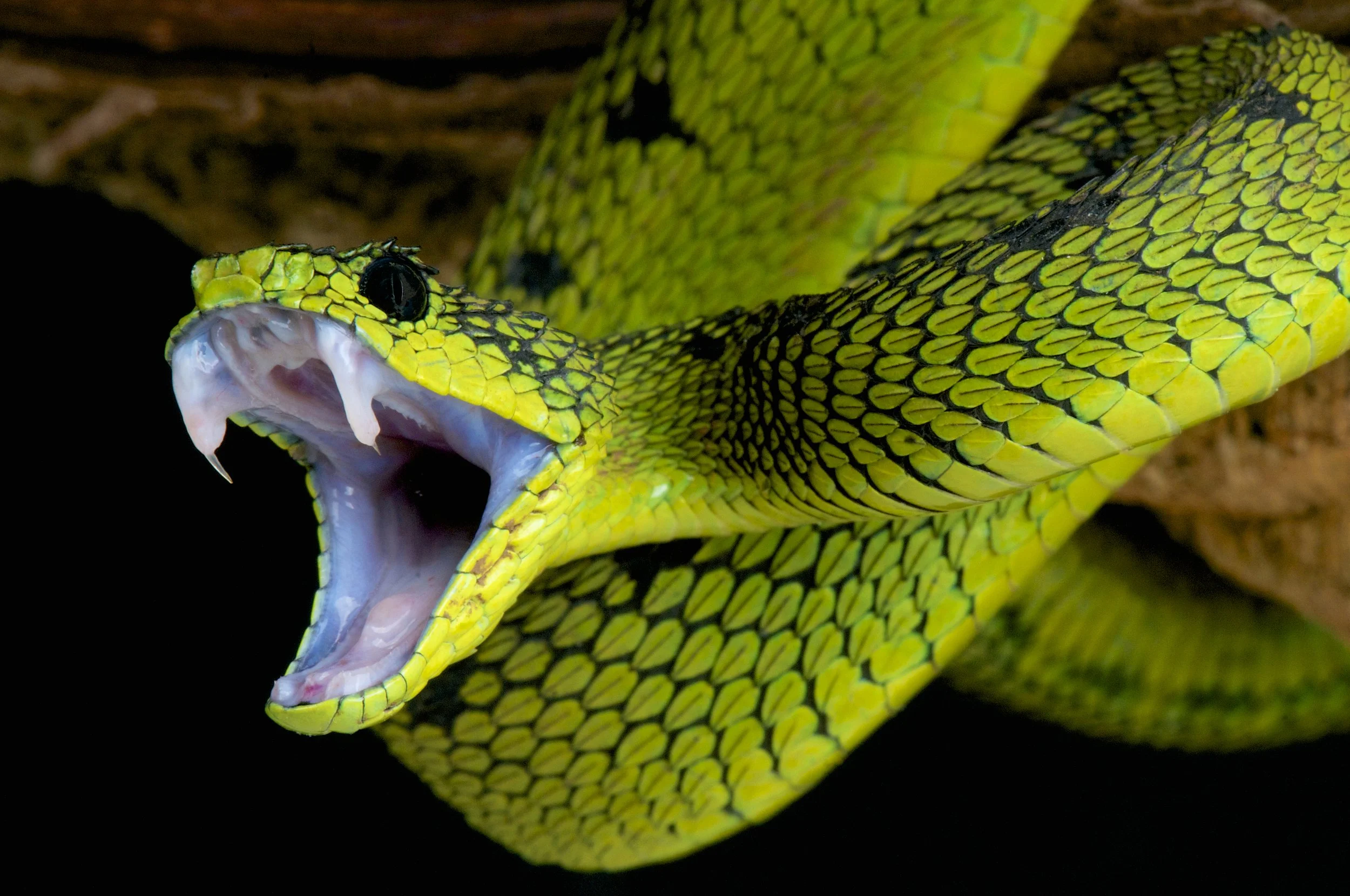
below: the great lakes bush viper is a top target on this expedition, an incredible species in the genus atheris. our best chance to see one is in rwenzori.
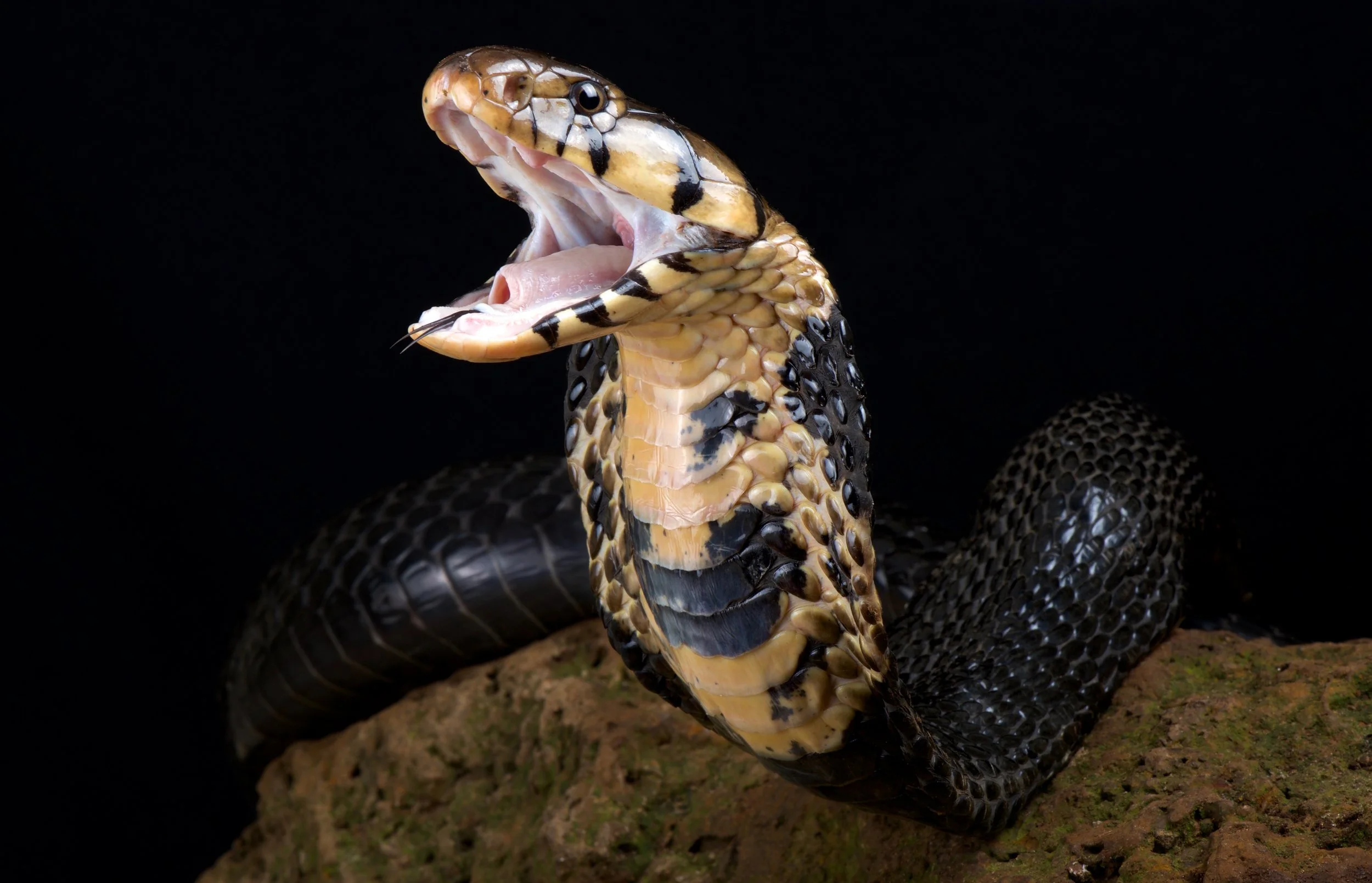
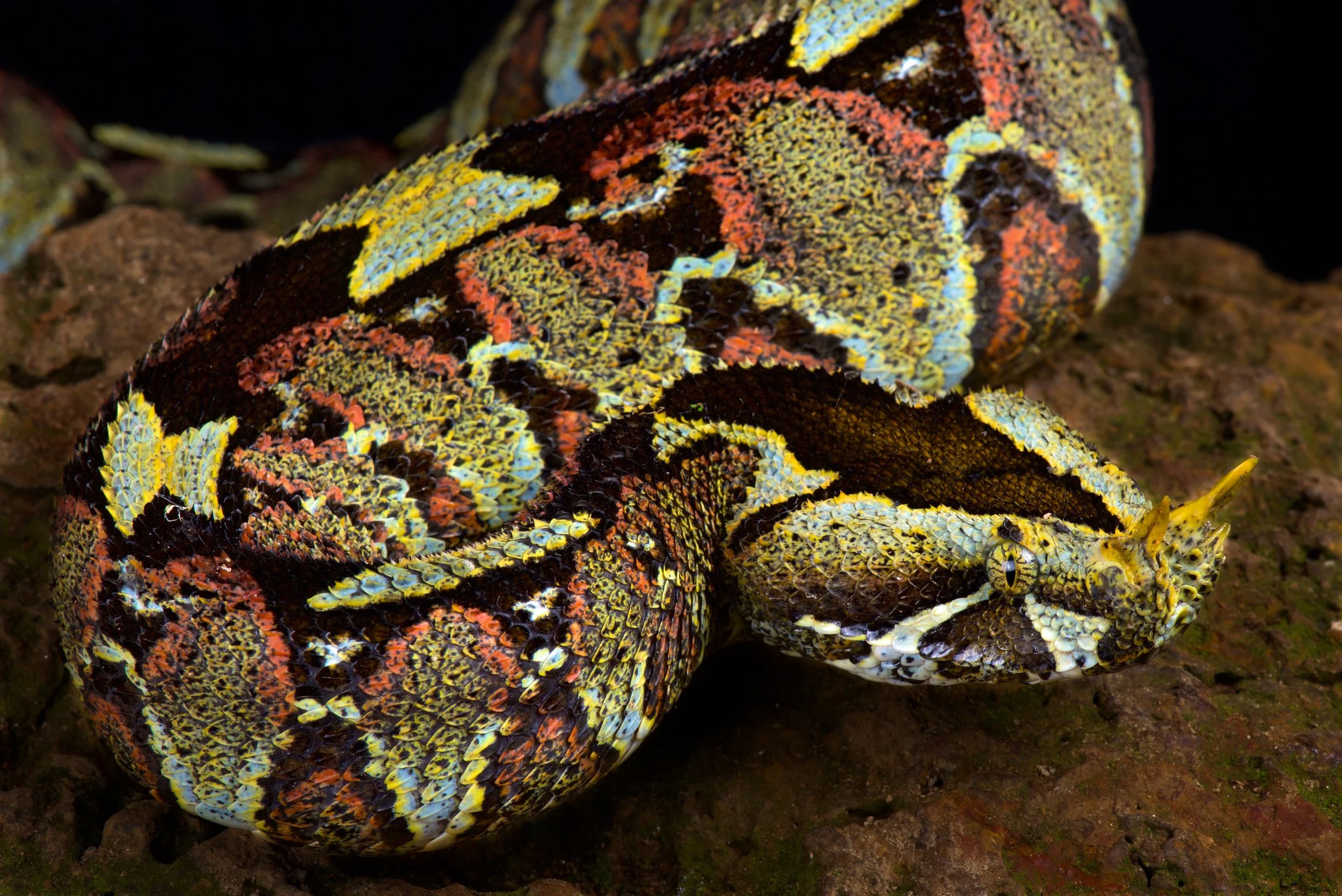
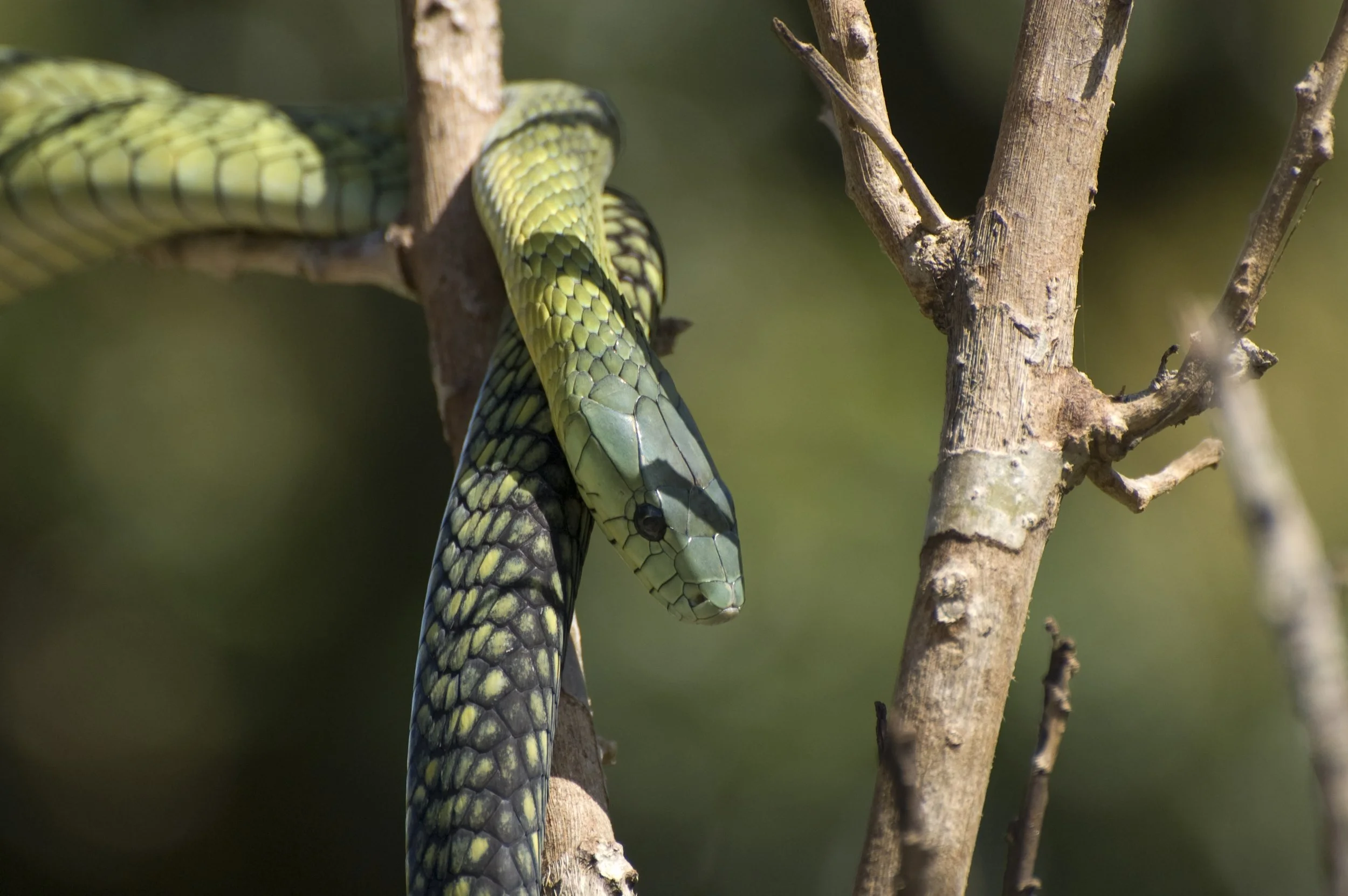
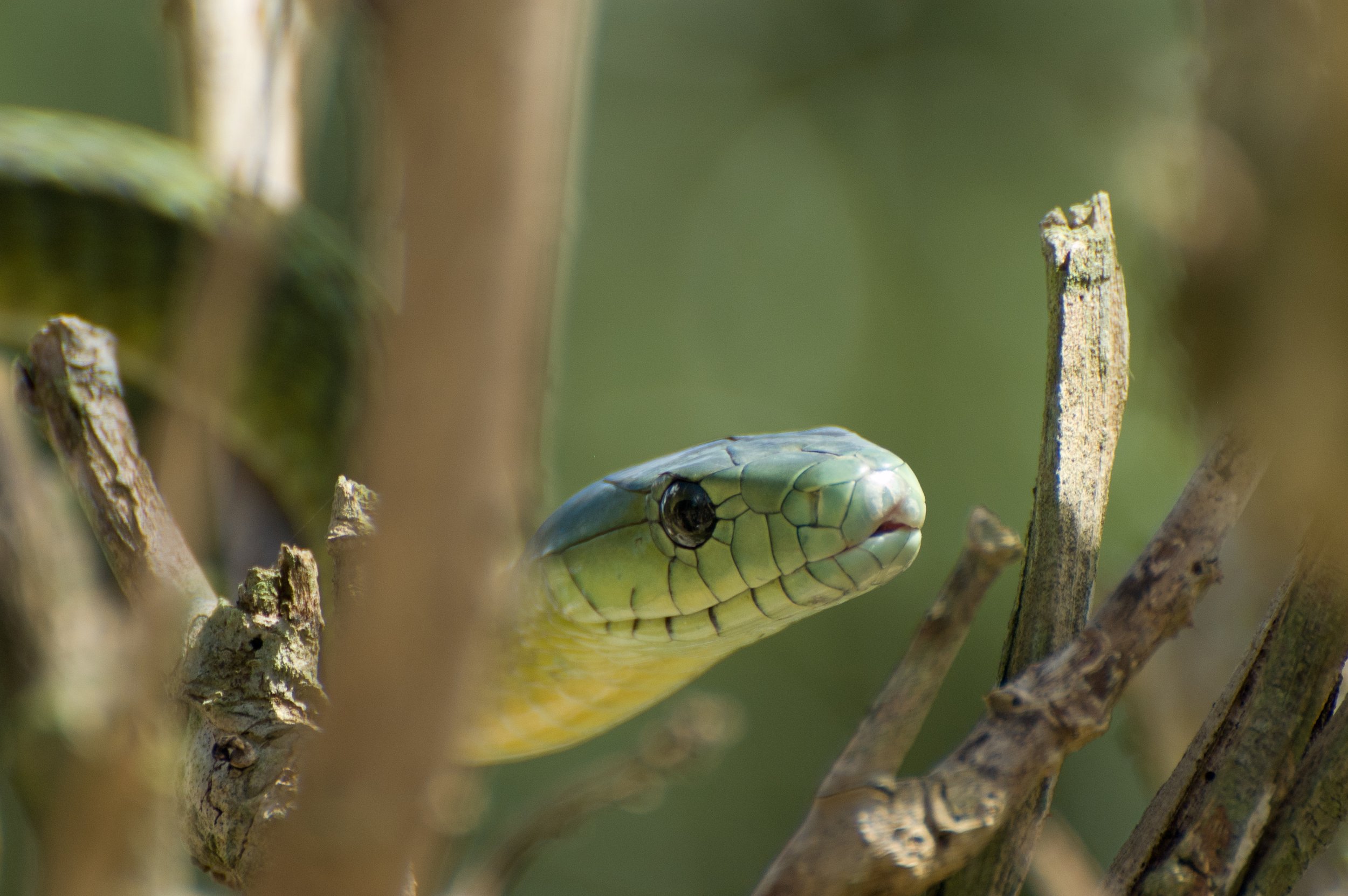
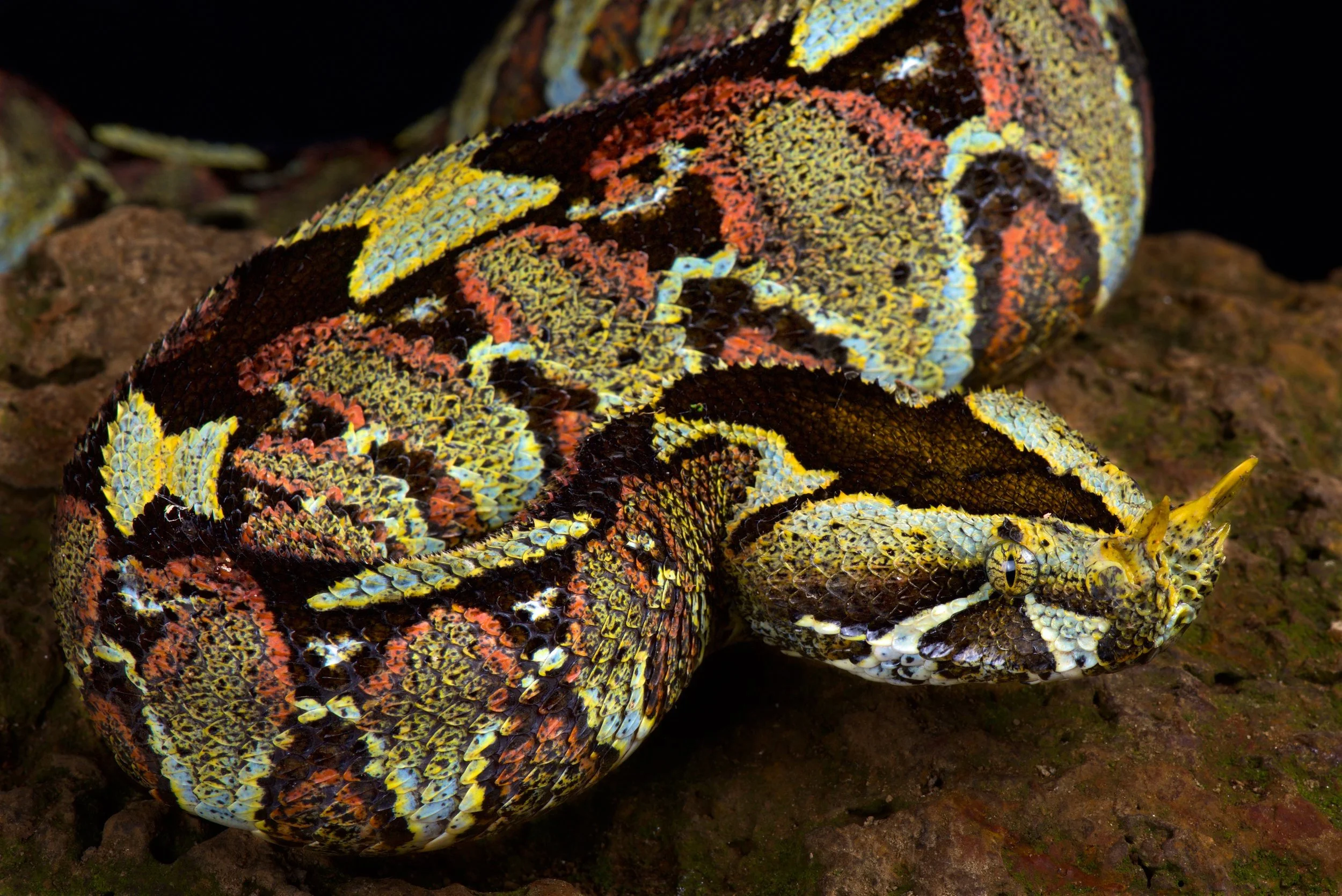
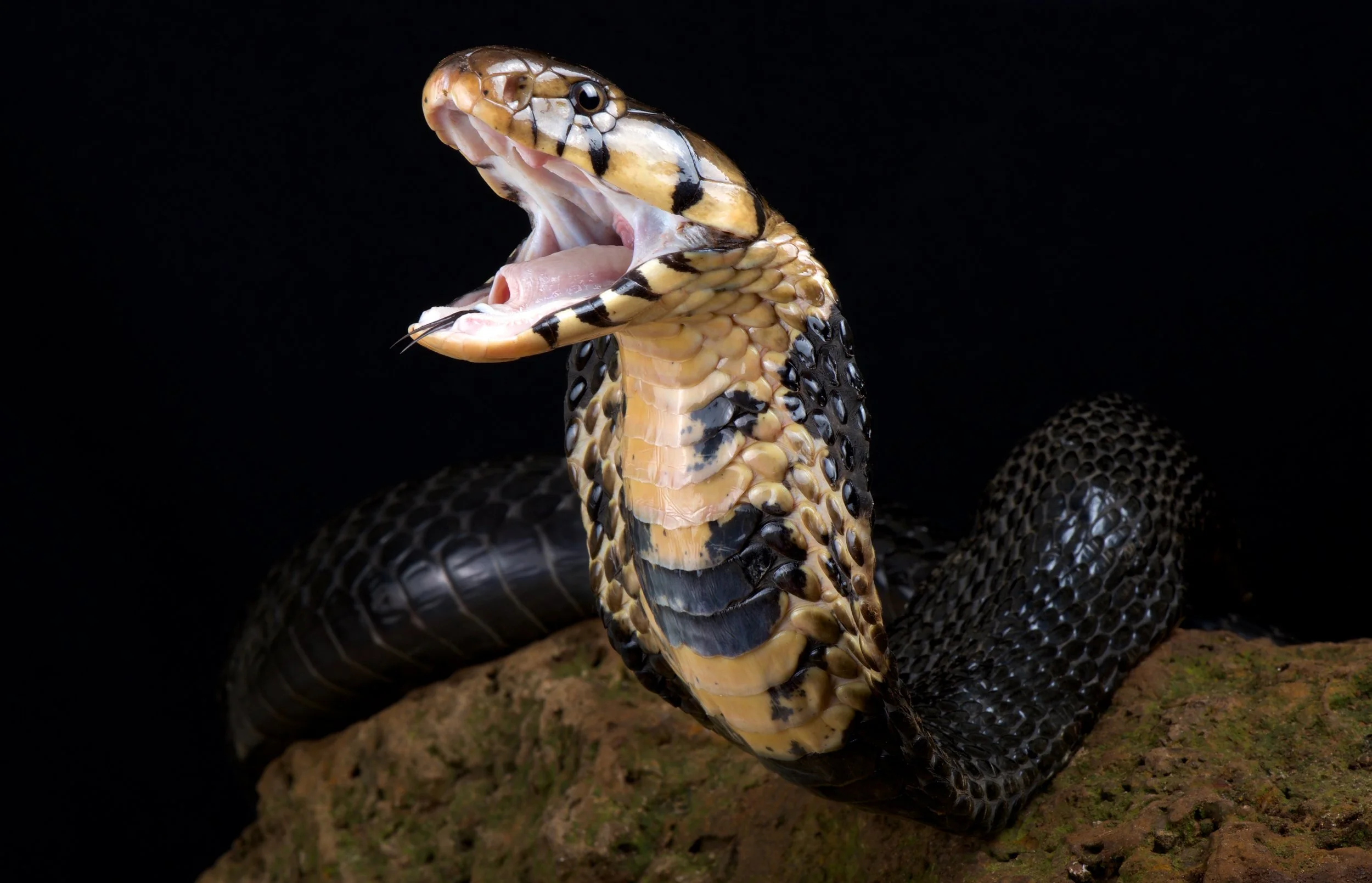
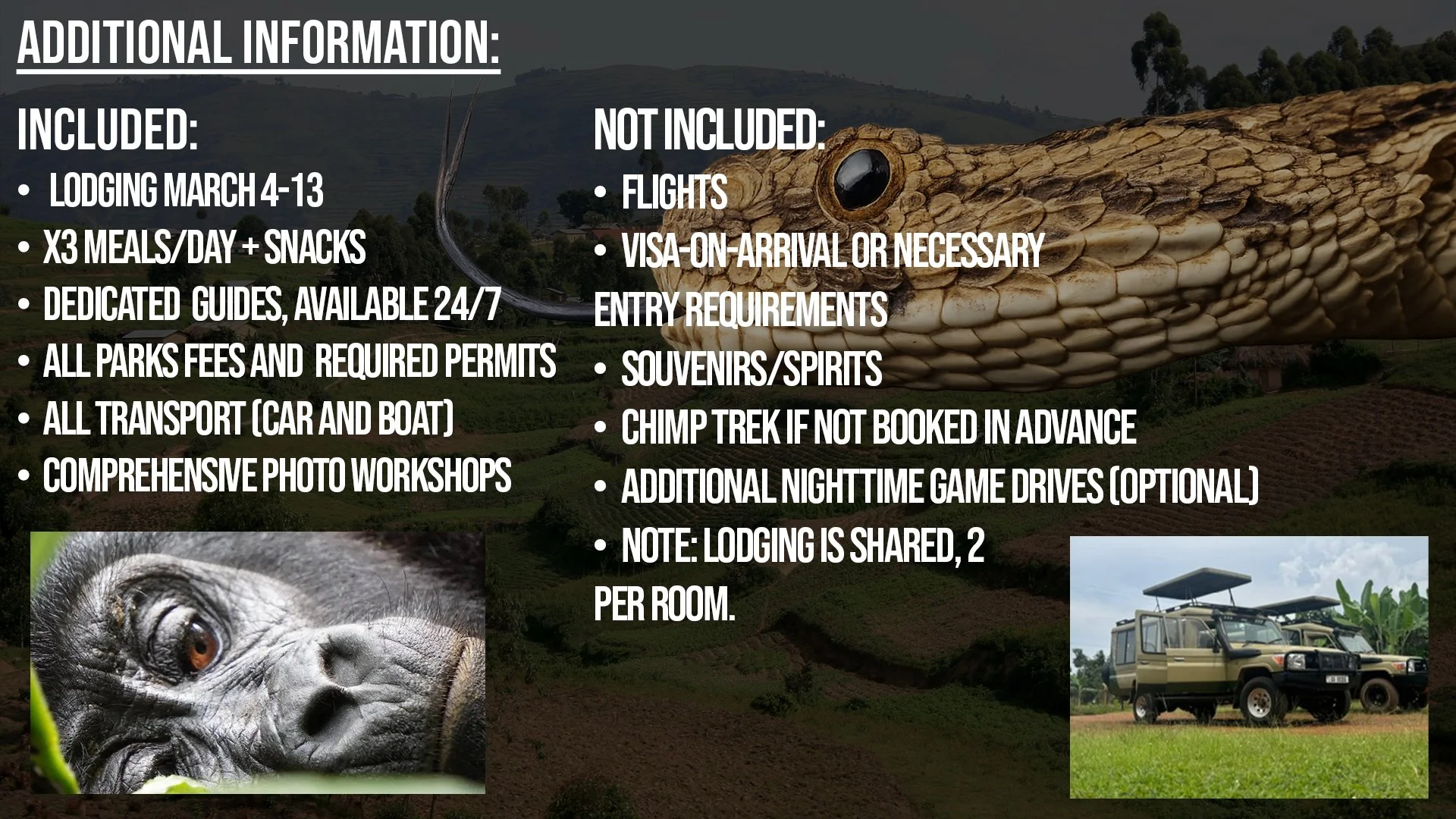
the black forest cobra (left) and the rhinoceros viper (right) are two iconic snakes that call the rolling hills and lowlands of the country home. they are some of the most visually “striking” venomous snakes we have on earth.