
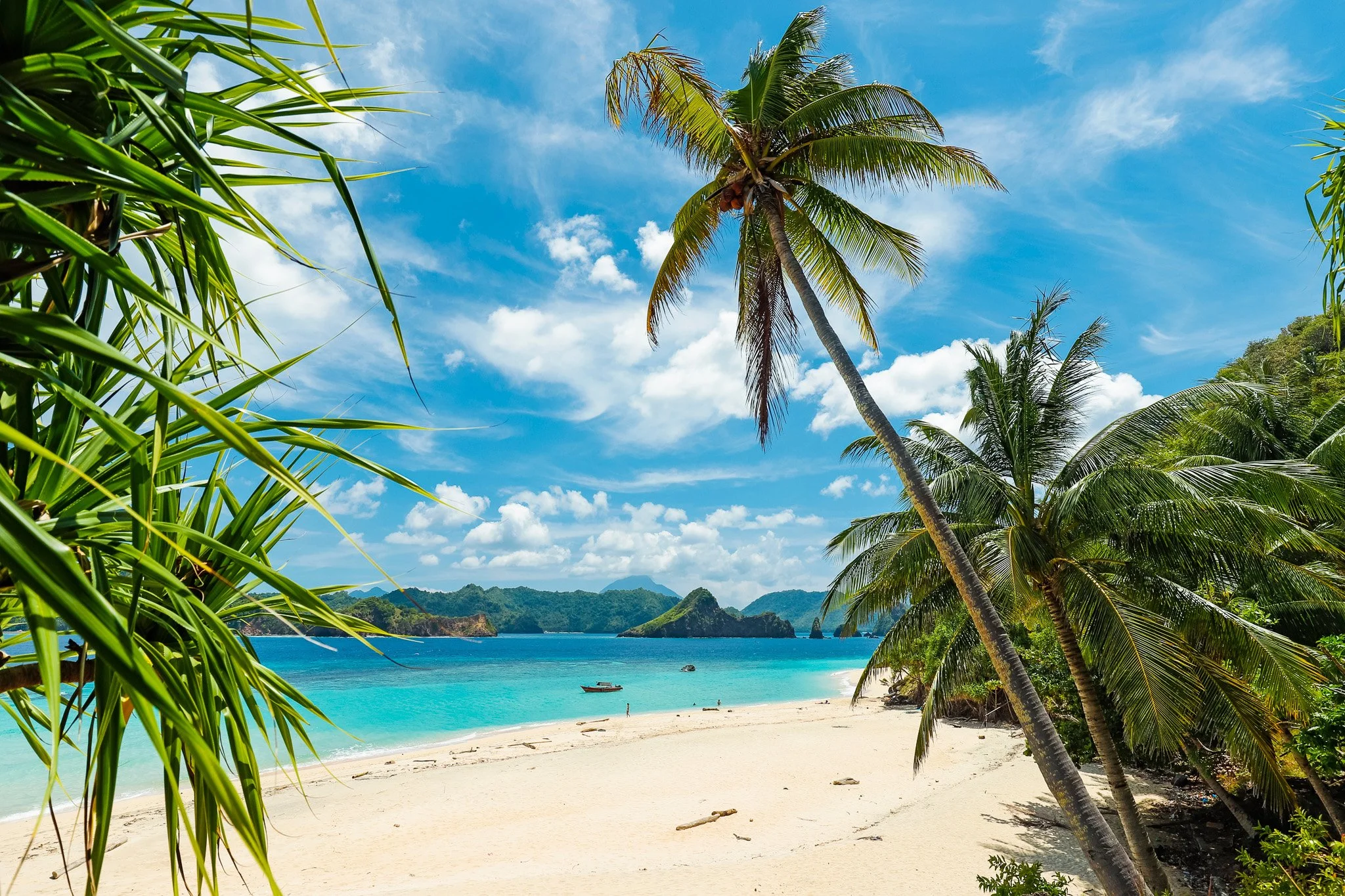
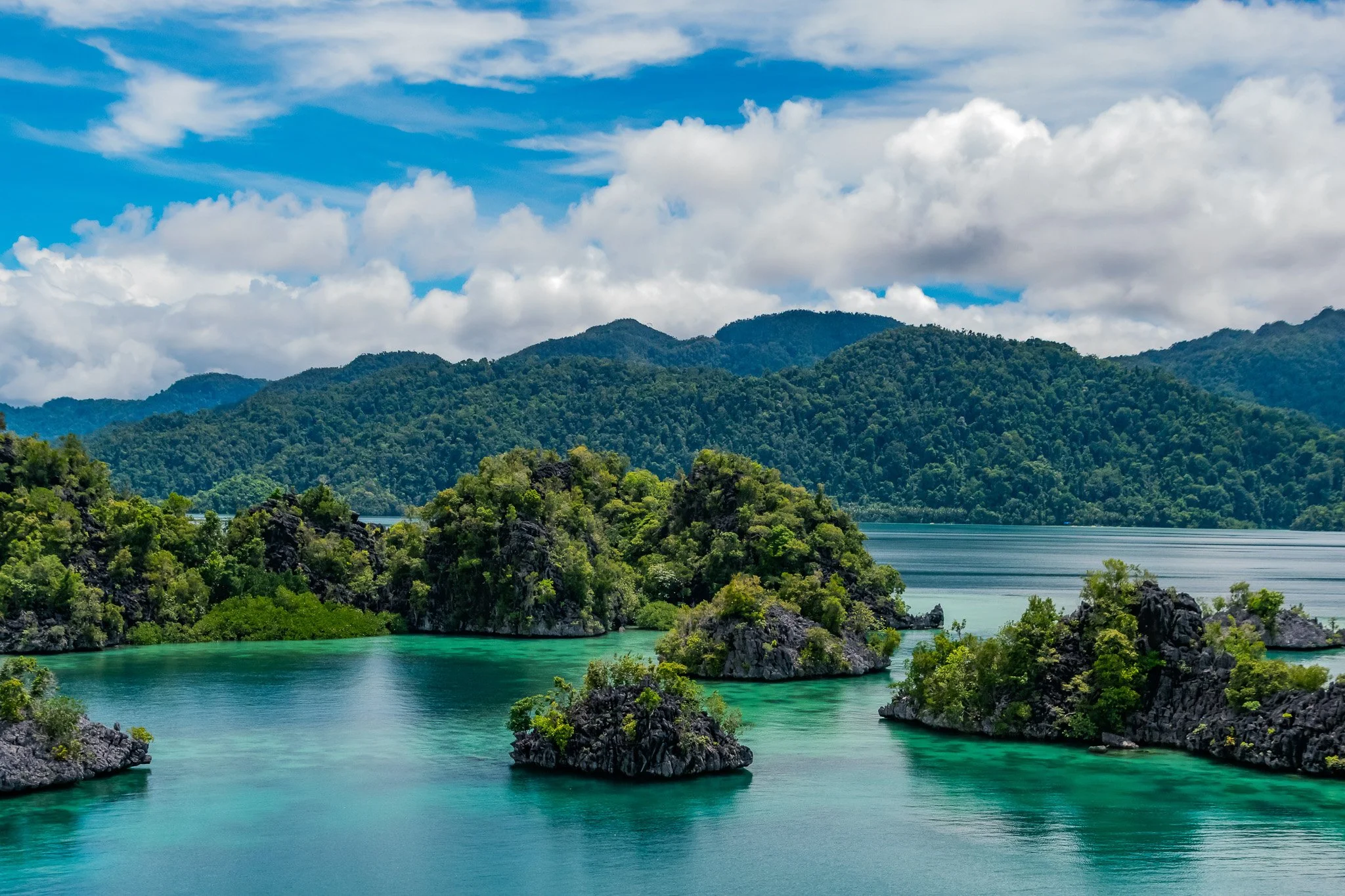
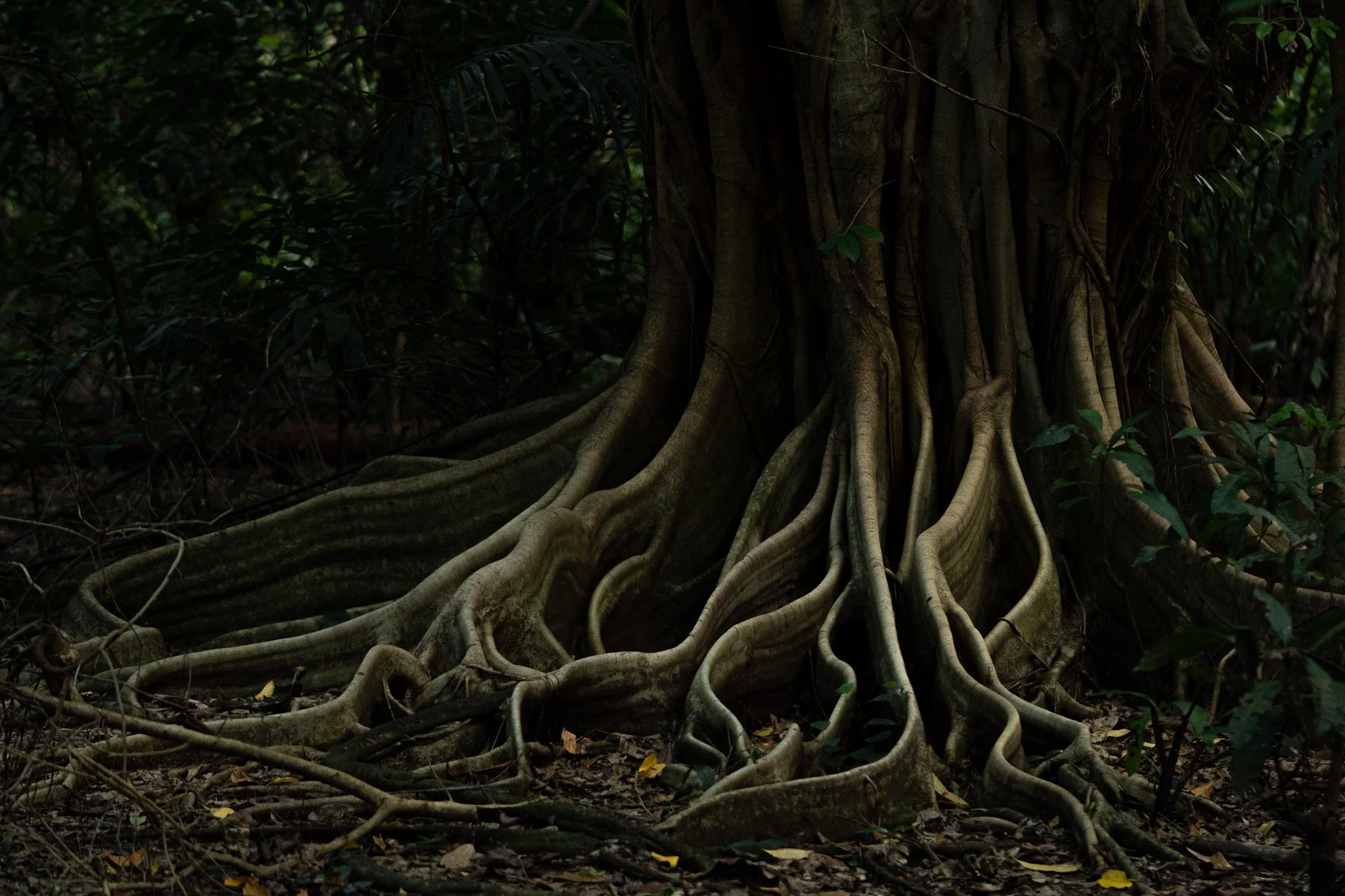
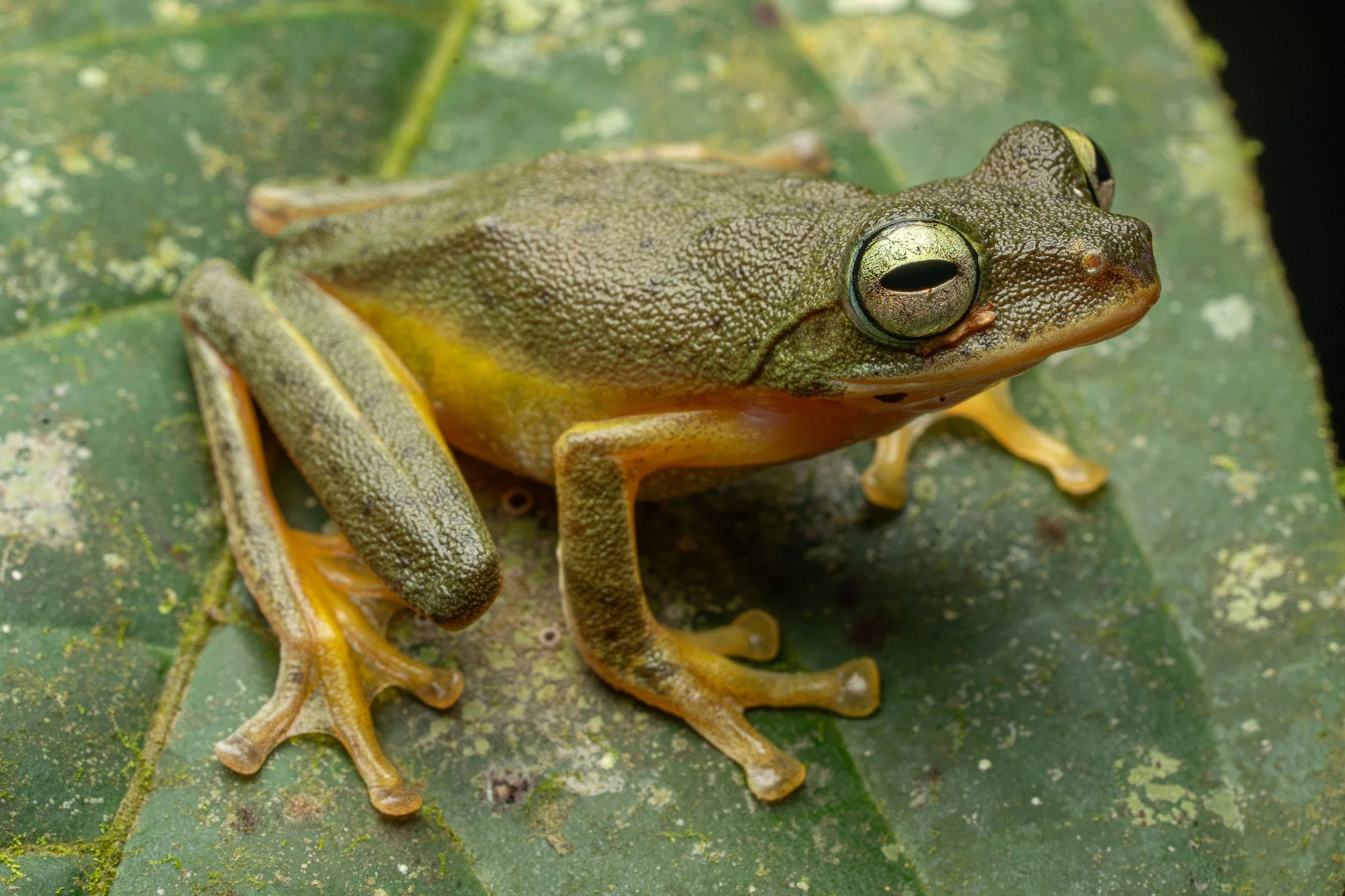
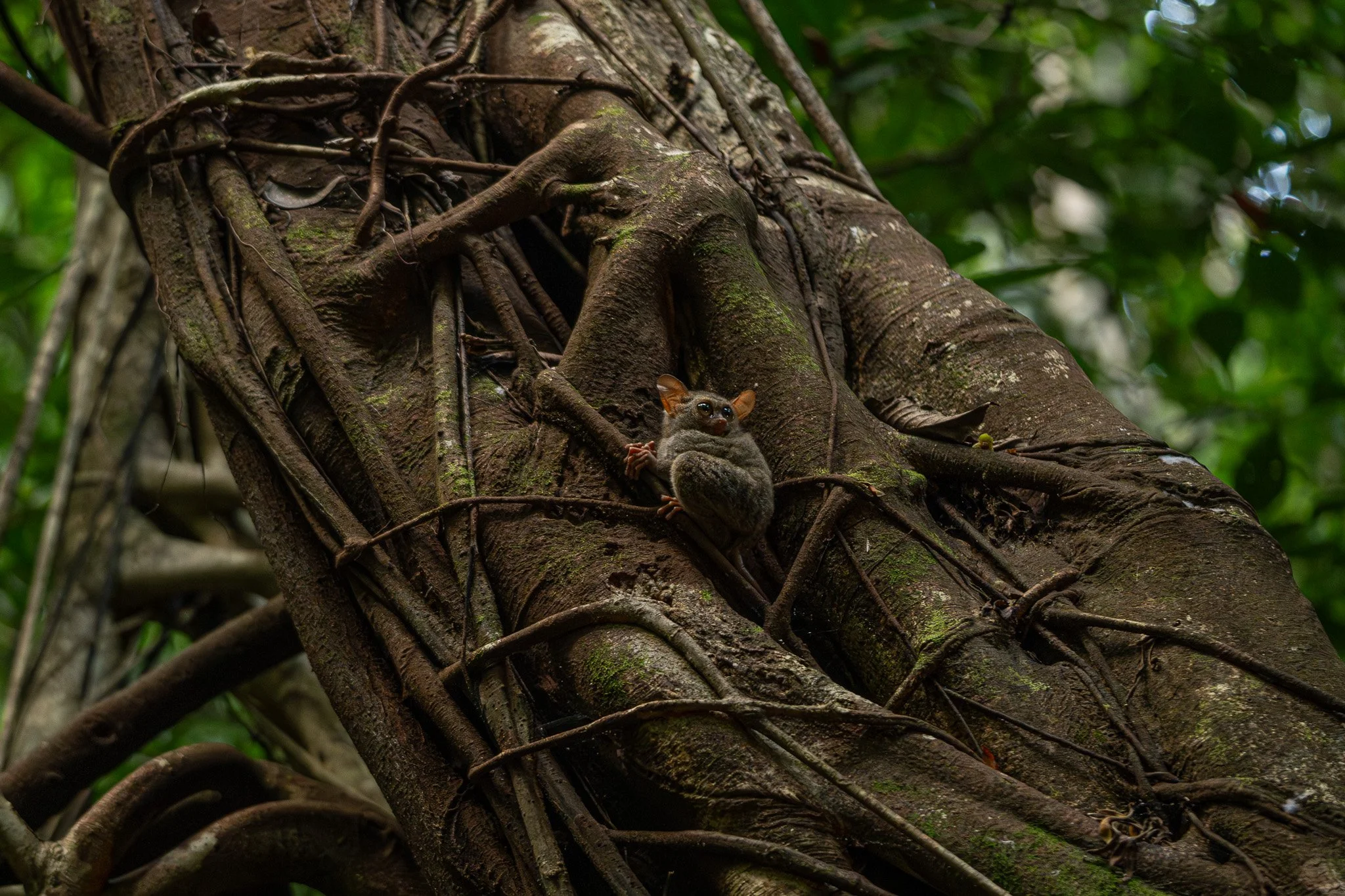
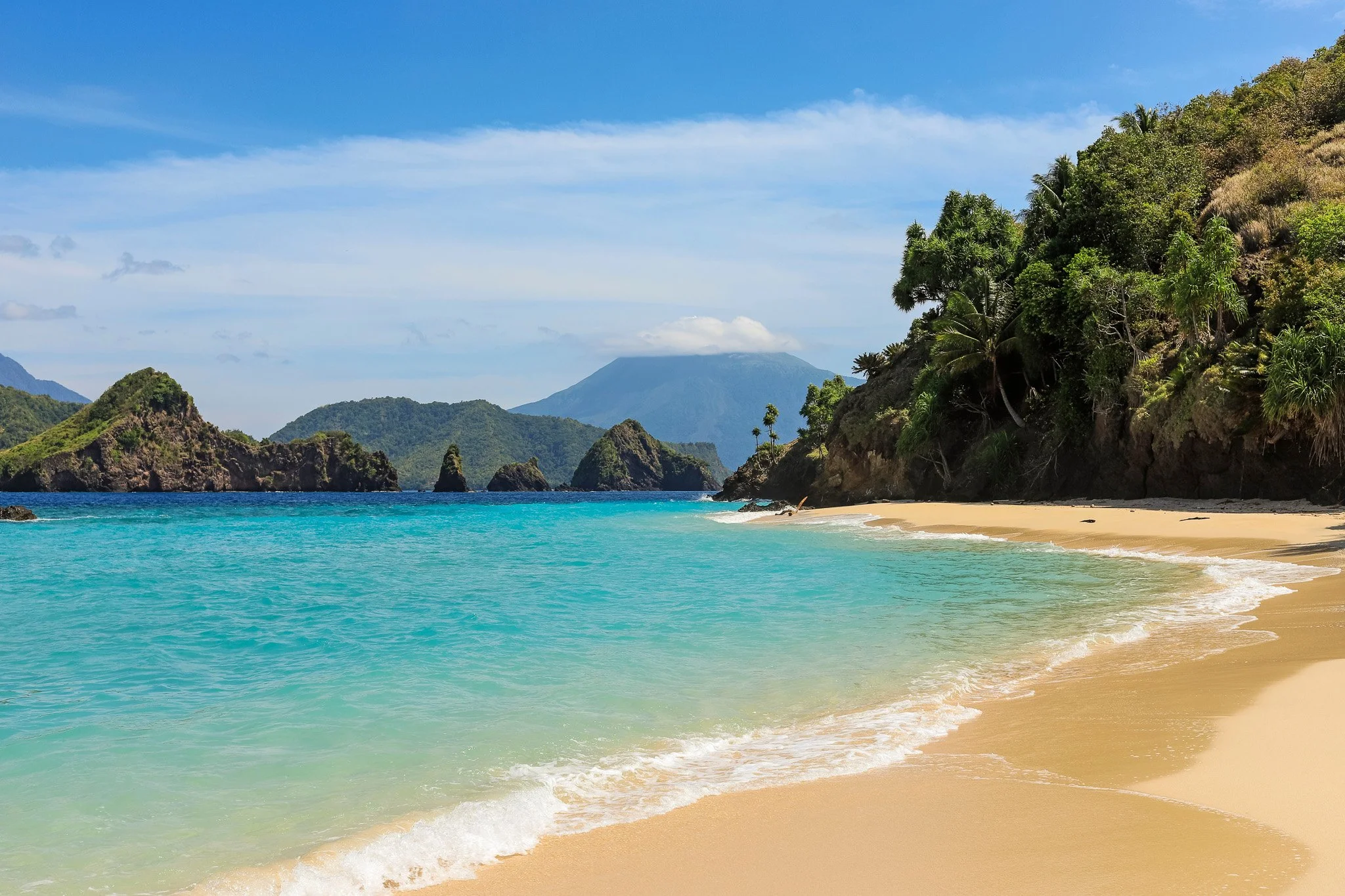
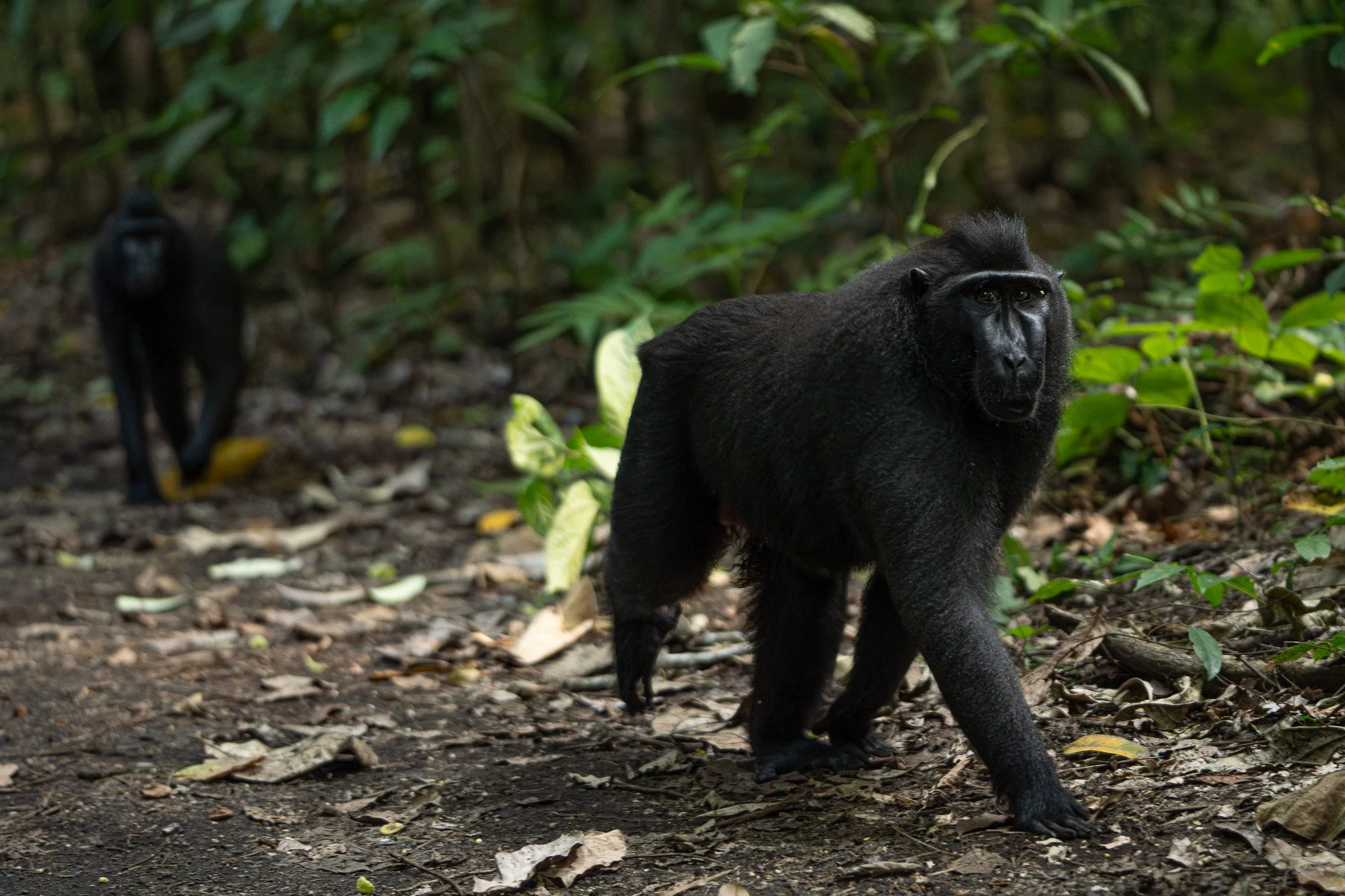
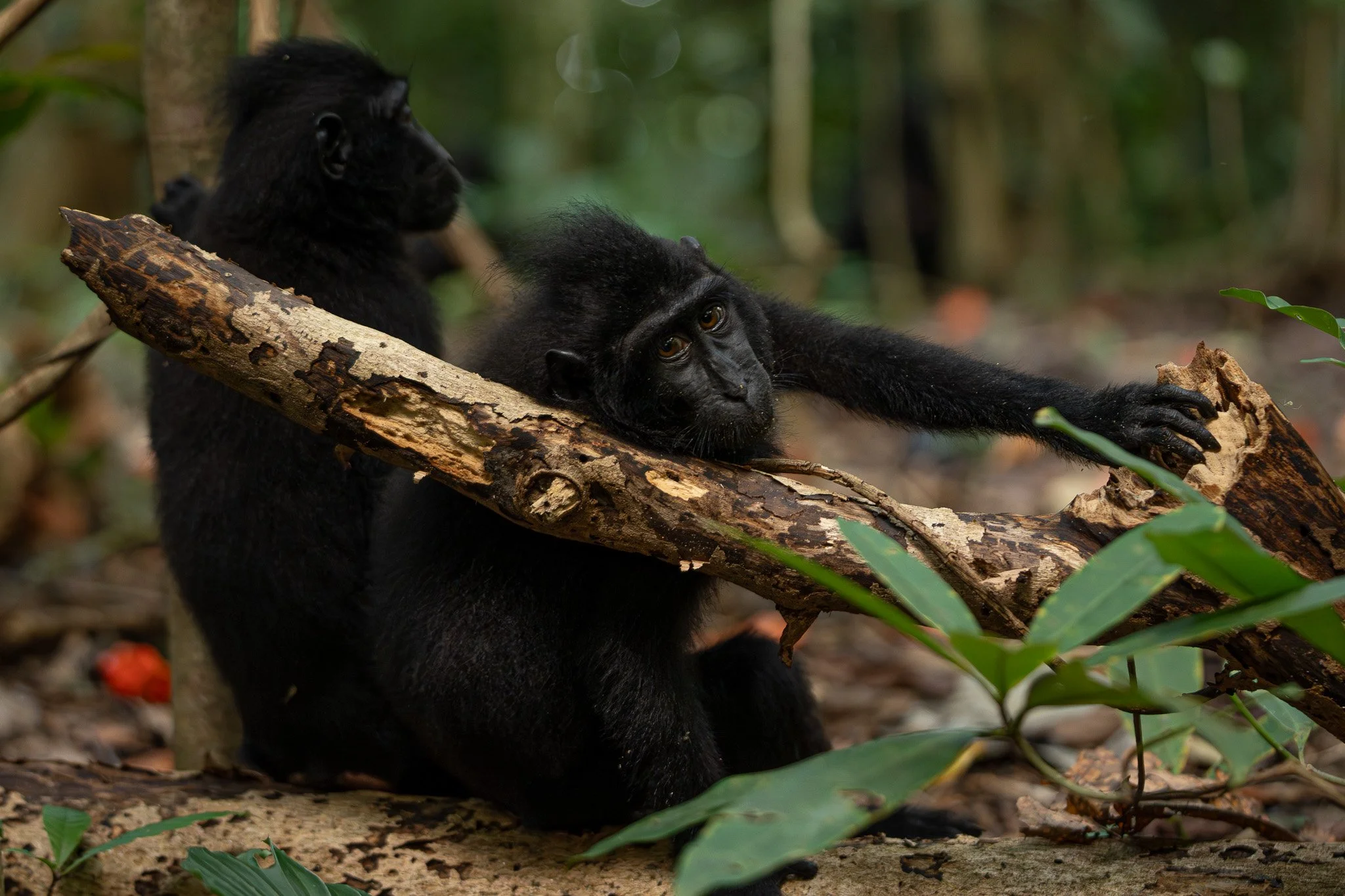
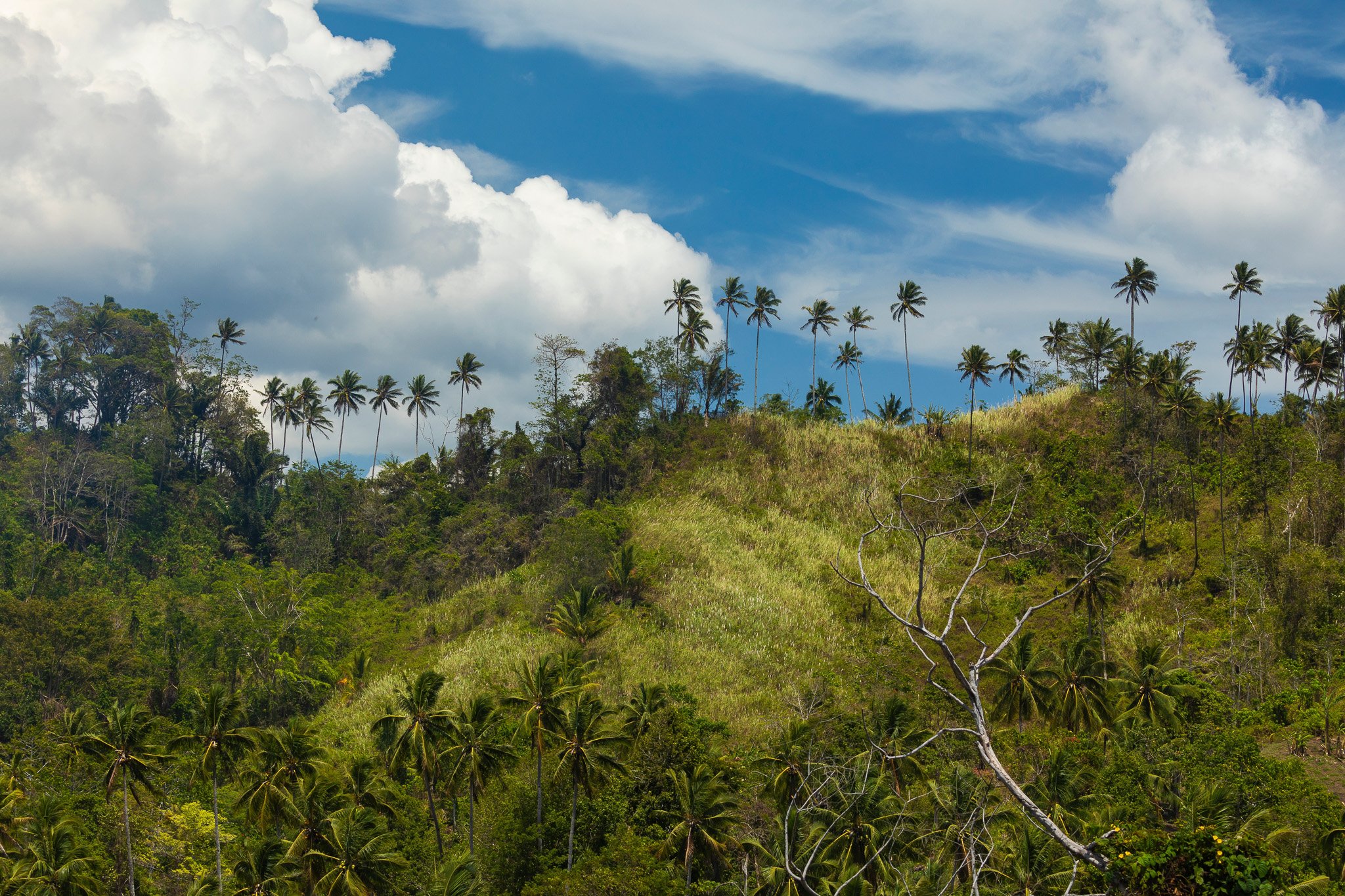
Sulawesi sits at the heart of Wallacea and the Coral Triangle, making it one of the most extraordinary places on Earth to combine herping and diving. Its long isolation has driven extreme endemism—around 80% of amphibians and a vast proportion of reptiles and mammals occur nowhere else—while complex geology and fragmented habitats continue to fuel rapid speciation and micro-endemism.
Alfred Russel Wallace was a 19th-century naturalist who independently conceived the theory of natural selection alongside Charles Darwin. Through fieldwork across the Malay Archipelago, he recognized a sharp faunal boundary—now called the Wallace Line—separating Asian and Australasian species.
Sulawesi lies within this transition zone (Wallacea), and its biota shows a mix of both regions but with high endemism. For Wallace, it was key evidence that geographic isolation drives speciation, helping establish modern biogeography. Our main target species (T. laticinctus) is a case-in-point example of what happens to one species when separated for millennia from other populations under slightly different conditions- conditions that add up to big changes over geologically vast degrees of time.
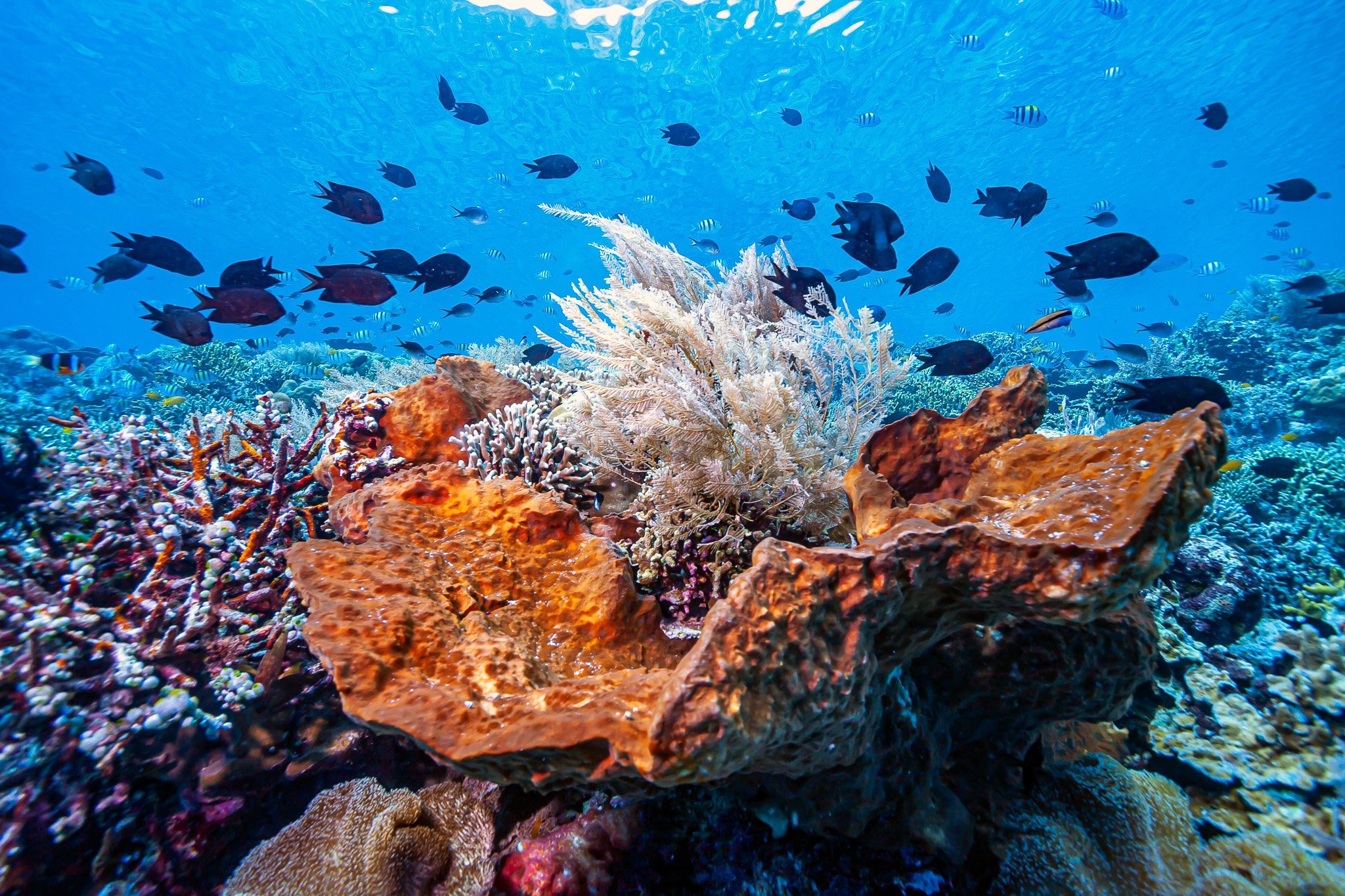
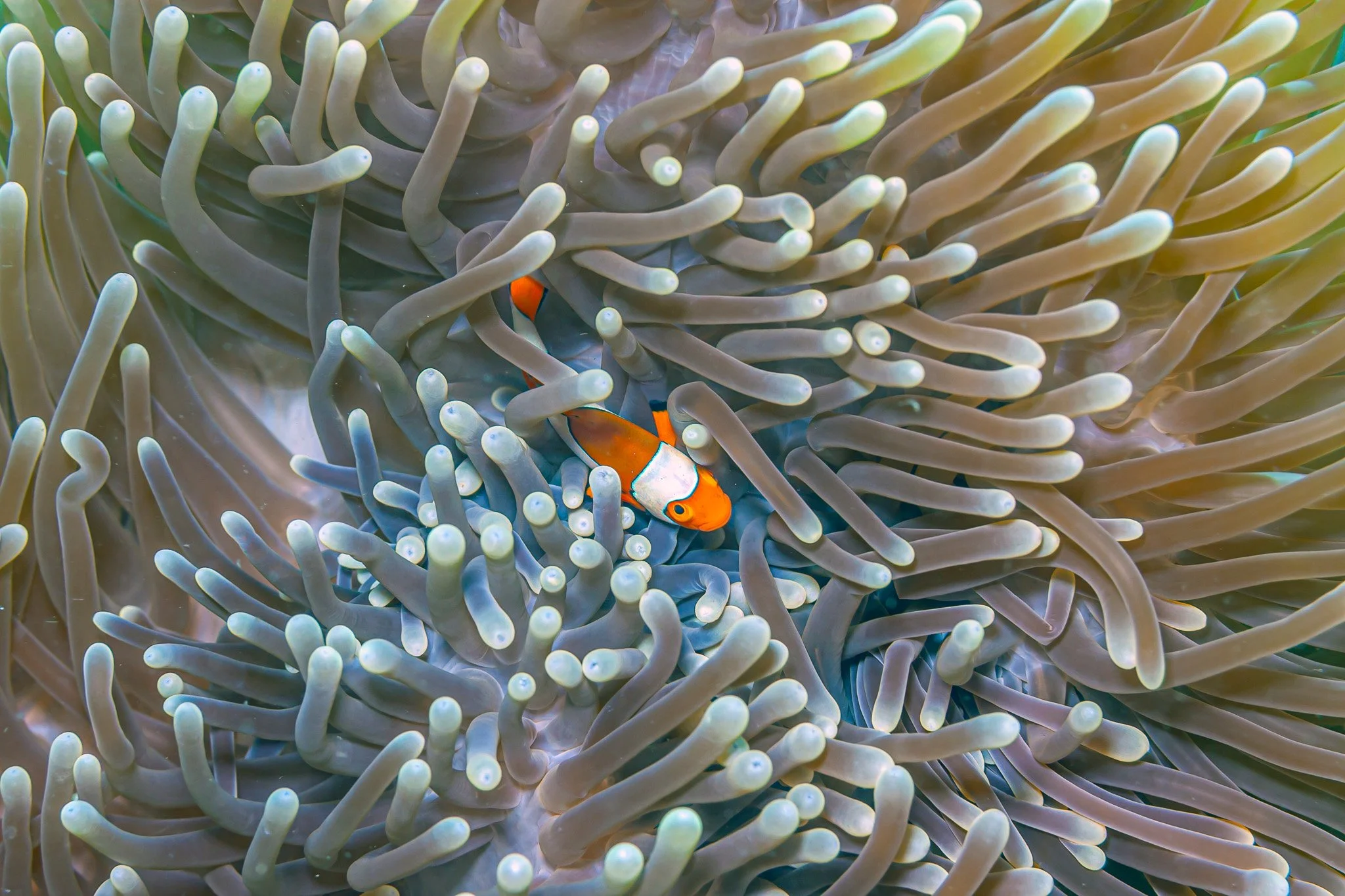
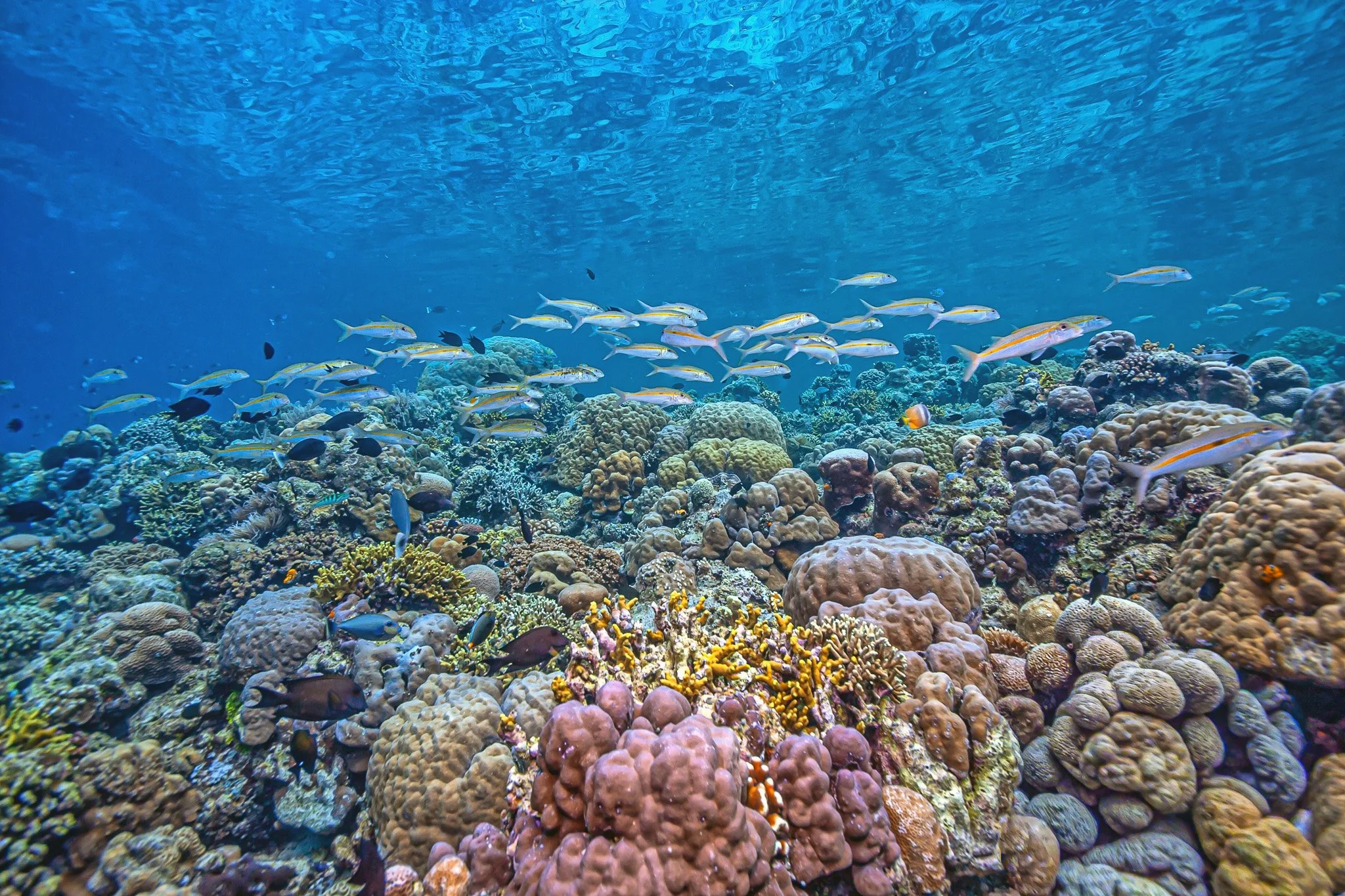
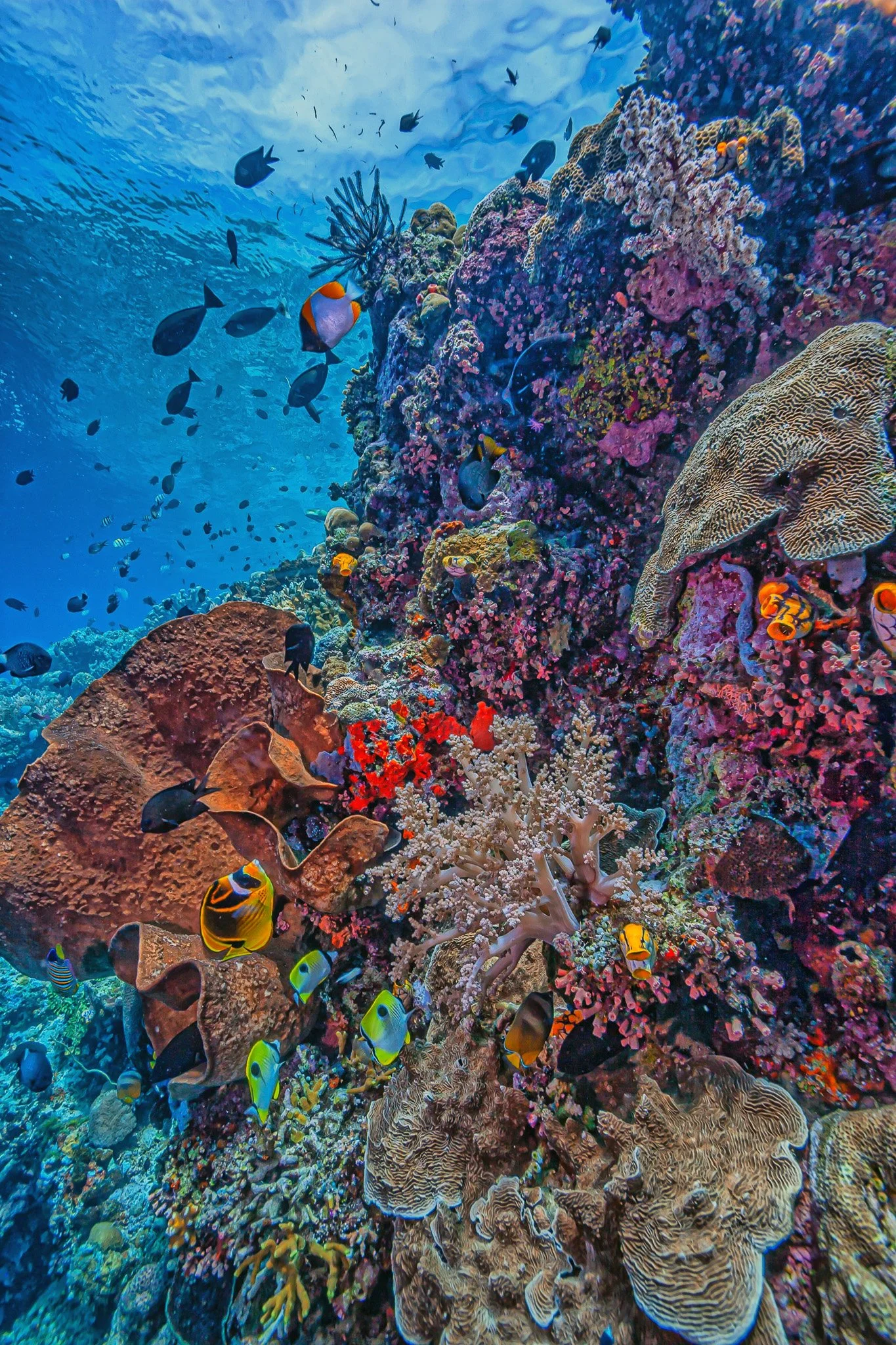
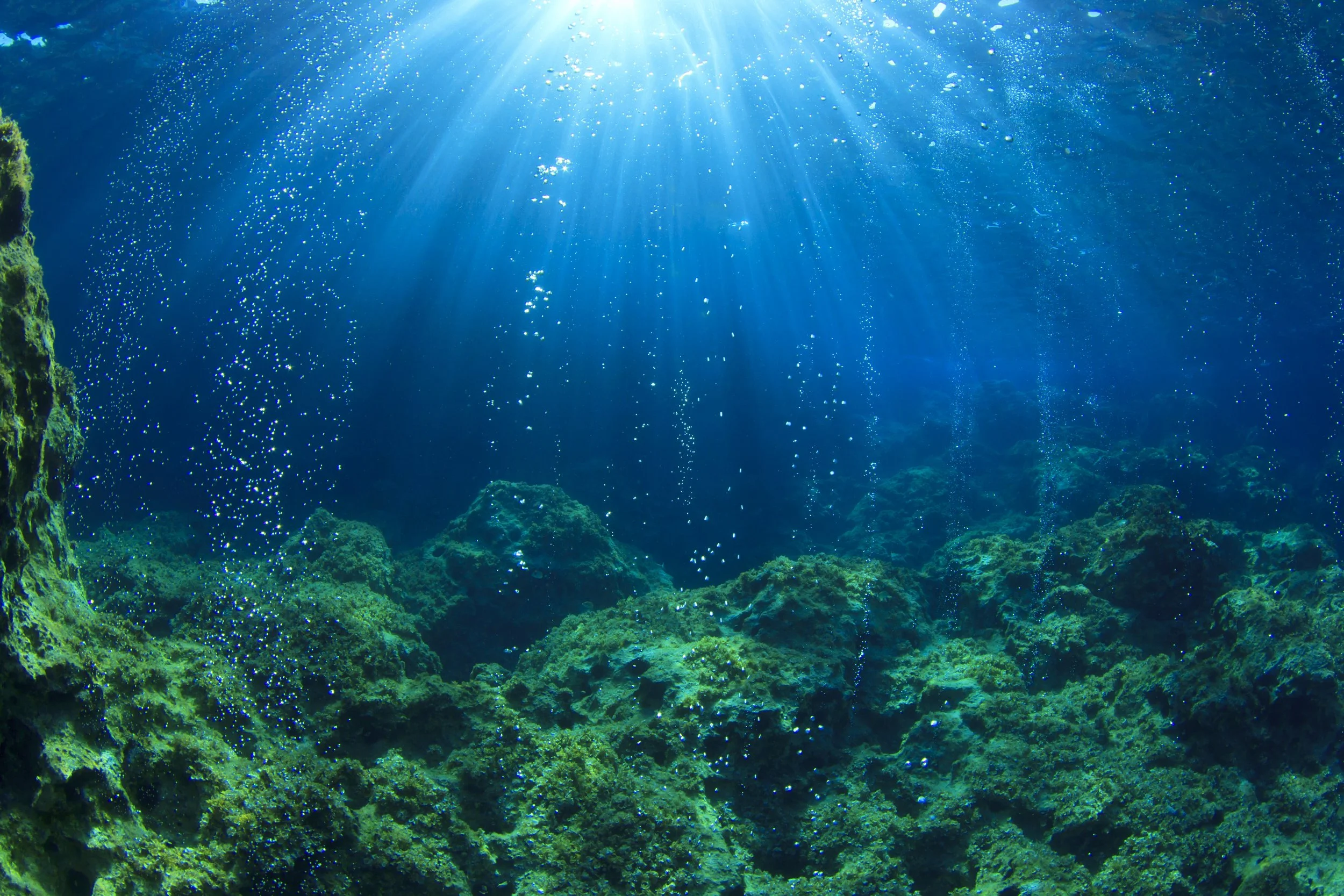
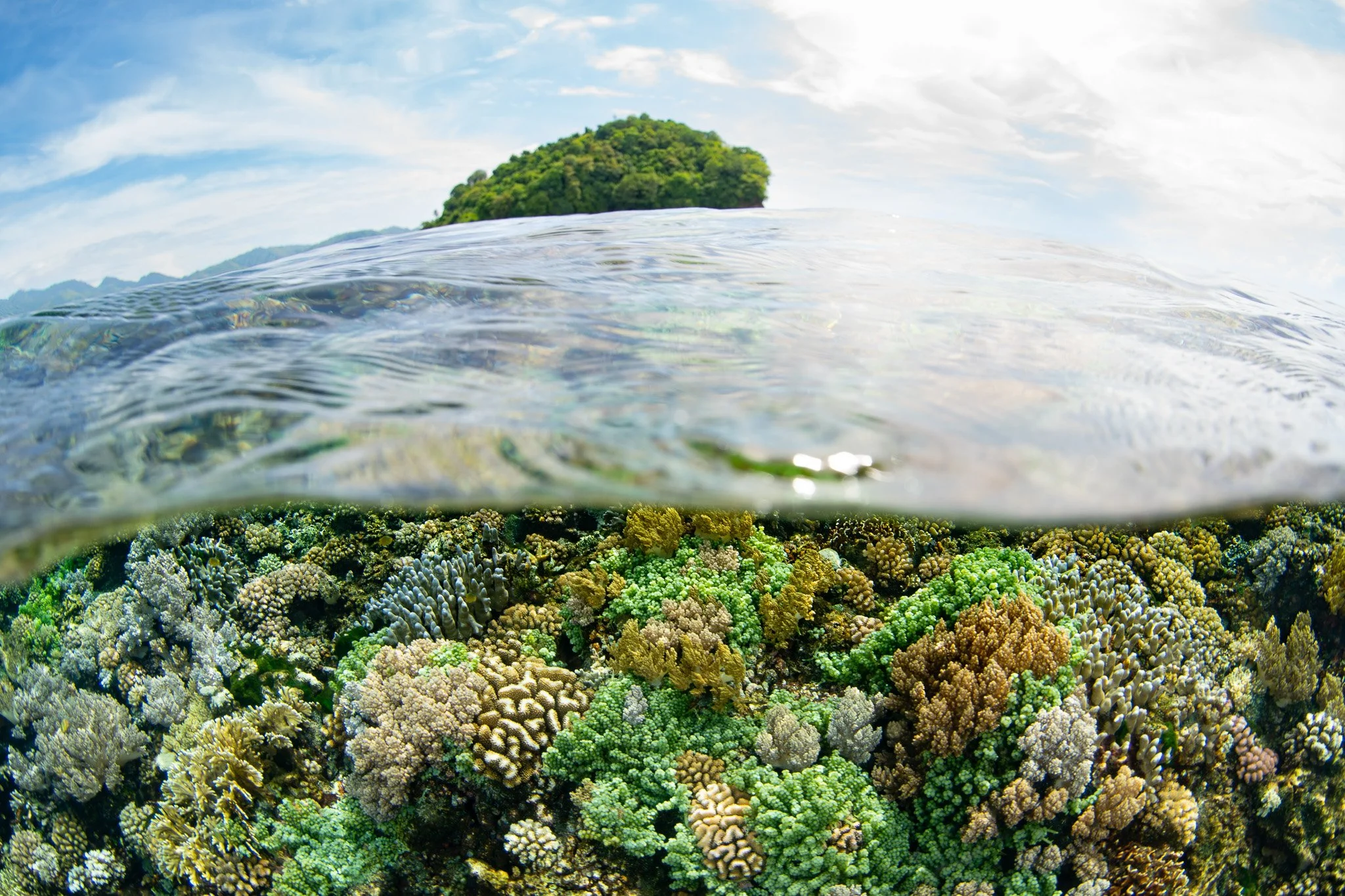
Beneath the surface, its reefs hold roughly 76% of the world’s coral species and over 3,000 reef fish, offering unmatched diversity from macro muck life to pelagics. Yet this biological intensity is increasingly under threat: much of Sulawesi’s natural habitat has already been lost, mangroves are declining, and expanding mining, logging, and agriculture are pushing into the few remaining truly wild areas. What persists is one of the planet’s last truly explosive evolutionary landscapes—fragile, irreplaceable, and rapidly disappearing.
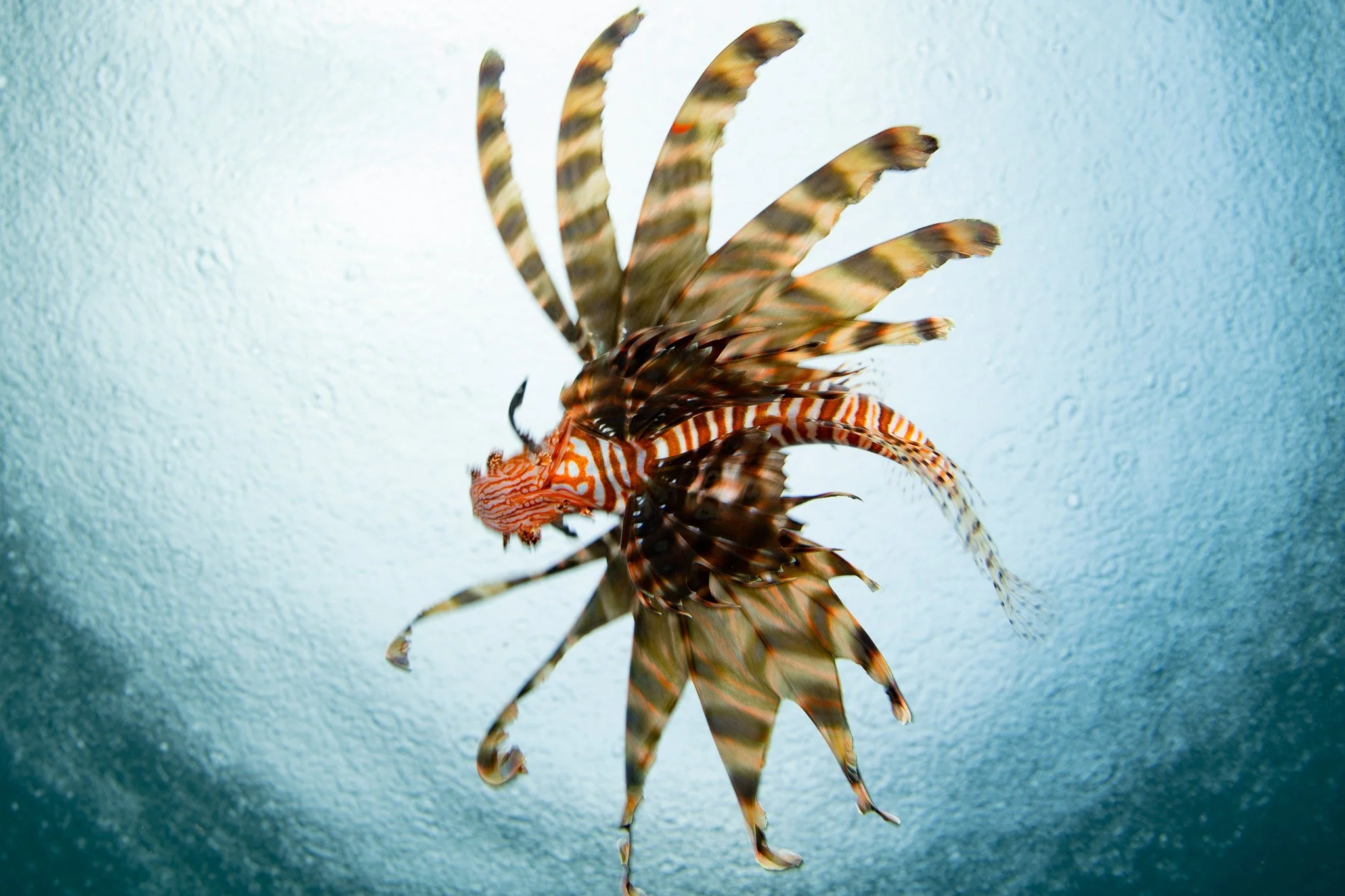
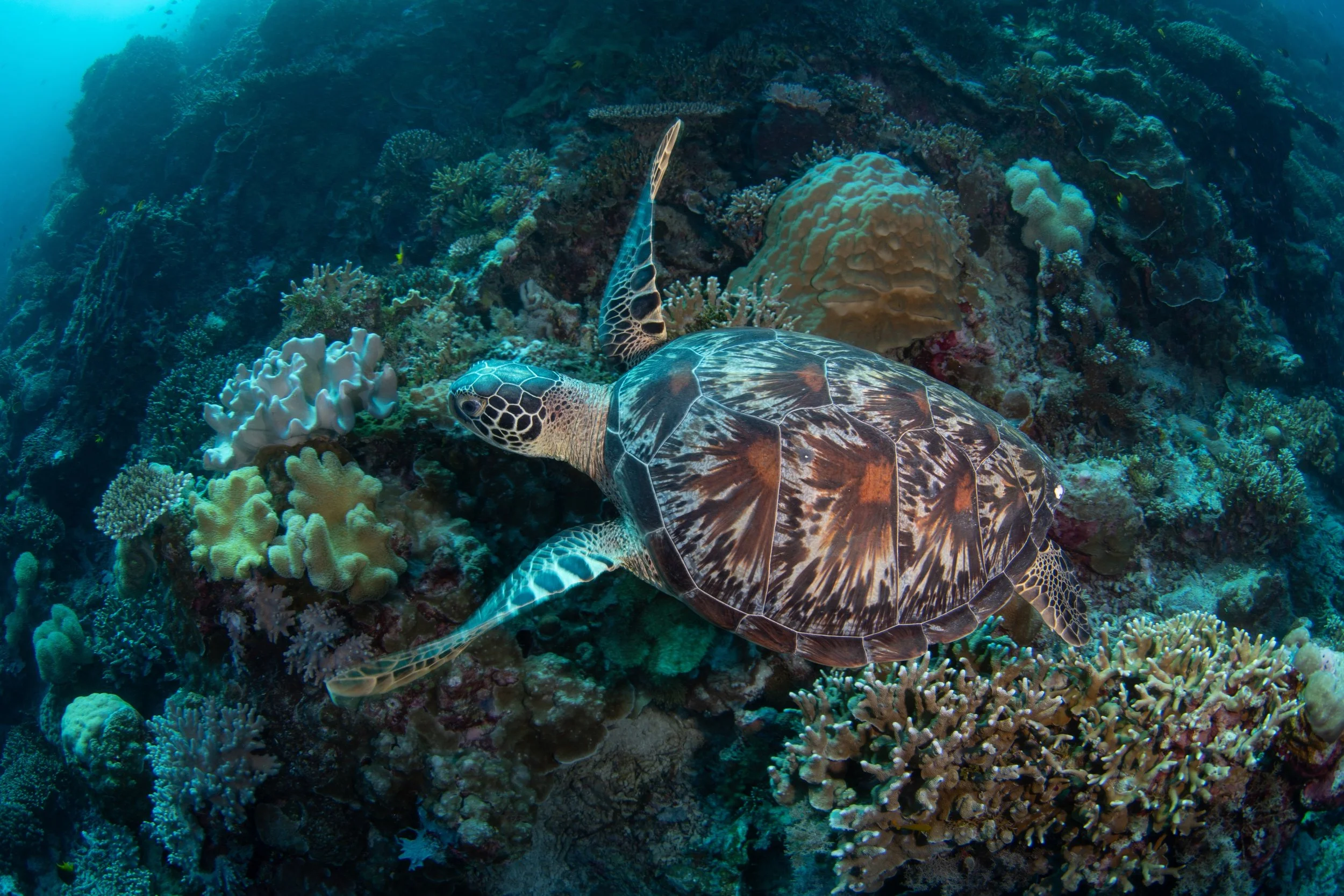
*THIS IS A DIVING AND HERPING EXPEDITION. YOU DO NOT NEED ANY CERTIFICATIONS TO SNORKEL WHILE OTHERS DIVE! north SULAWESI IS AN INTERNATIONALLY CHERISHED DIVING LOCATION, boasting 8-10 sea snake species present in it’s waters, as well as 5 sea turtle species.*
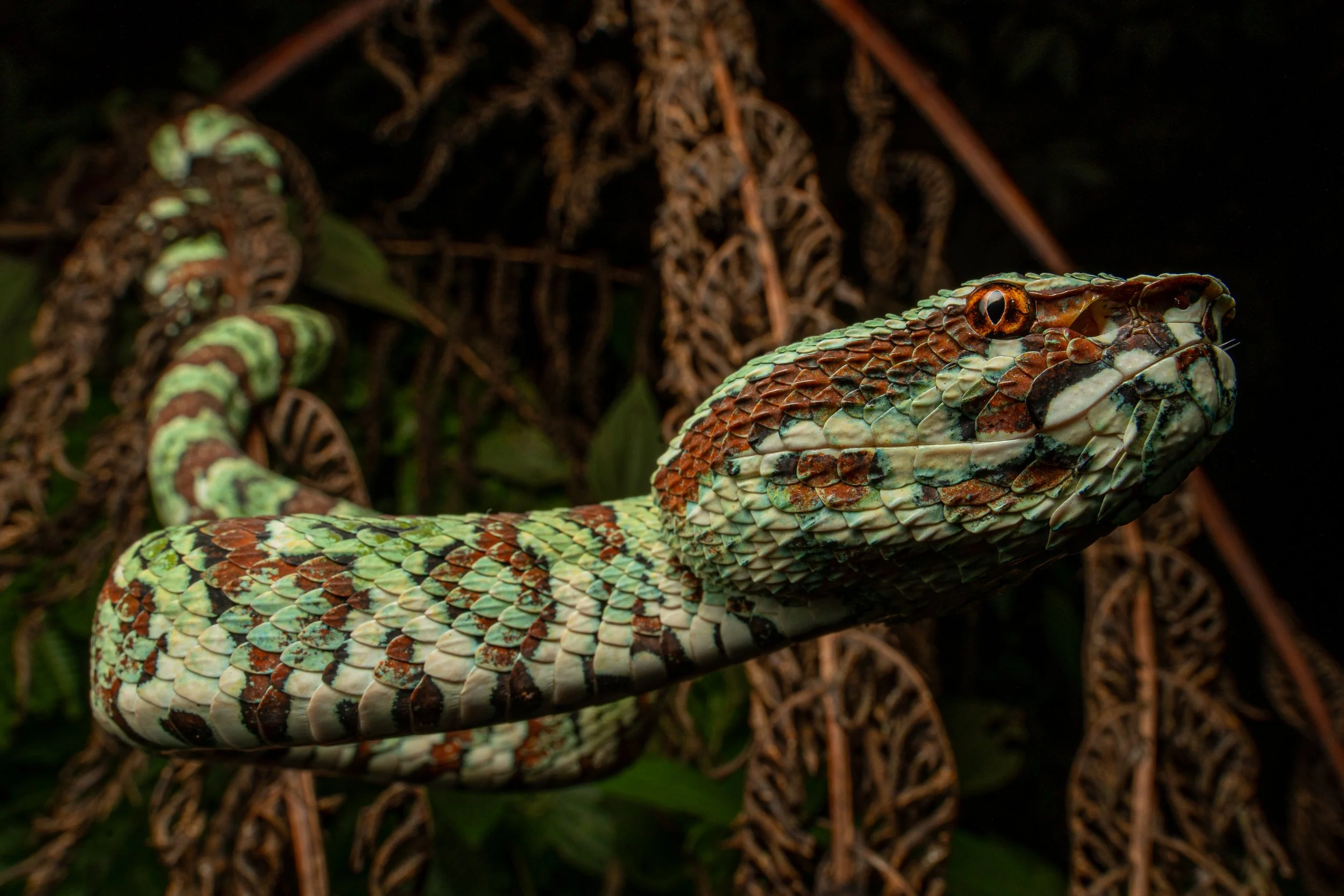
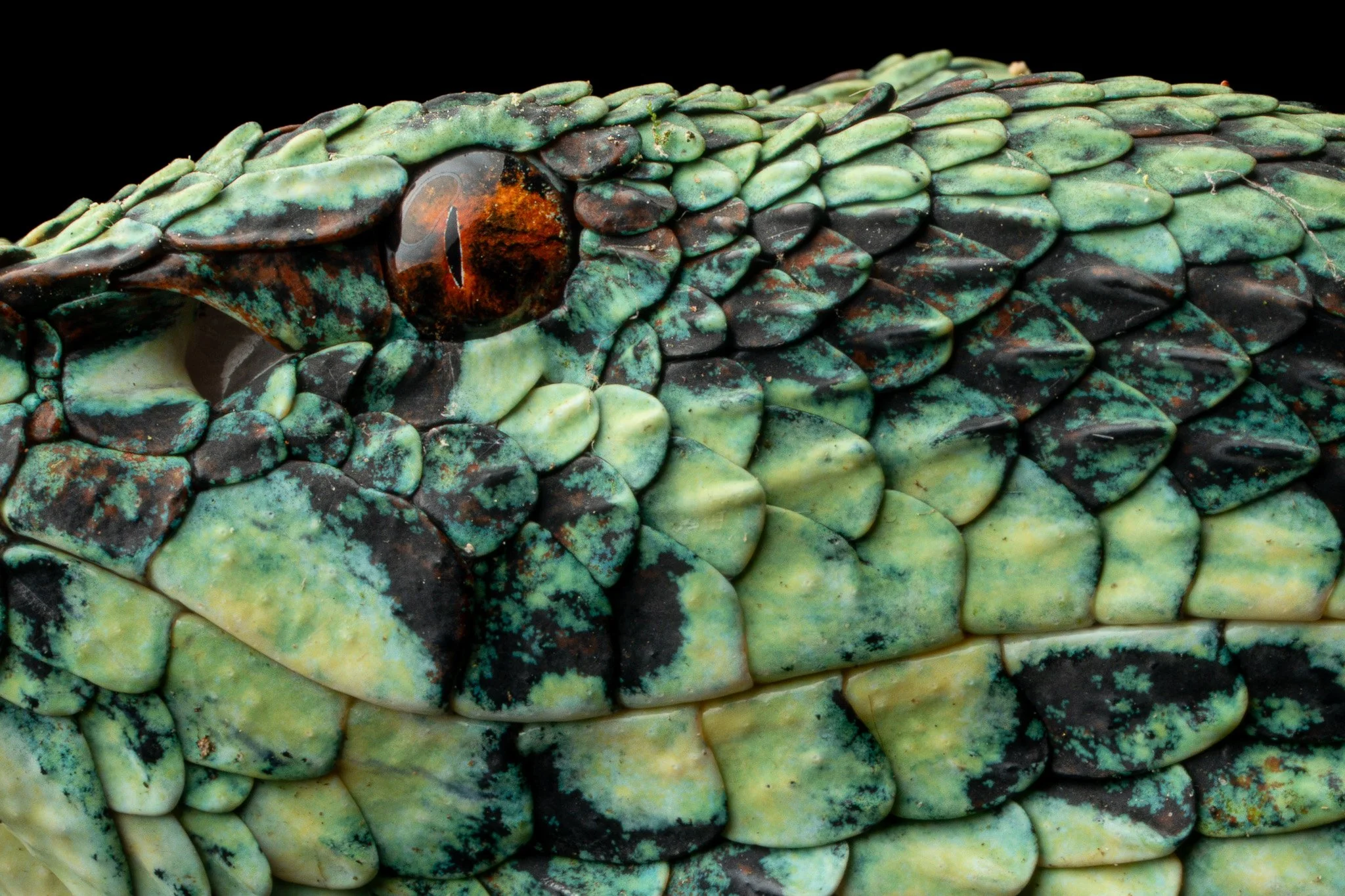
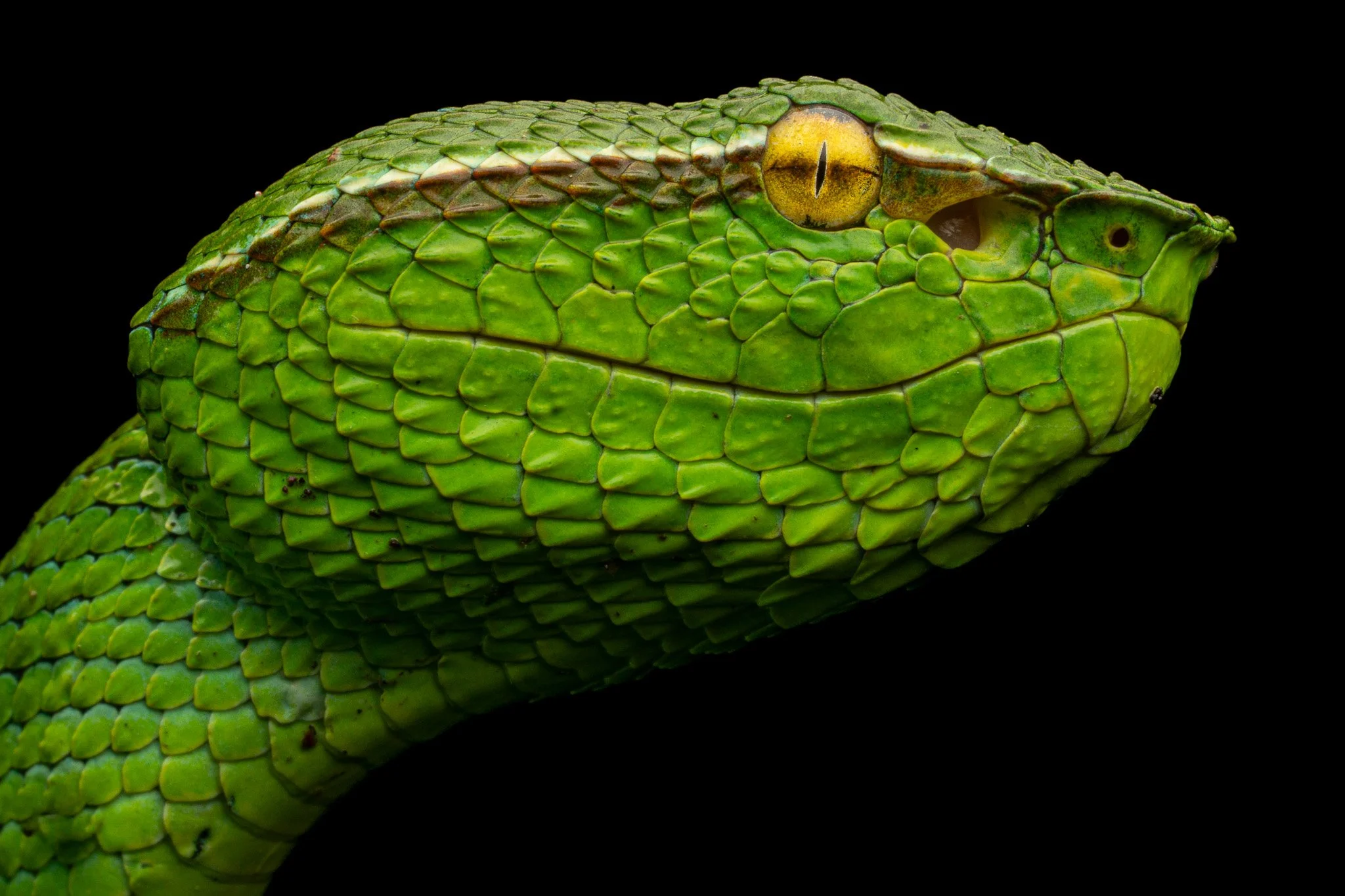
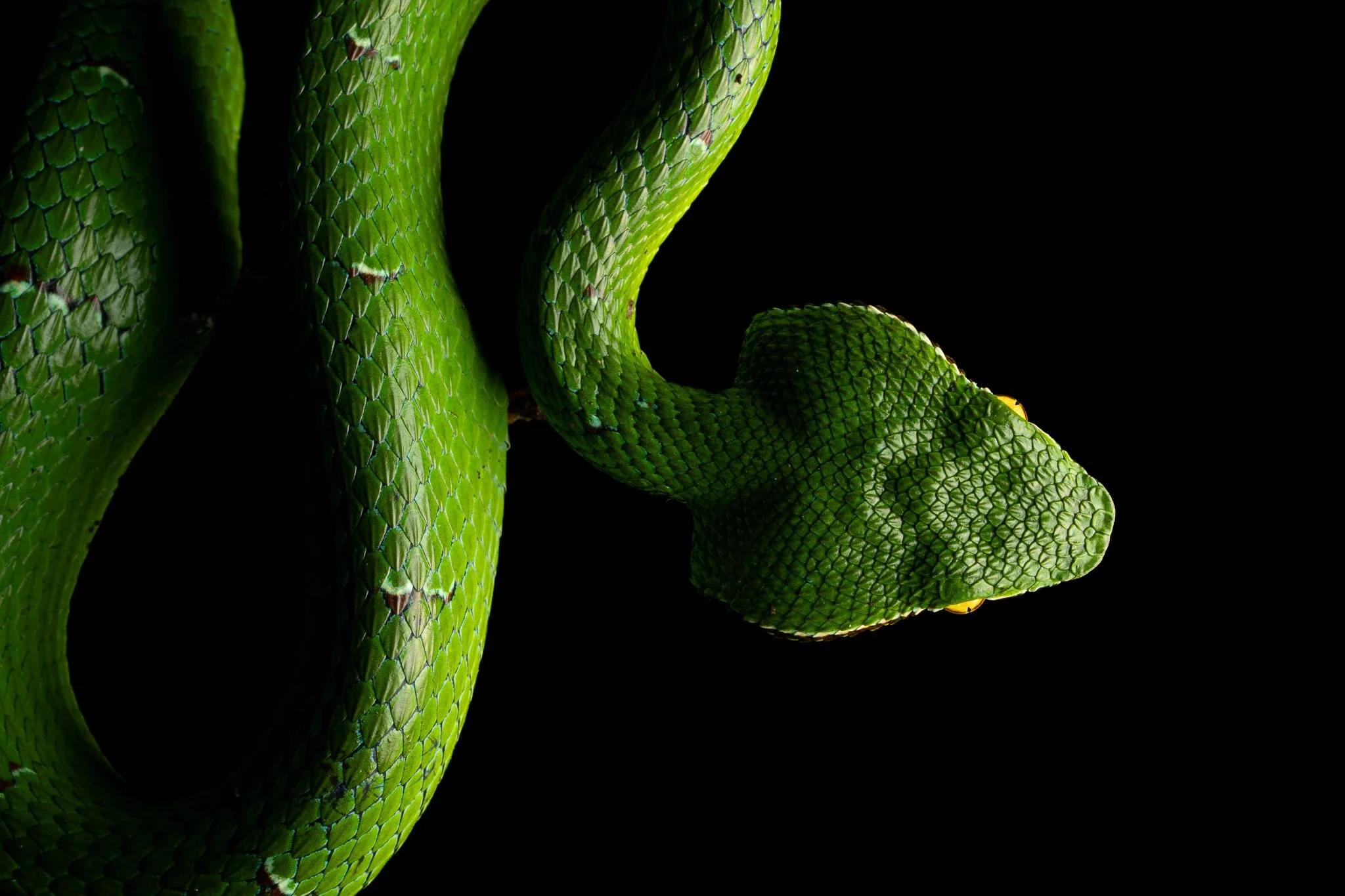
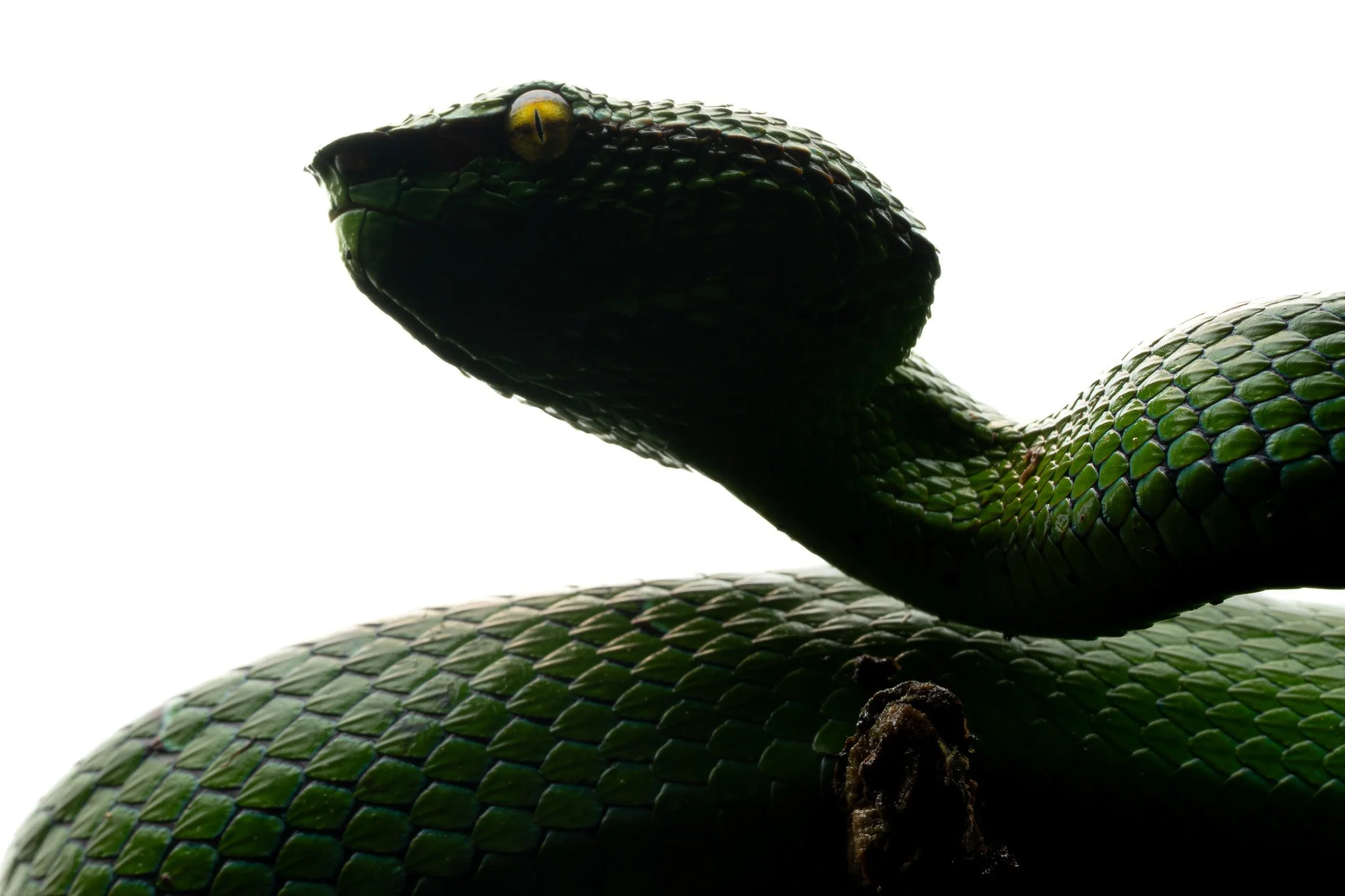
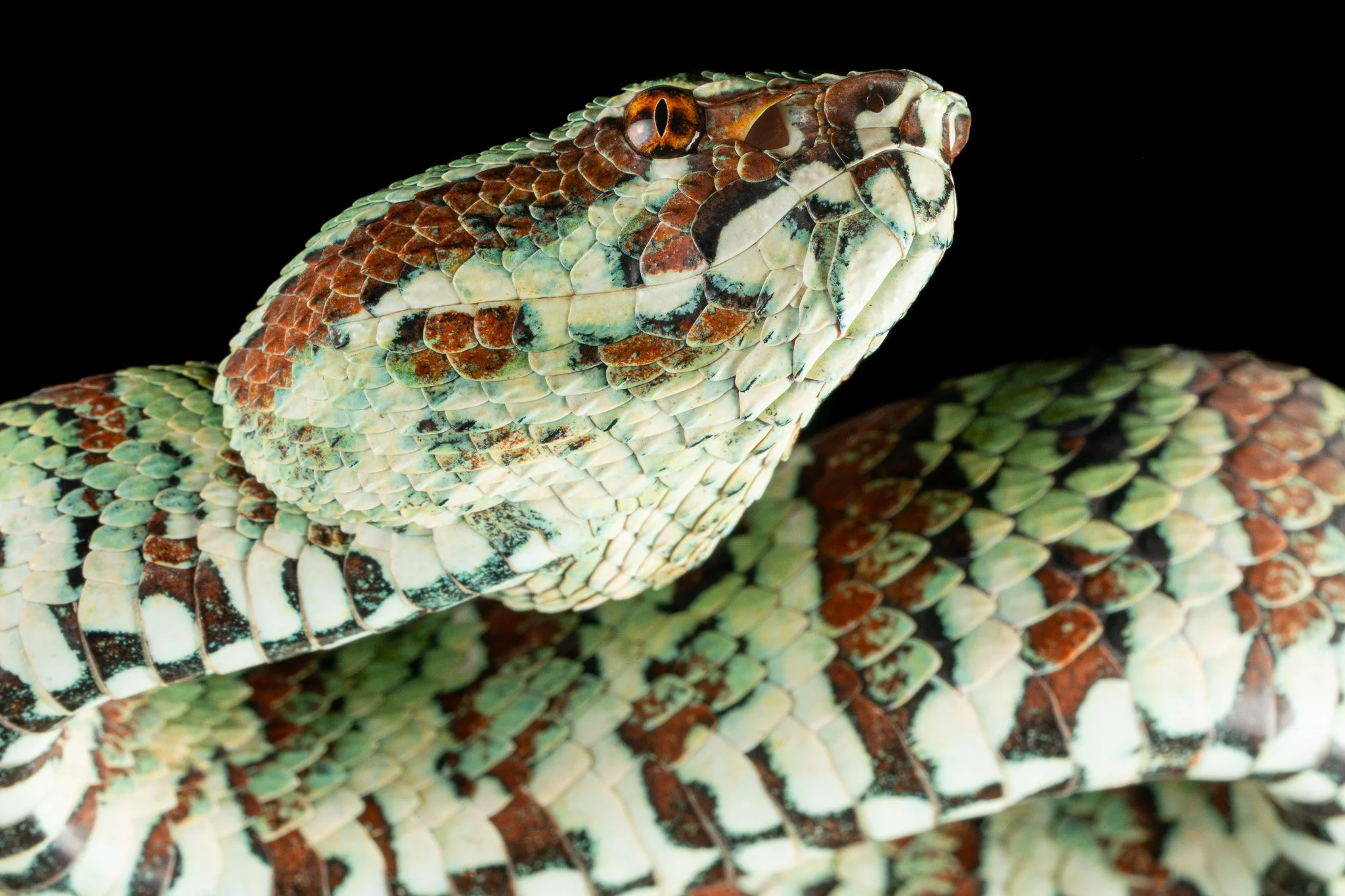
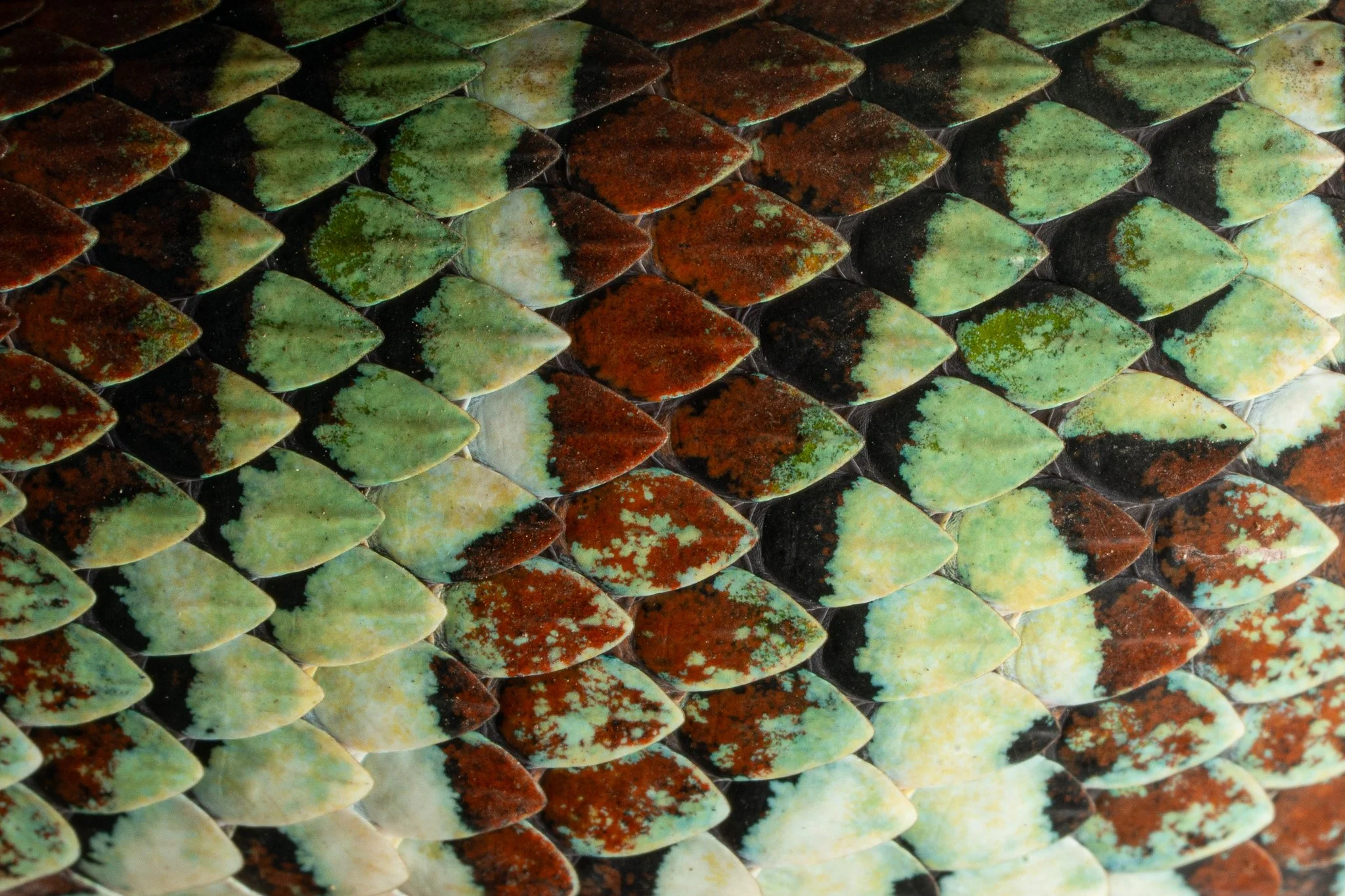
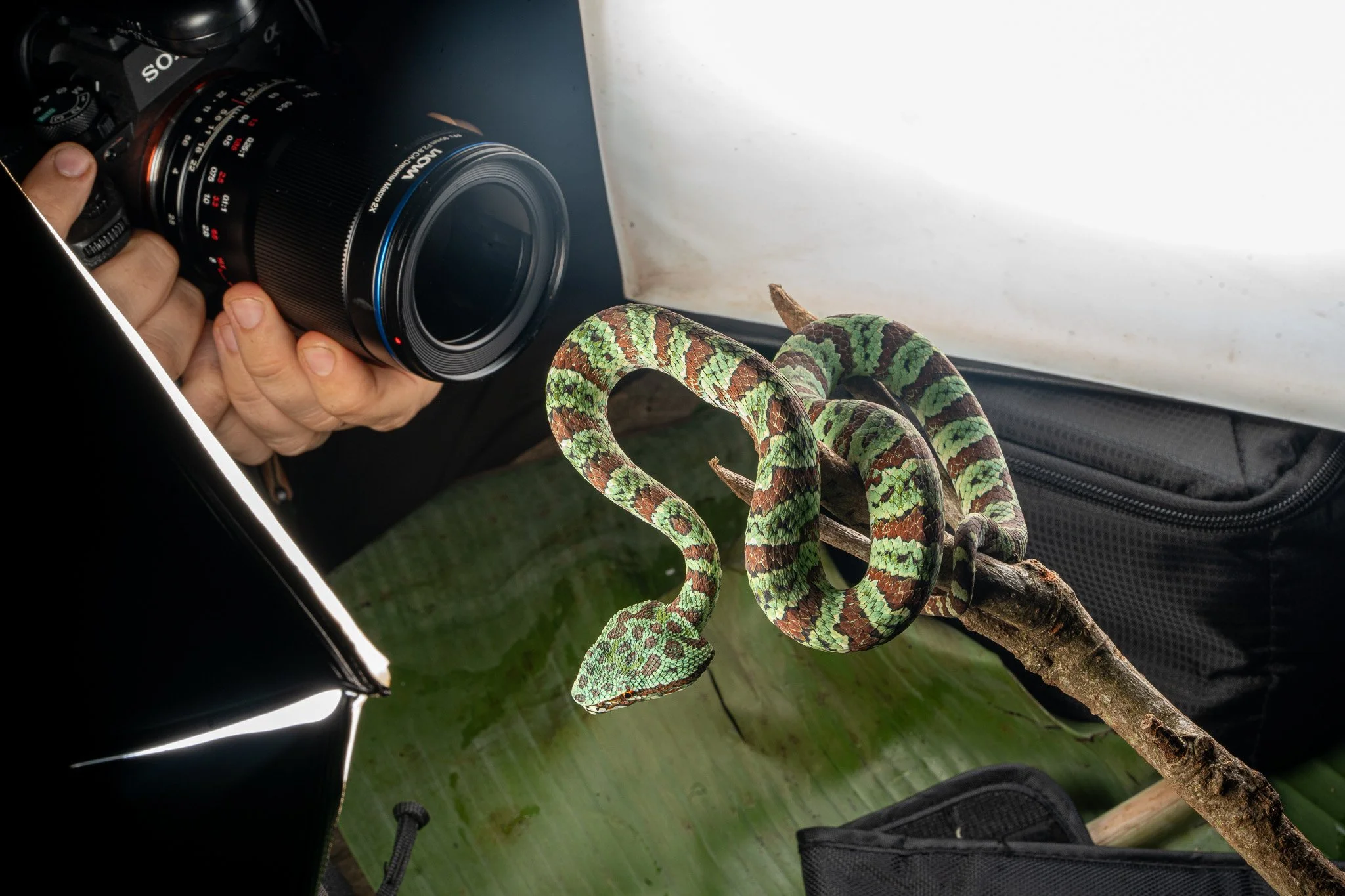
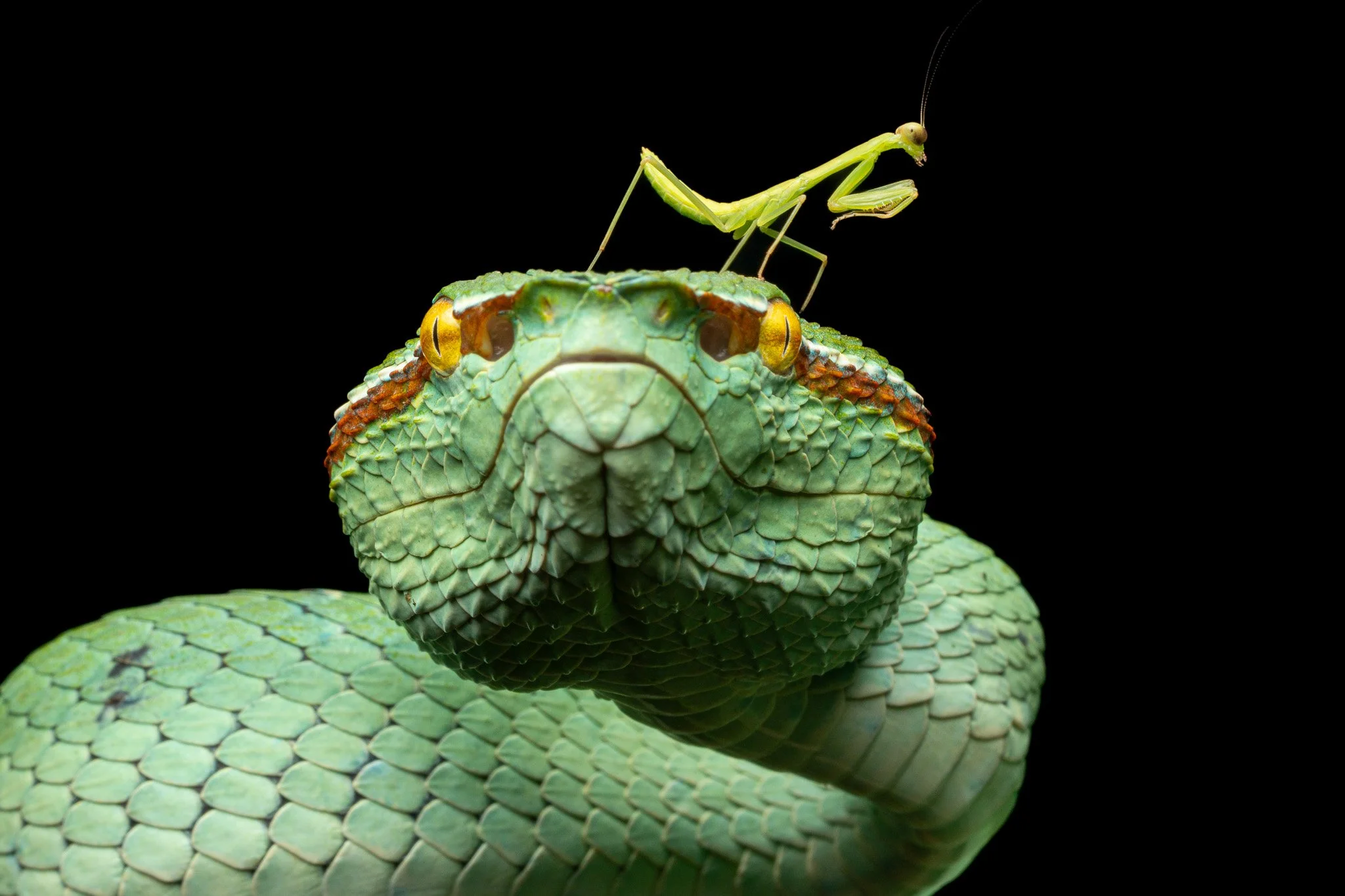
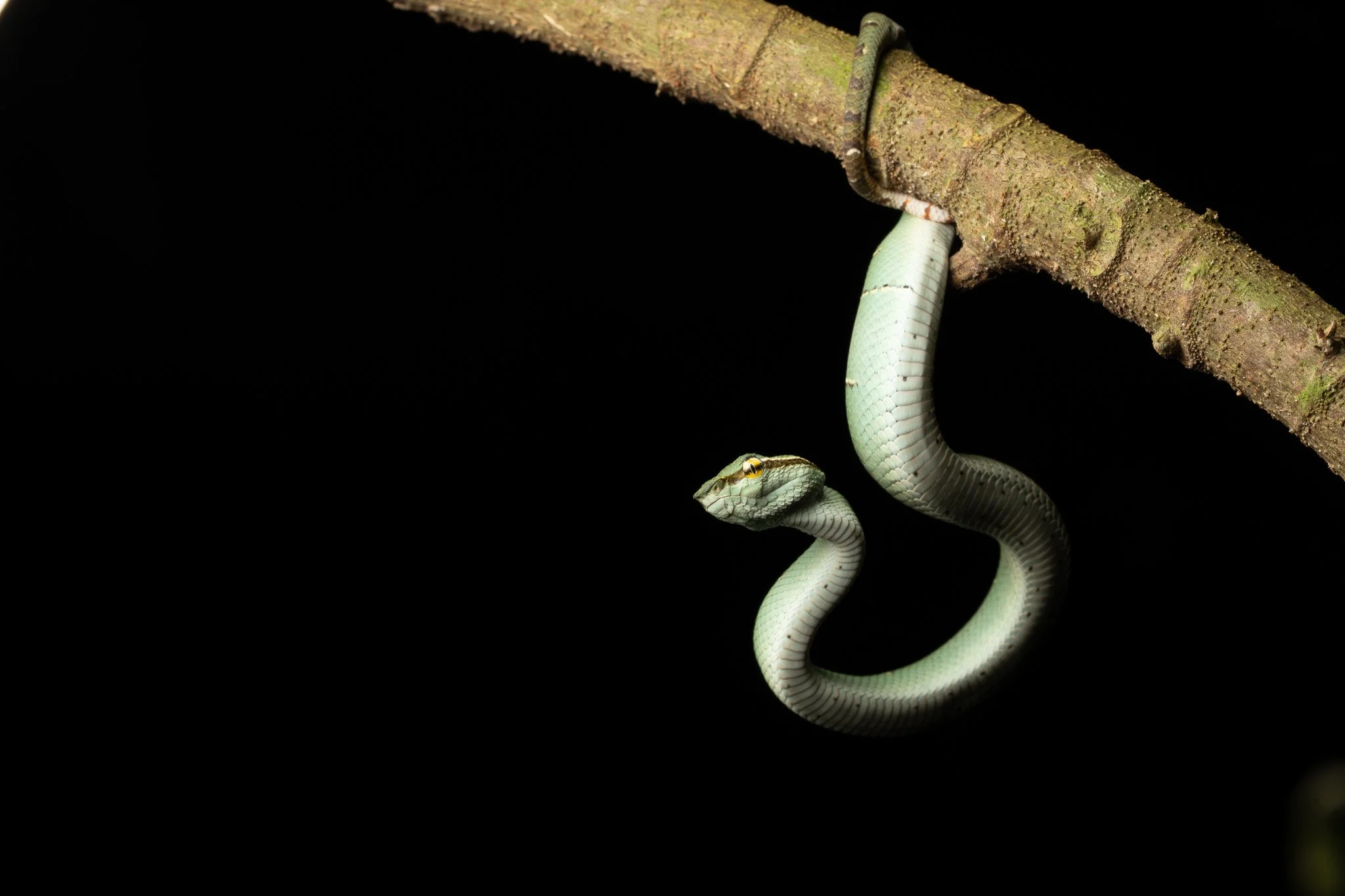
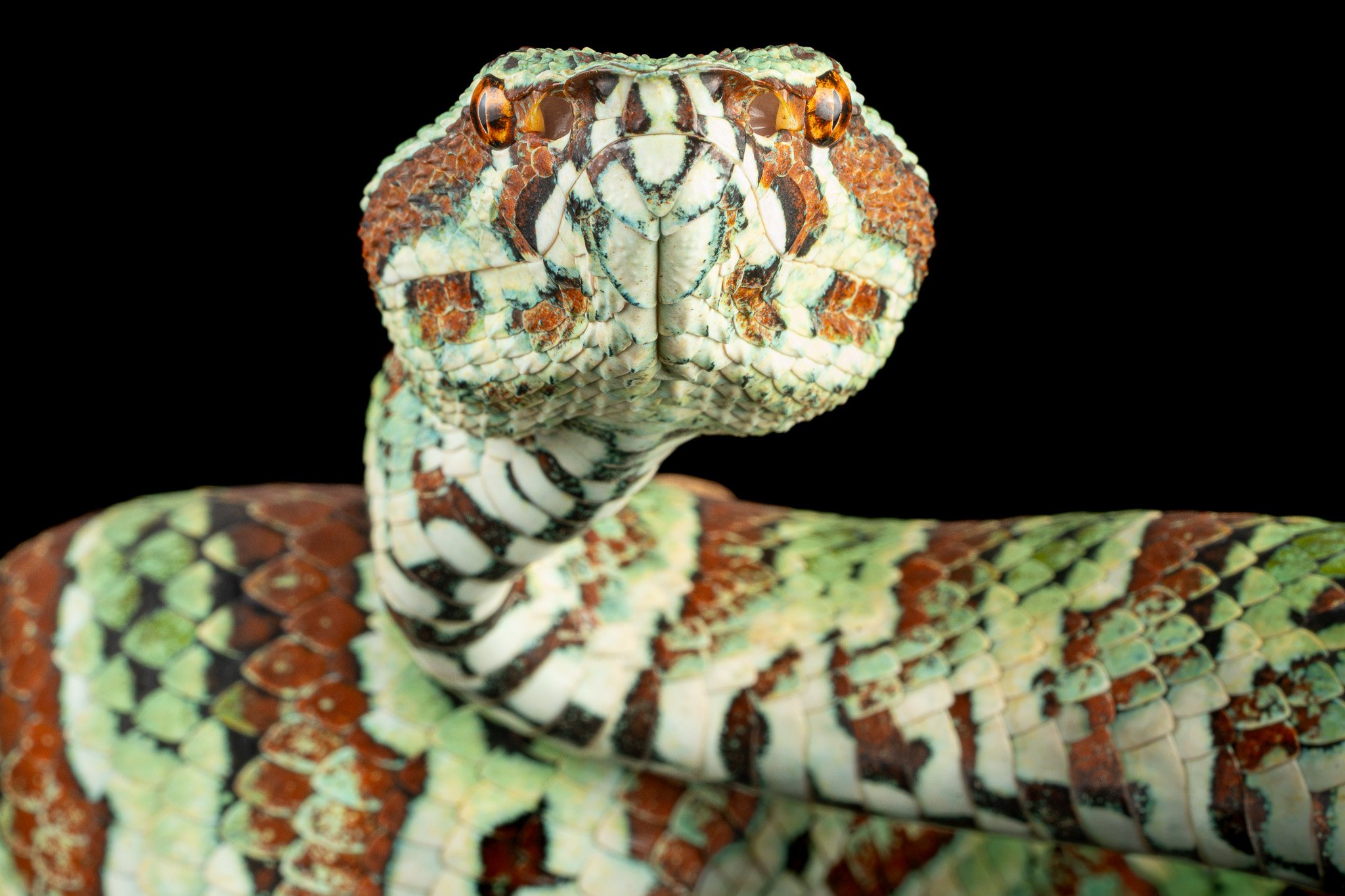
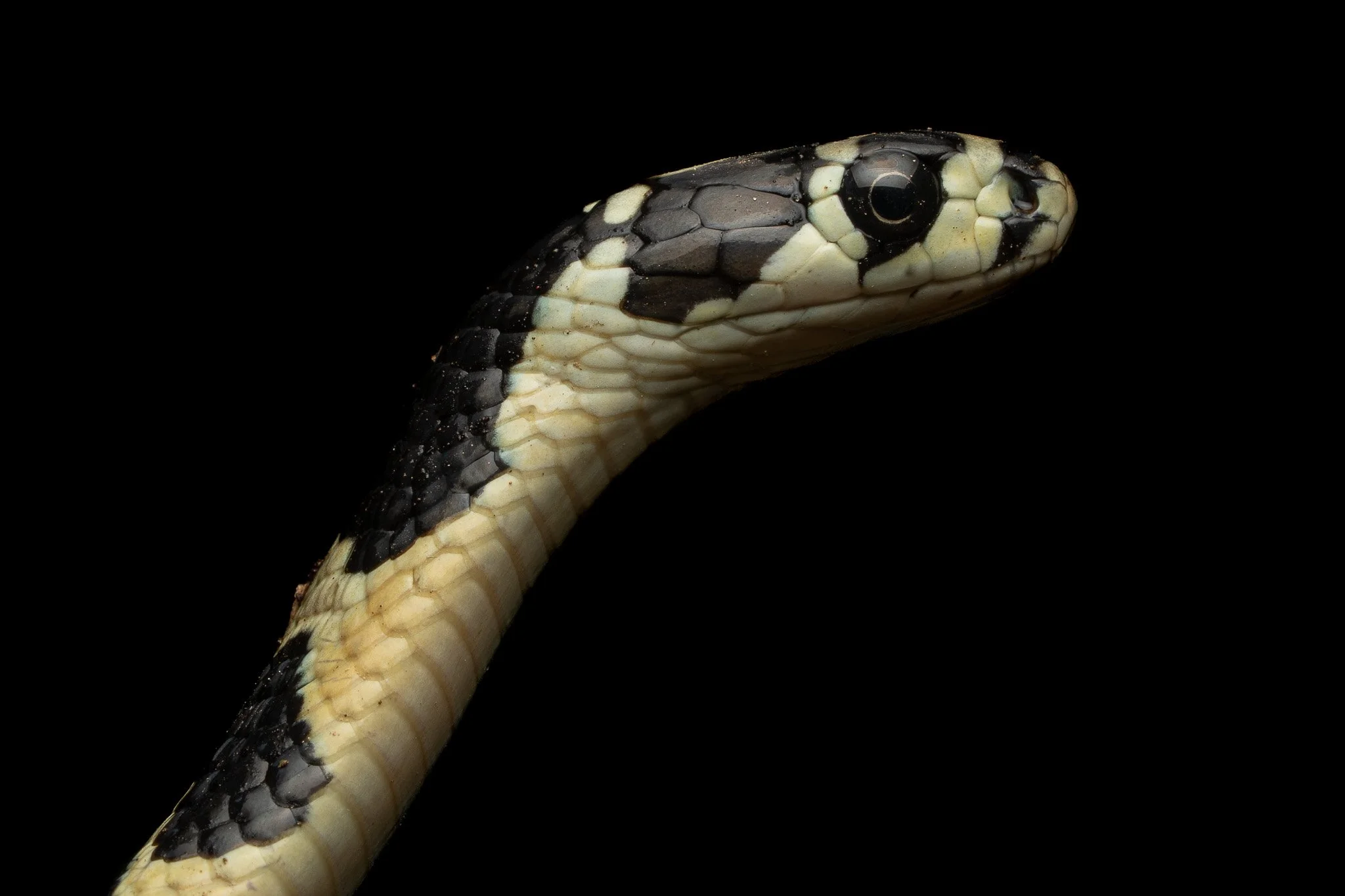
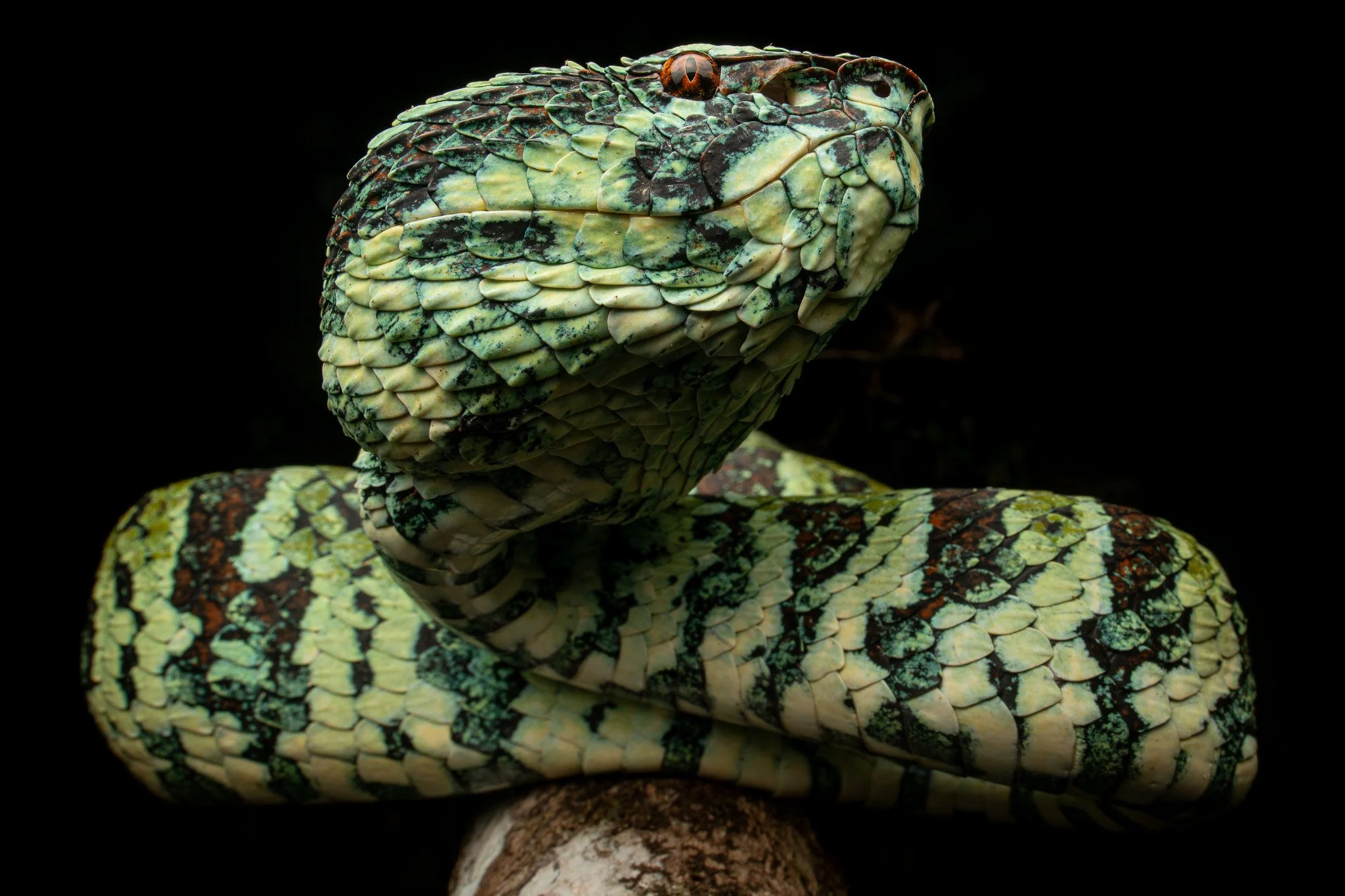
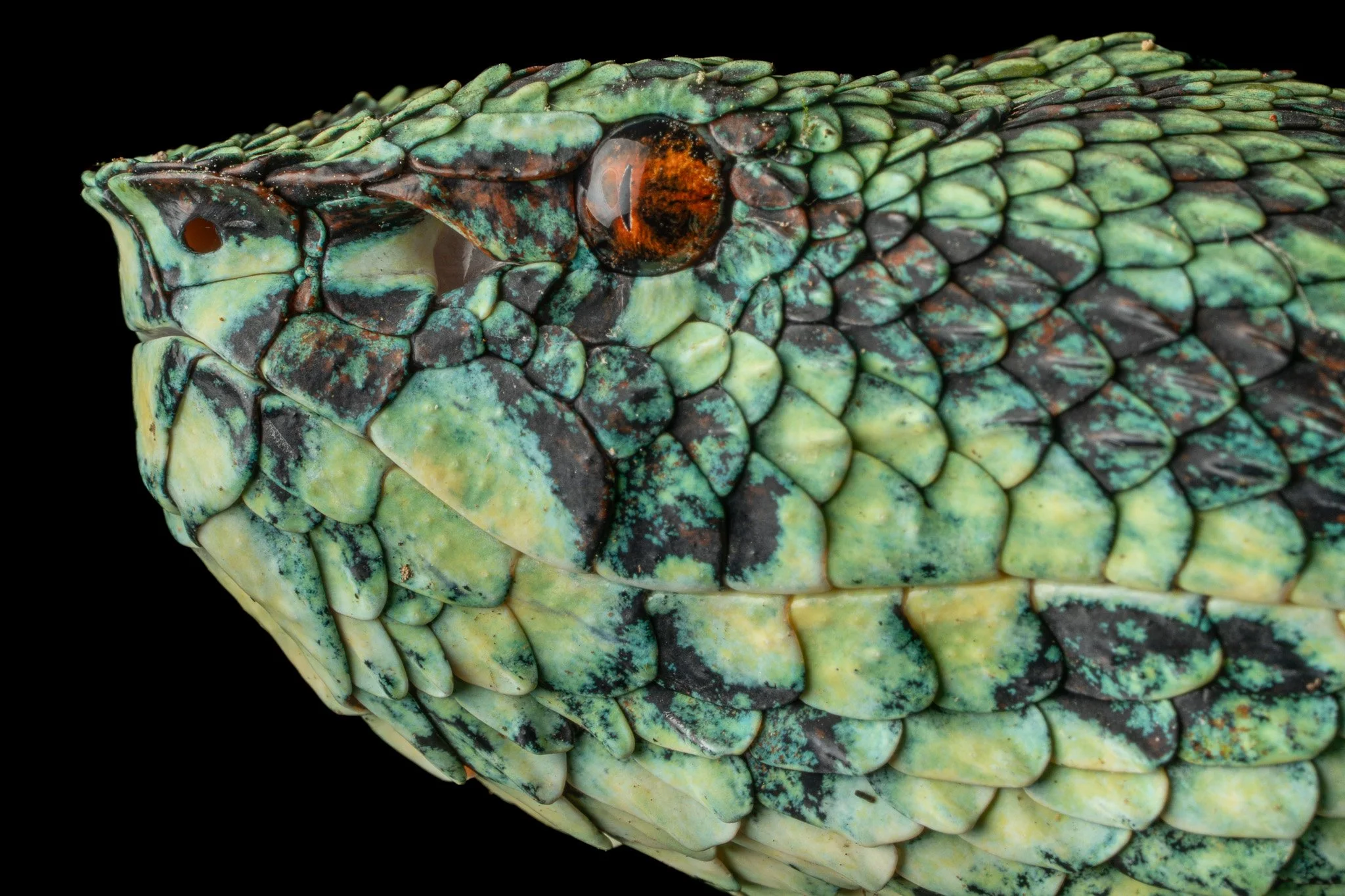
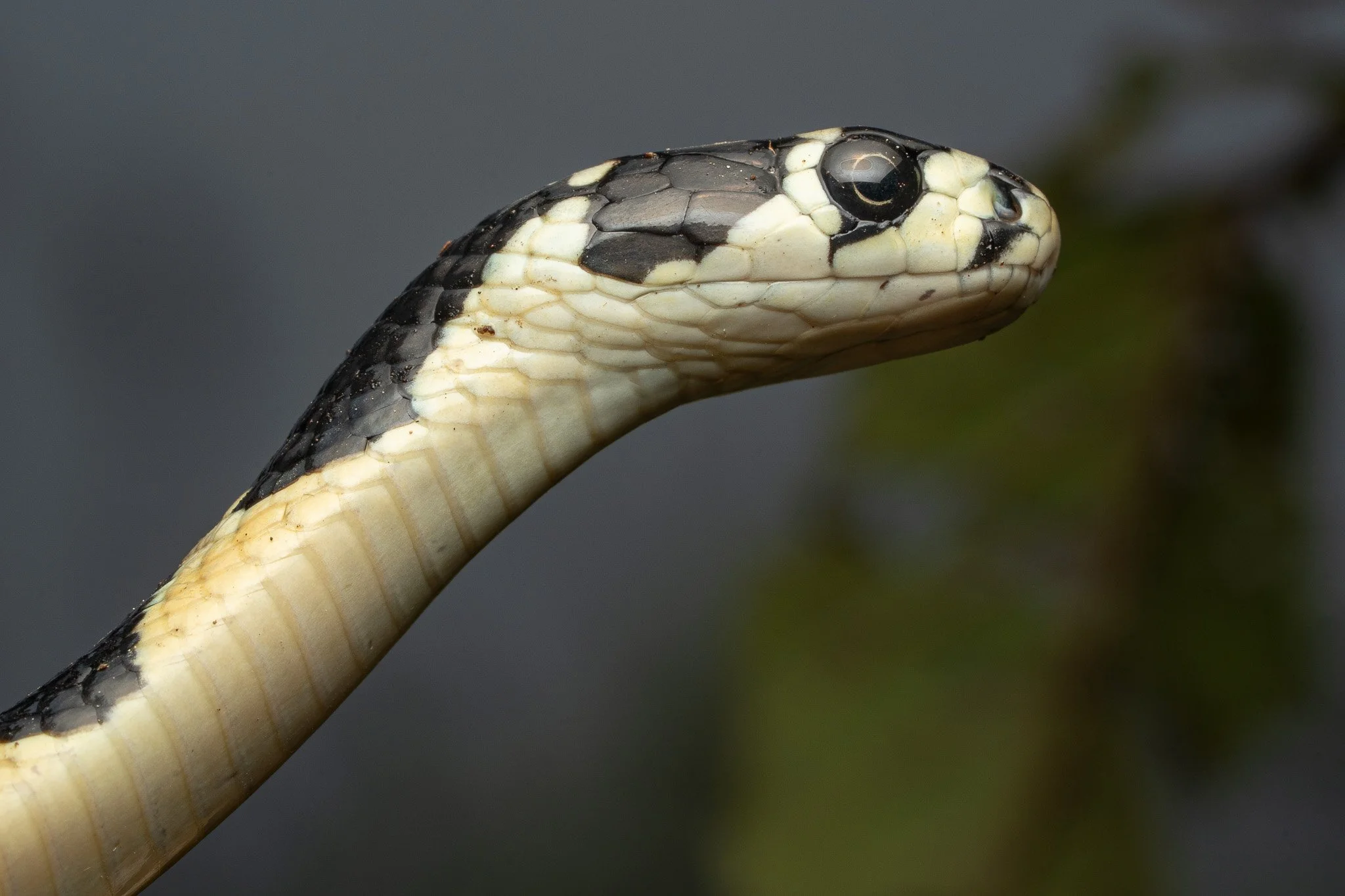
Our primary terrestrial target in Sulawesi, the imperiled and astonishingly beautiful broad-banded temple pit viper (Tropidolaemus laticinctus).
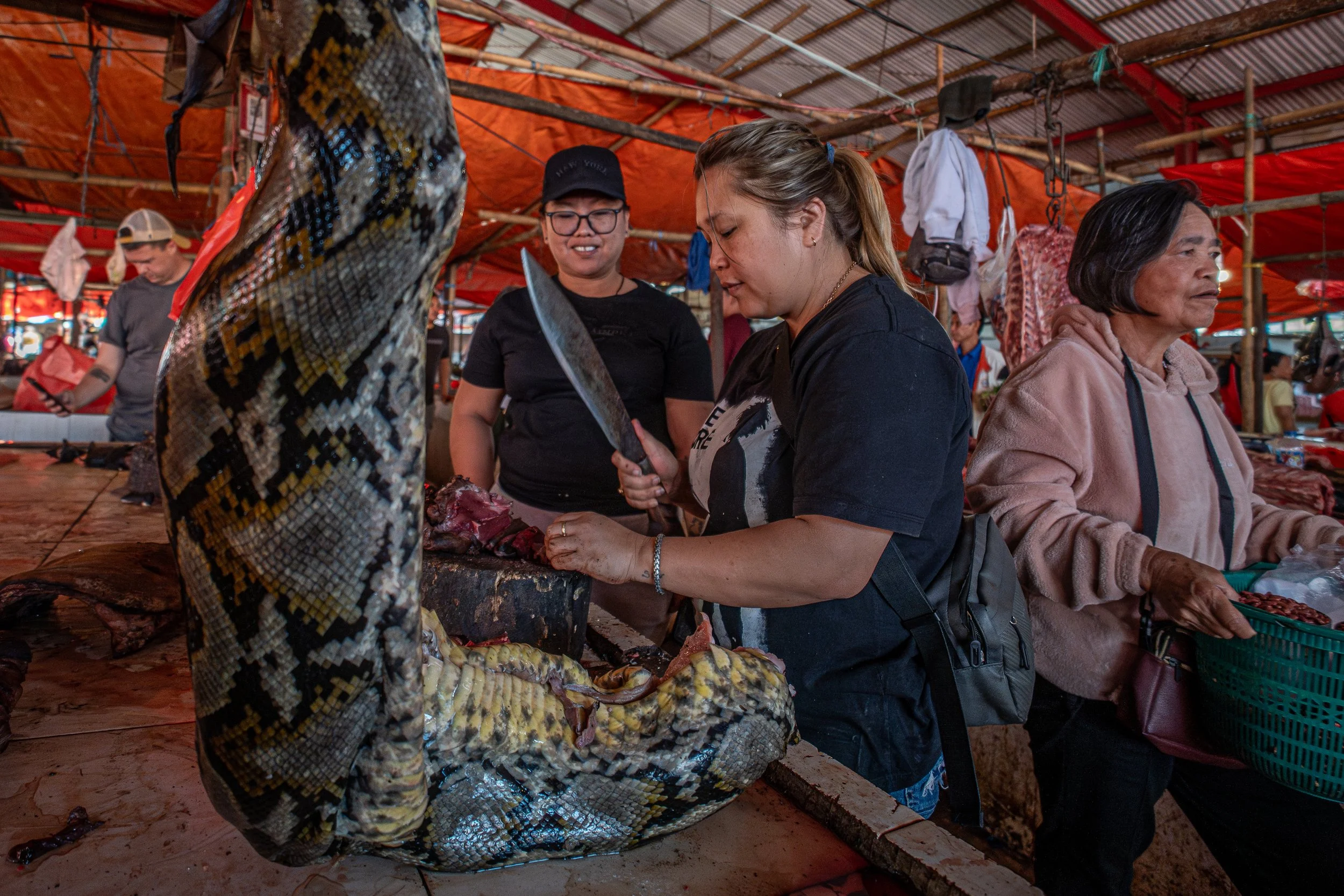
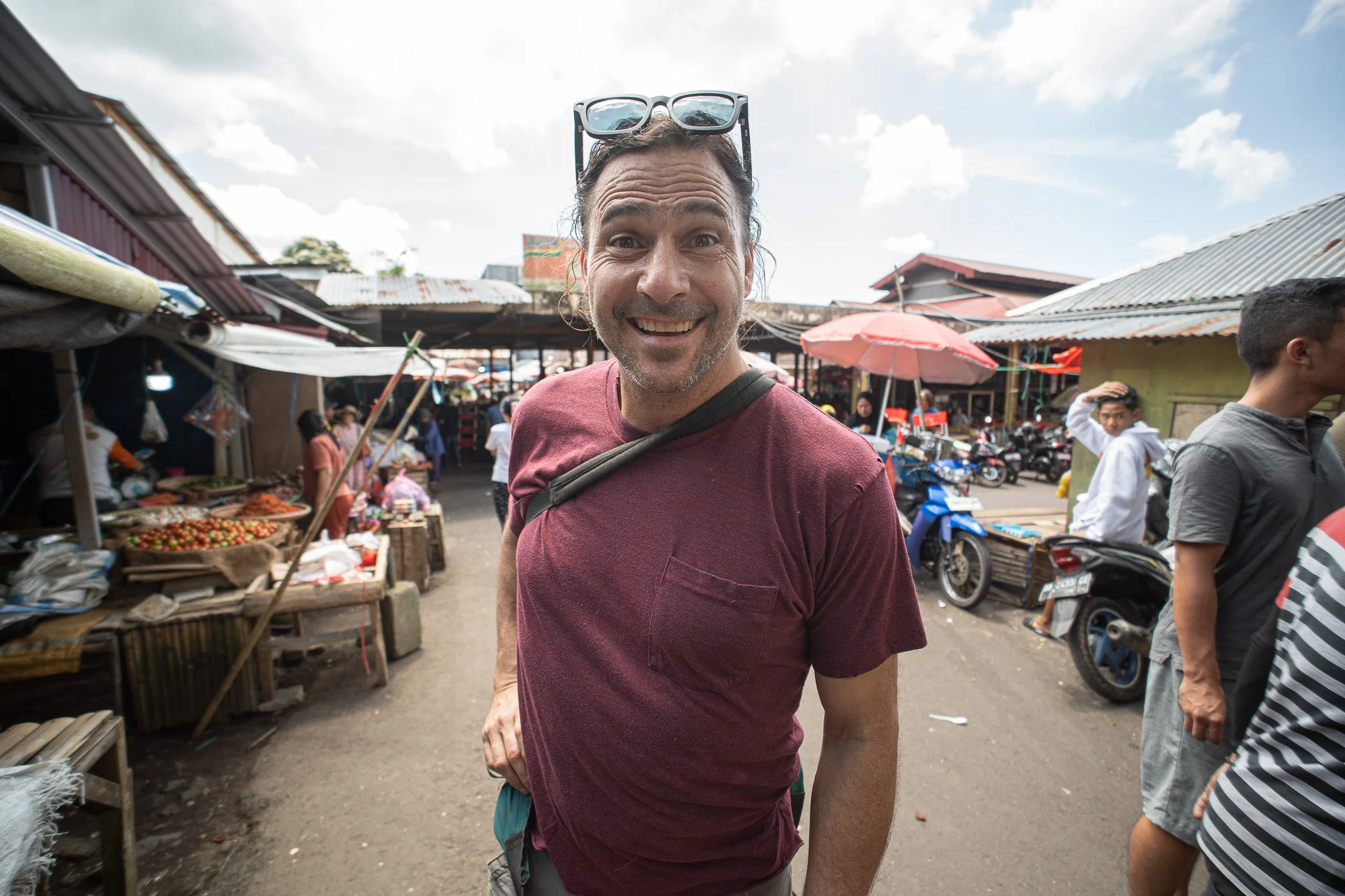
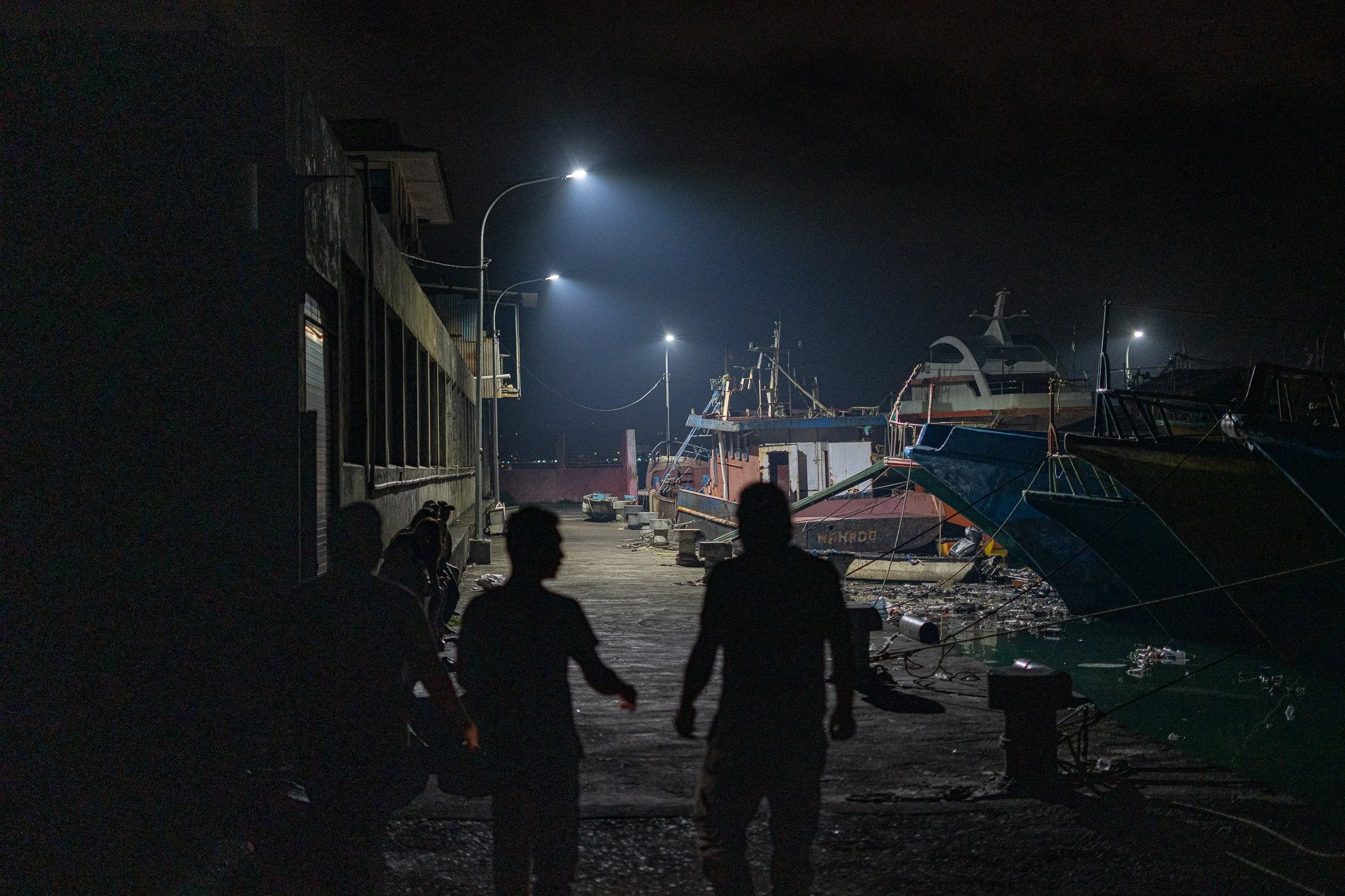
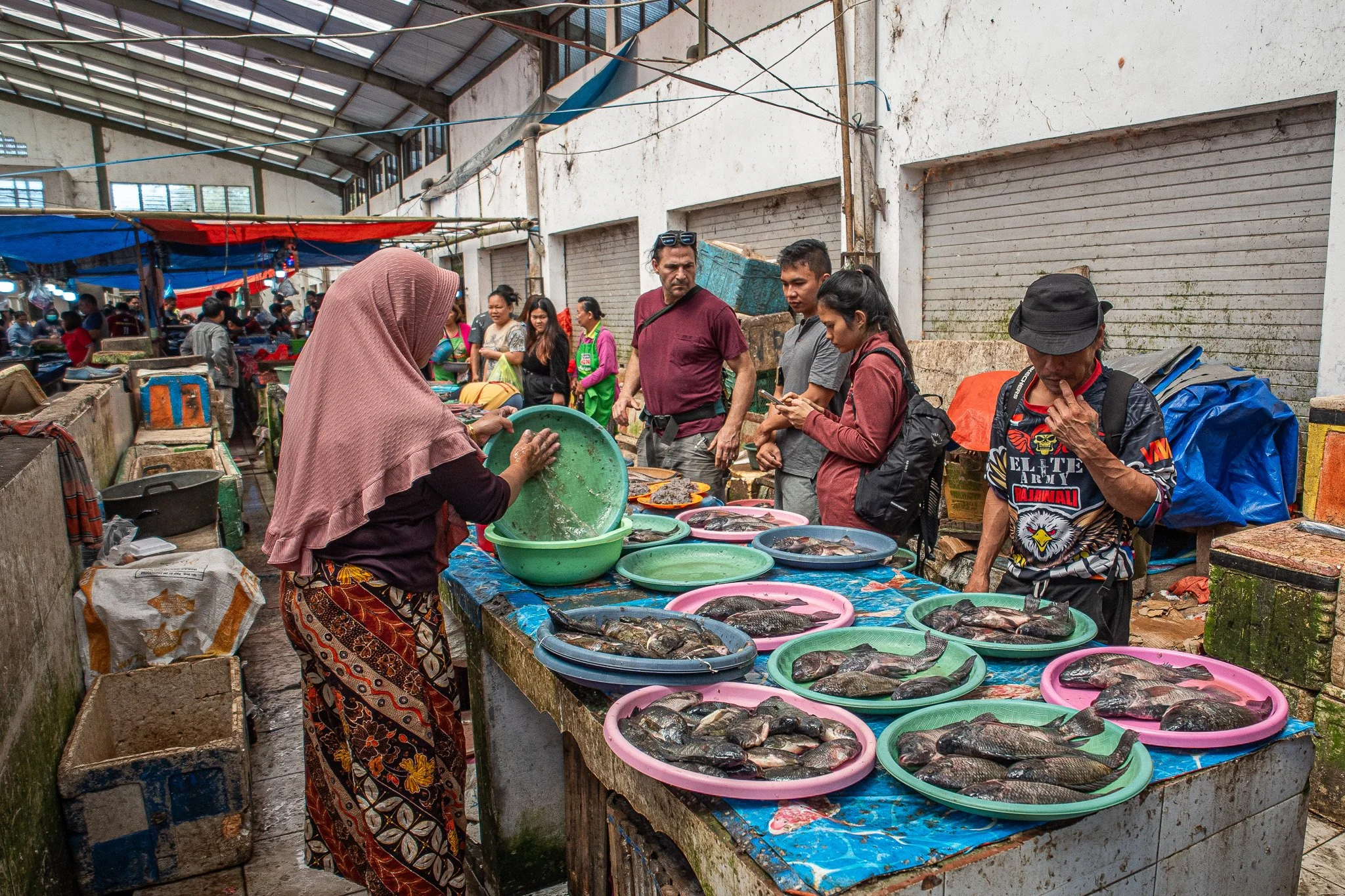
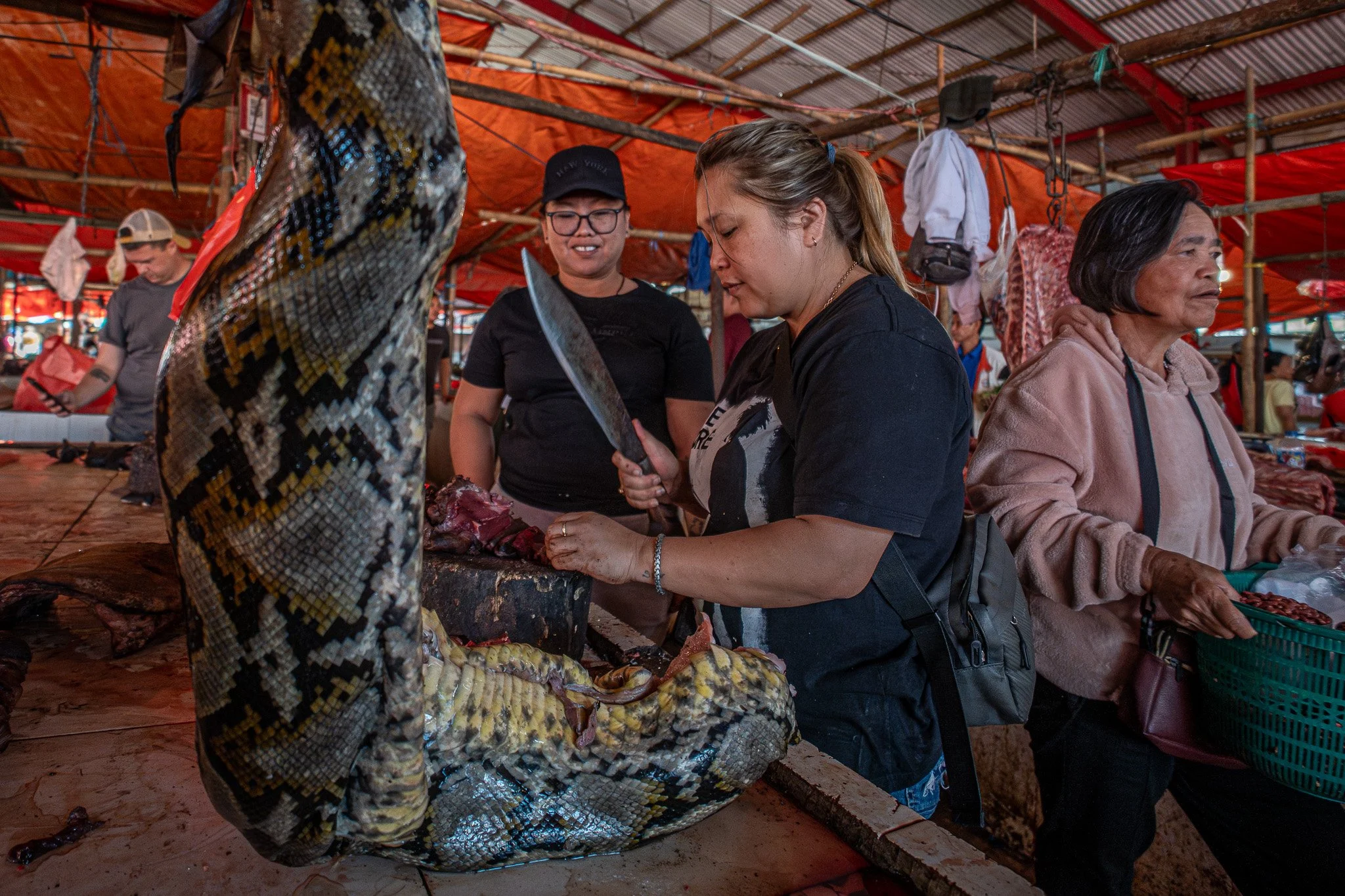
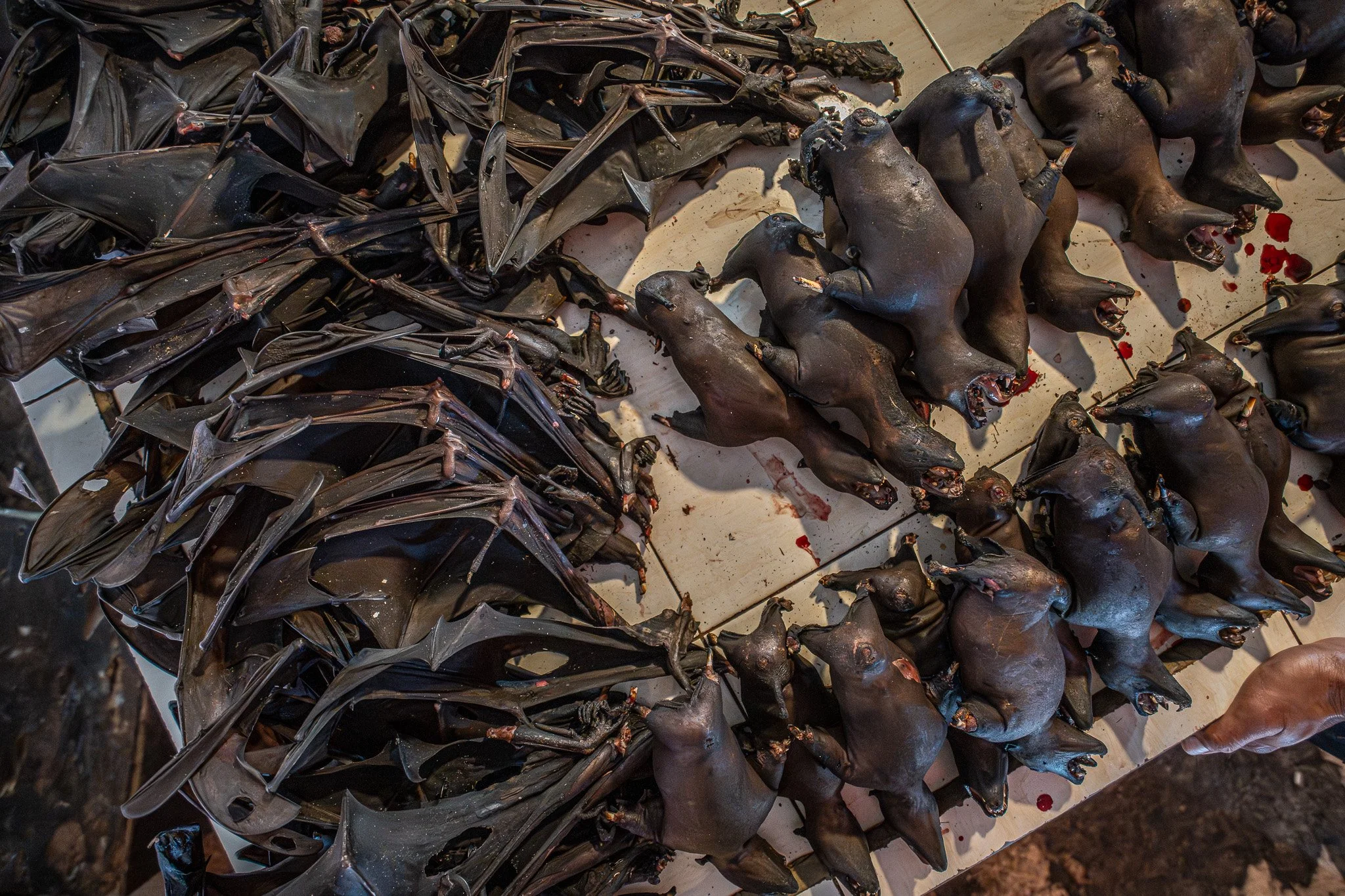
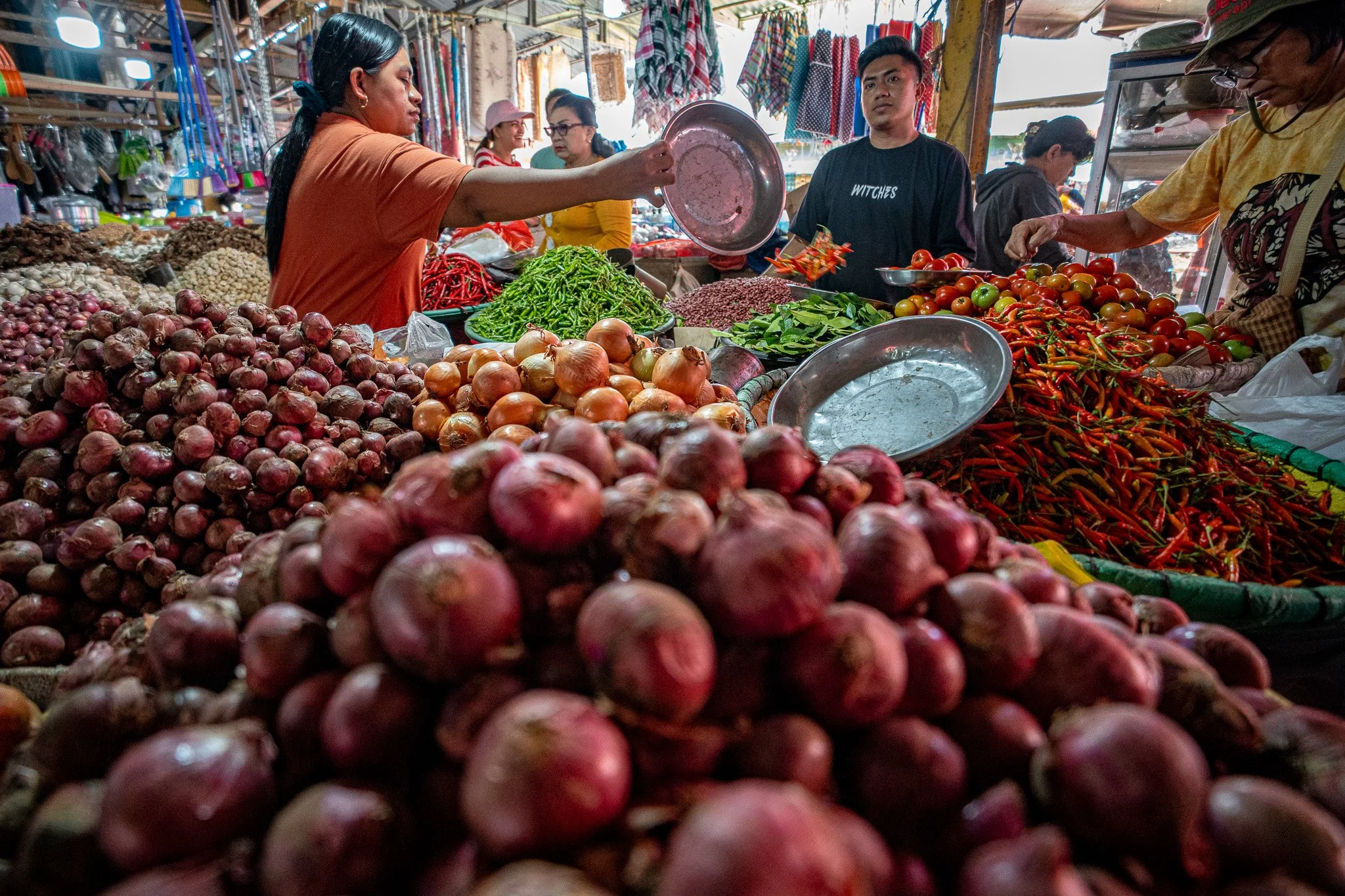
The people of Sulawesi have utilized the natural resources around themselves for centuries, as we’ll see at the infamous Tomohon wet market. Unfortunately, unchecked hunting pressure and rampant poaching for the illegal wildlife trade has led to massive declines in Sulawesi’s wildlife populations throughout the 21st century. By stimulating the local economy through responsible ecotourism, we aim to bring fresh, sustainable value to Sulawesi’s flora and fauna. We can’t protect the wildlife without bringing alternative options to the table.
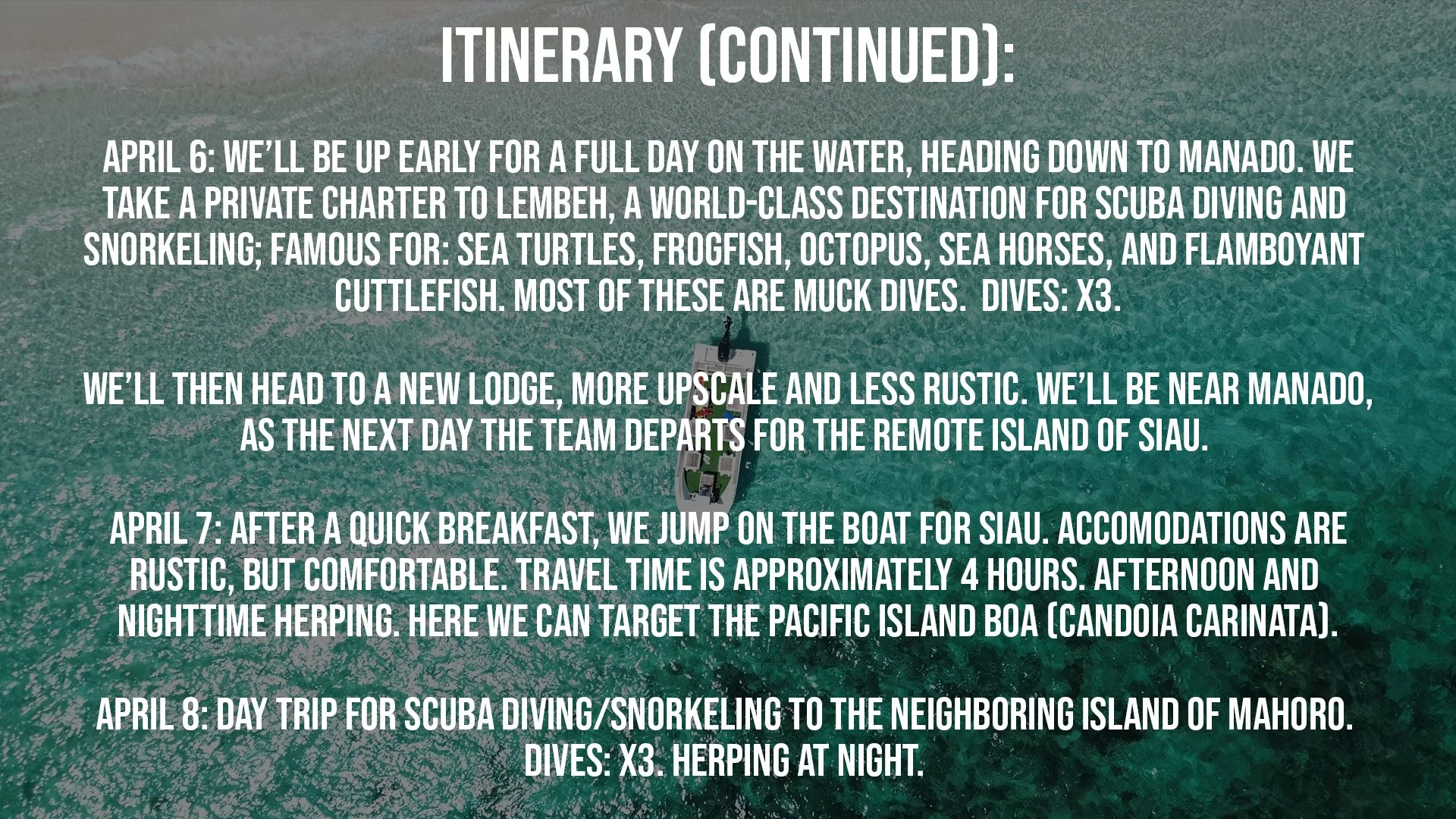
One of the most curious, intelligent, and striking animals in existence; the falmboyant cuttlefish. This is one of many strange marine organisms we can hope to spot while diving Lembeh.
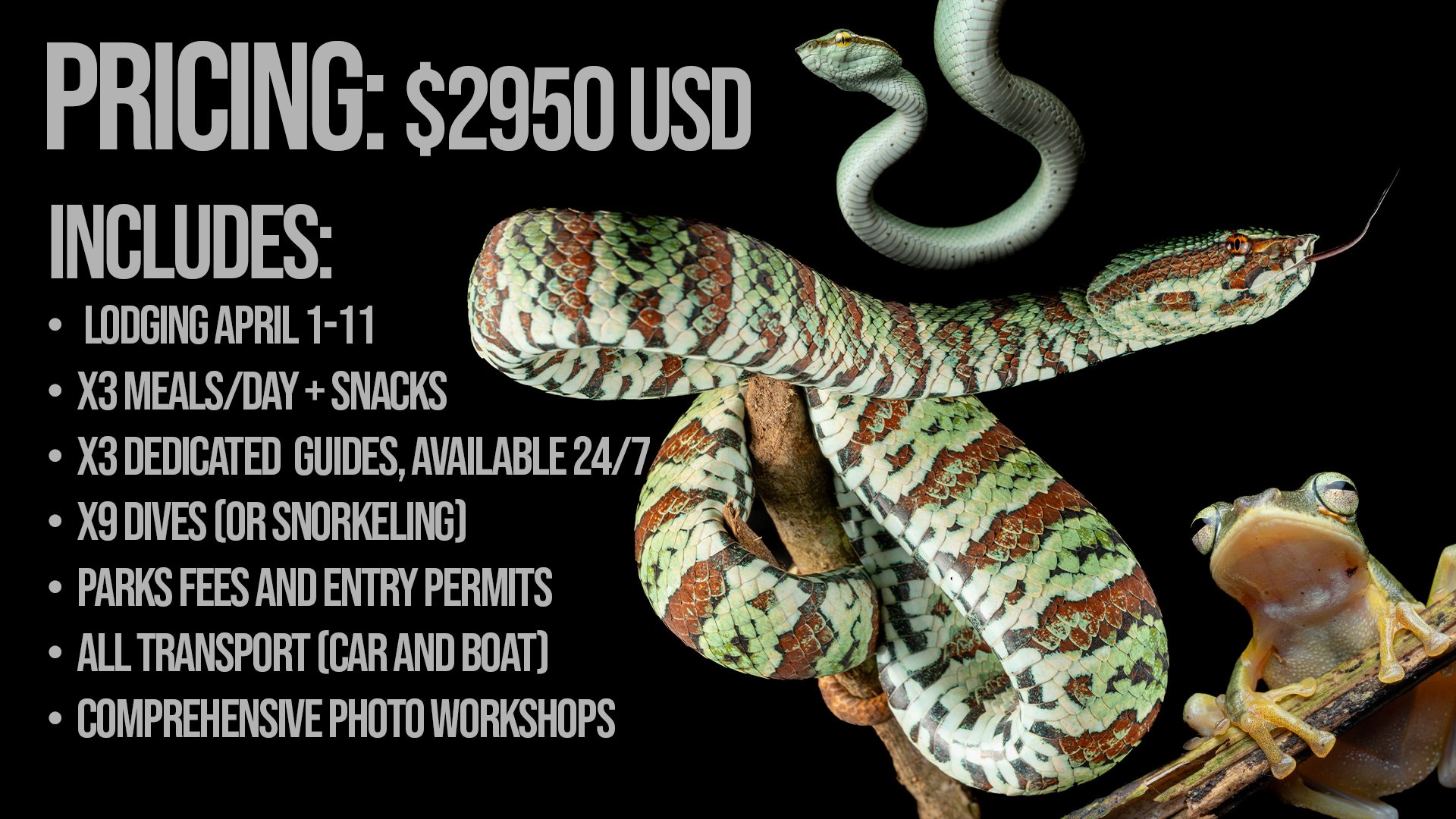
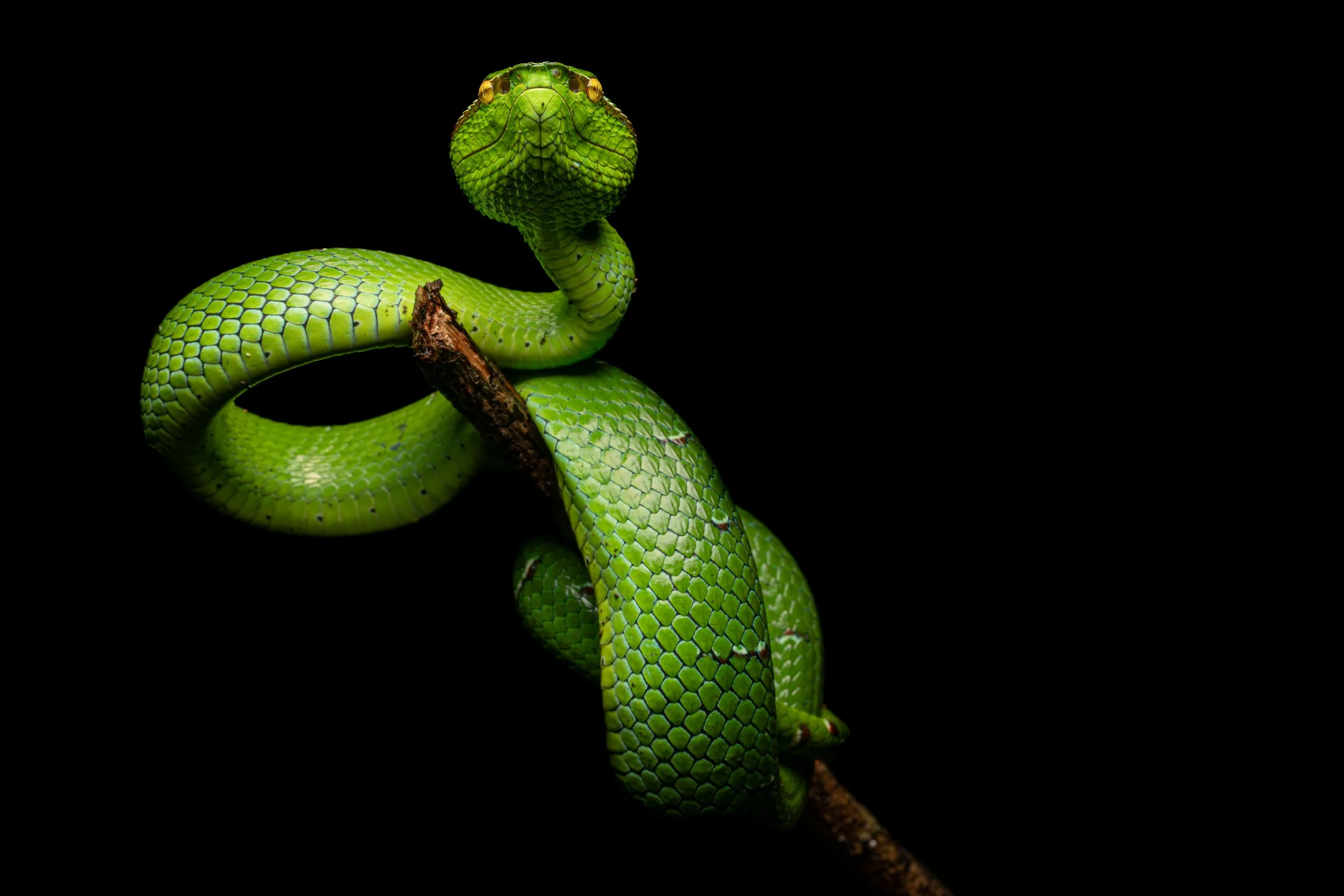
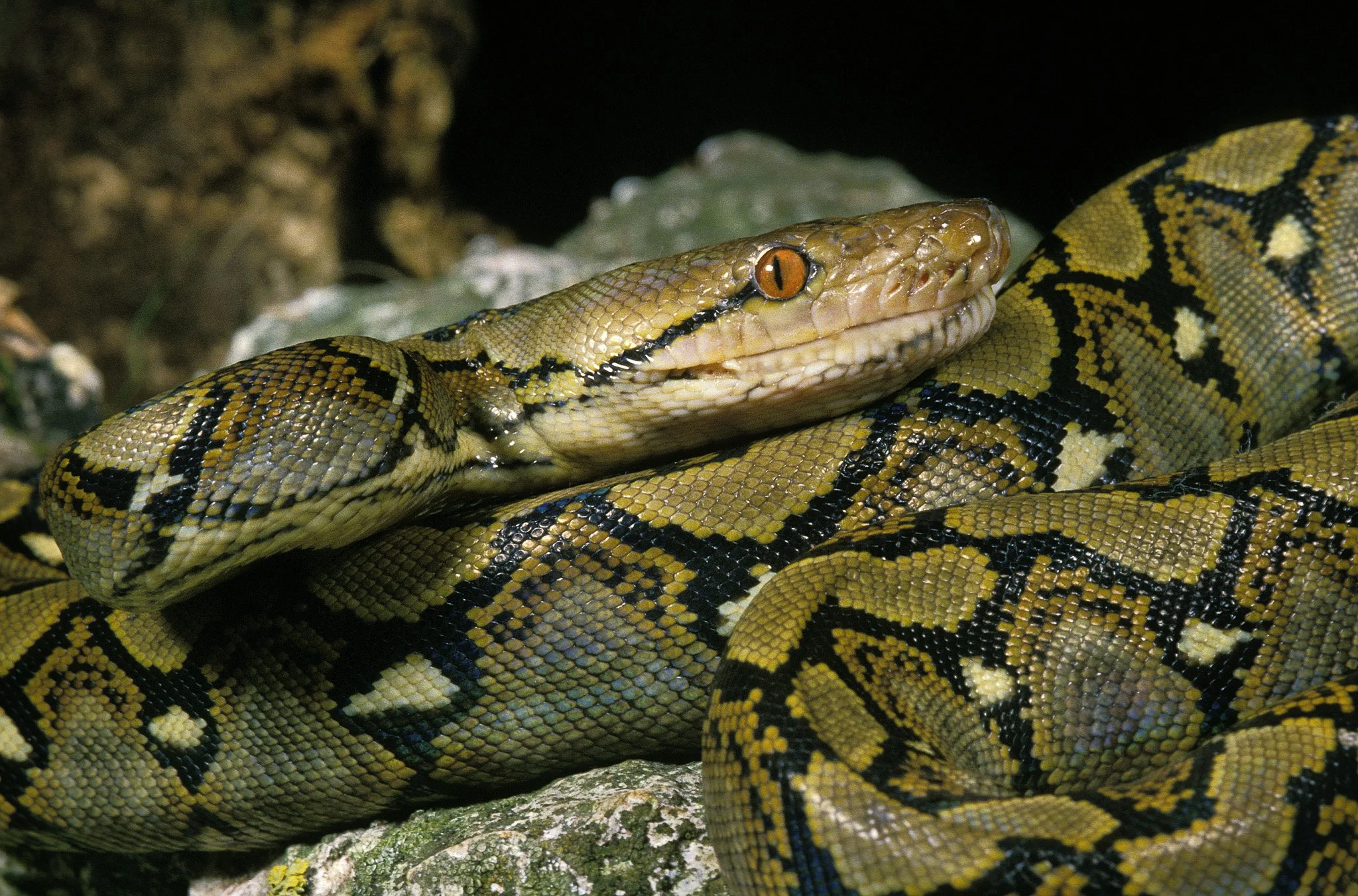
Believe it or not, our target viper might be the same species as this one! Tropidolaemus laticinctus is widely considered conspecific with Tropidolaemus subannulatus based on weak morphological differentiation and strong geographic continuity. The characters used to separate T. laticinctus—primarily broader crossbands and somewhat slight variation in coloration—fall within the intraspecific variation observed across T. subannulatus populations in other regions. More notably, female laticinctus have given birth to apparent subannulatus (and vice-versa) both in the wild and in captivity.
Additionally, there is no clear phylogeographic break or consistent scalation difference supporting species-level divergence. These patterns suggest T. laticinctus represents a regional morph or population variant rather than a distinct evolutionary lineage. Despite subannulatus and laticinctus likely being one in the same when it comes to our modern definition of a species, its imperative that laticinctus is recognized as a threatened variant, species, or subspecies in order to unlock potential conservation tools and resources if we are to protect them as development and overcollection ravage populations.
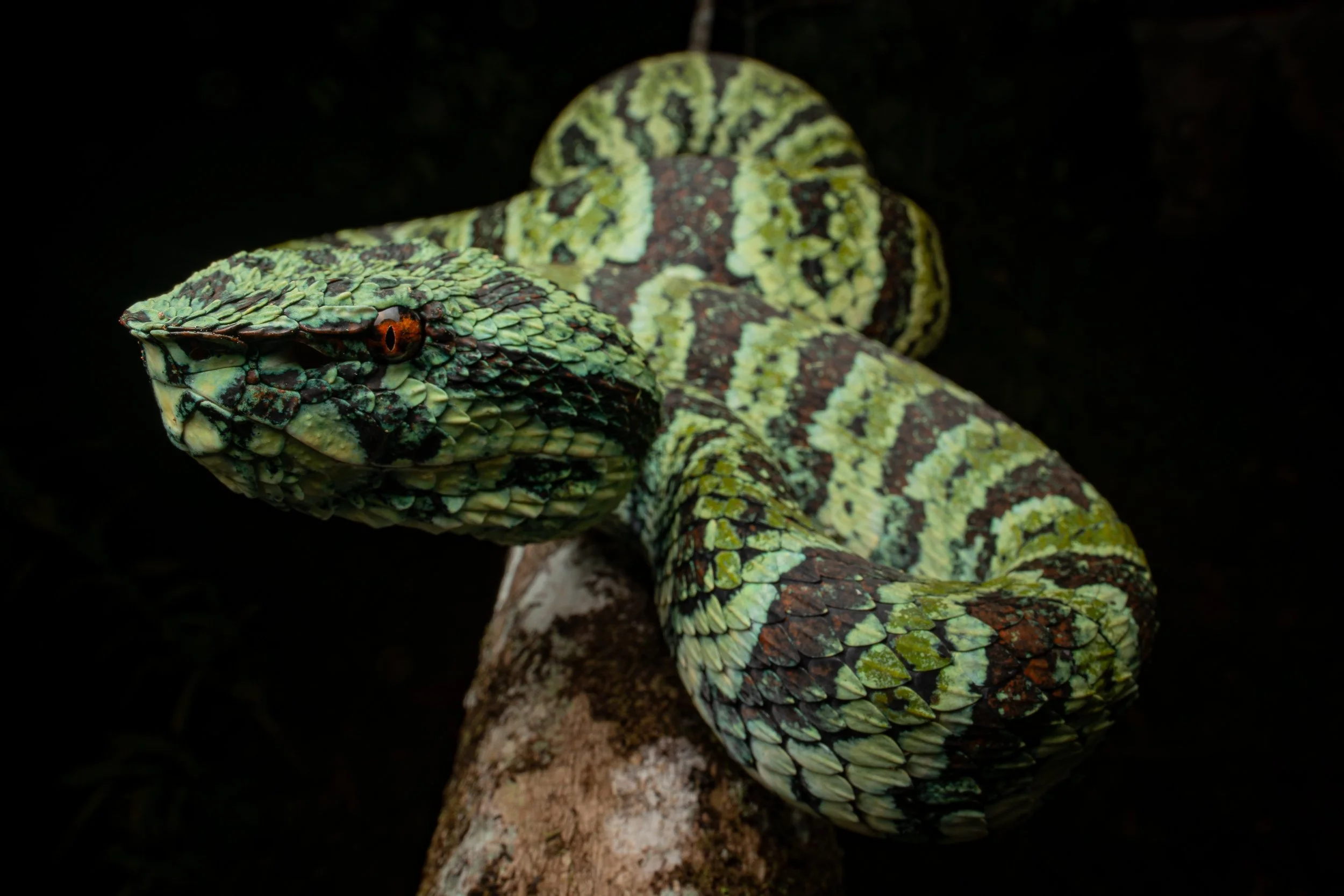
Tropidolaemus laticinctus, an gravid female of near-record size located by our team in North Sulawesi. Photo by Ian Breland
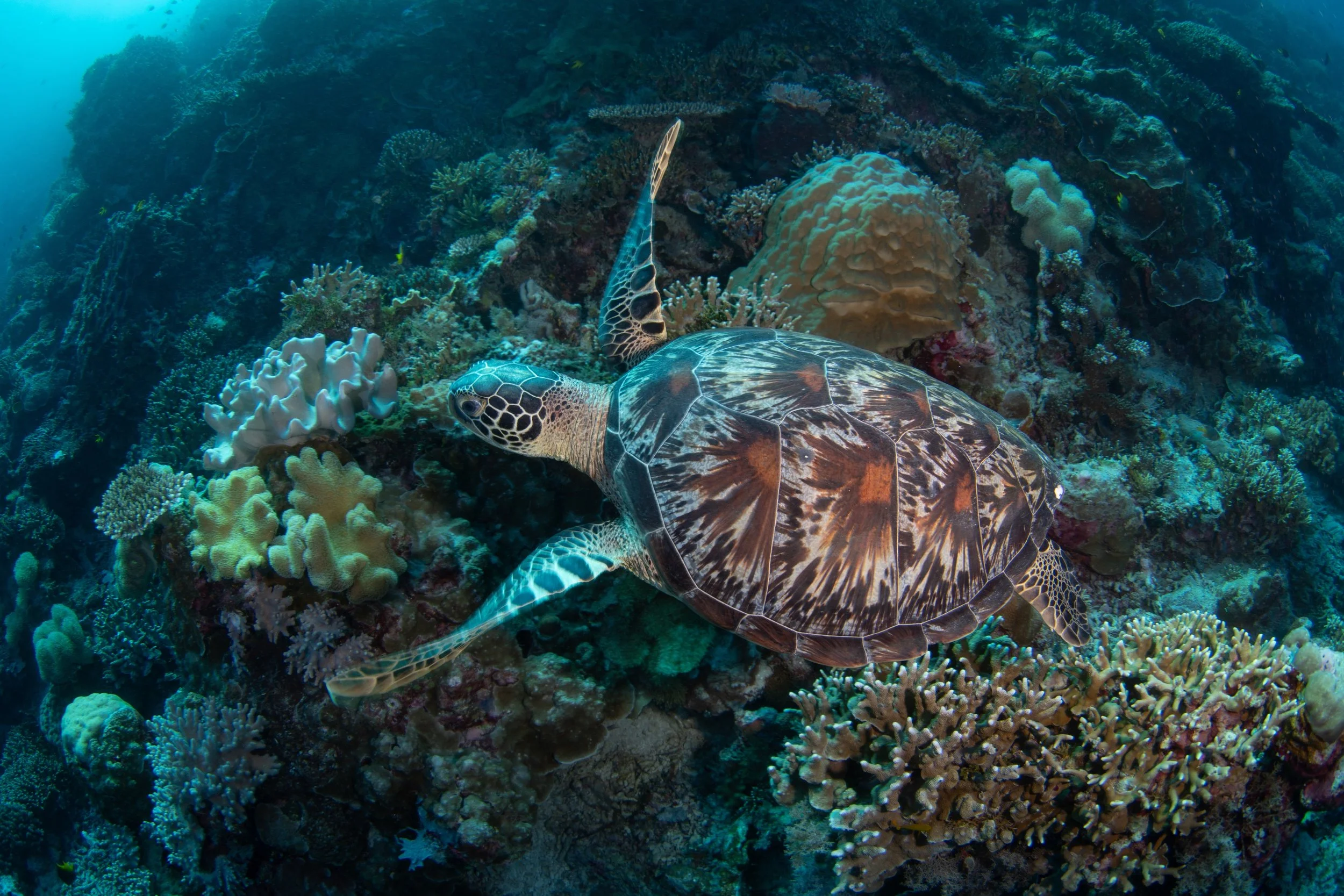
North Sulawesi is a sea turtle hotspot. We have noted up to 20 individuals on single previous dives!
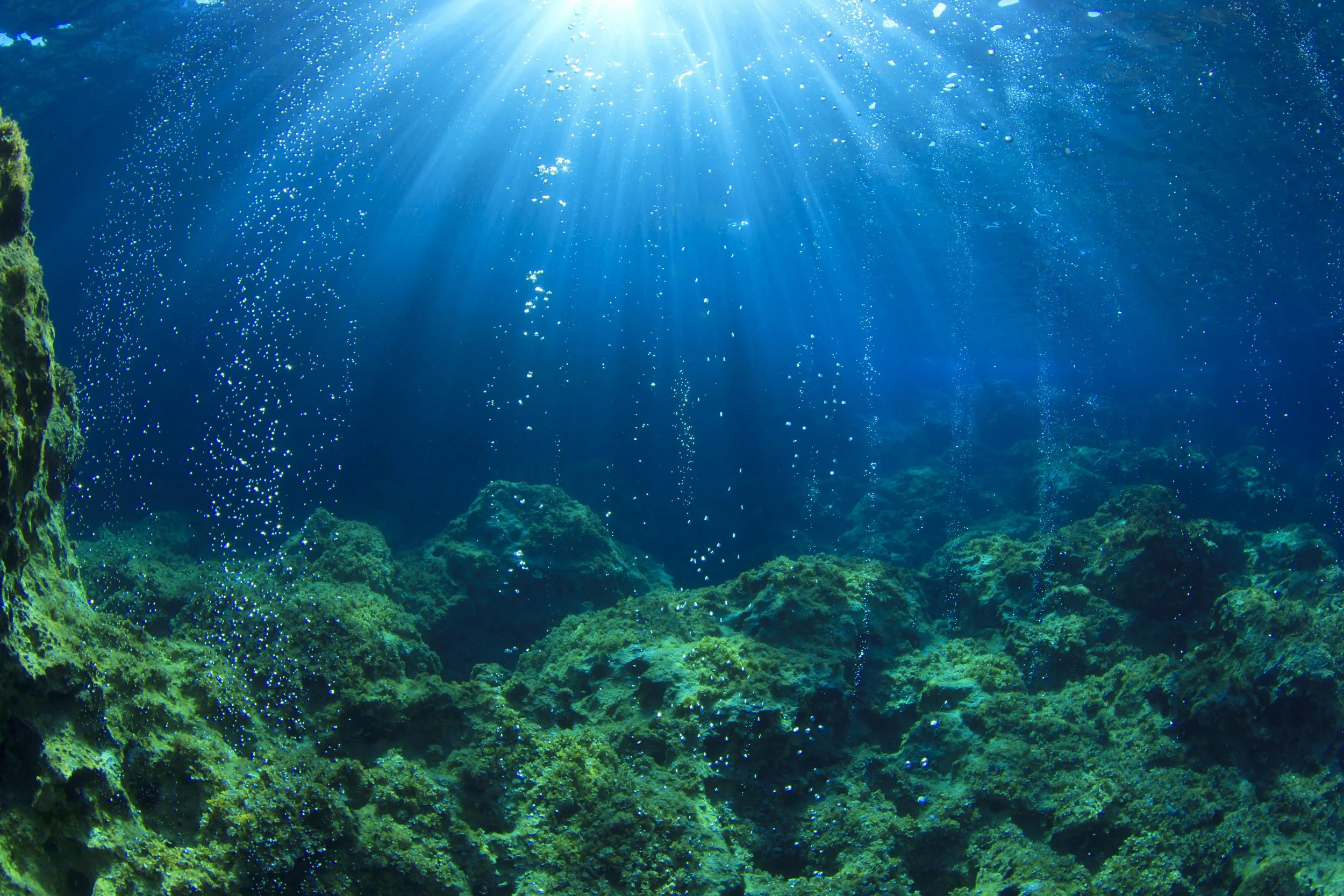
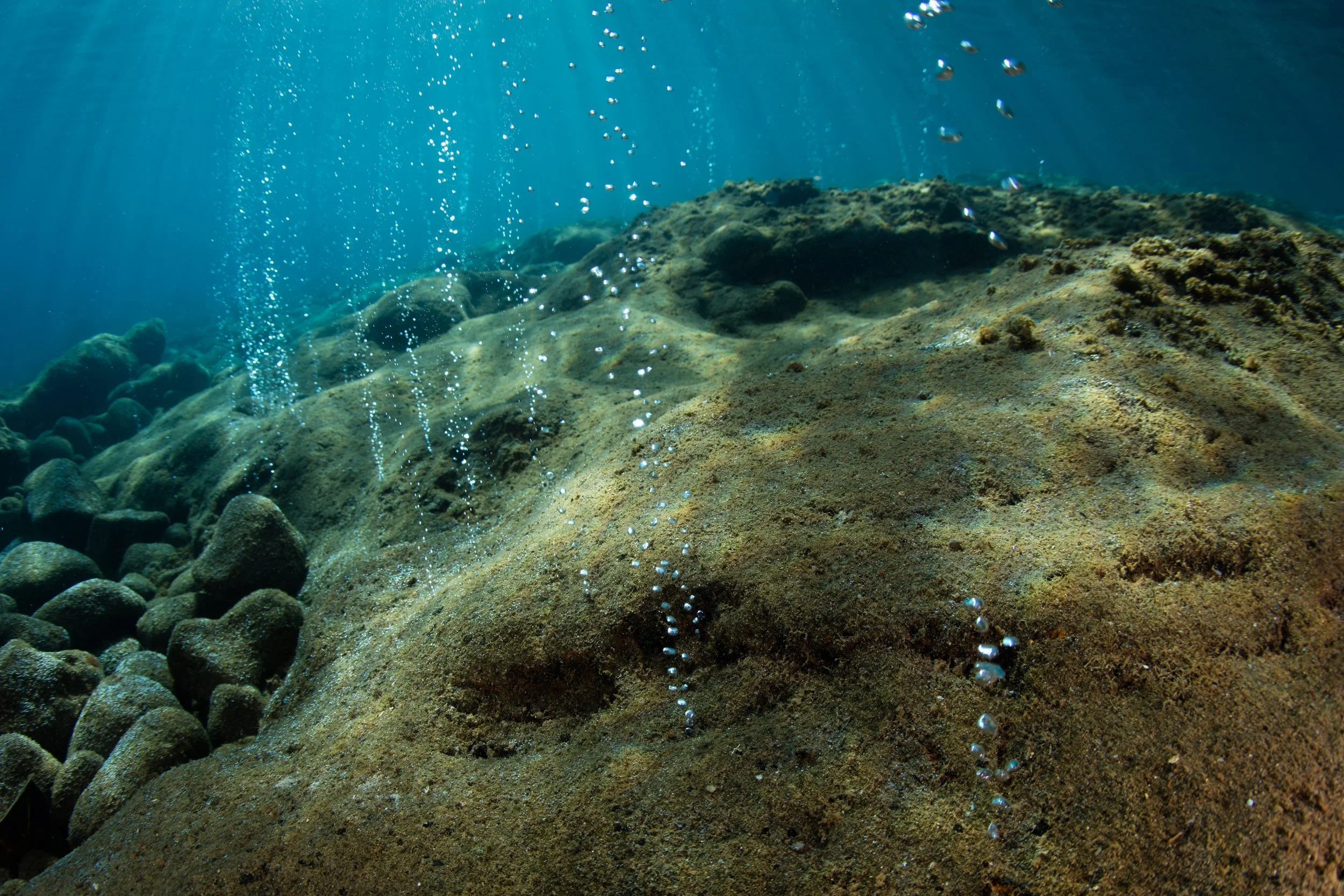
Mahangetang (Banua Wuhu) in Indonesia is a unique, active submarine volcano dive, where divers can explore warm, sulfur-bubbling vents rising from 400+ meters to just 5 meters below the surface. This will be one of our dive sites, and arguably the most unique.
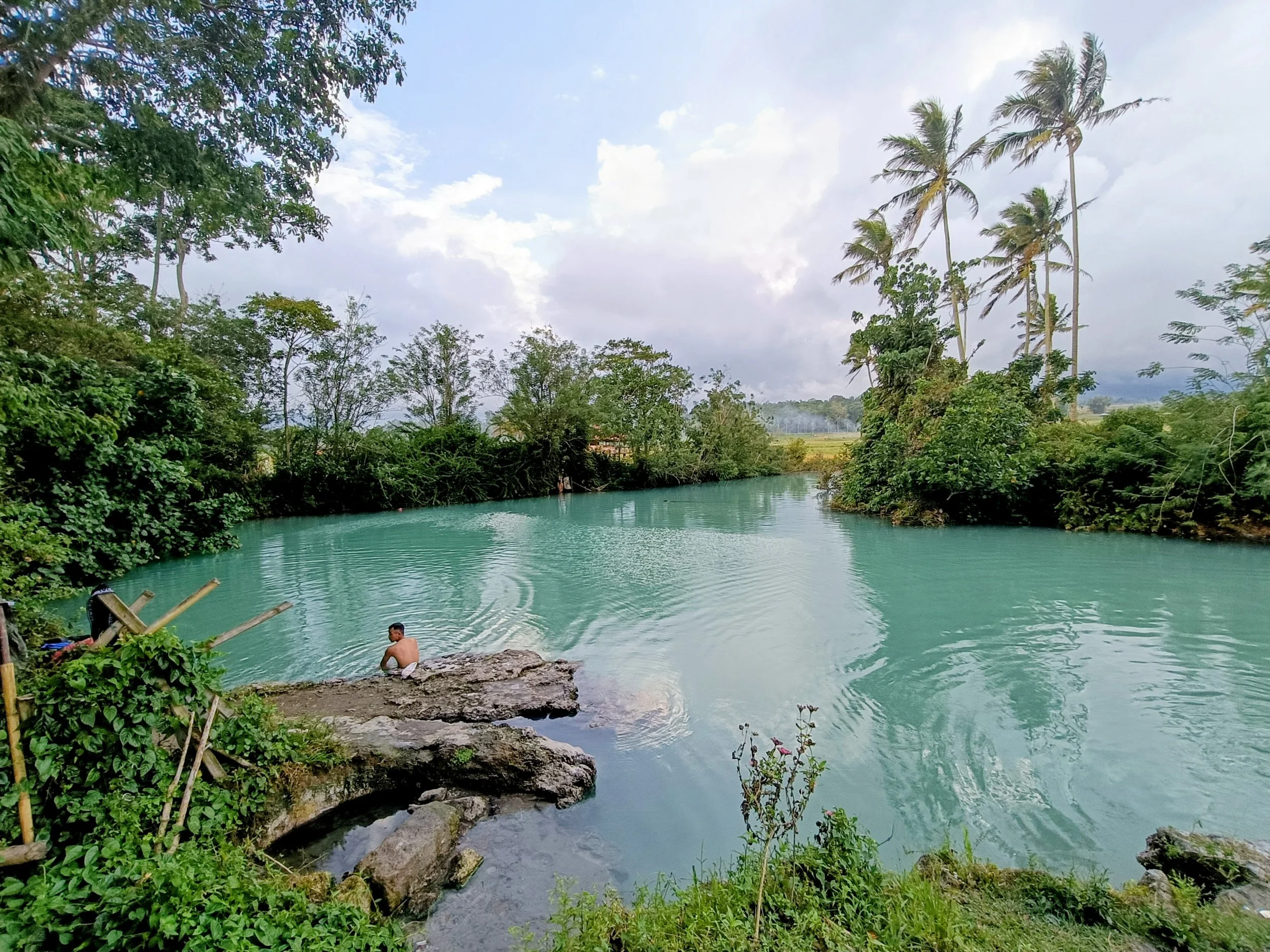
A limited glimpse into the series of hot springs dotting North Sulawesi, an area both plagued and blessed by extreme volcanic activity. The soil here is perfect for agriculture, but frequent eruptions from nearby volcanos are a real danger to residents. Luckily, early warning systems are in place and the hot springs offer a welcomed respite from the dense jungles. Photo by Nicolas cartier